A $200 hardware attack can undermine Intel and AMD cloud security
It’s a crack in confidential computing's trust model.
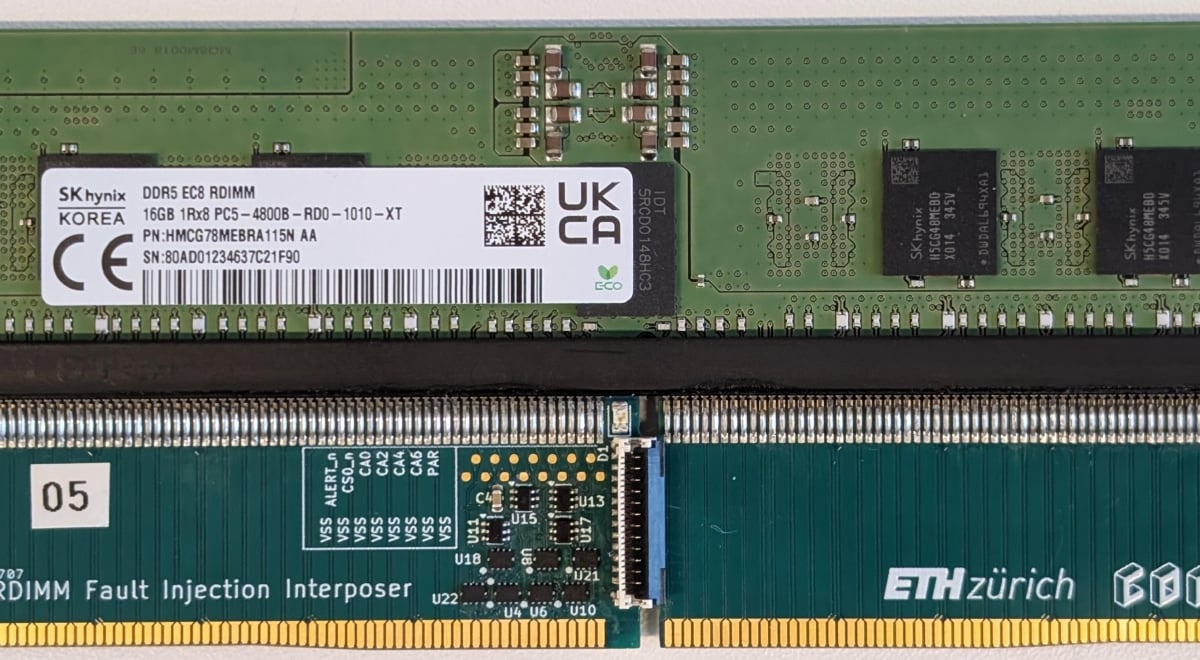
hardware interposer device. Courtesy of Ddropattack.eu.

 Follow us
- Researchers built a DDR5 memory adapter for under $200 that can interfere with protected server memory.
- DDRop drops selected memory writes, making processors read older encrypted data as current.
- The strongest demo forced an Intel TDX virtual machine into debug mode and exposed private memory.
- Intel and AMD said the attack needs physical server access and sits outside their threat models.
Key Takeaways by nexos.ai, reviewed by Cybernews staff.
Security researchers have uncovered a novel hardware attack against confidential-computing systems in modern servers. The technique, dubbed DDRop, allows bad actors to undermine memory protections in Intel and AMD chips.
The breakthrough comes from researchers at KU Leuven, ETH Zurich, Durham University, and Google. Their work targets confidential-computing, a technology designed to protect sensitive workloads even when an attacker has compromised the server's operating system or hypervisor.
The team focused on trusted execution environments like Intel TDX, Intel Scalable SGX, and AMD SEV-SNP. It developed a low-cost adapter, known as an interposer, for under $200 that can be installed between the processor and a DDR5 memory module.
DDRop works by selectively dropping memory writes. The processor then continues to read older encrypted data from memory as if it were current.






Breaking cloud trust
The researchers demonstrated the most serious consequences of the attack on Intel TDX. By manipulating protected page-table data, they forced a confidential virtual machine into debug mode and read its private memory in plaintext.
The fundamental gap comes down to design trade-offs made for speed at massive scale. Noting the importance of Trusted Execution Environments (TEEs) in the cloud, the researchers explain that TEEs help protect sensitive workloads through hardware-enforced isolation, remote attestation, and transparent memory encryption.
“However, to meet memory performance and size demands, modern TEEs omit cryptographic freshness guarantees, leaving them vulnerable to replay attacks by adversaries with physical memory access,"write the researchers.
In other words, while the system can verify that the data is authentic, it cannot prove that it is the newest version of that data.
Fixing the problem isn’t a straightforward exercise for chipmakers. Because the attack relies on a physical gap in how memory hardware communicates, a simple software update cannot remove the underlying hardware limitation.



Stay updated with our latest stories and follow us on social media
Be the first to discover new stories, ideas, and updates from our team.
Intel and AMD acknowledged the findings after coordinated disclosure but said the attack falls outside their published threat models because it requires physical access to the servers.
That said, physical tampering and hardware trust remain ongoing challenges across the enterprise landscape.
Security analysts have long warned that hardware security chips can track machines permanently, as detailed in an analysis of how TPM chips create permanent hardware fingerprints.