The hidden battlefield under the sea: the world’s cable crisis
Countries from Europe and the “Quad” – the US, Australia, Japan, and India – are stepping up maritime security. They’re deploying advanced drones and surveillance systems to protect critical infrastructure from hostile actors. Why is guarding the seabed so difficult, and what are the chances of security plans ending up on the seabed themselves? Cybernews dives in.
By Cybernews.

 Follow us
Countries from Europe and the “Quad” – the US, Australia, Japan, and India – are stepping up maritime security. They’re deploying advanced drones and surveillance systems to protect critical infrastructure from hostile actors. Why is guarding the seabed so difficult, and what are the chances of security plans ending up on the seabed themselves? Cybernews dives in.
Europe’s undersea pipelines, cables, and energy terminals are a big part of what keeps our society ticking. Without them, the instant connection to each other and the rest of the world that we take for granted would quickly disappear, and we’d find ourselves heading back to the Stone Age.
Everything from basic government functions to the continent’s economy and security intel relies heavily on well-maintained undersea infrastructure.
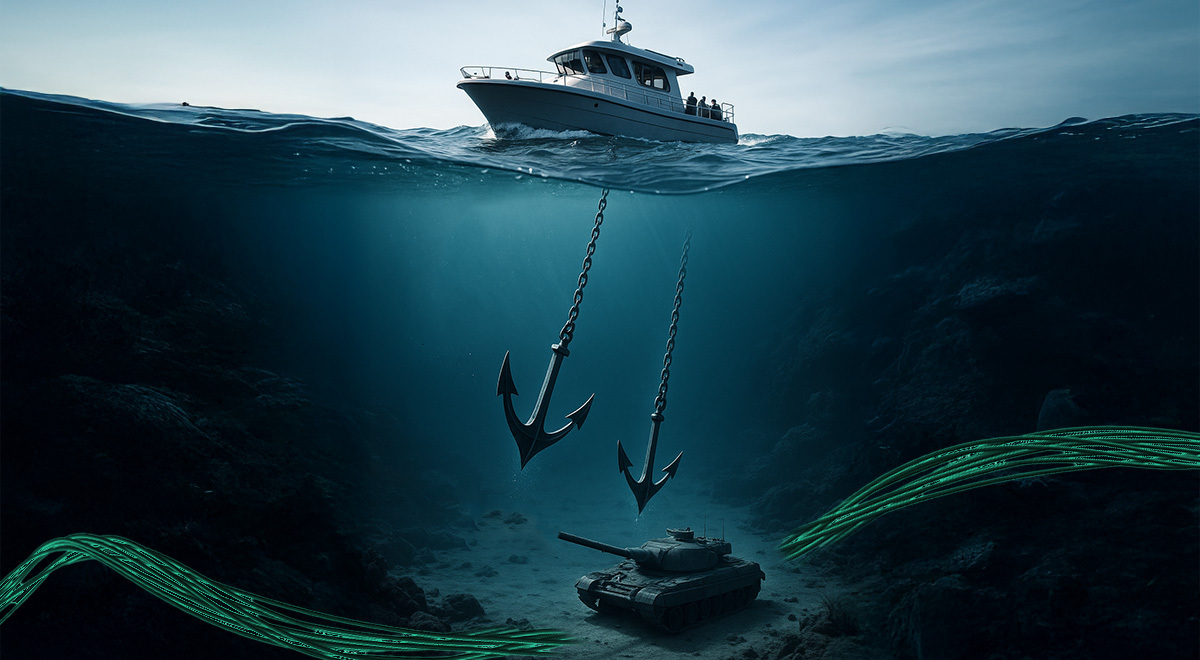
With geopolitical hostilities rising, these underwater cables and pipes are becoming an important target for actors like Russia and China. It’s not only European countries that suffer from supposedly accidentally loitering Russian boats that happen to be floating above underwater cables minutes before they’re damaged.
Today, the Quad countries discussed securing and expanding underwater communication cables amid a rising threat of sabotage and cyber attacks, the US embassy in India said in a statement, cited by Bloomberg.






European countries like Germany, Denmark, Lithuania, the UK, Sweden, and others have also had their fair share of concerns due to accidents in the Baltic Sea.
So, why are underwater cables and pipes such a big security issue now?

Easy target with lots of disruptive potential
Undersea cables are now the prime targets for sabotage and cyberattacks. No wonder – 99% of global data runs through them. Most are in relatively shallow waters and therefore easy to find. You can even look them up on a map.
They also make a good target for malicious actors, both for espionage and destruction. An estimated 150 to 200 undersea cables are damaged annually but don’t rush to blame Russia yet. Most of the damage is caused by fishing nets, anchors, and even shark bites, as reported by Silobreaker, a threat intelligence platform.
Once the cables are out, trouble comes.
Nic Adams, Co-Founder & CEO of 0rcus, a hacking startup focusing on nation-state cybersecurity threats, says that it takes only minutes for an attacker on the seabed “to trigger months of downstream chaos and turmoil.”
“Unprotected cables invite sabotage or clandestine tapping with devastating effects: mass outages that cripple critical services, espionage campaigns siphoning proprietary or state secrets, supply chain paralysis stalling factories and ports, financial implosion as trading platforms go dark, plus cascading failures across healthcare, transport, and energy sectors,” he says.
Although the tech and security armageddon that Adams described hasn’t happened yet, there are certainly precedents for it, particularly from Russia.
Russia is eyeing underwater cables and getting away with it
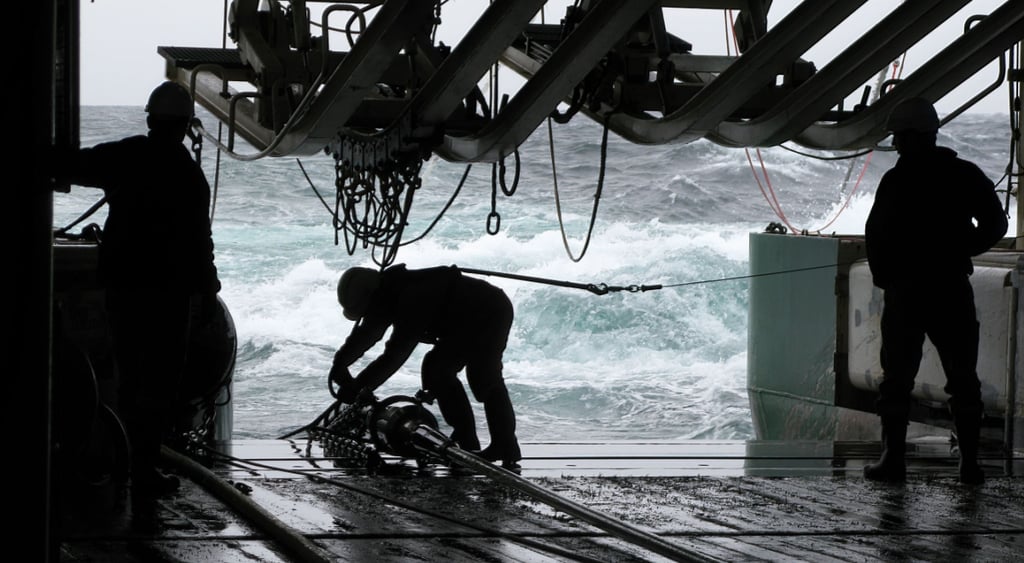
This year has been anything but short on incidents revolving around underwater cables. A pattern of cable and pipeline damage cases has been reported in the Baltic Sea, near critical European infrastructure.
Germany started 2025 by deploying a 36‑foot “Blue Whale” stealth submarine drone into the Baltic Sea. The country deployed the device with the support of NATO, which makes it the first tactical move to prevent sabotage by Russian or Chinese-linked vessels targeting critical underwater cables and pipelines.
Recently, the UK’s Royal Navy introduced an underwater robot that can be operated remotely and can dive deeper and stay submerged longer than human divers. It’s designed to detect and disarm underwater bombs and sabotage devices.
The introduction of this robot comes in a worrying context. The UK’s Parliament has previously opened a security inquiry, highlighting that 99% of UK data travels via undersea cables, making these assets prime targets.
Defence Secretary John Healey and PM Keir Starmer publicly warned about “Russian shadow fleet” vessels loitering near cables, mapping infrastructure, and flagging possible sabotage.
Denmark has also launched two unmanned surface vessels to improve maritime surveillance amid concerns about sabotage to undersea cables and pipelines in the Baltic Sea.
This goes to show that the world might be facing a new threat, with actors finding a new approach to sabotage their enemies – vulnerable seabed infrastructure.
Three challenges in protecting underwater pipes and cables
Underwater pipes and cables are a dimension where basic needs, international interests, and potential warfare meet. In this world, the attackers have more advantage than victim countries, mostly because it’s difficult to prove whether it was a shark or a state-sponsored actor.
Another important thing to know is that Europe’s underwater infrastructure is a lot more vulnerable compared to the Indo-Pacific, which makes the old continent all the more approachable for bad actors. There are some key reasons for that, according to Former NSA intelligence officer and Chair of the ISRS, Dave Venable.
- Risk of a diplomatic crisis
According to Venable, the first issue is the fact that attribution for undersea cable disruption might cause a lot more issues than the disruption itself. “If a cable gets cut in deep water, it could have been caused by several things: An anchor? A fault? Or an AUV operated by an adversarial state actor? And when state involvement is suspected, proving it without diplomatic escalation becomes an additional problem,” says Venable.
For example, a Russian-flagged tanker was suspected of dragging its anchor and thus damaging the Estlink 2 power and telecom cables on Christmas Day in 2024. Finnish authorities detained the vessel and questioned the crew, but prosecutors did not formally accuse any state of sabotage. They stated that there was not enough proof.
- The infrastructure was never designed with security in mind
Another issue is that most of the time, the current protective infrastructure around the cables is unable to respond to an issue in a timely manner. This is because most cables span thousands of kilometers, often in remote international waters, where persistent monitoring is extremely difficult. “Most operators rely on telemetry that only detects damage after the fact,” concludes Venable.
- Cooperation between countries
According to Venable, the third issue is the fact that cables are spread across multiple jurisdictions with different levels of coordination. “Unlike the Indo-Pacific, where major hubs like Singapore are tightly integrated with national defense planning, Europe relies on a patchwork of public and private actors with inconsistent readiness, strategies, funding, and planning,” Venable says.
These three security issues and the ways to solve them lie somewhere between cooperation between private companies that own the seabed infrastructure and national governments that should see the seabed protection as a matter of national security.
Private matters become a national interest
As attacks on seabed infrastructure become more frequent and more strategic, defense experts agree – underwater cables and pipes should be seen as a matter of national security and a bigger aspect of cyber defense.
“Adequate underwater cable defense must require fusion of naval patrols, deep‑sea sensor arrays, threat intel integration, public‑private coordination,” says Nic Adams, CEO of 0rcus, a cybersecurity company that specializes in using AI and offensive hacking techniques.
“Europe must treat subsea networks as sovereign territory: embedding real‑time surveillance, rapid repair capabilities, and pre‑positioned response teams. I see these silent conduits as ground zero.”




While nice in theory, this can become an issue, as most of these cables don’t belong to countries per se. Nearly all of the world’s active submarine data cables are financed, laid, and operated by private businesses – Google, Microsoft, Orange in France, British Telecom in the UK, etc.
Here is the issue – the infrastructure is private, but the threat and damage are public and most of the times, national. So what can governments do? The answer likely lies in the already existing rules for airspace or satellites – they’re both a part of national security, and the responsibility of monitoring them falls under the private sector as it does for the public sector.
“Most of this infrastructure is privately owned, but the strategic implications of disruption are public,” says Venable.
“Public-private cooperation is the only way forward.”
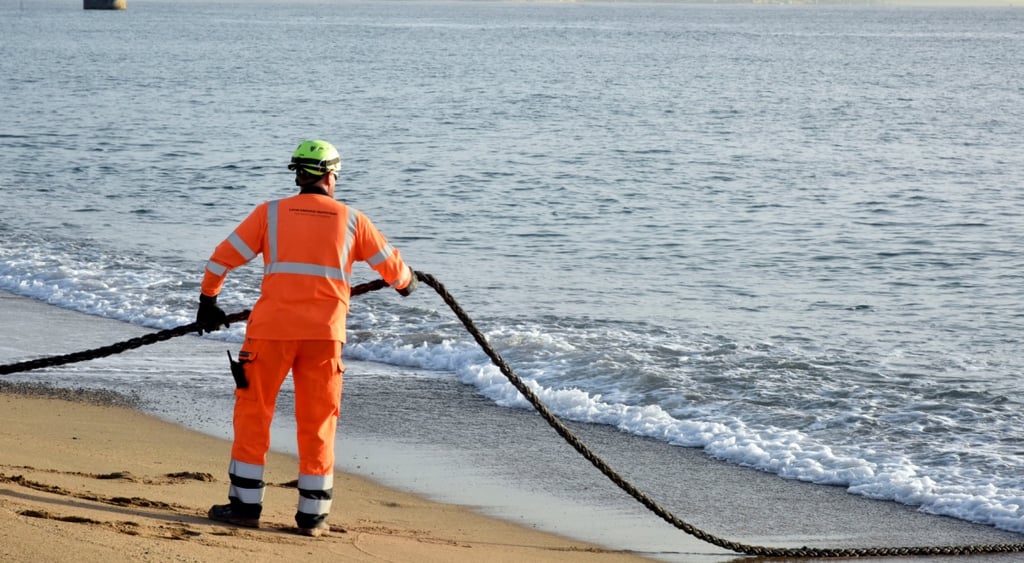
This calls for public-private mechanisms, deals that ensure consistent monitoring of the seabed, response plans to potential incidents, and information exchange among main stakeholders.
Good example cases come from Norway and the UK.
In 2022, Telenor, a telecom giant in Norway, worked with national defense authorities to secure coastal cable landing sites by using advanced telemetry and joint monitoring. This allowed a quick response to a suspicious outage near Svalbard.
In contrast, a cable break in 2022 in the UK’s Shetland Islands exposed the risks that arise if private businesses and policymakers do not collaborate. With no backup plan and delays between local telecom providers and UK authorities, the entire archipelago was left without phones or internet for over 24 hours.
