Disgruntled researcher cooks again: Windows 11 lock screen bypassed using Narrator, no patch available
Windows 11 lock screen? No problem.

Image by Cybernews

 Follow us
- A Windows 11 lock screen bypass lets attackers run code on locked BitLocker-encrypted PCs.
- Abdelhamid Naceri demonstrated the FastUnlock flaw using Narrator and the Forgot my PIN screen.
- ThreatLocker reproduced the exploit and says a BitLocker preboot PIN can help when machines are off or hibernated.
- Microsoft has not patched the issue, and Naceri says it affects every Windows machine he tested.
A lock screen on a fully patched and BitLocker-encrypted Windows 11 system can be bypassed using Narrator and a few keystrokes, security researcher Nightmare Eclipse has demonstrated. Hackers with hands on a computer can run code, access files, and potentially gain complete control.
Security researcher Abdelhamid Naceri, who publishes Windows zero-day vulnerabilities as Nightmare Eclipse and is best known for his feud with Microsoft, has just unveiled a massive Windows 11 lock screen authentication bypass zero-day flaw.
In a demonstration on a locked Windows PC that requires a password, Naceri simply enables Narrator, presses a series of keys to navigate the hidden UI through the “Forgot my PIN” screen, and he’s in. A working exploit has already been confirmed by the security company ThreatLocker.
The attacker, using this exploit dubbed FastUnlock, gains privileges of a non-admin account, “WSIAccount,” which is enough to execute code, access files, and potentially take over the system. WSIAccount, short for Web Sign-In Account, is a legitimate, system-managed local account that supports web-based and passwordless sign-in flows.





“It took a total of 5 minutes from finding this to breaching a fully encrypted BitLocker machine with Windows 11 26H2 November Patch installed, an issue caused by total negligence from Microsoft's side,” the researcher writes in his GitHub repository, detailing the flaw.
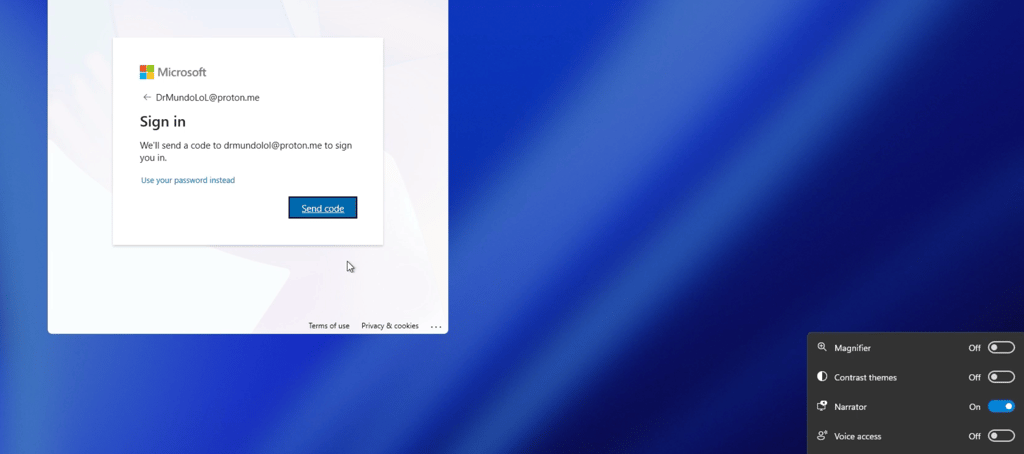
Naceri says the bug is “extremely consistent” across every Windows machine he tested. All the attacker needs is hands on a computer with at least one account linked to an online Microsoft account.
“This [vulnerability] breaks the guarantee that a properly secured BitLocker machine cannot be accessed even if the attacker has physical access, so hold tight any Windows machines until Microsoft patches this,” warns the researcher.
Independent researchers confirmed the flaw
Kenneth Walker, Threat Intelligence Research Engineer at ThreatLocker, reproduced the proof-of-concept technique on a test machine, gaining access as the “WSIAccount” user, and dropping a file from external media to the system.
The researcher noted that the on-screen keyboard can be launched to enter the sequence of key presses, and shared a video demonstrating the exploit.


Stay updated with our latest stories and follow us on social media
Be the first to discover new stories, ideas, and updates from our team.
The FastUnlock hack works because BitLocker normally unlocks the drive before any user signs in – the system uses the TPM chip to decrypt at boot.
To protect a Windows computer before Microsfot addresses the flaw, ThreatLocker recommends enabling BitLocker preboot PIN. However, it will only protect a machine that is powered off or hibernated.
How does the hack work?
Nightmare Eclipse explains that the bug was introduced when Microsoft redesigned Narrator. This accessibility feature reads on-screen text, buttons, menus, and other elements to help users navigate the PC. The tech giant failed to prevent the new UI from running in the context of a lock screen user.
The researcher detailed the procedure as follows:
First, on the Windows lock screen, select “I forgot my PIN,” “password,” or another authentication method to open the account recovery interface. Then Press Win + U and turn Narrator on.
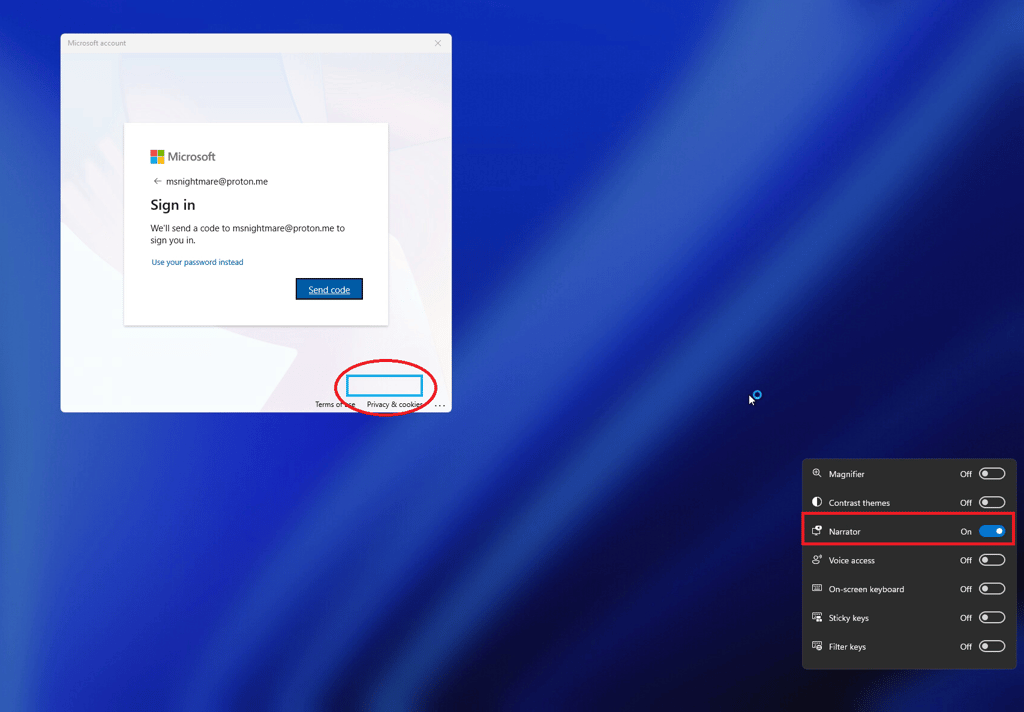
“It will immediately focus on a background window owned by Narrator,” the researcher explains.
However, the Narrator’s background window is invisible. The researcher shared a screenshot showing what was actually in the background.
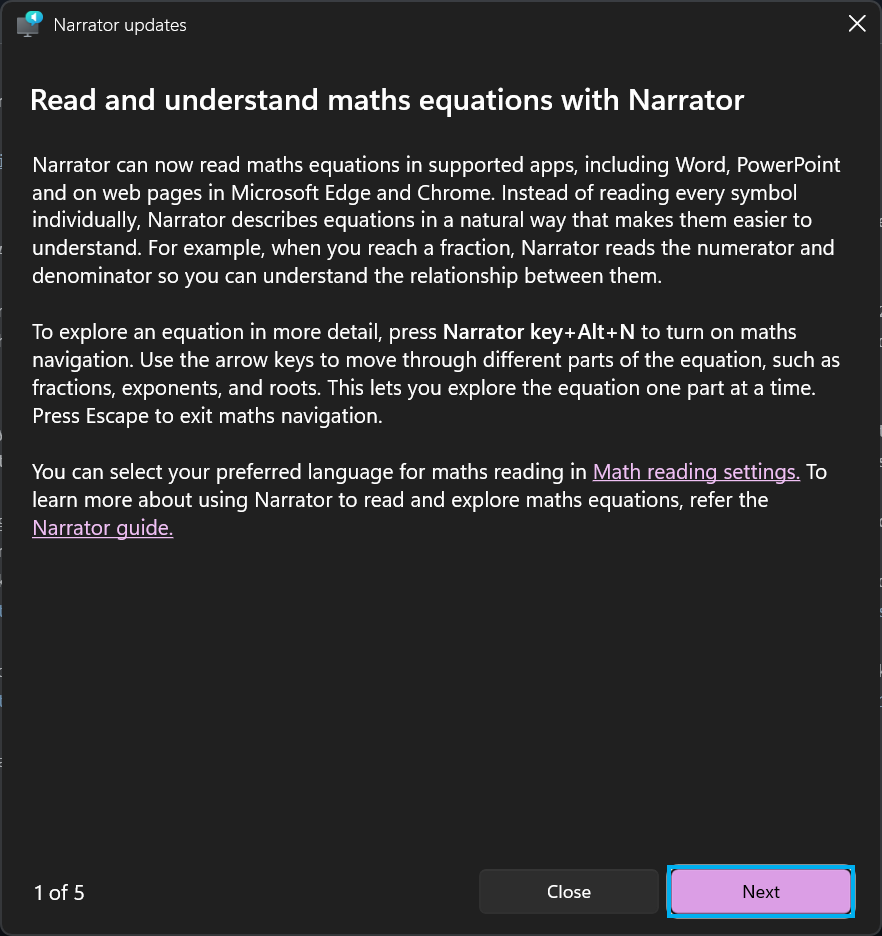
Holding CAPS and using arrow keys allows navigation to the “Next” button.
Next, the invisible navigation needs to reach “Math reading settings” in Narrator and open the linked Windows Settings interface.
“From now on, it’s just up to you how you want to execute code,” the researcher said. “Having a focus on the settings window allows multiple ways to get code execution in the context of the ‘WSIAccount’ user.”
One option is to navigate to “Bluetooth & Devices”, enable AutoPlay, and open a folder from a USB drive. Connecting a USB stick would then launch File Explorer and allow selecting and running files.
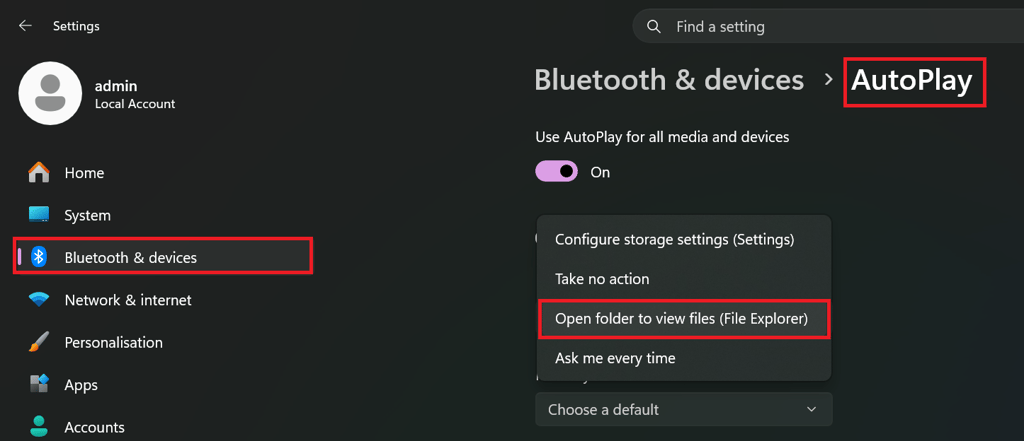
“If you do everything properly, the binary in your USB stick will be executed,” the researcher concluded.
Naceri became a folk hero among security researchers after he began publishing one Windows zero-day after another following his dismissal from Microsoft in 2025. He publicly disclosed over a dozen previously unknown vulnerabilities, including several affecting Defender, repeatedly embarrassing the company. The vengeful researcher chose to publicly drop the exploits, rather than responsibly disclose them, claiming Microsoft left him “homeless with nothing.”