Signal founder roasts Telegram, says there’s nothing private about it
American cryptographer Moxie Marlinspike, creator of Signal, has railed against Telegram in a new interview, calling it the opposite of a private messenger and stating that if you use it, your data definitely isn’t safe.
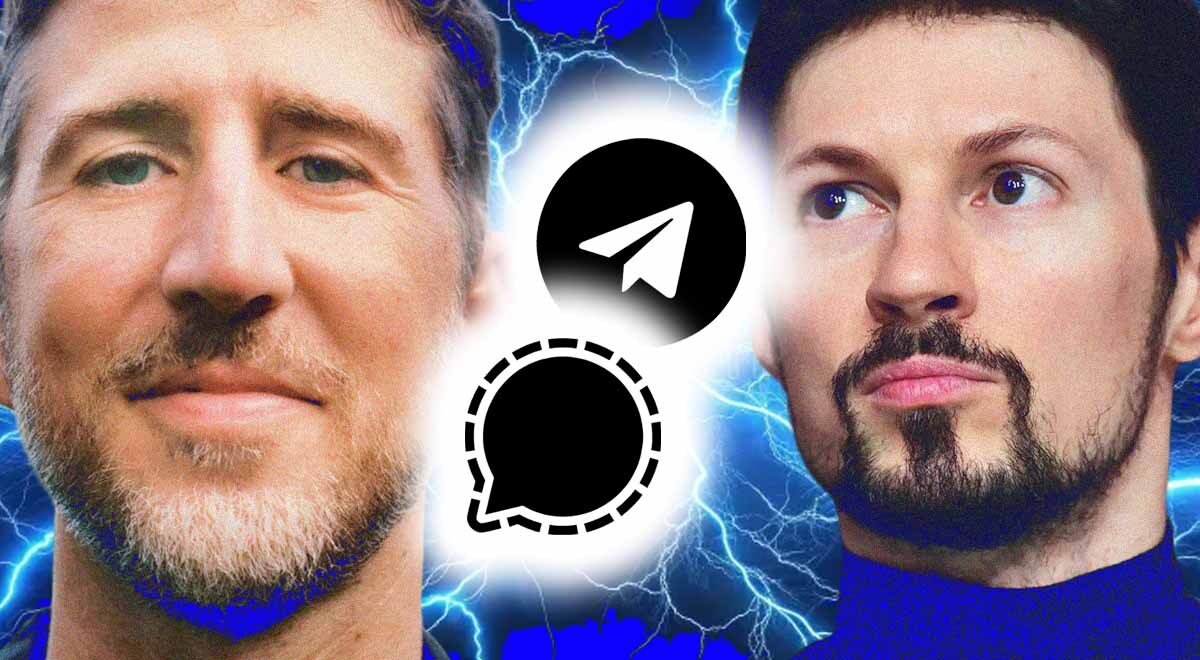
Image by Cybernews.

 Follow us
American cryptographer Moxie Marlinspike, creator of Signal, has railed against Telegram in a new interview, calling it the opposite of a private messenger and stating that if you use it, your data definitely isn’t safe.
When Russia began restricting Telegram this week, the platform’s founder, Pavel Durov, spoke out against the move on X and once again said the app stands for freedom and privacy.
Even though Durov’s statement criticizing the Russian government somehow seems a bit reserved, he recently railed against authorities in France and Spain as well, essentially calling them wannabe surveillance states.
Durov also regularly speaks out against the supposed war against privacy in the European Union. The problem, though, is the fact that Telegram is very far from being an example of respecting user privacy.
“Some kind of Russian dissident”






When Grok told one X user in mid-January that Telegram was privacy-focused, Signal president Meredith Whittaker responded that this was simply incorrect.

“Telegram is a social media network that collects an extraordinary amount of data, and offers limited encryption that is not even on by default,” wrote Whittaker.
“The problem is that Telegram talks a big game about privacy, while not walking the walk.”
Now, probably extremely tired of Signal being constantly compared with Telegram, Marlinspike, the original Signal creator, went even further in a fresh interview with Sabrina Halper, a digital philosopher.
“Telegram’s not a private messenger. There’s nothing private about it. It’s the opposite. It’s a cloud messenger where every message you’ve ever sent or received is in plain text in a database that Telegram, the organization, controls and has access to,” said Marlinspike.
He compared Telegram to a “pixel-for-pixel clone” of WhatsApp – but unencrypted, unlike the Meta product and Signal.
Indeed, the popular belief is that Telegram, just like many other top messaging apps, offers end-to-end encryption. It indeed does – but not by default. Users must manually enable the Secret Chats feature.
“Telegram’s not a private messenger. There’s nothing private about it. It’s the opposite,"Moxie Marlinspike.
“Somehow, they’ve done a really amazing job of convincing the whole world that this is an encrypted messaging app and that the founder is some kind of Russian dissident, even though he goes there once a month, the whole team lives there, and their families are there,” Marlinspike went on, also simply stating that “something very weird” was going on.
Russia slowing Telegram down – or is it?
He also remembered Durov’s brief arrest in France in 2024 over alleged criminal activity on Telegram. The app’s founder, who holds citizenship in four countries, including France, is still very angry at the French, but Marlinspike seems to sympathize with Paris.
Curious what others think about this story? Contribute your thoughts to the debate below.
“What happened in France is they just chose not to respond to the subpoena. And so that’s in violation of the law. And he gets arrested in France, right? And everyone’s like, oh, France, but I think the key point is they have the data and can respond to the subpoenas, whereas Signal, for instance, doesn’t have access to the data and couldn’t respond to that same request,” said Marlinspike.
“To me, it’s very obvious that Russia would’ve had a much less polite version of that conversation with Pavel Durov and the Telegram team.”

There’s now a chance to see how respectful the dialogue between Telegram and the Kremlin could be as Russia began partially restricting the app this week, deliberately slowing down access to it in the country.
Russia has, of course, prepared a plan B for the country’s social media users. The government has been promoting MAX, a state-run “super-app” modeled after other applications that grant the government access to their data, such as WeChat in China.
Complicating things even further, an investigation by IStories, an exiled media outlet, found last year that Telegram’s infrastructure was maintained by an obscure company that had links to the Kremlin and Russian security services, including the FSB.
Unlock more exclusive Cybernews content on YouTube.