Thailand hits pause on data center boom as community fears mount
It’s closing legal loopholes that may pose risks.

Illustration by Cybernews

 Follow us
- Thailand paused 166 data center projects while it develops national rules for the fast-growing industry.
- Officials say they lack a complete inventory of existing data centers and projects awaiting approval.
- The government wants clearer rules for electricity, water, land use, safety, and infrastructure costs.
- Communities worldwide are pushing back against AI data centers over power use, pollution, and local impacts.
Key Takeaways by nexos.ai, reviewed by Cybernews staff.
Thailand is putting the brakes on its rapidly expanding data center industry, pausing construction on dozens of facilities.
The pause is temporary until the government determines how much infrastructure the country actually needs and how much electricity, water, and land it can afford to dedicate to AI data centers.
The National Economic and Social Development Council (NESDC) announced the move following a September 4th meeting of its Data Center Business Policy Committee.
The government says the pause is not intended to shut the door on investment, but to replace Thailand's fragmented approval system with a nationwide regulatory framework.






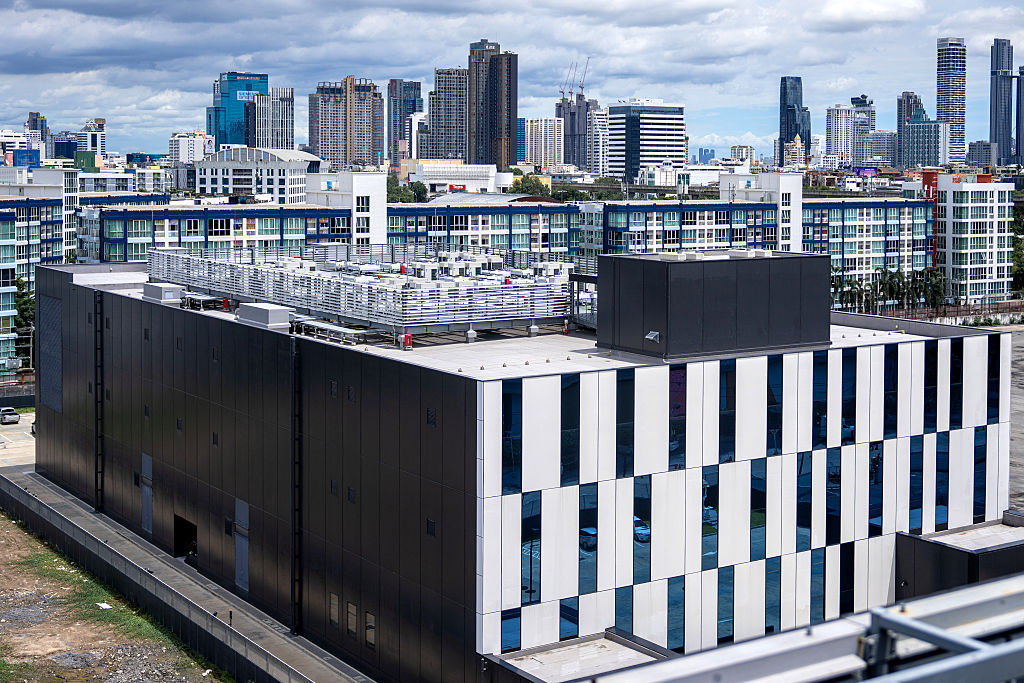
“The Prime Minister and the Minister of Interior emphasized the importance of data centers to the digital economy and urged the swift establishment of clear guidelines and a regulatory framework,” read a communiqué issued after the meeting.
The regulatory scrutiny comes as Thailand tries to position itself as a regional hub for cloud computing and AI infrastructure.
However, the government is increasingly facing questions over whether the country's power grids, water supplies, land, and local communities can absorb the industry's rapid expansion.
Thailand doesn't know exactly how many data centers it has
Thai authorities admitted they do not yet have a sufficiently complete picture of the country's data center industry, including existing facilities and projects in the pipeline.
Information about data centers is currently scattered among different agencies responsible for electricity, water, construction, investment promotion, and other approvals.
Some facilities have also been registered under other business categories, including warehouses, making the industry's actual footprint harder to track.
Authorities are rushing to fix that, ordering relevant agencies to consolidate information into a single dataset by September 11th.
The new inventory will cover operational facilities, completed projects, those under construction, and projects awaiting approval or licensing.
Officials are also considering creating a dedicated Thai Standard Industrial Classification code for data centers, giving the government a clearer way to track investment and business activity.
According to local media, Danucha Pichayanan, secretary-general of the NESDC, said information gathered from 16 government agencies showed that 35 data center projects were already operating before the decision was made.
166 projects caught in the regulatory freeze
Thai authorities have currently paused 49 data center projects under construction and 117 awaiting approval, bringing the total to 166 data center projects on hold.
The regulations are expected to take roughly a month to develop, although the exact legal mechanism and duration of the construction pause have generated some uncertainty.
Thailand's NESDC does not itself have the power to physically stop construction on the projects, according to its secretary-general.
Trying to save communities from electricity shortages
One of the proposals under consideration would classify data centers consuming more than 2MW of electricity as industrial businesses.
That threshold is intended to bring large facilities under stronger safety and regulatory requirements, although officials have also indicated that the 2MW figure may need further consideration, given the scale of projects currently being proposed.
Large data centers require enormous amounts of power around the clock and can also consume significant quantities of water for cooling. They may require new substations, backup generators, and fuel storage.
All this is creating additional infrastructure and safety concerns. Bangkok has already encountered this potential issue, as data centers may move into residential areas.
Six large standalone data center applications have been submitted in the capital, with proposed facilities requiring between 9MW and 23MW of electricity each. Three have already been approved, while 3 others have been suspended for reassessment.
An existing regulatory loophole allows data center operators to seek planning permission under the classification of warehouses, which does not require a special infrastructure to be built around it.



Stay updated with our latest stories and follow us on social media
Be the first to discover new stories, ideas, and updates from our team.
Thailand wants data centers to pay their way
Officials are considering resource utilization fees to account for both the direct and indirect costs associated with data centers.
The idea is that the public should not end up absorbing infrastructure costs generated by private facilities through increased pressure on electricity, water, and other resources.
The government also wants future projects assessed on their broader economic value to Thailand. Rather than simply approving projects based on investment commitments, authorities are considering a competitive "pitching" mechanism under which developers would have to demonstrate how their facilities would benefit the country.
The government also wants the eventual system to include minimum standards for existing facilities, with operators potentially given a transition period to bring their sites into compliance.
Growing opposition towards data centers
An AI facility can bring billions in investment, but it can also impose a huge new electricity load, demand for cooling water, a need for backup power infrastructure, and pressure on local grids.
That tension is increasingly appearing around the world as governments and communities confront the physical cost of the AI infrastructure boom.
The communities are increasingly resisting new facilities due to concerns about pollution, energy consumption, and the growing footprint of big tech in everyday local life.
In France, opposition to data centers has become an election issue, as candidates pledge to revoke approvals for data center construction.
And a Utah community has revolted against a massive AI data center project due to concerns about heat output and the expected strain on energy use.