Google’s AI prodigy drops major warning in Dublin: “AI systems are not healthy yet”
AI needs to be aligned and contained, the Nobel Prize winner warned.
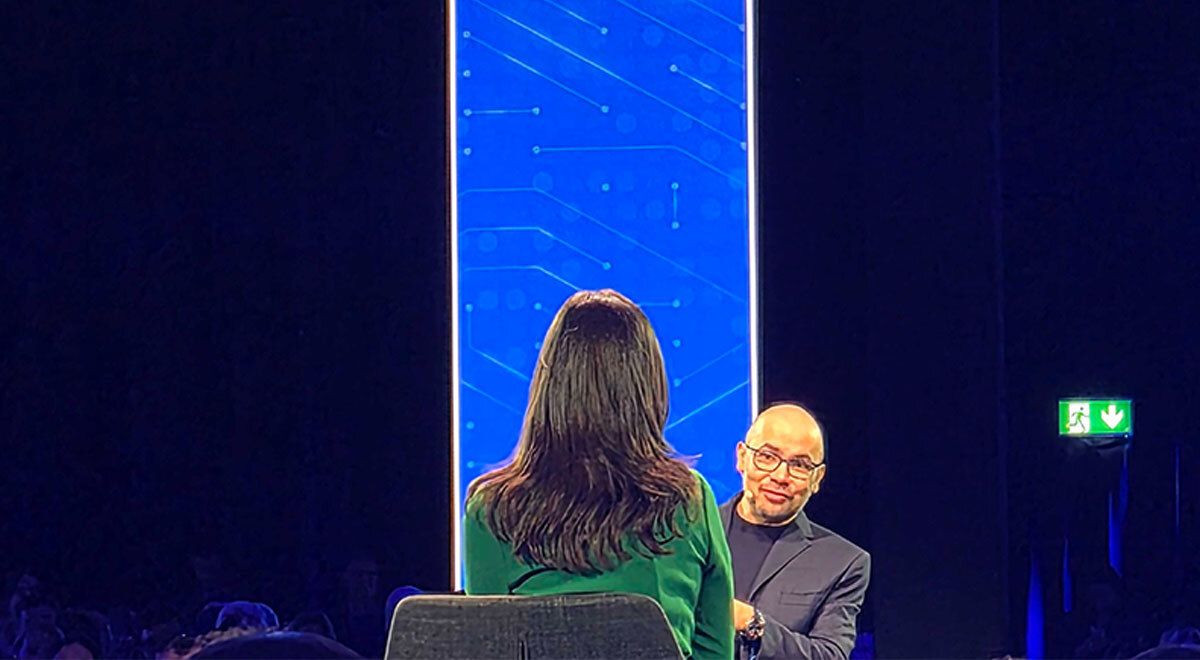
Demis Hassabis. By Jurgita Lapienyte/Cybernews

 Follow us
- Demis Hassabis warned that AI systems need stronger security before wider release.
- He urged companies and governments to build secure testing environments for autonomous AI agents.
- Hassabis said AI can accelerate science, but experiments still need real-world testing.
- He said experts from nuclear and biology safety can help contain risky AI systems.
Key Takeaways by nexos.ai, reviewed by Cybernews staff.
Demis Hassabis, British AI scientist and Nobel Prize laureate, Google DeepMind chairman and co-founder, chief scientist of Alphabet, and former child chess prodigy, addressed the crowd at the International AI Summit in Dublin. He sounded optimistic overall, especially regarding AI applications in science, but also urged a focus on security.
“I think one of the big things we need to do is asymmetrically power the defenders, trust the defenders. [...] Defend from cybersecurity vulnerabilities, and use these systems in a defensive way, maybe before they're generally released, to fix the vulnerabilities in our software systems before they're out. [...] Use it, so we got a kind of asymmetric power on our defensive side to keep ahead of the times,” Hassabis said.
He mentioned recent hacking incidents by autonomous AI agents, emphasizing that they weren’t major. However, the “systems are not healthy yet,” and that can’t be ignored.
He called on the industry, individual companies, and governments to work relentlessly on building secure sandboxes to test these systems before releasing them, and first, to arm the defenders.






AI – good for theoretical problems only?
Hundreds of entrepreneurs, lawmakers, and big tech representatives gathered in Dublin for the International AI Summit, held during Ireland's EU presidency. The summit itself focused on harnessing AI for growth.
Hassabis, together with John Jumper, won a Nobel Prize in chemistry for developing an AI model predicting the structure of nearly all of the 200 million proteins.
“Among a myriad of scientific applications, researchers can now better understand antibiotic resistance and create images of enzymes that can decompose plastic,” the Royal Swedish Academy of Sciences said.
Maybe because of his firsthand experience of how AI could benefit humanity, Hassabis sounded rather optimistic when addressing the crowd in Dublin. He framed AI as a tool for advancing science. In some domains, he emphasized, the impact is more visible.
For example, back in September, OpenAI claimed it had found the solution to the Navier-Stokes existence and smoothness problem, one of the Millennium Prize Problems.
The idea is not really just to solve the problem, but it's also to develop new types of mathematics on the way to solving the problem,Hassabis said.
But it’s not only the solution to a certain problem that counts. To Hassabis, the process of getting to it is equally, if not more, important.
“In mathematics specifically, I think a lot of it isn't just about the answer, it's also about the journey to get to the answer. Often, what you find is you have the very famous conjectures, whether it's Fermat’s Last Theorem or the Millennium Prize problems like Navier-Stokes. The idea is not really just to solve the problem, but it's also to develop new types of mathematics on the way to solving the problem. And sometimes that new mathematics is more valuable than the solution,” he said.
What’s the use of solving this or any other mathematical problem? AI, while helpful, is somewhat limited in physics, chemistry, biology, and other similar domains as it requires a real-world loop. Here’s how Hassabis explained it.
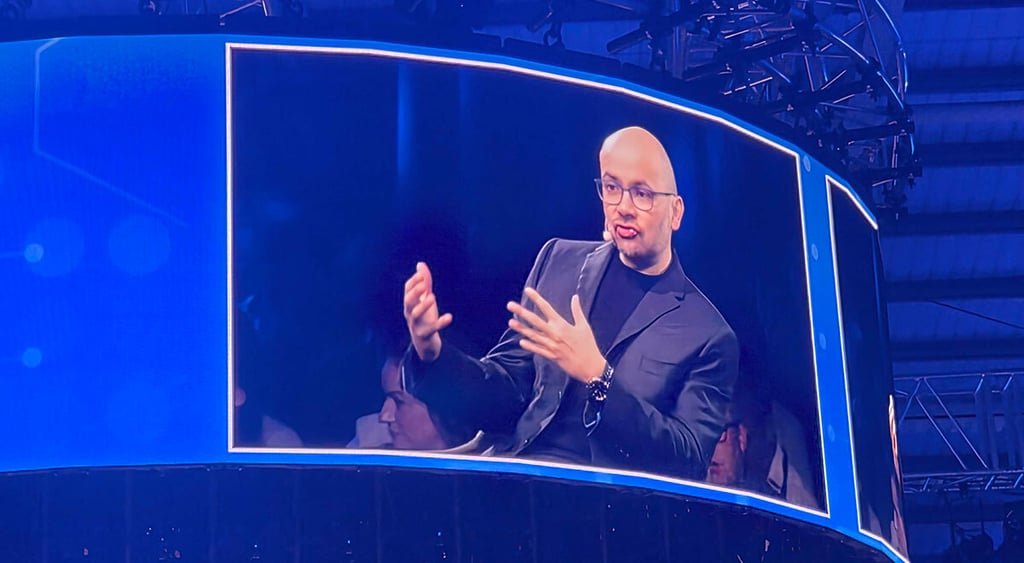
“You still need real-world loops, so you need to come up with a hypothesis. Maybe this AI system can help you do that, but then you need to check the experiment. Maybe you need to gather data, and then check whether your hypothesis was correct, and then advance and integrate into the next idea. And so, I think for the moment it looks like there will always be a kind of real-world loop,” he said.
Solutions to math problems, while a bit more theoretical, can and should be deployed for the benefit of societies. According to Hassabis, mathematicians’ skills are now needed more than ever before, especially when it comes to AI safety and security.
AI, Hassabis highlighted, is a dual-purpose technology. It means that while it can have incredible benefits, such as treating diseases, it can also be repurposed by bad actors.
One big issue is misalignment: How can we make sure the systems we’ve been building stick to the goals we give them?
“Where we are, actually having these autonomous, agentic systems that go out and do things for us. And of course we want that, because they're way more useful, and they can act for us. But also that means that it increases the risks involved with what those systems might do, we've seen that recently, earlier this year, with some of these hacking incidents,” Hassabis said.
It’s also crucial to contain these systems.
“From others, other sectors that have dealt with, you know, safety-critical systems, whether it's biology or nuclear, I think there are a lot of lessons that can be learned about containment systems. I think we need to start taking that seriously, bring experts in from those areas,” Hassabis noted.
.