Trump prioritizing trade with China over cyber war, Salt Typhoon goes unpunished
The US President wants the world’s fellow autocrats to like him so much that he seems unwilling to allow nuisances such as cyberattacks against America to get in the way. This means that Salt Typhoon, a complex Chinese cyberespionage group, is being given a pass.
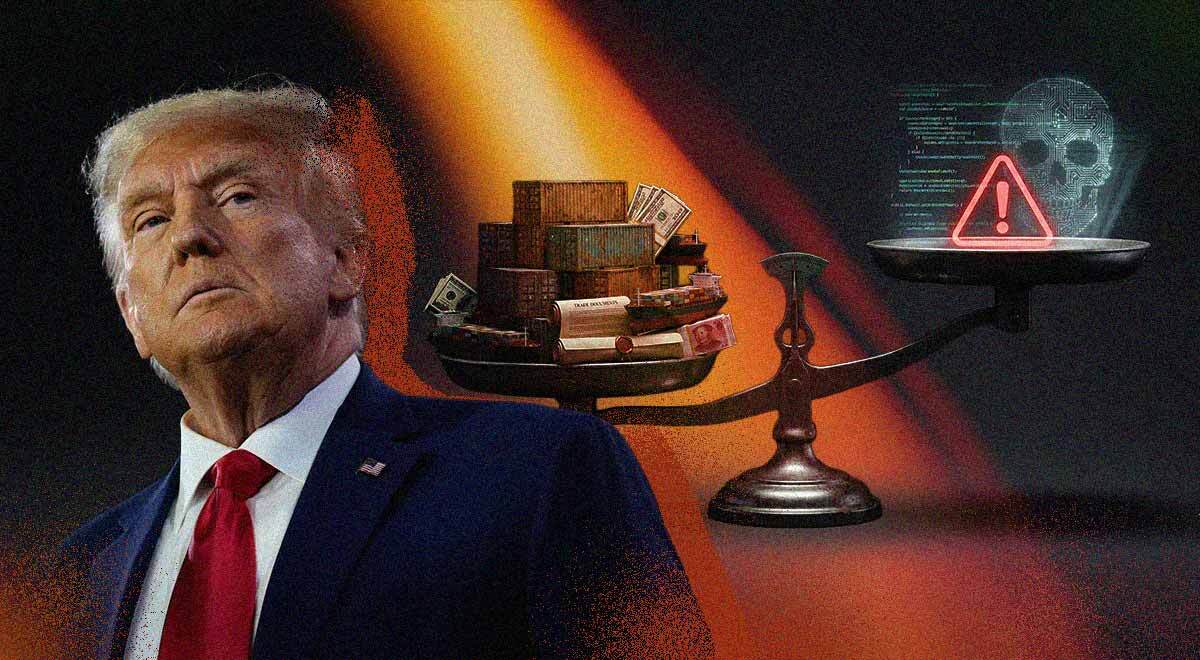
Image by Cybernews.

 Follow us
The US President wants the world’s fellow autocrats to like him so much that he seems unwilling to allow nuisances such as cyberattacks against America to get in the way. This means that Salt Typhoon, a complex Chinese cyberespionage group, is being given a pass.
In the newly released US National Security Strategy, the threat to the country from China is named quite clearly.
“Deterring a conflict over Taiwan, ideally by preserving military overmatch, is a priority. We will also maintain our longstanding declaratory policy on Taiwan, meaning that the United States does not support any unilateral change to the status quo in the Taiwan Strait,” says the document (PDF).
But actions speak louder than words. Even though Trump’s national security advisor, Mike Waltz, said late last year that the US wants to go on the offensive against America’s cyber adversaries, this is not happening, at least in the public eye.
In fact, the Trump administration seems to have paused plans to sanction China’s Ministry of State Security over last year’s Salt Typhoon intrusions, Financial Times reports. Washington is allegedly worried that sanctioning Beijing would hurt the trade deal framework both countries struck in October.




Last month, the US Federal Communications Commission also voted to roll back Salt Typhoon-inspired cyber rules for telecommunications providers, infiltrated by that very same Chinese cyberespionage group.
It was precisely the Salt Typhoon group that compromised at least nine US telecom companies in late 2024.
US officials later said that the cyber spies stole a large amount of records, including private communications of individuals involved in the government, such as Trump and Vice President JD Vance.
The FBI also announced a $10 million reward for any information that identifies, mitigates, or disrupts Salt Typhoon’s malicious cyber activities.






US officials allege that Salt Typhoon is doing more than just gathering intelligence. It’s allegedly positioning itself to paralyze US critical infrastructure in case of a conflict with China. Beijing has repeatedly denied being behind the intrusions.
The Trump administration has chosen not to respond to these attacks, at least in public, anyway. Salt Typhoon isn’t mentioned in the National Security Strategy even once, for example.
“We’ve made ourselves into a big target,” Matt Pearl, director of the strategic technologies program at the Center for Strategic and International Studies, told Axios.
“It would be unfortunate if this was more than a short-term, tactical decision.”
In January, the Trump administration is planning to release its national cybersecurity strategy, but it’s reportedly going to be just five pages long.
If it looks like economic considerations are winning out against security concerns, that’s probably what it is. Plus, there are more signals that’s what’s happening.
This week, Trump also said his administration was lifting a blockade on exports of Nvidia’s H200 chips to China in exchange for a 25% cut from future sales for the US government.
In January, the Trump administration is planning to release its national cybersecurity strategy, but it’s reportedly going to be just five pages long, although the document will touch on subjects like China, AI, cybercrime, and post-quantum cryptography.
The National Review’s columnist Jim Geraghty is deeply critical of the Trump administration’s stance on China. This week, he wrote: “Trump appears convinced that he and Xi are buddy-buddy these days, and he isn’t going to let little things like massive cyberattacks <...> get in the way of that.”
Unlock more exclusive Cybernews content on YouTube.