California bill proposes prison time for recording with smart glasses in some areas
Disabling a warning light on smart glasses could become a crime.
california-ban-smart-glasses

 Follow us
- California SB 1130 would criminalize recording with smart glasses in private business areas without explicit consent.
- Violations could bring up to one year in county jail, a $1,500 fine, or both.
- The bill would require clear recording indicators and ban sales of noncompliant wearables from January 1, 2028.
- Attorneys say unclear privacy and consent standards could confuse businesses, consumers, and enforcement.
Key Takeaways by nexos.ai, reviewed by Cybernews staff.
California Senate Bill (SB) 1130 would establish criminal penalties for filming with smart glasses in business places where people have a “reasonable expectation of privacy.” Agreeing on what this means may prove to be difficult.
The bipartisan bill, introduced by Democratic Senator Eloise Gómez Reyes, must be voted on by August 31st, 2026, before the constitutional deadline to pass active bills.
It would prohibit using wearable recording devices to capture sound or video of other people in any area “within a place of business where the person has a reasonable expectation of privacy” unless they give explicit consent.
In addition, the legislation would ban the disabling of any indicator on a wearable device, such as a light or sound, that warns others when the device is capturing audio or video.





Violation of these rules would be punishable by a fine of up to $1,500, by imprisonment in a county jail not exceeding one year, or by both.
California lawmakers will decide on better privacy protections as 72% of Americans report worrying about being secretly recorded by camera-equipped wearables in public, according to a recent poll.




Stay updated with our latest stories and follow us on social media
Be the first to discover new stories, ideas, and updates from our team.
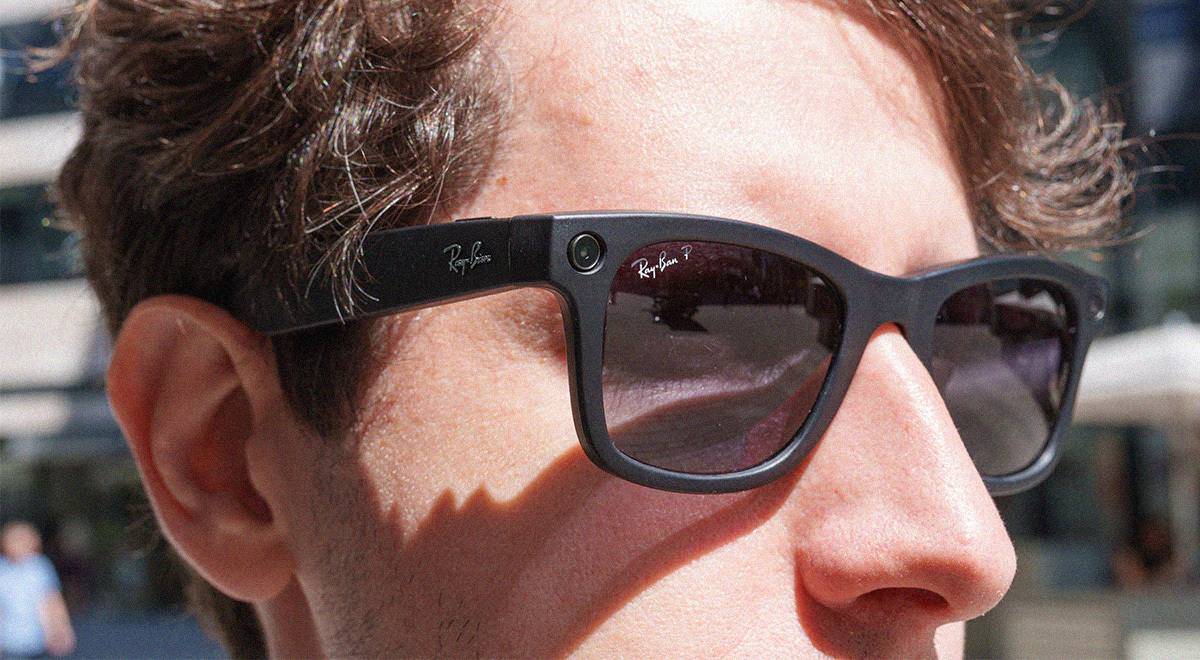
Smart glasses appear to be the bill’s primary target, as the devices covered by the proposal are “designed to be worn on or attached to the body, rather than held by the user,” suggesting that the rules won’t apply to smartphones.
The bill proposes a ban on the manufacture and sale of wearable recording devices that lack a light, sound, or other indicator sufficiently prominent to alert people in the vicinity to the recording. If passed, the prohibition would come into effect on January 1st, 2028.
What is a reasonable expectation of privacy?
Joel Brand, a licensed criminal defense attorney at Law Office of Joel Brand, notes that California’s Penal Code already uses the “reasonable expectation of privacy” phrase to cover viewing the inside of a bedroom, bathroom, changing room, fitting room, dressing room, and tanning booth, among other areas.
However, unlike the state Penal Code, the (SB) 1130 doesn’t require the intent to invade privacy.
As written, the bill is broader than much of the coverage suggests, because a person can violate the consent rule without hiding the device and without intending to invade privacy,Joel Brand, a licensed criminal defense attorney at Law Office of Joel Brand
The bill describes “place of business” as any “physical office or retail establishment in which members of the public receive goods or services from the business.”
As it doesn’t cover public places, the bill may not prevent content creators from covertly filming on the streets, who often use the footage to humiliate women.
Cobun Zweifel-Keegan, a managing director, D.C. at IAPP, says the legal concept of reasonable expectation of privacy is meant to be contextual and flexible, and the expectation depends entirely on the setting.
At the same time, he says, it leaves significant legal uncertainty. Until regulators clarify their interpretation, outcomes between companies would differ, while consumers might be confused.
“Adding to this challenge is the fact that an expectation of privacy is always situated within a relationship,” Zweifel-Keegan says.
What form explicit consent must take also remains an open question, Brand says.
“The word ‘explicit’ cuts against treating a posted sign plus silence as enough,” he adds.
A blanket ban on smart glasses is impossible
California lawmakers are deciding on the bill amid a growing number of bans and restrictions on the use of smart glasses and other wearables in the US and Europe.
Eyewear and headwear equipped with recording technology have been banned from all courts in New York State. Smart glasses will also be confiscated at all judicial buildings in England and Wales.
Similar bans are popping up across the UK hospitality industry, with recording devices may soon be banned in the country’s cinemas over privacy concerns.
Norway’s Digitalization Minister, Karianne Tung, announced plans to impose stricter regulations on wearables that can record and interact with AI assistants, including a prohibition on using yet-to-be-released features enabling facial recognition in public spaces.
In Germany, Hamburg’s commissioner for data protection and freedom of information, Thomas Fuchs, recently warned that smart glasses are essentially disguised cameras that could possibly be banned under German law.
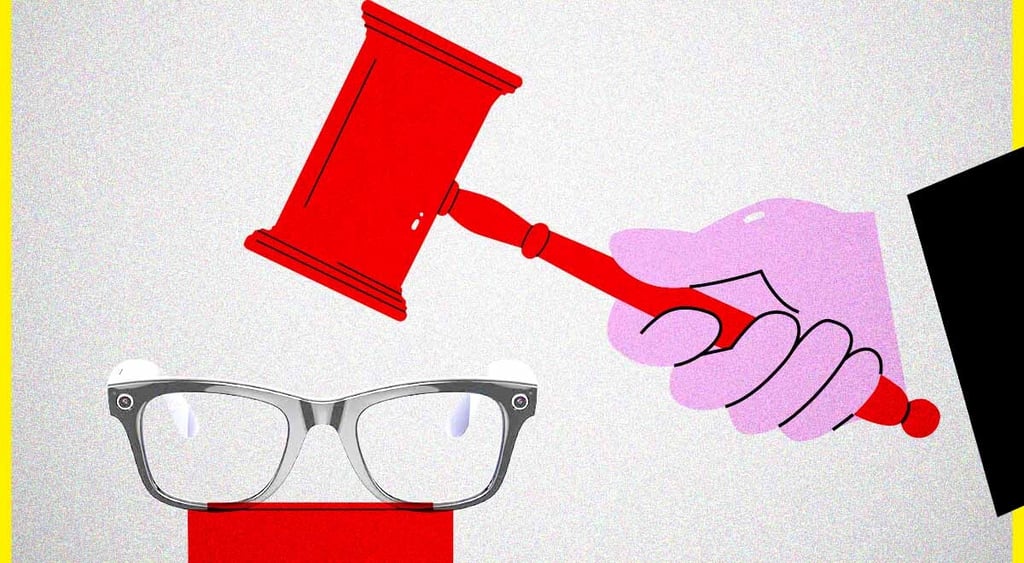
However, despite efforts to address the evolving “privacy nightmare,” as experts put it, smart glasses and other recording-equipped wearables are here to stay.
A blanket ban on recording with wearables in public spaces is a constitutional non-starter in the US, according to Zweifel-Keegan, because the First Amendment strongly protects the right to document what happens in plain sight in public forums.
He tells Cybernews, “Lawmakers can definitely penalize specific unlawful conduct like stalking, harassment, or non-consensual intimate recording, but they cannot categorically outlaw recording simply because the camera happens to be attached to someone's face.”