European trade unions want Palantir ditched. EU defense chief calls it “a great company”
Groups worry that Palantir poses risks to civil rights and democracy.
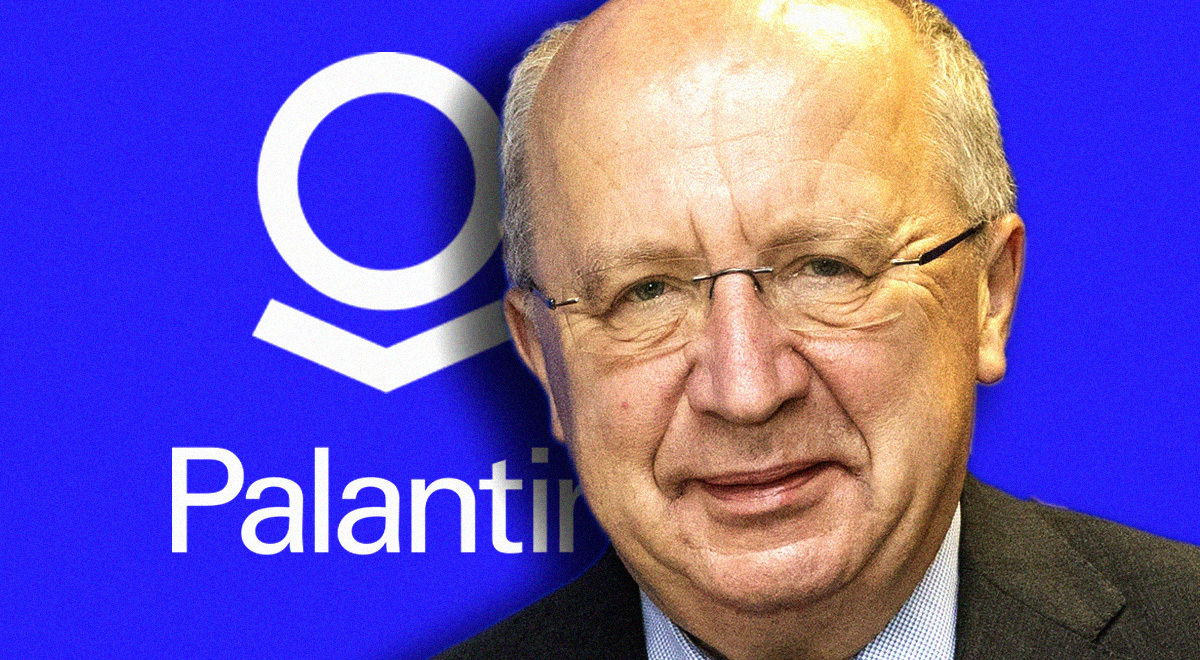
Andrius Kubilius. Image from Wikipedia/Illustration by Cybernews

 Follow us
- More than 120 European unions and groups want governments to cancel public-sector Palantir contracts.
- They say Palantir tools threaten civil rights through surveillance, crime prediction, and military AI.
- EU defense commissioner Andrius Kubilius called Palantir a great company and said AI is crucial for defense.
- Some European governments are testing alternatives, but NATO officials doubt Europe can quickly replace Palantir.
Key Takeaways by nexos.ai, reviewed by Cybernews staff.
Over 120 European unions and organizations urged the continent’s governments to end cooperation with controversial US data broker Palantir Technologies.
The groups demand that national governments and the European Commission scrap all existing public-sector contracts with the US tech company Palantir Technologies and permanently end states’ links to the firm, according to an open letter.
The letter was signed by organizations from multiple EU member states, as well as Armenia, Albania, Switzerland, Turkey, and the United Kingdom.
Organizations argue that Palantir’s tools and software are widely used by governments for surveillance, predictive policing, and AI warfare.






“Its record should disqualify it from involvement in the operations and functioning of democratic governments. Yet it has been handed public sector contracts throughout Europe, ranging from healthcare to military and policing,” the letter reads.
The groups warn that Palantir’s advance into Europe’s public institutions poses “particular risks to civil rights and democracy.”




Stay updated with our latest stories and follow us on social media
Be the first to discover new stories, ideas, and updates from our team.
AI in war is becoming “the new normal”
The calls to cut ties with the company stand in stark contrast to recent remarks by the EU’s defense and space commissioner, Andrius Kubilius.
In an interview with Euronews, Kubilius called Palantir “a great company,” following a meeting between the presidents of Poland and Lithuania – Karol Nawrocki and Gitanas Nausėda – and Palantir’s CEO Alex Karp.
Kubilius said he wasn’t aware of the content of the meeting, but insisted that AI is becoming “the new normal” in the development of defense doctrines and is considered “crucial.”
The commissioner is well-known for his pro-Ukrainian stance, and the country’s armed forces use Palantir’s software to defend itself against Russia’s invasion, including for intelligence analysis, demining, and planning Kyiv’s deep strikes.

Karp himself repeatedly expressed his support for Ukraine and visited Kyiv in 2022, months after the full-scale invasion began.
Meanwhile, European groups raised concerns over Palantir’s tools being used by the military of Israel, the country that currently faces genocide proceedings at the International Court of Justice over its war against Gaza.
European alternatives to Palantir
Individual EU member states have already started exploring alternatives to Palantir.
The Netherlands Ministry of Defense said in June 2026 that a “fully fledged alternative” to Palantir’s software must be available within 2 years, but not earlier, as a rushed transition would pose security risks.
In May 2025, Germany’s domestic intelligence agency awarded the French company ChapsVision a contract to provide software for analyzing large volumes of data, choosing it over Palantir.
France’s technological giant, Thales, recently launched a sovereign command-and-control system, HexaForce, which could replace Palantir’s battlefield tech, reducing NATO’s reliance on American tech.
While the exploration of alternatives perfectly fits into Europe’s digital sovereignty push, replacement of US tech in the military field may be slow – or impossible.
NATO announced in March 2026 that its customized Palantir Maven Smart System had achieved "its full technical operational capability” and had been granted full security accreditation to operate on the Alliance’s classified network.
However, some military insiders and experts are highly skeptical of finding viable alternatives to US technologies. Admiral Pierre Vandier, NATO’s Supreme Allied Commander Transformation, recently warned that Europe had no “real competitor for Palantir.”