US sanctions on the ICC strengthen the case for European tech sovereignty
US sanctions could bite Europe hard.
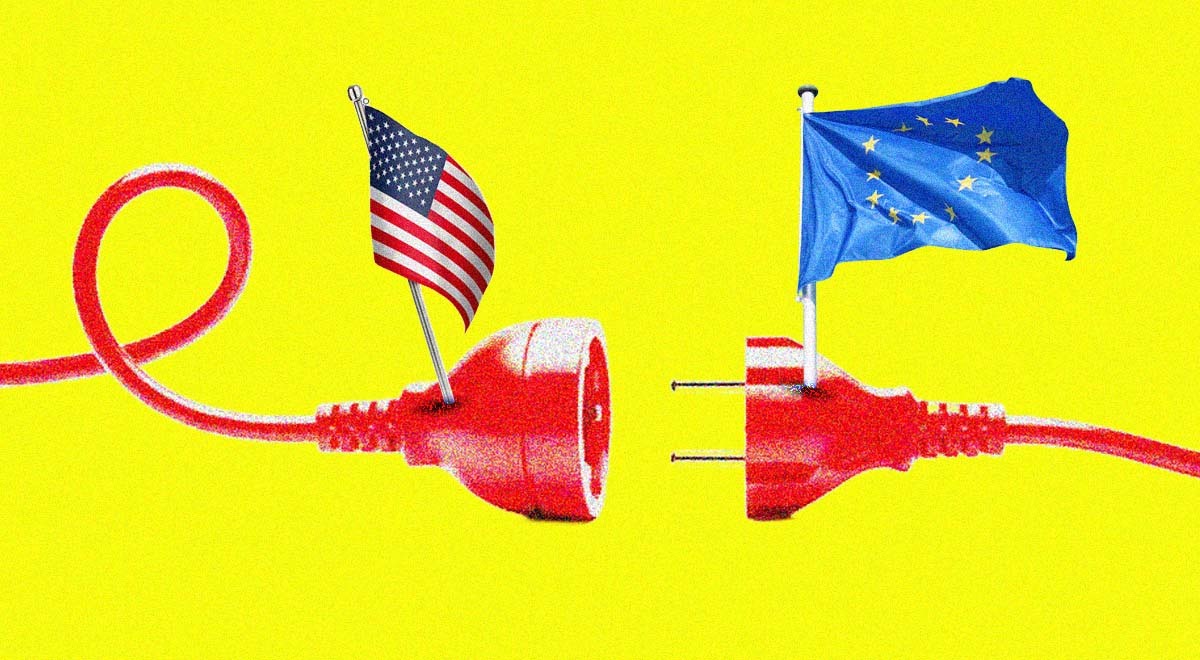
Image by Cybernews

 Follow us
- US sanctions on the ICC renew concerns about Europe’s reliance on American tech providers.
- Sanctioned ICC officials reported losing access to email, payment cards, cloud services, and digital tools.
- Amazon, Google, and Microsoft control about 70% of Europe’s cloud market.
- The case may strengthen EU efforts to build local technology and payment alternatives.
Key Takeaways by nexos.ai, reviewed by Cybernews staff.
The latest round of US sanctions on the International Criminal Court (ICC) highlights the dangers of depending on American technology amid political turmoil.
The Donald Trump administration imposed sanctions on the Hague-based ICC on October 9th, 2026, citing the need to prevent the institution from persecuting American citizens.
“We will ban transactions with this rogue court, cutting off their resources and crippling its ability to operate,US Department of State
If the ICC doesn’t address US “concerns” in 180 days, American businesses and banks will be barred from conducting transactions with the court. Otherwise, they would face civil and criminal penalties.






While a relatively small number of Europeans will be affected, some European governments and activists may see the ICC case as a cautionary tale amid increasingly tense relations with the Trump administration.
It also serves as another major argument for European tech sovereignty, as sanctions – although still highly theoretical – could cripple operations of the continent’s governments and businesses.
What does life look like under sanctions?
When the Trump administration imposed sanctions on the ICC prosecutor Karim Khan in 2025, he reported losing access to his professional Microsoft email account.
The company denied the allegations, but the case served as a wake-up call to reconsider Europe’s dependence on US tech. The ICC itself switched from Microsoft Office Suite to German-made openDesk, with some governments following suit.
When Trump first floated the idea of imposing the sanctions last year, ICC reportedly held emergency meetings to discuss the future of operations, fearing much wider implications than in Khan’s case, Reuters reported.
The ICC paid salaries several months in advance and discussed the possibility of losing access to bank accounts and routine office software.
Canadian judge at ICC, Kimberly Prost, who was sanctioned in 2025, recently told NPR that her credit cards, issued in the Netherlands and Canada, were canceled as a result.
Prost also began losing access to services from American companies like Amazon and Google – even Apple’s voice assistant, Alexa, stopped talking to her.
French judge Nicolas Guillou, meanwhile, described his life as a nightmare after US sanctions: he cannot use any Visa or Mastercard cards, lacks access to most digital services, and cannot even place online orders if an American intermediary is involved.
“The only way to effectively respond to these sanctions is to build a response at the European level, because it needs to be economically strong, with a sufficiently powerful political and economic scope,” Guillou is quoted as saying by Euronews.
What’s at stake for Europe?
Peter E. Harrell, a visiting scholar at Georgetown’s Institute of International Economic Law, points out that the US issued associated general licenses (GLs) for ongoing ICC transactions until April 2027, including payments by member states to the court, rent, utilities, and other standard commercial services.
The GL 14 license, for instance, covers “services incident to the exchange of communications over the internet,” including email, web hosting, and video conferencing, which Harrell calls “a win for the US tech sector” as Europeans aim to achieve digital independence.
“I read GL 14 as a sign that the US takes this concern seriously and is trying to avoid giving the EU’s ‘digital sovereignty’ movement more ammunition – it signals that even if the US sanctions a company in an allied country, it may not turn off email and Slack,” he writes in his X post.
Despite heightened tensions, the US and Europe remain more friends than enemies, and American companies would prefer not to lose access to the lucrative European market, where they currently dominate.
Three American giants, Amazon, Google, and Microsoft, control about 70% of the European cloud market. More than 74% of publicly listed European companies rely on US-based tech services, such as Google and Microsoft, according to a survey by Proton.
US card schemes such as Visa and Mastercard accounted for over 60% of card transactions in the EU in 2022, according to data from the European Central Bank (ECB), underscoring deep-rooted European dependencies on US tech.
Sanctions may bite hard
When US sanctions arrive in full force, their consequences can be dire.
In August, the Department of State declared Autistici/Inventati, an Italian hosting collective, a Specially Designated Global Terrorist. The group was accused of “building and operating the digital infrastructure for violent Antifa cells and other far-left militants across the world.”
The Department listed collaboration with groups that are considered terroristic by both the US and the EU, including Hamas, the Islamic Revolutionary Guard Corps (IRGC), and Palestinian Islamic Jihad.
Autistici/Inventati, which isn’t designated as a terrorist group in Italy, immediately had its PayPal account suspended and lost its domain and an account with the Italian bank Banca Etica.
The collective announced it was shutting down days later, saying that “the possibility that our work may cause legal and financial consequences to those who are close to us leaves us no choice.”
When the US imposed sweeping sanctions on Russia following its 2022 attack on Ukraine, American tech companies quickly followed with restrictions on the Russian market.
For example, Microsoft announced it would suspend all new sales of its products and services in Russia. Google restricted the creation of new accounts for Russian users, and, along with Amazon, stopped accepting new cloud customers in the country.
US downplays sovereignty risks
As Europeans increasingly adopt or explore local alternatives to American technologies, the US is working behind the scenes to stop the push for sovereignty.
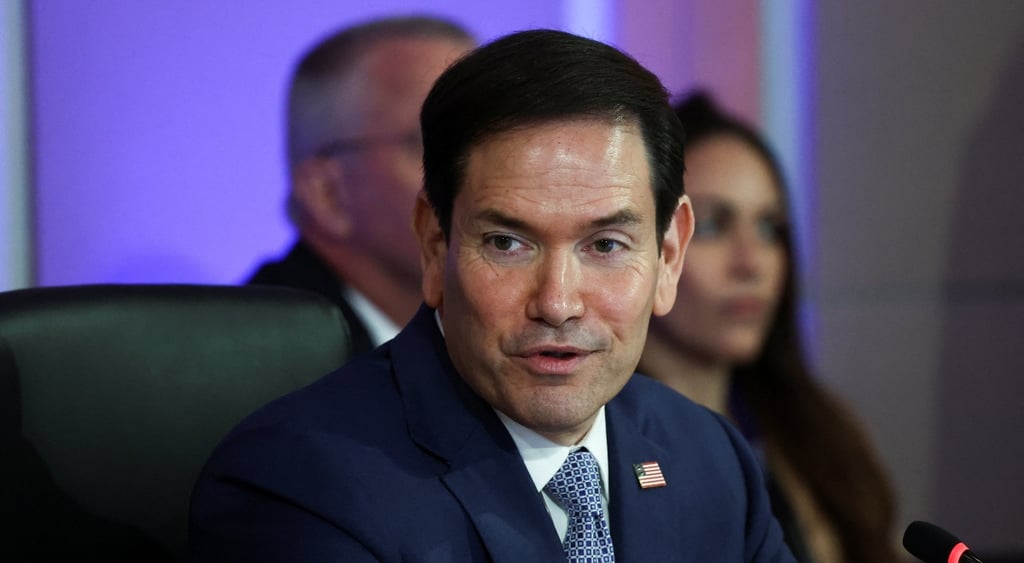
US Secretary of State Marco Rubio reportedly instructed diplomats in July to push back against talk of a “kill switch,” a hypothetical scenario in which the US government could order American companies to disable their services for European customers.
Rubio ordered diplomats to fight Europe’s digital sovereignty initiatives, weeks after the EU adopted the Tech Sovereignty package, aimed at increasing the continent’s digital autonomy.
The US government also doesn’t shy away from using sanctions when there’s a risk to the interests of American tech companies.
In December, the US imposed visa bans on former EU commissioner Thierry Breton and 4 civil society figures involved in regulating US digital platforms, although a federal judge later paused the decision.
The US government may be balancing between punishing the ICC and protecting its companies, but the latest round of sanctions will give a new impetus for a European digital sovereignty push – even if the sanctions don’t come with switching off Slack.