Europe has software for total digital sovereignty, Infomaniak CEO Marc Oehler says
But it needs more talent and hardware.
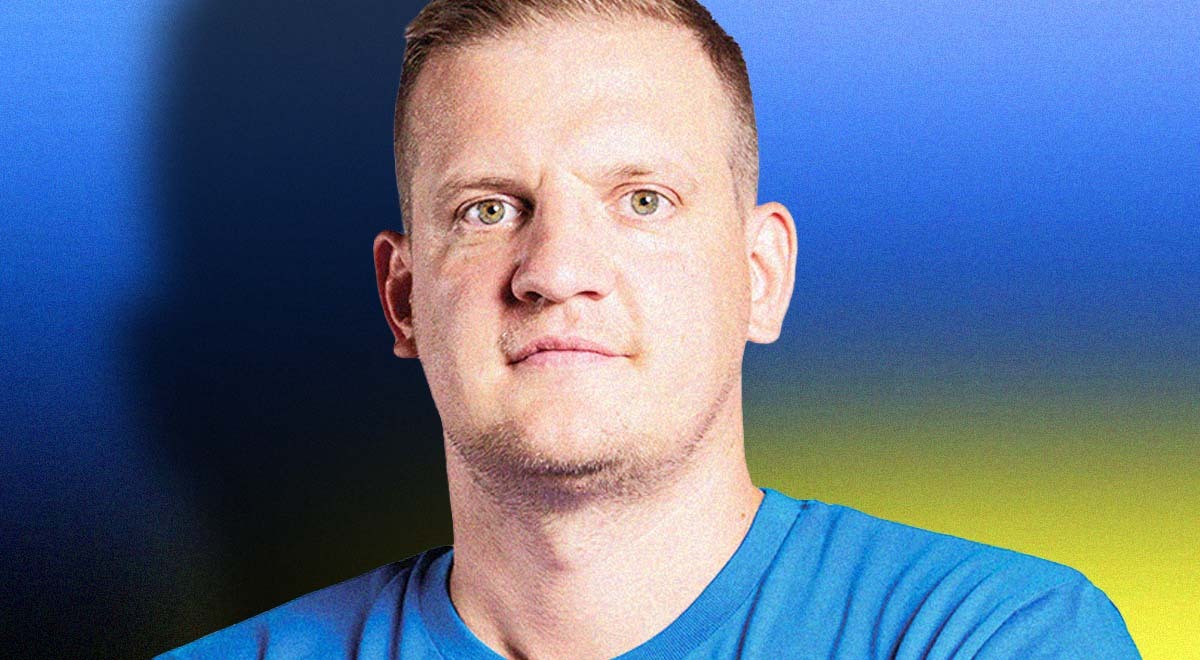
Marc Oehler

 Follow us
- Infomaniak CEO Marc Oehler says Europe already has the software needed for digital sovereignty.
- However, Europe’s biggest gaps are tech talent and hardware.
- Concerns over US laws, service shutdowns, vendor lock-in, and price hikes are pushing demand for European providers.
- Oehler argues shifting cloud spending to European providers would create jobs, fund training, and reduce dependence.
Key Takeaways by nexos.ai, reviewed by Cybernews staff.
Marc Oehler, CEO of the Swiss technology company and cloud provider Infomaniak, says the challenges to Europe’s digital sovereignty lie in talent and hardware.
The European tech sovereignty debate, reignited by hostile policies of the Donald Trump administration, has put European companies in the spotlight.
Among them is Geneva-based Infomaniak, which markets itself as a provider of independent cloud, web hosting, and mail service.
Oehler says Europeans need to move away from a misconception that European alternatives to US tech are inferior.




“Continuing to turn to the US when an equivalent exists right here makes no sense. That applies to local jobs and tax revenue, too. It shouldn't even be a question anymore,” he tells Cybernews.
The risks are no longer “merely theoretical”
The tech sovereignty debate has resulted in increased interest in Infomaniak’s services and a growth in new clients, Oehler says, a trend observed among other local companies.
There are also “promising discussions” underway with European governments and public organizations.
Companies are realizing that relying on a system governed by foreign laws poses a real – not merely theoretical – risk.Marc Oehler
A wide range of concerns drives the sovereignty push, including data privacy. US laws, such as the 2018 Cloud Act, obliges American companies to provide data requested by its law enforcement regardless of where it is stored.
Microsoft, for instance, has recently been accused of leaking data from Dutch civil servants working on European tech regulations to the US House of Representatives.
The “kill switch” scenario, in which the US government orders American companies to disable technologies for European customers, has long been considered theoretical.




Stay updated with our latest stories and follow us on social media
Be the first to discover new stories, ideas, and updates from our team.
However, it materialized in June 2026, when the US government commanded Anthropic, a leading US AI lab, to temporarily suspend access to its most advanced models, Fable 5 and Mythos 5, to foreign nationals.
“Added to this are vendor lock-in, which becomes extremely costly to undo over time, and price dependency. When VMware or Microsoft raise their prices, the customer has no leverage,” he adds.

Is European digital sovereignty possible?
Asked whether total digital sovereignty in Europe is possible, Oehler says the answer depends on the timeframe.
“In the short term, we already have everything we need on the software side. We certainly shouldn’t rule out open source, which belongs to everyone and is now just as high-performing as proprietary software. The stack already exists,” he tells Cybernews.
However, in the medium term, the major challenge stems from training and the lack of talent, which Oehler attributes to insufficient investment rather than a lack of capabilities.
We need to train more people, and do so faster.Marc Oehler
Europe has long suffered from a tech talent drain to the US, but the trend reversed in 2023. Now, more tech workers are moving from the US to Europe than the other way around, according to an analysis by Revelio Labs.
The gap, however, remains evident in AI, where Europe lags behind the US and China, despite having strong universities and world-class research.
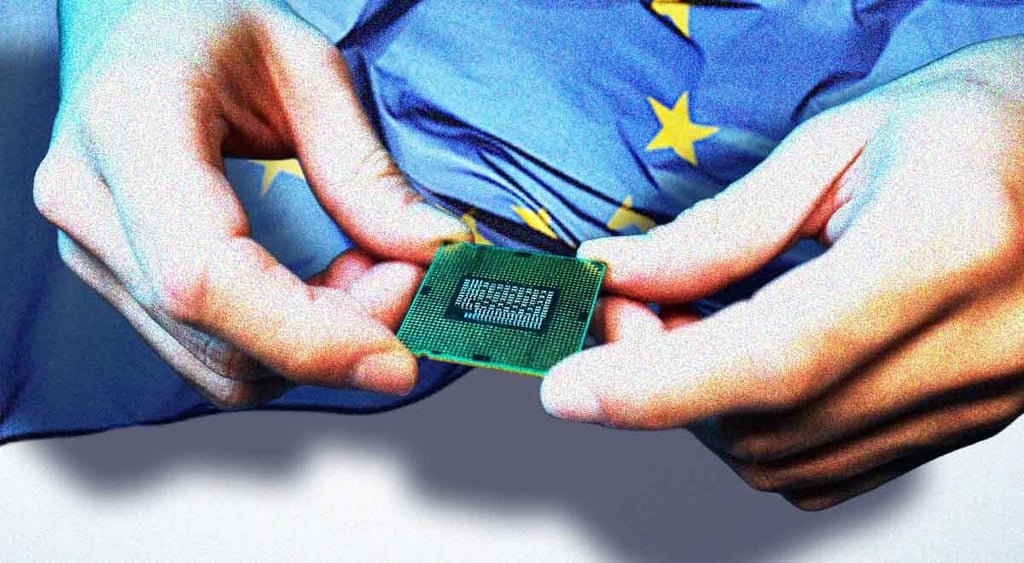
Hardware is an issue in the long term, Oehler says, but adds that “Europe is moving in the right direction with serious initiatives regarding semiconductors.”
The EU’s Chips Act 2.0, for example, was unveiled in June 2026 and aims to support the continent’s semiconductor industry and reduce strategic dependencies by improving competitiveness and stimulating demand, among other measures.
However, with more than 80% of digital products and services in the EU provided by foreign companies, many experts also emphasize the long road to breaking dependence on American technologies.
A 2025 report by international experts estimates that building the EuroStack, which encompasses independent tech infrastructure, would require €300 billion ($346 billion) in investment and a decade to complete.
And the clock is ticking. Arthur Mensch, a CEO of leading European AI company Mistral, said the continent has 2 years before becoming America’s AI “vassal state.”
For Oehler, the key condition for achieving digital sovereignty is shifting spending to local cloud providers.
He says that European companies currently spend €264 billion ($305 billion) annually on cloud services from US providers, and this dependency is growing by about 10% each year.
“If a significant share of that money stays in Europe, it directly creates jobs, funds training, and sets a virtuous cycle in motion,” Oehler explains.
What is a sovereign cloud?
The cloud is a major piece in the puzzle of European tech sovereignty. As of now, 3 American giants – Google, Microsoft, and Amazon – account for about 70% of the European market.
The EU has taken action to tackle this dependence. Its upcoming “Tech Sovereignty Package” would restrict member governments’ use of US cloud providers to handle sensitive data.
Governments in France, Germany, and the Netherlands have already started moving data from their ministries and agencies to the European cloud.
There’s also a debate about what a sovereign cloud actually means. US tech companies now offer local “sovereign” solutions with European leadership and independent governance, but critics call it sovereignty washing.
The European Commission’s decision to award €180 million ($207 million) to 4 local cloud providers to strengthen the bloc’s digital independence raised the question of sovereignty again after it came to light that one of the winners uses Google technology.
Some critics also argue that European cloud providers’ reliance on processors produced by American companies, such as Intel and AMD, makes sensitive data vulnerable to exposure to US agencies.
For Oehler, European cloud sovereignty rests on 4 pillars: not being subject to US laws such as the Cloud Act, developing its own software solutions, not monetizing user data, and owning and operating its own data centers without outsourcing abroad.
The legislation endangers Swiss providers
The EU’s Cloud Sovereignty Framework, as part of the recently proposed Cloud and AI Development Act (CADA), lays out the key metrics for assessing cloud providers’ sovereignty.
The system takes into account whether data is stored and processed in the EU. In addition, it assesses whether providers are owned and controlled by the EU and may even examine personnel citizenship.
Oehler says the CADA proposal “sends a strong political signal and gives structure to the debate,” as it makes open-source and an explicit lever for technological sovereignty and sets sustainability requirements for data center deployment.
However, Oehler says the legislation’s “internal preference” logic risks “relegating Swiss providers to the lower tiers” because Switzerland is not part of the EU, despite having deep economic and political ties.