All you need to do is sweat: Engineers create with a smart ring that can track glucose, vitamin C, and alcohol
Just when you think your smart ring can’t get any smarter.
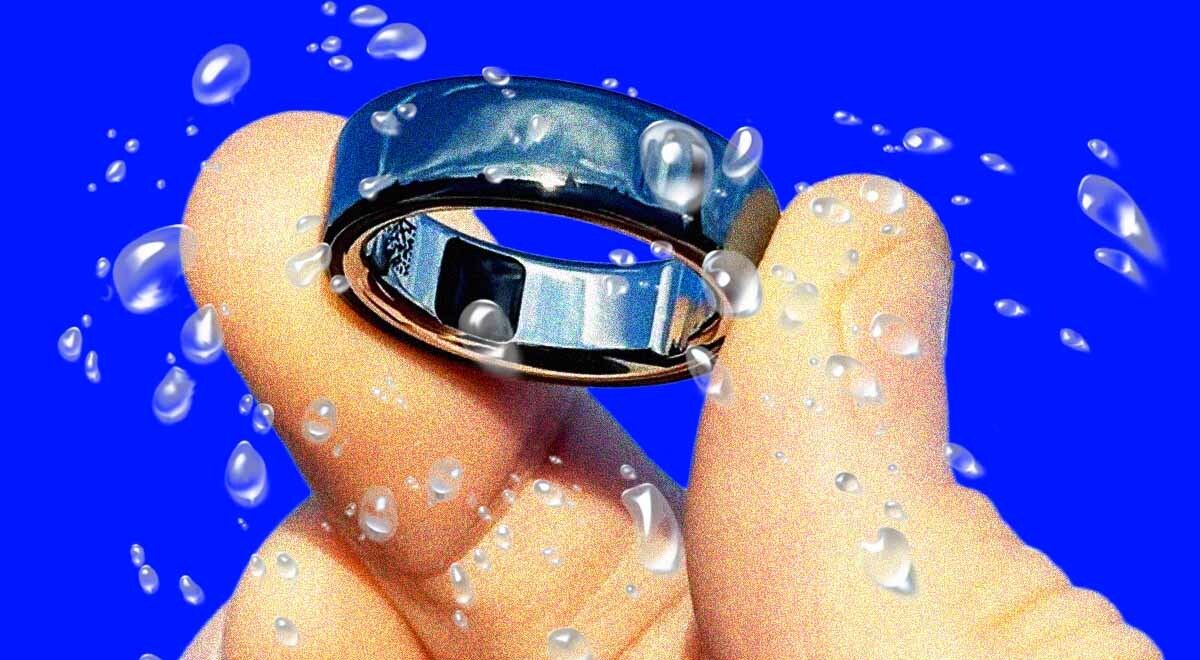
Image by Cybernews

 Follow us
- Engineers created a smart ring prototype that tracks biomarkers from sweat.
- The ring can monitor glucose, ketones, vitamin C, uric acid, lactate, and alcohol levels.
- Researchers say glucose and ketone tracking could help people with diabetes understand insulin needs.
Key Takeaways by nexos.ai, reviewed by Cybernews staff.
Engineers are working on a smart ring prototype that could track in-depth biomarkers, such as glucose levels, vitamin C levels, and alcohol intake.
We already know about smart rings tracking core health and fitness metrics such as heart rate, sleep, and movement.
But engineers from the University of California, San Diego, are taking it to the next level with a smart ring prototype that uses finger sweat to track chemical biomarkers.
According to a paper published in Nature Communications, the new smart ring can track glucose, ketones, vitamin C, uric acid, lactate, and alcohol.





How would this smart ring work?
Since the smart ring would react to sweat, it doesn’t mean that it would only track the user’s biomarkers when they, for example, do sports.
The device would draw sweat from the skin’s surface via osmosis, using a technique developed by Tamoghna Saha, a postdoctoral scholar at the University of California, San Diego, and one of the authors of the paper titled “A fully integrated smart ring for daily biochemical monitoring.”
Tracking these indicators could help provide a broader understanding of our health, for instance, the monitoring of glucose and ketone could provide insights into the right insulin dosing for those with diabetes, noted Joseph Wang, professor in the Aiiso Yufeng Li Family Department of Chemical and Nano Engineering at the UCSD Jacobs School of Engineering, via UC San Diego Today.
The smart ring was tested with healthy users and those with type 1 diabetes.
The biomarker smart ring prototype features biomarker sensing technology, low-power electronics, and a rechargeable battery that provides up to 12 hours of power.
The device uses an osmotic hydrogel to draw sweat from the skin, creating a pressure gradient to remove fluid. The sweat is then analyzed via an electrochemical sensor array found in the ring.
The information from the ring is sent to the smartphone application.



Stay updated with our latest stories and follow us on social media
Be the first to discover new stories, ideas, and updates from our team.
Mixed user reactions
The new smart ring sparked interest within the Reddit community, where some users expressed their concerns.
“Even if this works, and I don't believe it does in its current form, a finger is the worst place for it. The place that constantly gets immersed in water, filthy during outdoor activities, covered in moisturizer, etc,” wrote one netizen.
“And a 12-hour battery is simply not a feasible solution,” added another user.
Some users weren’t convinced about the testing, saying that it’s not yet “reliable enough.”
Some Redditors acknowledged that scientists and engineers are “not just giving up because ‘it’s no better than what we already have.”
Nevertheless, many agreed that it will take 5 or even 15 years for the ring to actually enter the current smart ring market.
New Wearable Ring Tracks Glucose, Ketone and Other Biomarkers in Sweat Simultaneously
by u/bcl15005 in diabetes_t1
Is the best smart ring race still on?
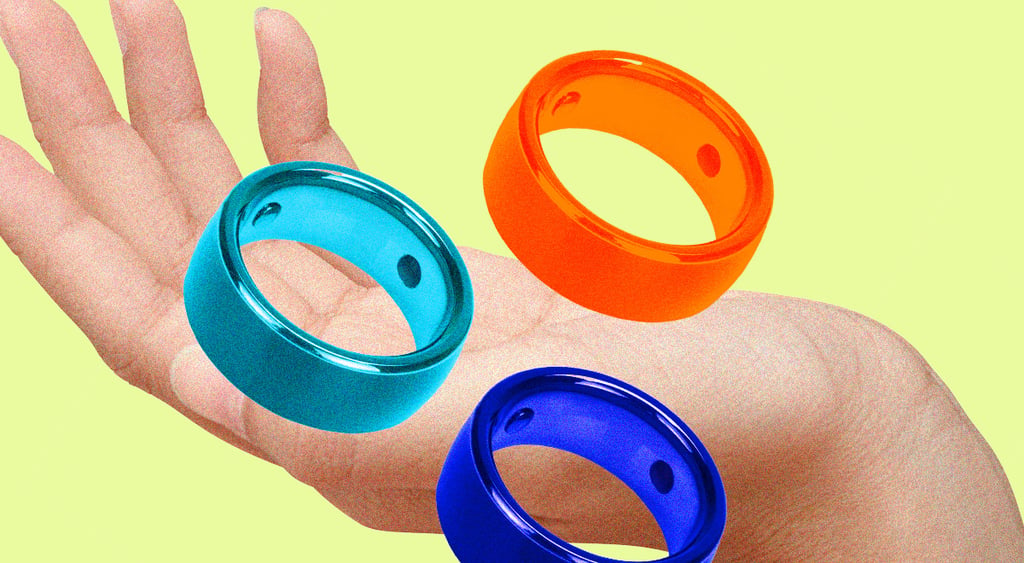
Over the last couple of years, smart rings have become a thing, with brands such as Oura Ring, RingCon, Ultrahuman, and Samsung Ring stealing the spotlight.
Some well-known companies, such as Apple and Garmin, have users questioning why they haven’t released their own smart ring versions.
Despite Apple releasing patents on what seemed to be a multipurpose smart ring, there are no hints that the device will ever see the light of day.
The company decided instead to improve what they already established, their smart watches, rather than focusing on another type of hardware, especially with the current smart rings essentially tracking the same metrics.