Europeans quietly shift away from US tech services, share lists of local alternatives
A new wave of online lists is mapping out European alternatives to everyday apps and platforms, encouraging users to switch from US tech platforms and instead support local innovation, reclaiming control of their digital lives.

Image by Cybernews.

 Follow us
A new wave of online lists is mapping out European alternatives to everyday apps and platforms, encouraging users to switch from US tech platforms and instead support local innovation, reclaiming control of their digital lives.
Curated “tech swap” lists are trending across Europe. Multiple directories, forum posts, and social media threads appear regularly to help Europeans find local replacements for familiar American apps, including email, cloud storage, search, and many others.
One of the European “tech menus” comes from Constantin Graf, a software developer from Vienna, Austria, who created european-alternatives.eu.
To move away from Gmail, the site suggests using services such as Mailbox.org, Posteo, the Dutch provider Soverin, or Proton Mail from Switzerland, among over a dozen others. Google search can be relieved by French Qwant or German Ecosia, and Vivaldi or Mullvad can step in as an alternative to the Chrome browser.
Instead of AWS, the site suggests using French Scaleway, OVHcloud, Finnish UpCloud, or Swiss Exoscale. Want to replace Slack? You can choose Stackfield or Nextcloud Talk from Germany, Infomaniak kChat from Switzerland, or Fleep from Estonia. And even YouTube has possible alternatives, including Alugha and PeerTube.





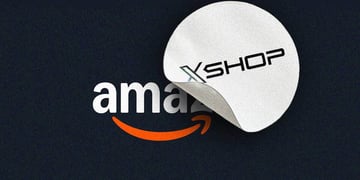

Nearly every American service has several, and sometimes even dozens of European alternatives.
Another directory, ironically registered in Colombia, is euroalternative.co, developed by Piotr Kulpinski, a software developer and entrepreneur.
Here, users are recommended to choose the Latvian office suite ONLYOFFICE instead of Google Docs or Microsoft 365, the Spanish file-sharing platform Internxt Send instead of Dropbox or WeTransfer, or Swiss cloud storage pCloud instead of Apple’s iCloud or Google Drive. Proton Lumo and Mistral will step in for Grok or ChatGPT. However, Netflix doesn’t have any substitutes on either site.
Switch-to.eu, another similar platform by Vincent and Simon Peters, digital designers from Antwerp, focuses on migration guides that walk users through the process, such as switching from WhatsApp to Signal.
Users on X and other social media platforms are noticing and sharing such sites.
European companies also appear to be capitalizing on the digital sovereignty trend.
Plenty of reasons to switch, with US foreign policy the catalyst
The new platforms list numerous reasons why Europeans should opt for local alternatives. There are several clear immediate benefits, including higher privacy and protection, no ads, and enhanced consumer rights protections.
“When you buy from local businesses, you are supporting yourself down the road. Taxes paid by the company come back to you indirectly, and the company creates jobs in your region,” Graf’s website reads.
Kulpinski’s directory highlights support for local innovation and keeping data in Europe.
“The idea came to me when I was struggling to find European cloud services for my own business. I realized how difficult it was to discover these alternatives despite the amazing tech talent we have in Europe. So I decided to build the resource I wished existed,” Kulpinski said.
However, money, respect for privacy, and simpler business operations are not the main reasons why these kinds of lists have suddenly started trending.
“In an era of geopolitical uncertainty and escalating tensions between Europe and the US, digital sovereignty is more critical than ever,” said Maciamo, an author of yet another tech swap list on Eupedia.com forum.
“Recent trade disputes, data privacy conflicts, and the risk of sanctions or regulatory clashes highlight the vulnerabilities of relying on American tech platforms.”
The forum users highlighted freedom from foreign legislation and tracking.
“Especially after big tech’s shameless capitulation to Donald Trump, interest in European alternatives has only grown,” the switch-to.eu website claims.
“Growing concerns about data privacy and the increasing monopolistic power of American tech companies led us to create this platform.”
Digital sovereignty is already a policy in the EU
Cybernews has already reported that many European countries are increasingly adopting Linux and open-source software to reclaim digital sovereignty and reduce reliance on US-based technology giants amid rising geopolitical tensions.
Schleswig-Holstein, a German state, has been leading the digital sovereignty movement by attempting to completely ditch Microsoft tools, such as Teams, Word, Excel, and Outlook, in favor of open-source alternatives.
Have thoughts about this topic? Others do, too. Join them in the discussion.
Discussions on digital sovereignty and technological independence are being held within the EU.
A Europe-wide cooperative, the Digital Commons European Digital Infrastructure Consortium (DC EDIC), has been launched to build and share digital tools and infrastructure, aiming to strengthen European digital sovereignty.






The European Commission views DC EDIC “as a strategic instrument to reduce EU dependency on a small number of global platforms and to give governments, businesses and citizens real digital choice built on European values.”
“It will serve as an incubator and one-stop shop, providing funding pathways, technical and legal expertise, and cross-border collaboration models that will help administrations reuse proven Open Source building blocks,” the press release reads.
An EDIC is a legal instrument under the EU’s Digital Decade Policy Programme 2030, which is the region's plan to advance the digital economy, sustainability, and security.
Unlock exclusive Cybernews content on YouTube.