The rise of sleep tech – can tech finally fix our broken sleep?


Getting real, restful sleep has always been a challenge for me. It’s a mix of my own late-night scrolling, city noise, and the kind of worries that always seem louder at bedtime. I’ve tried all the proper habits: guided meditation, muscle relaxation, calming playlists. Still, most mornings, my phone delivers another underwhelming sleep score. That, of course, only fuels my anxiety about not resting enough.
Sleep problems have become so widespread that – and it’s sad to admit – they’re almost the new normal. About 1 in 3 adults in the US don’t get enough uninterrupted sleep, and up to 70 million Americans suffer from a clinical sleep disorder. With so many of us desperate for rest, it’s no wonder the global sleep tech industry is booming.
In this article, I’m unpacking what it’s really like to bring sleep tech like Pulsetto into everyday life – what it solves, what it doesn’t, and whether it might actually change the way we rest.
The promise and pitfalls of sleep tracking
As sleep challenges become more common, many of us are turning to sleep-tracking devices for answers. The idea is straightforward: if we can pinpoint exactly when we fall asleep, how often we wake up, and how our habits influence rest, we might finally gain some control over those elusive hours.
On one hand, these trackers can motivate better habits and spark positive changes. On the other hand, bad scores or restless graphs can trigger what experts now call “orthosomnia”: sleep anxiety caused by too much focus on nightly metrics. Sometimes the drive to optimize every hour actually makes it harder to tune out, relax, and just fall asleep – and I feel it too.
That said, the technology behind these devices is impressive, and there are some great options on the market today. Among the big names, the Oura Ring stands out for accuracy, wearable comfort, and a well-designed app, routinely scoring highest in expert and consumer tests.
RingConn is also gaining ground thanks to a lower price and excellent battery life. However, Oura still leads on app polish and reliability for sleep tracking, especially for those who care about metrics like HRV and sleep stages.
If you’re considering joining the smart ring crowd, here’s a practical side-by-side look at the latest Oura Ring 4 and RingConn Gen 2:
| Feature | Oura Ring 4 | RingConn Gen 2 |
| Dimensions & weight | 2.88mm thick, 7.90mm wide, 3.3g-5.2g | 2.00mm thick, 6.80mm wide,2g-3g |
| Colors | 6 | 4 |
| Health tracking | Sleep tracking, heart rate monitoring, activity tracking, readiness score, stress management tools, women’s health insights | Sleep tracking, stress monitoring, heart rate monitoring, activity tracking, women’s health insights |
| Device compatibility | iOS, Android | iOS, Android |
| Battery life | Up to 8 days | Up to 12 days |
| Price | $349 | $299 |
| Subscription cost | $5.99/month | None |
| Money-back guarantee | 30 days | 30 days |
Knowing your sleep is lacking is just the start. Numbers and charts on their own can’t fix anything. Instead, the real work begins with small, concrete changes: setting a regular bedtime, putting your phone away before bed, and taking the scores as gentle nudges, not hard judgments.
That’s what led me to explore beyond tracking and try something more proactive. This brought me to Pulsetto – a device promising to actually improve my sleep.
From tracking to active intervention
Pulsetto claims to help with anxiety and sleep issues through gentle, non-invasive stimulation of the vagus nerve.
But what is it, and does it actually work? Transcutaneous vagus nerve stimulation (tVNS) has become a hot topic in recent sleep research. Multiple clinical trials and meta-analyses now show that tVNS can significantly improve sleep quality, shorten the time it takes to fall asleep, and reduce insomnia’s severity and symptoms of anxiety when used consistently over several weeks.
It’s widely recognized as a safe, non-pharmacological approach – even outperforming some standard therapies for some people. However, as with any intervention, not everyone responds the same way, and some of the details – like best settings and long-term effects – are still being studied.
Pulsetto uses a method similar to those in the leading research. Its electrodes are placed on the neck, and you apply a bit of SignaGel – a conductive electrolyte gel that improves comfort and ensures the electrical pulses can reliably reach the nerve.
For my part, I tried both Pulsetto Lite and Fit, and preferred the Fit for its comfort and better-fitting design. Both the Pulsetto Lite and Fit arrived with a USB-C charging cable and a tube of SignaGel.
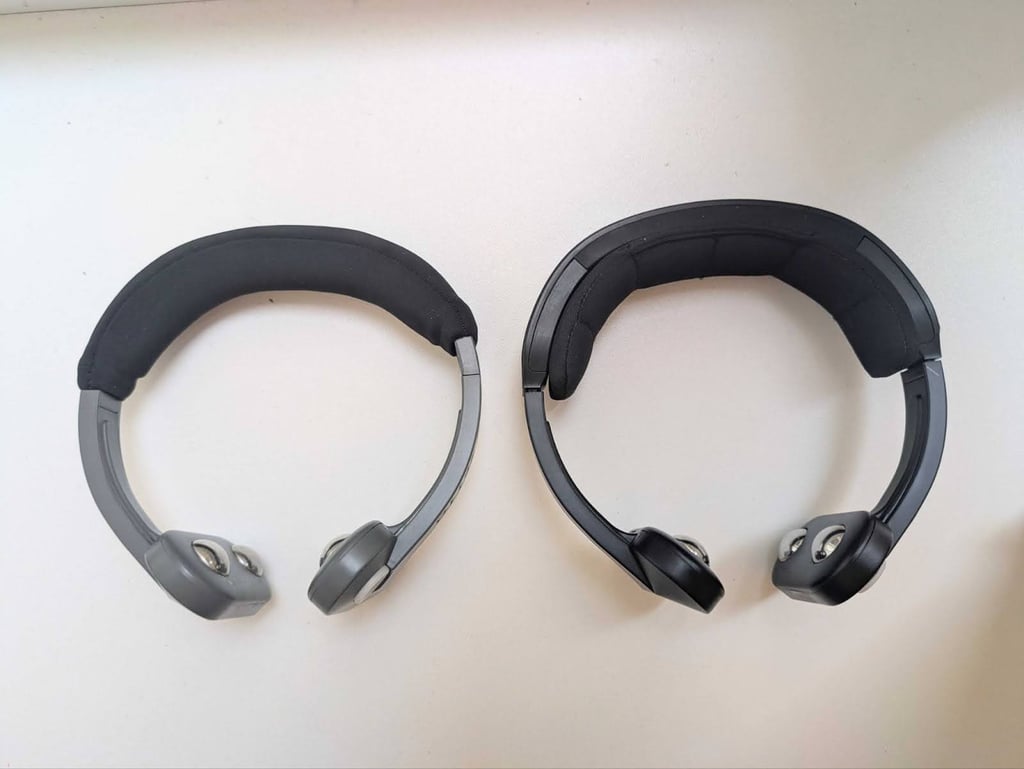
💡Personal tip: Instead of applying the gel to your neck, apply it directly to the electrodes for more precision.
Once I downloaded the app, I had to go through a little questionnaire to tailor the app to my needs. Personalization felt a bit more involved than your average wellness app. First, I answered questions about how I’m feeling right now and what’s stressing me. Options range from work and finances to relationships and health. The app then uses these answers to suggest a focus – in my case, unsurprisingly, it landed on sleep.
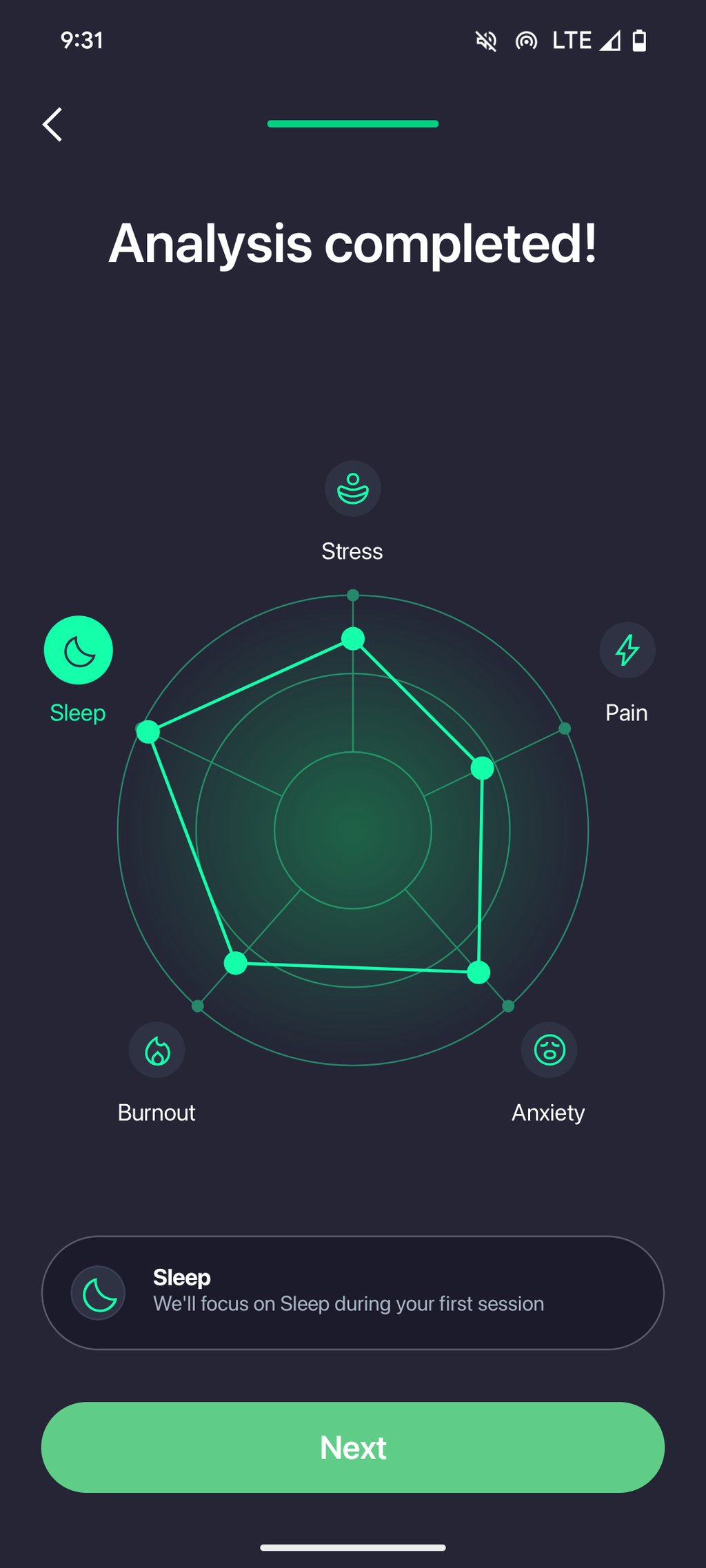
Then, I set a reminder for an evening session and committed to 2 weeks of nightly use. I didn’t expect any miracles, but I was honestly hoping for even a small shift.
What happened when I tried to fix my sleep
On my first night with Pulsetto, I was curious and maybe a bit impatient. I cycled through all 9 intensity levels right away. The lowest setting felt like almost nothing. As I clicked upward, the sensation became clear: not a massage, but rather thousands of tiny, not-too-sharp needles, like a gentle kind of acupuncture for my neck.
At level 4 or 5, it was pleasant and slightly odd. Seven was my sweet spot – enough of that electric tingle to know something was happening. The highest intensity, though, felt a bit too much and caused a slight neck spasm.
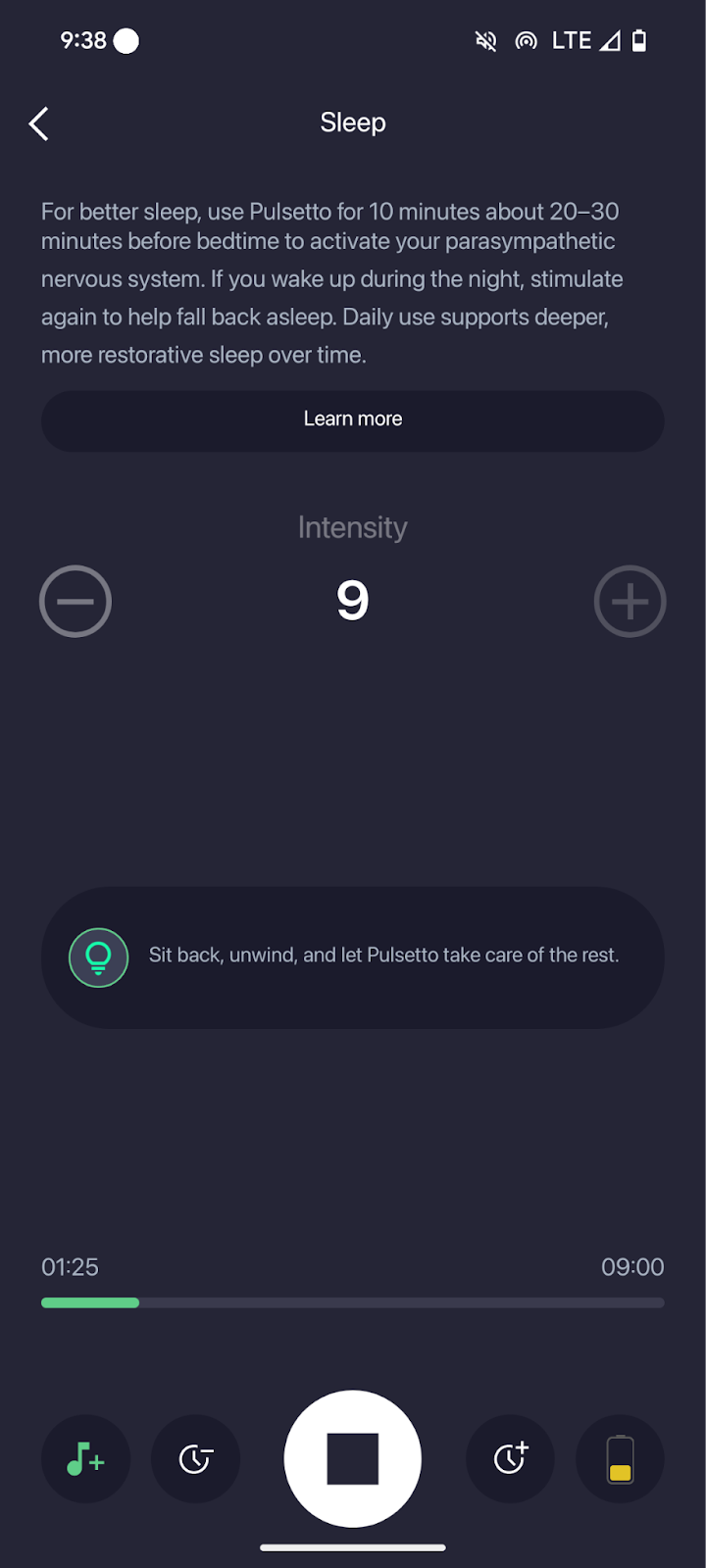
Each 10-minute session became a signal to wind down – a short pause in my evening. For the first 5 days, I didn’t notice any changes – drifting off was just as unpredictable as usual. I started getting a bit impatient and frustrated, but I convinced myself to continue.
But on days 7-8, a subtle shift kicked in. I fell asleep a little quicker, and there were more mornings when I genuinely felt more rested. Was it the device itself? The start of a new ritual? Or just a placebo effect from expecting something to change? It’s impossible to know for sure. But the fact is, by the end of the experiment, my sleep felt a bit smoother.
This fits with what researchers report: tVNS devices like Pulsetto rarely show instant results, but consistent use over a week or two can bring modest, meaningful improvements in sleep and stress for many people.
Of course, individual results vary – a more extended test, or a more scientific setup, could help clarify whether those gains would last or grow over time. For now, I’m left with cautious optimism: the changes weren’t dramatic, but for me, they were enough to keep going.
The big picture: sleep tech, science, and the self-improvement era
Sleep technology is no longer a specialty market – it’s a booming, everyday part of modern life. The global sleep tech industry is now valued at close to $25 billion, with some forecasts predicting it could reach $65 billion or more within the next decade as more people invest in sleep devices and health apps.
But I often find myself wondering: does all this data and all these devices actually help? Sometimes, using technology helps me spot patterns or motivate better routines. Other times, it feels like I’m just collecting numbers or making myself more anxious when I don’t hit a “good” sleep score.
Ultimately, I see sleep tech as an empowering companion on the journey toward better rest. When combined with good sleep habits and a willingness to listen to our bodies, technology can offer real improvements, including restful nights and brighter mornings.
FAQ
What is sleep tech, and how does it work?
Sleep tech refers to devices and apps, like smart rings, sleep trackers, and neurostimulation gadgets, that monitor, analyze, or help improve your sleep using data and sometimes gentle physical stimulation.
Do sleep trackers like Oura Ring and RingConn actually help improve sleep?
Sleep trackers can raise awareness of patterns and motivate better routines, but simply tracking sleep doesn’t fix problems. The real benefit comes from using the data to make small, healthy changes.
What is an nVNS device, and can it help with sleep?
nVNS (non-invasive vagus nerve stimulation) devices like Pulsetto use gentle electrical pulses on the neck to stimulate the vagus nerve. Studies suggest they may help reduce anxiety and improve sleep for many people when used regularly.