Can neurotech hack your mind?


Neurotechnology is no longer science fiction – it’s rapidly becoming reality. Fueled by the biohacking movement and a desire to unlock human potential, innovations in brain implants and neural interfaces are surging forward. Headbands claim to boost focus, stimulators lift mood, and clinical implants aim to restore movement or speech.
But as we move closer to the future where technology and the brain connect, a chilling question emerges: could someone hack your mind? This article explores the fascinating – and potentially unsettling – possibilities of neurotech, and what it means for the future of thought, control, and even free will.
What is neurotech?
Neurotechnology, or neurotech, is a field of innovation focused on understanding and influencing the brain. It includes tools that can monitor brain activity, map how the brain works, visualize its processes, and even stimulate or repair specific regions. These technologies are used for everything from diagnosing and treating neurological disorders to improving sleep, focus, memory, and overall cognitive performance.
Neurotech comes in two forms: invasive techniques, which involve implanting devices in the brain, and non-invasive ones, which work from outside the skull.
One of the first major breakthroughs in the field was the MRI scan, which allowed scientists to watch the brain in action and see which regions light up during different activities or emotional states.
Today, researchers are pushing neurotech even further. Meta has funded neurotechnology experiments in which an algorithm decoded the production of sentences with up to 80% accuracy. The long-term vision behind projects like this is to eventually crack the neural code of language.
Decoding the brain’s neural code means turning complex patterns into thoughts, language, or intentions. Billions of neurons produce signals that are highly intricate and vary by person, so today’s experiments can only capture tiny pieces of that with limited accuracy. True understanding requires context and meaning, making this a massive scientific challenge. If reliable, neural decoding could transform communication while imperiling privacy. For now, these advances are early steps toward precisely understanding the brain’s language.
In the meantime, Elon Musk’s Neuralink is developing brain implants designed to help paralyzed individuals control computers with their mind, and, one day, regain mobility. So far, 12 patients have received Neuralink devices, marking only the beginning of what could become a transformative shift in how humans use technology to improve their brain function.
Tools and techniques of neurotech
Neurotechnology uses a range of tools to study the brain in action. First, the brain activity is monitored, capturing the signals that race through neural networks:
- Electroencephalogram (EEG). Uses electrodes placed on the scalp to record activity in the brain.
- Functional magnetic resonance imaging (fMRI). Measures brain activity by detecting changes in blood flow.
- Functional near-infrared spectroscopy (fNIRS). Uses handheld sensors on the scalp to track brain activity. It’s portable and less expensive than fMRI, though it offers lower depth and resolution.
- Microneedles. Tiny electrodes are inserted into the cerebral cortex to record activity directly from neurons. This invasive approach captures very precise signals from a small area.
Based on the recorded brain activity data, various tools designed to stimulate certain parts of the brain are used:
- Transcranial electrical stimulation (tES). Delivers small electrical currents through electrodes on the scalp to gently stimulate specific brain functions.
- Transcranial magnetic stimulation (TMS). Uses magnetic pulses delivered through coils on the scalp to create electric currents in the brain, altering communication between neurons.
- Focused ultrasound (FUS). Applies targeted pulses of ultrasound to stimulate precise brain areas, sometimes through openings like the eyes or nose.
- Deep brain stimulation (DBS). Involves surgically implanting electrodes in the brain to act as neurostimulators, often used to relieve symptoms of conditions like Parkinson’s disease or epilepsy.
Neurotech for brain training, sleep, focus, anxiety, and emotional regulation
Neurotech is increasingly being used to train and fine-tune the brain. By monitoring brain activity, specialists or software can detect how your brain responds during certain tasks. Then, a personalized therapy course is created based on the findings. Using gentle stimulation, specific brain regions are targeted to strengthen neural pathways and enhance performance over time.
Some of the most accessible gadgets are for sleep improvement. Commercial neurotech devices use dry EEG sensors to track brain activity as you fall asleep and while you sleep. Based on these readings, they may play calming music or soothing audio to help you drift off. Then they automatically lower the volume as soon as they detect you’re falling asleep. Others go a step further, using tES to influence brain activity and promote deeper, more restorative sleep.
Similar approaches are also being explored to sharpen focus, boost memory, reduce stress and anxiety, and support emotional regulation. Many consumer neurotech products now combine tES with guided meditation, music, or even interactive games to help users build these mental skills.
Brain training devices today
Brain training is becoming a part of everyday life for more and more people. Neurotech devices are now helping users improve sleep, sharpen focus, and regulate emotions. While there are many options on the market, not all are backed by solid science. Below, I explore a few devices that show real potential based on research and proven results.
Mendi
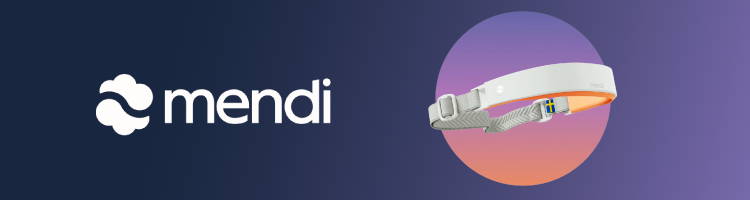
Mendi is a portable neurofeedback headband that uses fNIRS to measure brain activity and give real-time feedback through a game.
Neurofeedback is believed to help improve cognitive performance and boost focus. A pilot study showed that fNIRS neurofeedback can improve attention levels and that individualized training provides more benefits than non-individualized training. A meta-analysis of 15 randomized clinical trials on neurofeedback in healthy adults found that it significantly improved attention compared to no training, though it showed no significant difference compared to placebo neurofeedback training. Research from China also suggests that real-time fNIRS neurofeedback on non-emotional brain regions may improve emotional regulation.
Muse

Muse is a neurofeedback headband that uses EEG to provide personalized meditation guidance aimed at reducing stress and promoting a calmer, more relaxed state.
In a study involving healthcare professionals who used the Muse headband with guided meditation for 30 days, researchers observed statistically significant improvements in both stress levels and cognitive performance. This research was conducted by prestigious institutions and focused on the Muse device itself, not just the technology behind it. Other studies have also found that EEG neurofeedback headbands like Muse can improve mindfulness after just 14 days of use during meditation.
Somnee

Somnee is a headband that uses tES to improve sleep quality. It works by measuring neural activity with EEG sensors and then delivering transcranial alternating current stimulation (tACS) to specific parts of the brain based on each individual’s neural patterns.
A randomized controlled trial on 25 participants, both with and without insomnia, compared fixed versus personalized stimulation. The study found that only personalized stimulation produced significant improvements in sleep length and quality. However, the research tested the technology itself rather than the actual Somnee device.
Can neurotech hack your mind?
The idea of “hacking your brain” sounds like something straight out of a sci-fi movie – but, in reality, it’s much more subtle than most people imagine. We can’t yet read exact thoughts, access specific memories, control behavior against will, or implant complex ideas.
Today’s neurotech is limited but still impressive. Devices are able to read basic brain signals, showing which areas of the brain are active. They also influence mood and behavior through techniques like TMS, DBS, or neurofeedback. Neurotech can monitor brain states such as sleep, focus, or stress, stimulate targeted regions, and even decode simple movement intentions, such as moving a hand.
That said, certain aspects of neurotech can be vulnerable. Any device that connects to an app or stores data in the cloud can face cybersecurity risks. This includes wireless brain-computer interfaces (BCIs) and medical devices such as pacemakers or insulin pumps. In practice, the real dangers are things like disrupted therapy, altered or halted stimulation, data leaks, or drained device batteries, which are very different from implanting thoughts or stealing ideas.
As more consumer devices become available, data privacy is another major concern. Where and how user data is stored matters because poorly secured data could lead to massive breaches and exposure of highly sensitive information.
The future of neurotech
The future of neurotech is truly fascinating. It’s opening new ways to observe and influence the brain in real time. In the upcoming years, we may see devices that are increasingly more accurate, bridging the gap between medical use and everyday applications.
Bringing neurotech home
Neurotech is set to transform both medicine and daily life. In healthcare, these technologies will enable precision treatments for mental health disorders, memory enhancement treatments for Alzheimer’s patients, and new approaches to stroke rehabilitation. Beyond the clinic, we can expect a surge in consumer tools as biohacking gains traction – products designed to sharpen cognitive ability, boost performance, and power brain-responsive entertainment across gaming, VR, and AR.
Looking ahead, neurofeedback devices could become as commonplace as fitness trackers, allowing people to continuously monitor their brain health metrics and better understand their mental well-being. This mainstream accessibility could change the way we think about brain health in everyday life.
The long-term effects of neurotech
Despite the exciting potential of neurotechnology, questions regarding its long-term impact still remain. We currently lack a comprehensive understanding of the potential consequences of directly manipulating brain activity and whether such interventions carry unforeseen risks over time. A key concern is the possibility of developing a dependence on these enhancements and stimulants, potentially altering natural brain function. Furthermore, neurotech could affect neural pathways in ways we can't yet fully grasp.
Commercial neurotech must also meet high health and safety standards. Even non-invasive devices can carry unintended side effects or subtle, long-term influences on brain function. Manufacturers need rigorous testing and clinical trials to assess safety and efficacy, and regulators must set and enforce strict guidelines so that only reliable, well‑validated devices reach consumers.
Cybersecurity concerns
As neurotech devices connect to phones, clouds, and hospital networks, they inherit all the risks of modern computing, plus a few unique to the brain. Brainjacking, or unauthorized access to neural implants, could let attackers read signals, modify stimulation settings, or steal highly personal data. Even non‑invasive consumer headsets raise stakes: neural activity can reveal attention, mood, and health signals that are far more intimate and far less replaceable than a password.
The recent exposure of millions of users’ genetic data in the 23andMe breach shows how sensitive biometric data can be. Leaked brain data would be similarly permanent and uniquely identifying, fueling black markets or even state‑sponsored surveillance. Hospitals and clinics also face the threat of ransomware targeting neuro‑enabled medical devices and records.
Given these risks, robust cybersecurity protocols are essential. Strong encryption and regular security updates are crucial to protect users and to keep pace with evolving cyber threats. As neurotech becomes more integrated into our lives, safeguarding neural data and device integrity will be one of the field’s most critical challenges.
The regulation gap
The lack of proper regulation is a challenge in the neurotech industry. As these devices become more advanced, people may fear that their thoughts or mental data could be exposed or misused. Regulating such rapidly developing technology is challenging, as we’re currently seeing with AI, questions about safety, ethics, and appropriate use – especially for children – remain unanswered.
Currently, the FDA acts as the primary regulator, which sometimes slows innovation but also ensures basic safety standards. However, there are few protections against potential abuses, such as companies selling brain data to advertisers, law enforcement seeking neural information for investigations, or employers monitoring employees’ brain activity. The line between helpful applications and invasive overreach can be blurry. With limited means to detect or prevent neural crimes, these risks are amplified.
To keep up with this fast-evolving field, regulators must work closely with neurotech companies to develop flexible rules that protect privacy and safety, while still allowing innovation and development in the field.
Ethics in mental enhancements
Beyond privacy and security, neurotechnology raises profound ethical questions that society must confront. Altering brain activity, even with the best intentions, can affect a person’s sense of identity and mental autonomy. For example, enhancing memory or mood artificially might change how someone experiences themselves or their emotions over time.
In medical contexts, ensuring fully informed consent can be challenging, especially with vulnerable populations such as children or unconscious patients who may not fully understand the risks or implications. Additionally, as neurotech develops, access may be limited to wealthier individuals, risking a new form of cognitive inequality where only some can afford mental enhancements. These ethical dilemmas require careful consideration alongside technical advances, balancing innovation with respect for human dignity and fairness.
The potential of AI in neurotech
A major challenge in neurotechnology is the complexity of neural data. Collecting, identifying, and making sense of signals from the brain takes a lot of time, resources, and advanced tools. This process is often slow and difficult because neural data is so intricate. However, AI can be a powerful solution. It can dissect and replicate neural data far more quickly and effectively than traditional methods.
Although more research and better AI systems are still needed, the potential for progress is significant. We’re already seeing AI used in neurotech and showing great results. If AI can learn to understand the language of the nervous system, it could help develop new treatments that target specific brain functions. This would not only speed up treatment for chronic conditions but also mark an important step toward integrating AI into medicine.
Conclusion
Although true mind hacking remains a distant possibility, the future of neurotech is both exciting and unpredictable. What’s clear is that privacy will be a defining challenge. As more commercial neurotech devices enter our daily lives, increasingly personal brain data will be collected, raising real risks around security and misuse.
Yet, the potential of neurotechnology is remarkable. With advances driven by AI, we’re already seeing devices that can influence sleep, mood, and productivity. As this field evolves, we may soon see even greater breakthroughs, offering new ways to enhance or even restore brain function. Neurotech is rapidly shaping what it means to interact with our own minds, and its next chapter will be one to watch closely.
FAQ
What are the risks of neurotechnology?
The main risks of neurotechnology include privacy breaches, the potential for increased cognitive inequality, the possibility of brain hijacking, unauthorized control of your brain activity, and the unknown long-term effects on brain health.
What does Neuralink do to your brain?
Neuralink is a thin chip implanted in the brain that records neuron activity. It uses this information to allow users to wirelessly control external devices, like computers, simply through their thoughts.
Is there a way to unlock 100% of your brain?
No, unlocking 100% of your brain isn’t realistic. Different areas of the brain specialize in different functions, and they can’t all operate at maximum capacity simultaneously. However, you can support healthy brain function through mental stimulation and a healthy lifestyle.
What is neurotech used for?
Neurotech is used to record and influence brain activity. It currently helps treat neurological conditions like Parkinson's disease, epilepsy, and paralysis, restores lost senses, and monitors brain health.
What is brain hijacking?
Brain hijacking refers to the unauthorized control or manipulation of a person’s thoughts, emotions, or actions through a neural device. While largely theoretical at this point, it involves risks like hacking brain-computer interfaces or using neurostimulation to alter behavior without someone's consent.