FDA greenlights first autonomous robot that draws blood
A blood-drawing robot, anyone?
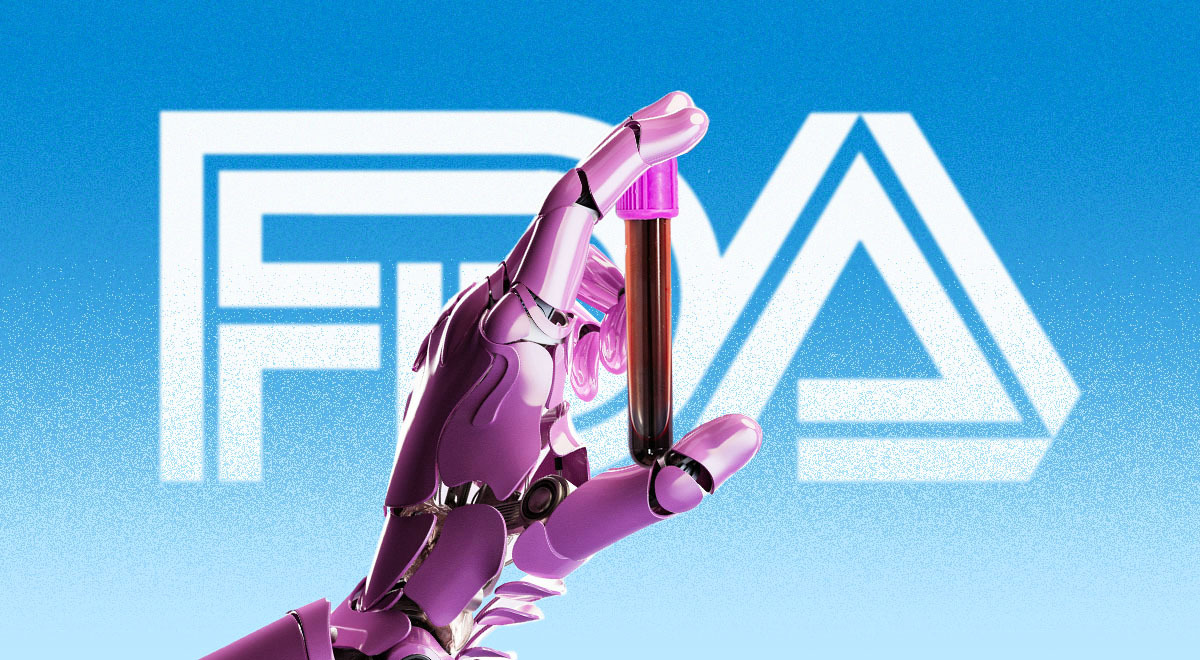
Image by Cybernews

 Follow us
- The FDA authorized Aletta, the first autonomous blood-drawing robot, for supervised adult outpatient use.
- One trained phlebotomist can oversee up to 3 devices, which could help ease US staffing shortages.
- Aletta uses light and ultrasound to find veins, then prepares skin, inserts needles, collects tubes, and bandages patients.
- In a 1,633-patient trial, Aletta succeeded on the first needle insertion 94.5% of the time, with mild adverse events.
Key Takeaways by nexos.ai, reviewed by Cybernews staff.
Aletta, the first-of-its-kind robotic device that can draw blood from a patient’s arm, will have to be supervised by a human specialist.
The US Food and Drug Administration (FDA) authorized Aletta, an autonomous robotic phlebotomy device, on August 19th, 2026, for use in adults in outpatient settings.
While it is the first standalone robotic device to draw blood without hands-on operator intervention, it will require supervision by a human trained in phlebotomy, the process of puncturing a vein to draw blood for various medical tests.
One phlebotomist can oversee up to 3 Aletta devices at the same time. The FDA’s authorization is hoped to help address the current shortage of phlebotomists in the US.






“Blood draws are one of the most commonly performed medical procedures in the United States, yet patients may face delays due to a growing shortage of trained phlebotomists,” said Michelle Tarver, MD, PhD, a director of the FDA’s Center for Devices and Radiological Health.




Stay updated with our latest stories and follow us on social media
Be the first to discover new stories, ideas, and updates from our team.
The robot was developed by Vitestro, a company based in Utrecht, the Netherlands.
How does the blood-drawing robot work?
According to the FDA, Aletta performs each step of the blood drawing process autonomously, but a human phlebotomist initiates the session.
The device uses near-infrared light and Doppler ultrasound to locate a suitable vein and tell it apart from arteries. If no appropriate vein is found, Aletta won’t start the procedure.
Once a vein is identified and the procedure is authorized by a human supervisor, the device takes the following steps: applies a tourniquet, prepares the skin, inserts and disposes the needle, changes collection tubes, and places a bandage.
The supervising phlebotomist confirms that collection tubes are filled in the correct order and verifies that all tubes are adequately full.
Is Aletta, the blood-drawing robot, safe?
Aletta’s effectiveness was assessed in a trial involving 1,633 patients, the findings of which were published in the peer-reviewed journal Clinical Chemistry.
The device successfully inserted the needle on the first try 94.5% of the time, a success rate comparable to or higher than that of procedures performed by humans. The rate remained high in patients with difficult venous access, obesity, and older adults.
Ten people (0.6%) experienced adverse events, all of which were mild.
Compared with manual blood drawing, 51% of patients reported less pain, and 39% reported similar pain levels. Another 10% said blood drawing by Aletta was more painful than one performed by a human.
Nearly half (46.8%) of the participants said they would prefer their blood to be drawn by Aletta rather than a human phlebotomist.