7 best offshore VPS providers in 2026
Our in-house experts conduct independent, hands-on testing and transparent reviews of VPS hosting providers by using real server environments, and industry-recognized benchmarking methods to ensure impartial and evidence-based assessments
Using the same criteria for all VPS services, we share our detailed methodologies and testing practices to help customers compare performance, reliability, scalability, and overall value before choosing a virtual private server.
Learn more

People turn to offshore VPS hosting to bypass strict local regulations, host sensitive projects, or reach a global audience with fewer limitations. The key factors when choosing the best offshore VPS are jurisdiction, data policies, uptime, network performance, and the ease with which you can scale resources as your project grows.
Alongside the Cybernews research team, I tested and compared 64 VPS providers across performance, pricing, and reliability, narrowing them down to the 7 best offshore VPS providers.
7 best offshore VPS in 2026
- IONOS – best low-cost VPS for basic offshore use
- Hostinger – best for international server locations
- Bluehost – best for simple VPS setup with full root access
- Hosting.com – best for stable VPS performance
- Liquid Web – best for managed VPS with strong support
- DreamHost – best for scalable and automated VPS hosting
- ScalaHosting – best for flexible VPS with built-in security



Our in-house VPS research team and expert writers work together to regularly test VPS hosting services across different use cases and provide accurate, up-to-date insights. Learn more about how we test and evaluate virtual private servers.
What is offshore VPS and who needs it?
An offshore VPS is a virtual private server located in a foreign jurisdiction that provides enhanced privacy and more flexible data regulations. While you share a physical server with others, your specific section is completely isolated.
The main advantage is the location. Hosting in a country with fewer restrictions lets you avoid the strict rules some countries might impose. This means your content has fewer limits. It's a great choice for projects that need privacy or global access.
If you’re exploring budget options, you can also check our review of cheap VPS hosting providers for a broader comparison.
Best offshore VPS hosting 2026 – detailed reviews
1. IONOS – most affordable global infrastructure

| Rating: | |
| Price: | From $2.00/month |
| Money-back guarantee: | ✅ Yes, 30-day |
| Special deal: | Get up to 27% OFF IONOS VPS |
IONOS is the cheapest provider on this list, making it ideal for low-cost VPS hosting projects. It works best for small projects, testing environments, or lightweight websites where cost matters more than advanced customization. While it does not offer the flexibility of developer-focused platforms, it provides a simple way to deploy servers in European and US data centers. Here’s what stood out most:
- Low-cost entry into foreign hosting. IONOS is the cheapest provider on this list, which makes it practical for running small workloads outside your local jurisdiction without a large upfront commitment.
- US and European data center choice. You can pick servers in Germany, the UK, Spain, or the US, giving you basic flexibility over where your data is hosted.
- Predictable VPS environment. The setup is structured and consistent, which I found useful when I just needed a stable offshore server without dealing with complex cloud configuration or scaling logic.
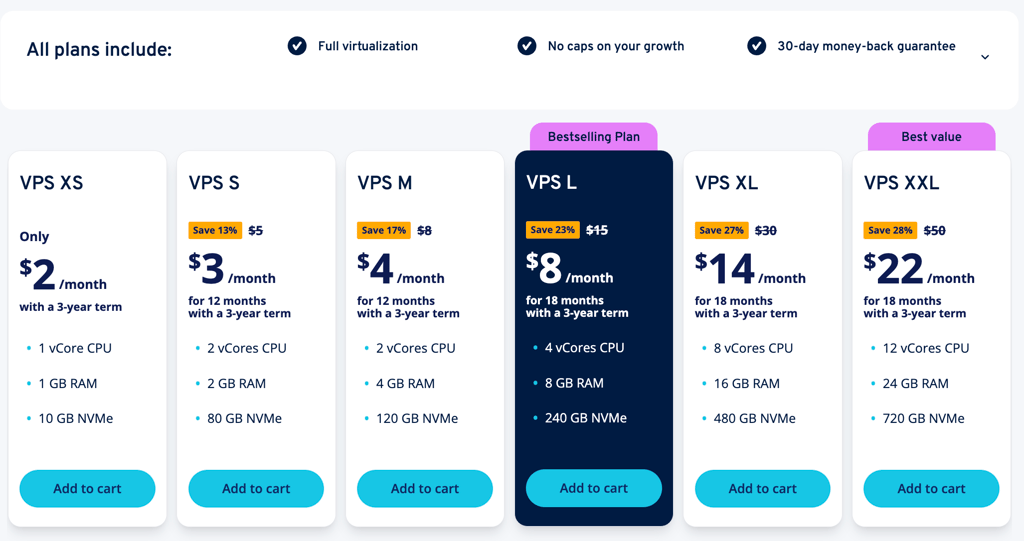
IONOS is not built for advanced offshore setups or deep customization, but that is also part of its appeal. I found it useful when I just needed a low-cost server in a specific region without having to deal with extra configuration. It provides a simple way to run workloads outside your local environment when price and basic jurisdiction choice matter more than flexibility.
IONOS is best for users who want the cheapest way to test VPS hosting in foreign jurisdictions. Avoid it if you need flexibility, performance tuning, or advanced offshore control.
2. Hostinger – top choice for international server locations

| Rating: | |
| Price: | From $5.84/month |
| Money-back guarantee: | ✅ Yes, 30-day |
| Special deal: | Get up to 73% OFF Hostinger VPS |
Hostinger is a practical offshore VPS option, offering reliable international server locations and privacy-friendly payment options. It lets you host projects outside strict regulations while still keeping things simple. Though Hostinger is not a niche offshore provider, it gives you enough control over data location to operate outside your own jurisdiction without a complex setup. Here is what impressed me the most:
- Extensive global reach. You can choose VPS locations in France, Germany, Lithuania, the United Kingdom, India, Indonesia, Malaysia, Brazil, and the USA (Phoenix, Boston).
- Crypto payment options. You can pay for your plan with various cryptocurrencies via CoinGate, helping keep your personal financial details separate from your hosting account.
- Full root access on KVM plans. Hostinger gives you complete administrative control. You can install custom security software for added privacy.
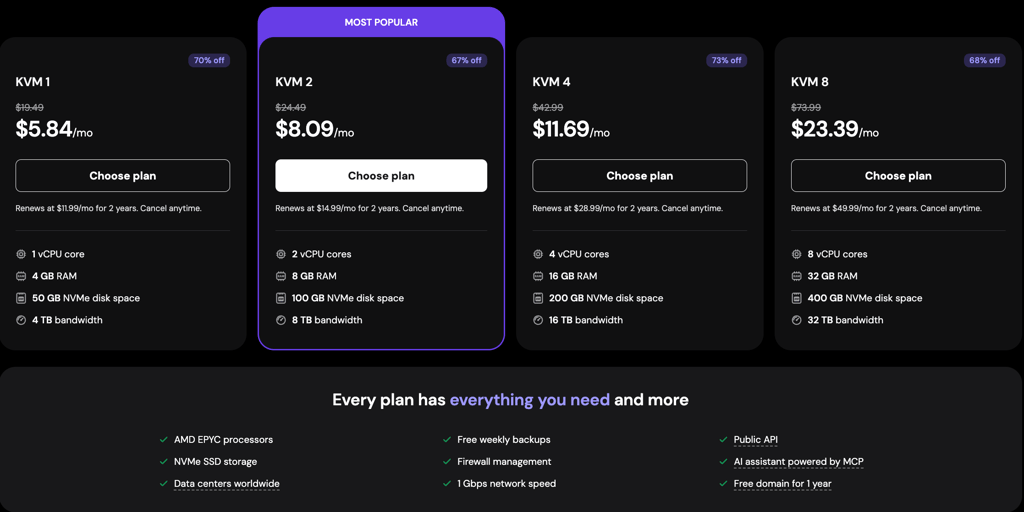
Hostinger is not a bulletproof host that ignores legal requests. However, using server locations in different jurisdictions can give you more flexibility than sticking with a local provider. I also appreciated how easy it was to pay with crypto and launch an international server within minutes.
Hostinger is best for users who want fast international VPS hosting with crypto payments and flexible server locations. Avoid if you need a bulletproof host that ignores all legal takedown requests.
3. Bluehost – simple setup for overseas hosting

| Rating: | |
| Price: | From $4.69/month |
| Money-back guarantee: | ✅ Yes, 30-day |
| Special deal: | Get Bluehost VPS with 55% OFF |
Bluehost is a mainstream VPS provider. It offers a simple way to host servers with full root access, whether you choose a managed or self-managed setup. It works well for users who want more control than shared hosting without dealing with cloud complexity. While not specialized for offshore use, it still provides a straightforward VPS environment that is easy to deploy and maintain. These are the notable features:
- Full root access. You get complete server control, which is the main step up from shared hosting.
- Managed environment. Bluehost handles much of the underlying setup, making it easier to manage than more technical cloud providers.
- Simplified structure. The platform focuses on straightforward deployment and maintenance rather than advanced configuration options, which suits users who want stability over flexibility.
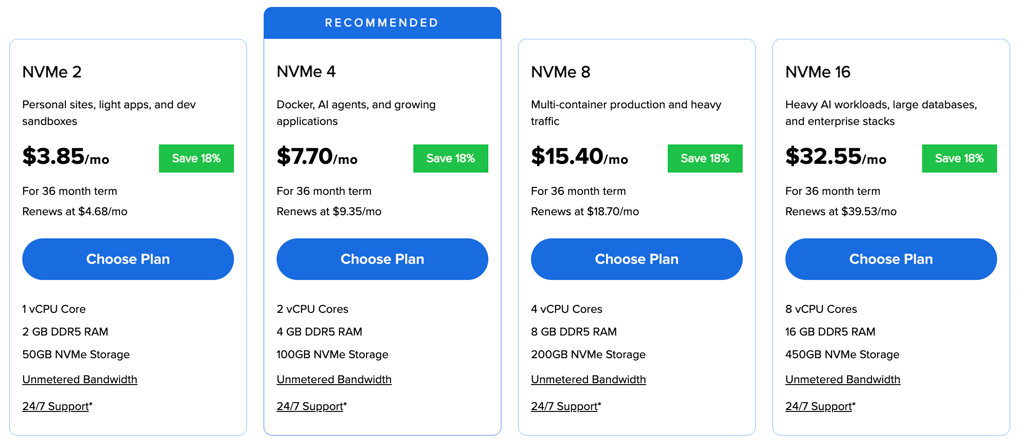
Bluehost is not built for offshore-focused setups or detailed infrastructure control. What stood out to me, instead, is how quickly you can get a stable server running without spending too much time on configuration or tuning. It works best when you want a predictable environment with minimal setup effort, rather than flexibility or jurisdictional variation.
Bluehost is best for users who want simple VPS hosting with full root access and minimal setup effort. Avoid it if you need flexible infrastructure control or offshore-focused deployment options.
4. Hosting.com – good performance for global networks

| Rating: | |
| Price: | From $9.99/month |
| Money-back guarantee: | ✅ Yes, 30-day |
| Special deal: | Get up to 50% OFF hosting.com VPS |
Hosting.com delivers reliable VPS performance and stability, making it ideal for users prioritizing dependable uptime over flexibility. It makes more sense for users who want a reliable environment that just works, rather than something built around offshore use cases. You are not getting much in terms of jurisdiction control, but you do get a setup that feels consistent once it is up and running. Here is what stood out to me:
- NVMe storage across plans. Faster data access makes a real difference in responsiveness compared to more basic VPS setups.
- Enough control without overcomplication. You can configure your environment properly, but it does not feel as heavy or technical as some cloud platforms.
- Consistent performance under load. The main strength of this provider is stability. It handles ongoing workloads without noticeable drops.
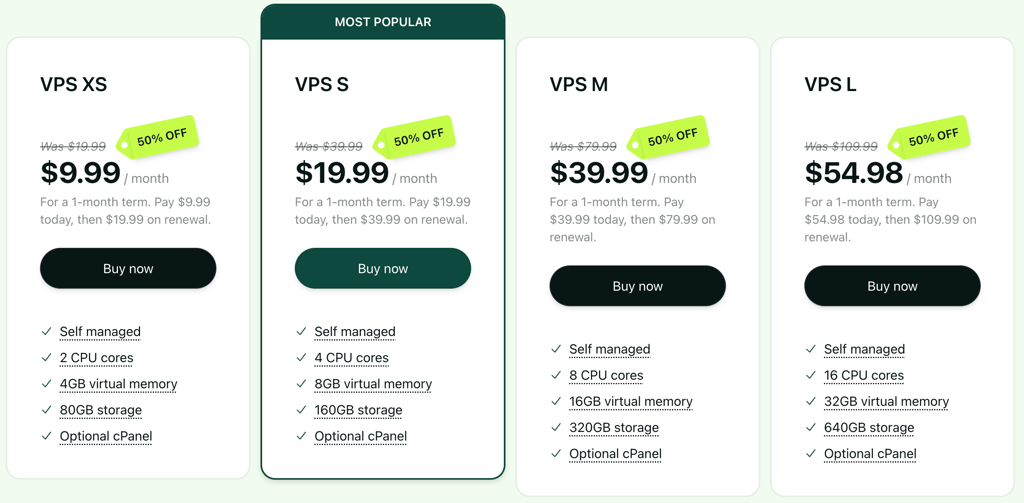
Hosting.com is not built for offshore-focused setups or anything that requires flexibility in where and how your server is deployed. That said, what stood out to me is how predictable everything feels once it is running. It works best when you want a VPS that stays stable without needing much attention, rather than one you constantly tweak or optimize.
Hosting.com is best for users who want a stable VPS with predictable performance and minimal maintenance. Avoid it if you need offshore flexibility, jurisdiction control, or advanced infrastructure customization.
5. Liquid Web – reliable support for remote VPS management

| Rating: | |
| Price: | From $5.00/month |
| Money back guarantee: | ✅ Yes, 30-day |
| Special deal: | Get up to 50% OFF Liquid Web VPS |
Liquid Web offers a carefully structured approach to VPS hosting, emphasizing managed environments and operational reliability. In an offshore VPS context, it aligns more with traditional enterprise providers than jurisdiction-flexible platforms, prioritizing support and consistency over deployment freedom. Here is what stood out to me:
- Managed infrastructure by default. Setup, updates, and maintenance can be handled within their managed plans, reducing the need for hands-on administration.
- Support-led experience. The service is built around 24/7 assistance, which makes it more suitable for users who prefer guided troubleshooting over self-managed environments.
- Standardized control panel options. Integration with control panels like cPanel, Plesk, and InterWorx keeps server management familiar and predictable.
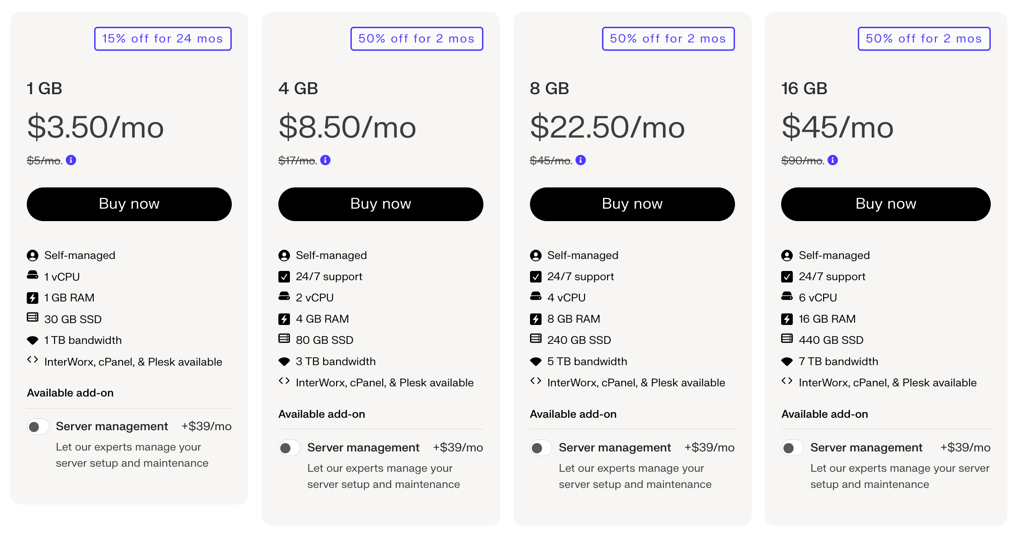
This means setup, maintenance, and updates are mostly handled for you, rather than exposed for direct control. It feels less like a raw VPS environment and more like a fully supported hosting service built on top of it.
Liquid Web is best for users who want a managed, support-heavy VPS experience. Avoid it if you need offshore flexibility or deep infrastructure control.
6. DreamHost – easy scaling for international growth

| Rating: | |
| Price: | From $10.00/month |
| Money-back guarantee: | ✅ Yes, 30-day |
| Special deal: | Get up to 73% OFF DreamHost VPS |
DreamHost takes a more productized approach to VPS hosting, combining managed infrastructure with a strong focus on simplicity and built-in automation. In an offshore VPS context, it feels more like a structured hosting environment than a flexible deployment platform, prioritizing usability and reliability over granular control. Here is what stood out to me:
- Managed VPS by default. Core tasks like OS updates, security patches, and maintenance can be handled automatically through their managed setup.
- Strong uptime commitment. DreamHost offers a 100% uptime guarantee, which reflects its focus on stability and predictable performance.
- Built-in automation and scaling. Features like auto-boost RAM protection and scalable resources make it easier to handle traffic changes without manual intervention.
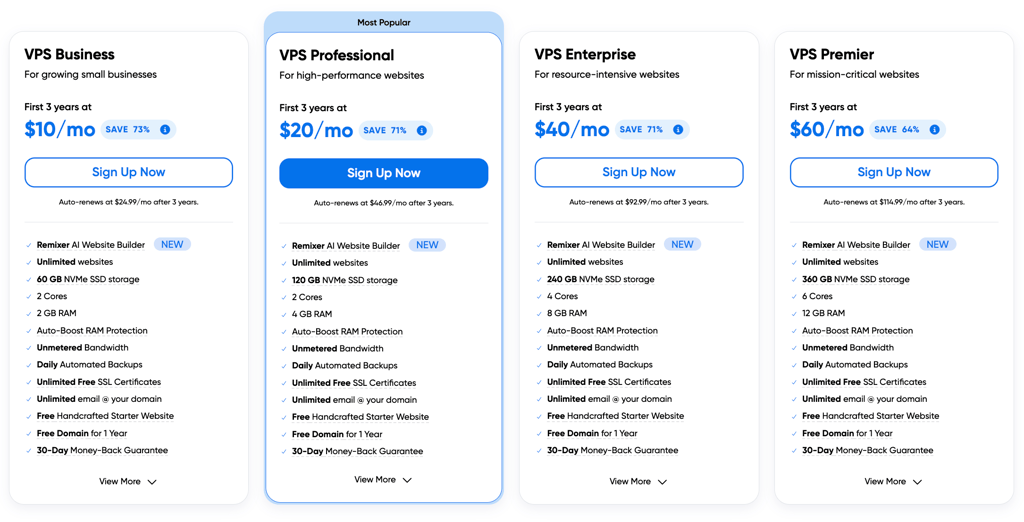
Most routine operations are handled through automation or the control panel rather than requiring direct system access. The experience feels more guided, with fewer situations where you need to intervene directly at the system level.
DreamHost is best for users who want a managed, stable VPS with strong automation. Avoid it if you need offshore flexibility or low-level infrastructure control.
7. ScalaHosting – customizable tools for remote server management

| Rating: | |
| Price: | From $14.95/month |
| Money-back guarantee: | Anytime partial refund for unused services |
| Special deal: | Get up to 63% OFF ScalaHosting VPS |
ScalaHosting positions itself as a flexible cloud VPS provider that combines managed features with a strong emphasis on control and scalability. In an offshore VPS context, it feels more balanced than enterprise-heavy platforms, offering both automation and hands-on configuration depending on how much control you want. Here is what stood out to me:
- SPanel control system. Instead of relying on traditional panels like cPanel, ScalaHosting offers its own SPanel, providing a more unified, simplified way to manage VPS environments.
- Built-in security layer. Features like SShield actively monitor traffic and block threats in real time, adding an always-on security layer without extra configuration.
- On-demand scaling. CPU, RAM, and storage can be adjusted directly from the control panel without migrations or downtime, making it easy to quickly adapt resources.
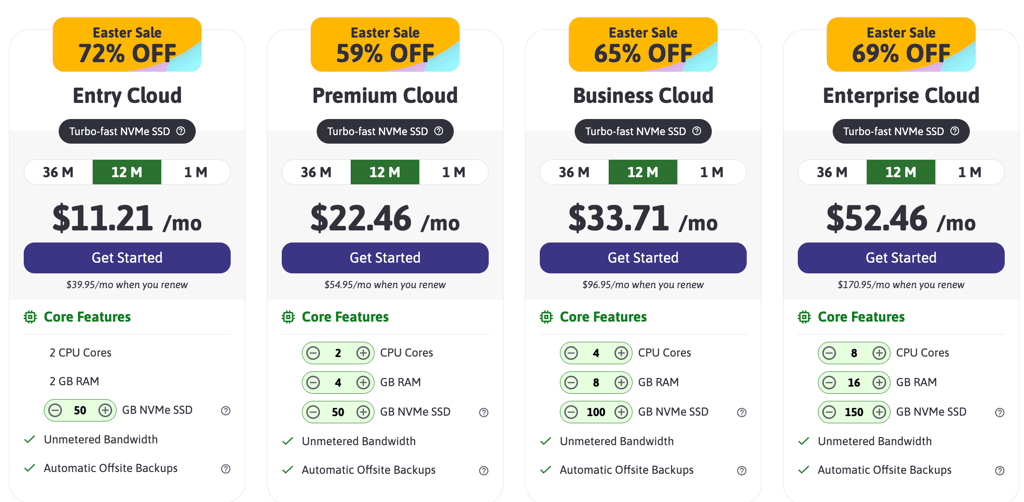
Server management is split between automation and manual control, depending on how the environment is configured. It feels less rigid than traditional managed VPS platforms and gives you more room to adjust and fine-tune the system when needed.
ScalaHosting is best for users who want a flexible VPS with strong built-in security and easy scaling. Avoid it if you need a strict offshore focus or a fully hands-off managed environment.
How to choose offshore VPS
Choosing an offshore VPS is less about raw performance and more about control, jurisdiction, and deployment flexibility. The right provider should give you enough freedom to operate outside your default environment while still maintaining reliability. Here are the key factors to focus on:
- Consider jurisdiction and infrastructure transparency. Offshore hosting depends on where and how your server is deployed. Look for providers that clearly define their setup and offer predictable environments. If this information is vague, it becomes harder to understand what you are actually getting.
- Evaluate server control and access. Full root access is essential if you need to configure security, install custom software, or manage workloads independently. Limited access can restrict your flexibility over time.
- Check payment flexibility. Some users prefer separating hosting from personal financial details. Options like cryptocurrency can add an extra layer of privacy, depending on your needs.
- Look at ease of deployment and usability. An offshore VPS doesn’t need to be complicated. A provider that lets you launch and manage a server quickly without unnecessary setup steps is often the better choice.
- Assess stability and scalability. Your server should remain consistent under normal workloads and allow you to adjust resources as your needs evolve.
Final thoughts
Choosing an offshore VPS really comes down to what you need in practice: more control, stable performance, lower cost, or a setup that just runs with little effort. There is no single best option for everyone, since each provider fits a slightly different use case and level of technical involvement.
Here is my quick decision guide:
- Cheapest way to test offshore locations – IONOS
- Fast global VPS with simple setup – Hostinger
- Easy VPS with full root access – Bluehost
- Stable performance with minimal maintenance – hosting.com
- Fully managed, support-heavy VPS – Liquid Web
- Simple scaling with automation – DreamHost
- More control and built-in security tools – ScalaHosting

FAQ
How much is offshore VPS in 2026?
Offshore VPS pricing typically ranges from $2.00 to $12.00 per month for entry-level plans and can reach up to $300.00+ for high-performance or fully customized configurations, depending on resources and management level.
Can I trust offshore VPS?
Yes, if you choose reputable providers with clear policies, uptime guarantees, and transparent infrastructure, such as IONOS. Trust depends more on the provider’s reliability and support than on the offshore label itself.