Best AI tools for startups in 2026

AI tools for startups are commonplace today, as these businesses need more manpower than they have, whether it's more hands on marketing, more people building the site, or more support in sales. Unfortunately, not many startups are using AI well. You have founders who sign up for multiple different tools, burn through free trials, and end up with software products that overlap, deliver poor results, and still leave the main issues untouched.
With an abundance of AI tools available, many startups don’t know which to pick. This is why, together with the Cybernews team, I created this guide of the 5 best AI tools for startups.
Each was picked for a specific startup use case. By the time you’re done reading, you’ll know which AI tool best fits your needs, and whether you truly need a single all-in-one platform or a stack of tools that do different things.
Best AI tools for startups – shortlist
- Symphony by Wix – best AI agent platform for startups with a website-driven business
- nexos.ai – top AI agent platform connecting you to other AI models
- ChatGPT – best general-purpose AI assistant for startups
- HubSpot AI – best AI sales automation for startups managing their pipeline
- Trendos – AI tool for identifying emerging trends and market opportunities




Our in-house research team and expert writers work hand in hand to regularly test website builders and provide accurate and fact-checked information. Discover the ins and outs of how we test and evaluate website builders.
Why startups need to invest in AI tools in 2026
In small startup teams, it's common to see everyone doing several jobs at once. Even the founder, who should be out there closing deals, is also working on the company’s landing page, chasing invoices, and answering support tickets. Teams that decide to expand quickly end up hiring more staff, increasing the payroll, and adding overhead before they’ve proven the revenue can cover it.
According to CB Insights research on startup failures, 70% of companies blame running out of capital for their shutdowns. Can AI help with that? AI tools let the experts on your team spend time on tasks that require real brainwork instead of repetitive tasks like drafting website copy, organizing launch plans, summarizing research, or even personalizing outbound emails.
Writing a landing page from scratch can take you a whole afternoon, or at least most of it, if you’re fast. On the other hand, if you feed a simple prompt into your chosen AI, you can spend less than an hour on that same task. Add up those saved hours over weeks, and you can dedicate them to real work that moves the business forward.
Real-world data compiled by Contentful shows teams integrating AI into content and digital operations see up to a 10x increase in production speed. At the same time, ICIC reported in 2025 that 60% of businesses found that AI directly improved day-to-day employee productivity.
Still, you must remember that the best AI tools for startups aren’t just the ones that look impressive in a demo. Yes, it’s flashy, and everyone is talking about it, but it has to actually fit into how your team already works. Your chosen AI tool has to genuinely save time on work you do every week and show real influence on your workflow fast.
What to look for in the best AI tools for startups
Before I get into my top 5 tools, it’s worth explaining how I judged them. During my initial research, I assessed the top-rated AI tools in 2026. Here are the key factors I considered when picking the best AI tools for small businesses and startups:
- Startup-friendly pricing (20%). This doesn’t just mean cheap, but the overall value for money. Look at what the paid tier actually unlocks, whether there’s a usable free plan to begin with, and how pricing changes when you add seats. You also need tools with transparent pricing, because some start free or with low fees, only to scale into a $2,000/month invoice the moment your team grows.
- Ease of implementation (20%). The point of onboarding these tools is to save time, so if they require a dedicated admin, a migration project, or weeks to understand how they work, they're not worth it. The best AI solutions for startups deliver value the same day you sign up, without forcing you to change how your team already works.
- Breadth versus specialization (15%). It all depends on the size of your team and the service you actually need. For small teams, breadth usually wins because you need to cover for the severe lack of manpower. As for later-stage startups with a dedicated function, a specialist often makes sense.
- Automation capabilities (15%). The best tools truly automate your workflow by letting you set the parameters up once and having it run on its own in areas such as sales follow-ups, content scheduling, and recurring reports, to name a few.
- Collaboration features (15%). I’m keen on tools with shared workspaces, role permissions, and the ability to hand off work between team members because they don't help only one person be productive, but improve the team's overall efficiency.
- Go-to-market execution (15%). The best tools don’t just do the boring stuff; they also help launch your site, produce campaign content, run outbound, and do work that directly affects revenue.
The best AI tools for startups
Below, you’ll find my review of the top AI agent platforms for startups in 2026, with each covering different business and startup needs.
1. Symphony by Wix – best AI agent platform for startups building a website-driven business

| Overall rating: | |
| Standout feature: | One leading AI agent coordinating 6 specialist AI agents under human approval |
| Starting price: | Starting from $16.00/month for 2,000 credits |
| Best for: | Early-stage startups building a website-driven business |
Symphony by Wix is my top pick for founders who want an AI-enabled tool for their small website-based business. It’s an agent platform, not just a regular chatbot, and the biggest thing it gets right is that it doesn’t ask you to replace anything. Rather, it connects to the tools you’re already running, like Slack, Salesforce, your CRM, your calendar, payment processors, and your Wix site and back office.
Even better, you only communicate with one agent, who has a team of 6 AI agents underneath. These are built-in specialists that cover outreach, marketing, scheduling, research, finance, and design, and they share context with each other, so what your marketing agent learns becomes part of what your outreach agent does next.
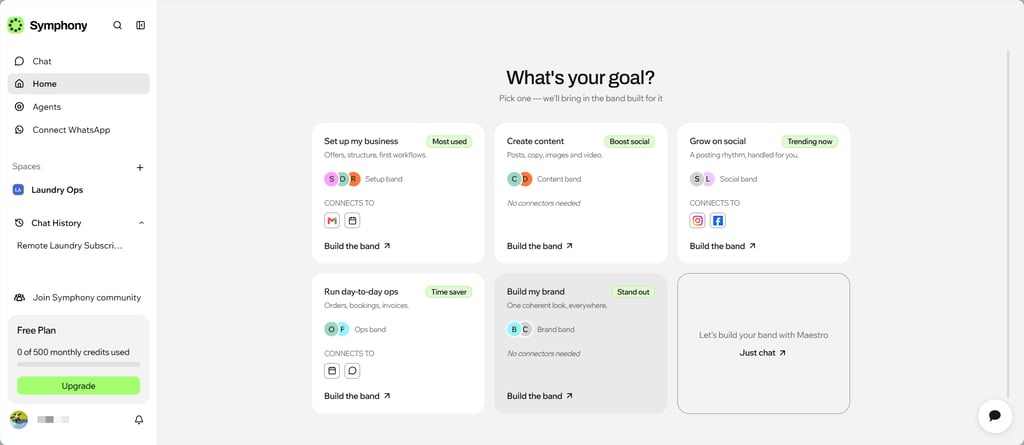
To test Symphony by Wix, I set up a remote laundry business, a subscription model with pickups, monthly billing, and a piece-count system. Symphony's orchestrator, Maestro, understood the model immediately and offered 2 bands of agents: an Ops Band for subscriptions, pickups, and money, and a Growth Band for new subscribers and retention. I picked Ops and got 3 specialists: Zara worked on subscriber messages and pickup coordination, Kofi on subscriptions and late payments, and Nadia on revenue reporting.
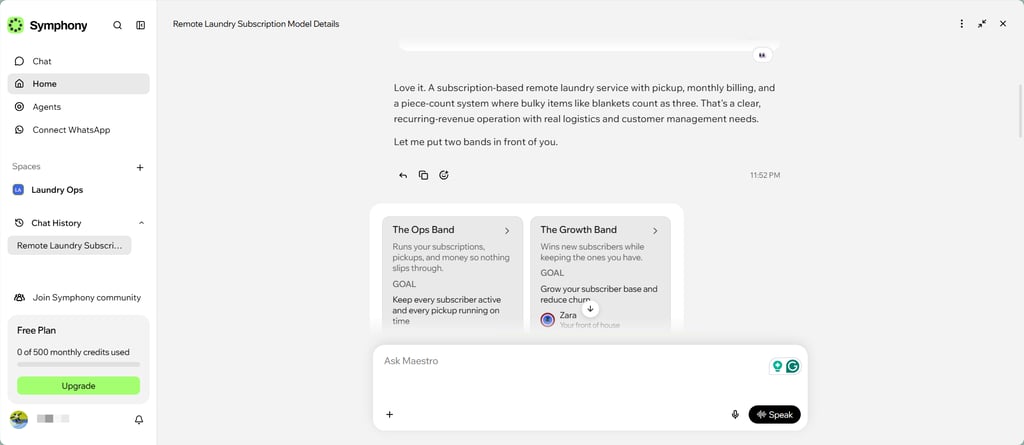
It connected Gmail, Stripe, and QuickBooks and was ready to run. That whole setup took one conversation and no configuration, and I liked that nothing got executed without my approval. So you get a tool that handles early planning, website structure, and copy ideation, while supporting the business setup, assisting in marketing, and optimizing your workflow inside the Wix ecosystem.
Chatting is free, but every drafted, sent, and scheduled run spends credits. The free version caps at 500 monthly credits with a 100 daily limit, while premium plans go from $16.00/month for 2,000 to $160/month for 30,000 credits.
2. nexos.ai – AI agent platform that connects you to other AI models
| Overall rating: | |
| Standout feature: | One workspace for 200+ AI models with no-code agents |
| Starting price: | $39.00/month (Workspace) |
| Best for: | Small teams using several tools and losing hours to repetitive work |
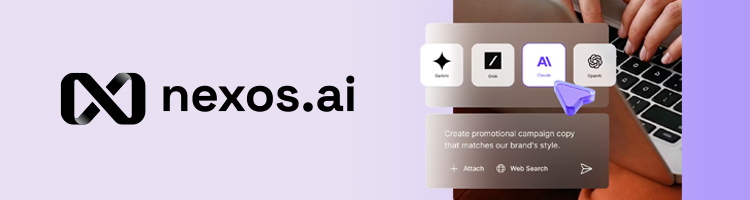
nexos.ai is great for small teams that find daily menial tasks slowing them down. What sold me on this platform is that instead of paying for ChatGPT, Claude, and Gemini separately, you get over 200 models in one chat interface, with side-by-side comparisons when you want to test which one handles a task best.
There’s also an Auto Select feature that picks a model for you based on the prompt, so you’re not stuck guessing.
When you find a workflow worth automating, the no-code Agent Builder turns it into an agent that runs on a schedule. You can set it to pause before sending a message or updating a record, which keeps you in control of anything that matters.
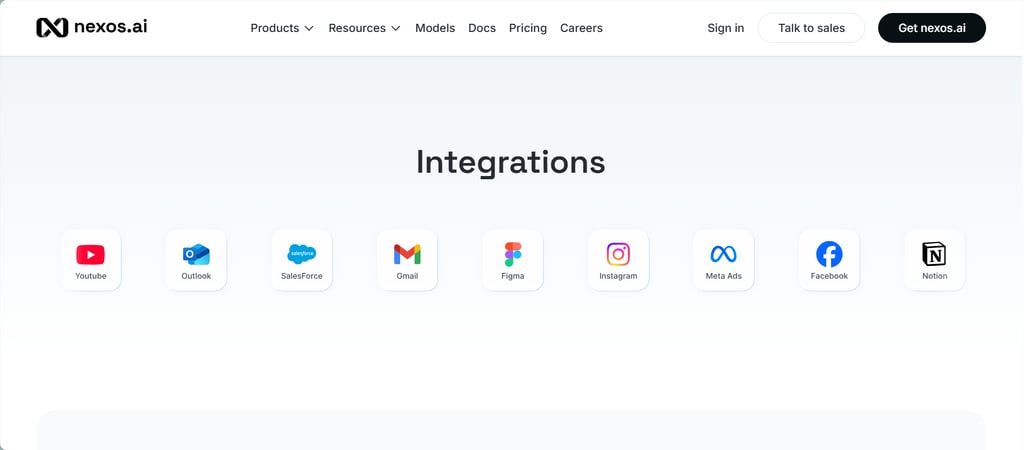
nexos.ai also connects to the tools you already run, so agents work with real context.
Another part I liked is that the tool was built by the team behind Nord Security, with SOC 2 Type 2, ISO 27001, ISO 42001, and GDPR compliance, EU hosting, and no training on your data.
One thing I’d flag is that AI agents don’t fix unclear processes but expose them. Somebody has to own the task or define the workflow, or the agent just moves the confusion somewhere else. You need to define what counts as routine and have someone reviewing the output.
3. ChatGPT – best general-purpose AI tool for startups

| Overall rating: | |
| Standout feature: | Projects and Scheduled Tasks features turn it into a strong automation engine |
| Starting price: | $20.00/month |
| Best for: | Startups needing broad and flexible help |
ChatGPT is the tool most business founders already have open in a tab, and there’s a reason for that. You need something that can draft a cold email in the morning, summarize 12 customer interviews, or even debug a Python script before bed. Few AI tools match the breadth ChatGPT offers.
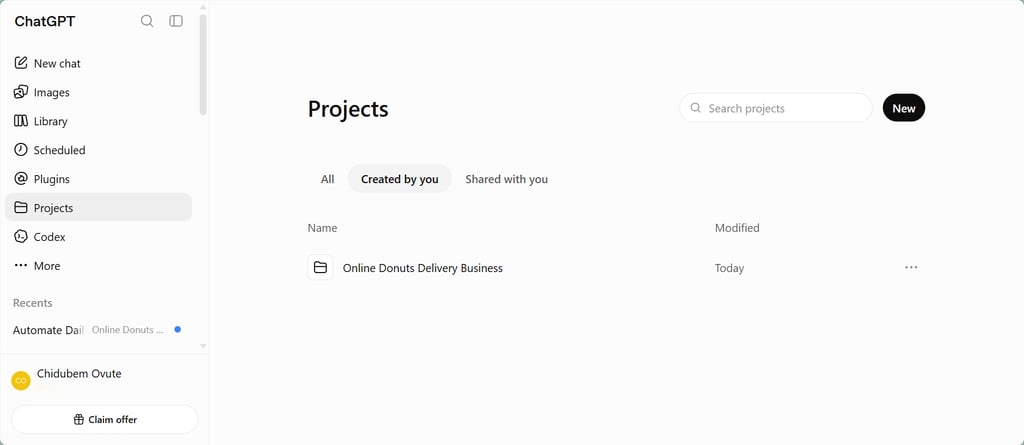
The gap between ChatGPT and purpose-built platforms has narrowed even more. With Projects, you can build a permanent workspace with hardcoded instructions, a pitch deck, and competitor notes, so you don’t have to paste context every time. Every chat in that project remembers it all.
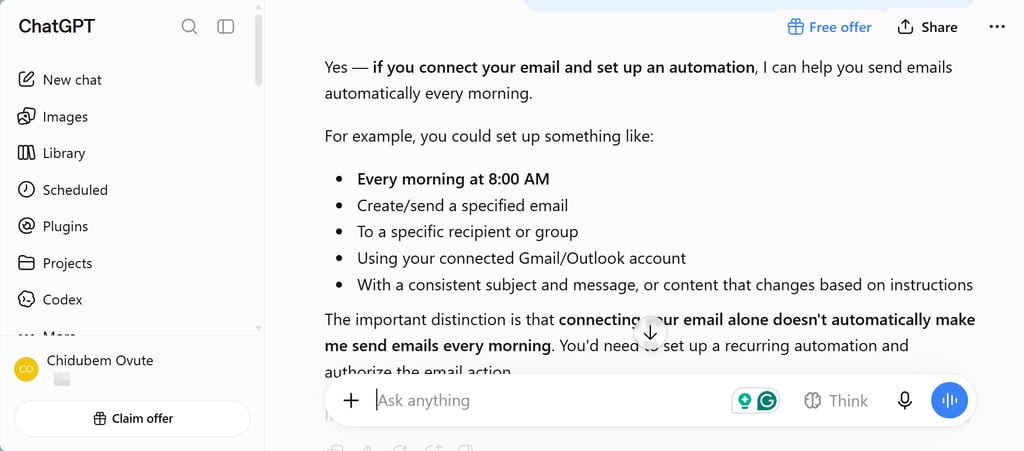
Then there’s Scheduled Tasks, thanks to which ChatGPT can now run recurring tasks on a schedule and, on paid plans, respond to events like a new Gmail message or a Slack channel post, and connect the Stripe plugin and pull live revenue data. It even monitors those connected sources in the background and notifies you when something needs attention.
ChatGPT still has limits. For one, I found it’s not as user-friendly as other top AI agent platforms for startups in 2026. Other tools basically walk you through everything or even do most of the work themselves, but you’ll need a lot of prompting and setup with ChatGPT.
4. HubSpot AI – best AI sales automation for startups managing pipeline seriously
| Overal rating | |
| Standout feature | AI agents work with your actual deals and contacts |
| Starting price | Outcome-based pricing |
| Best for | Startups with real sales processes and growing inbound demand |
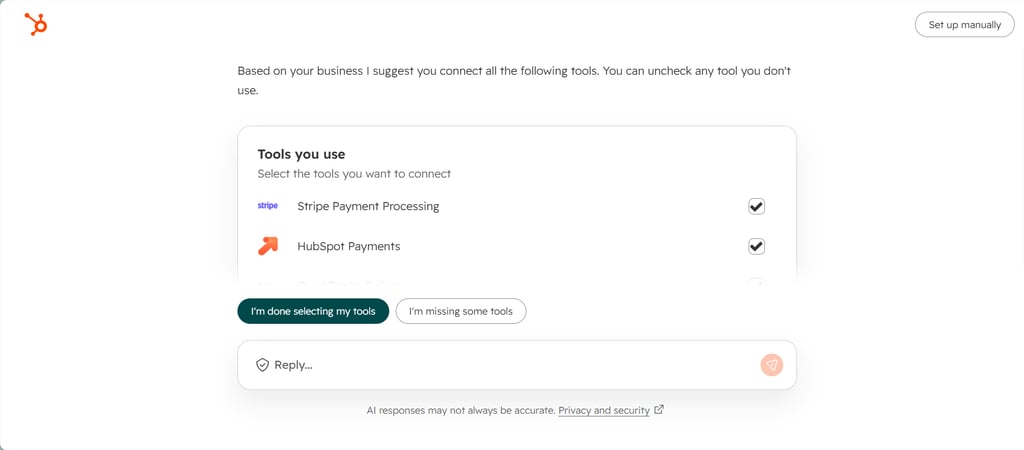
Once your startup’s sales processes start getting big, a standalone assistant stops being enough. With HubSpot’s native AI suite, Breeze, you get an AI tool that already knows who your leads are, what stage they’re in, and what happened on the last call. HubSpot is already one of the smartest CRMs around, so adding AI to it really elevates things.
If you’re hunting for the best AI sales automation for startups, this is where I’d start. Breeze has 3 parts: the Assistant, which you can converse with and ask to summarize a long email thread; Breeze Agents, which run in the background without prompting and can resolve tier-1 support tickets from your knowledge base and scan your market for high-quality leads; and Breeze Intelligence, which handles data cleanup, enriching new contacts with company size, location, and revenue.
The pricing also stands out because you’re actually charged for results of some of the tool's functions. For instance, the Customer Agent costs $0.50 per resolved conversation, and the Prospecting Agent comes at $1.00 per qualified lead. If your team has predictable volume or support, there’s real value there.
But this only pays off if your team has steady leads coming in or a sales process already in place. Without that, you’re paying for a tool with intelligence you can’t use yet.
5. Trendos – AI tool that helps spot trends and market opportunities early
| Overal rating: | |
| Standout feature: | AdRader lets you see sponsored places inside top AI models’ answers |
| Starting price: | $30.00/month for Basic |
| Best for: | Growth teams with active content or SEO efforts |
Trendos is an AI search visibility platform. Its AdRader feature monitors how your brand shows up in answers from ChatGPT, Gemini, Claude, Perplexity, and Google AI Overviews. Then, you get reports on whether you’re being mentioned, how you’re described, and how that changes over time.
This matters because AI has become the new way people find products and services. ChatGPT alone has almost a billion weekly active users, and with OpenAI now placing sponsored results as recommendations inside AI answers, Trendos is the tool that tells you if people are being shown your business.
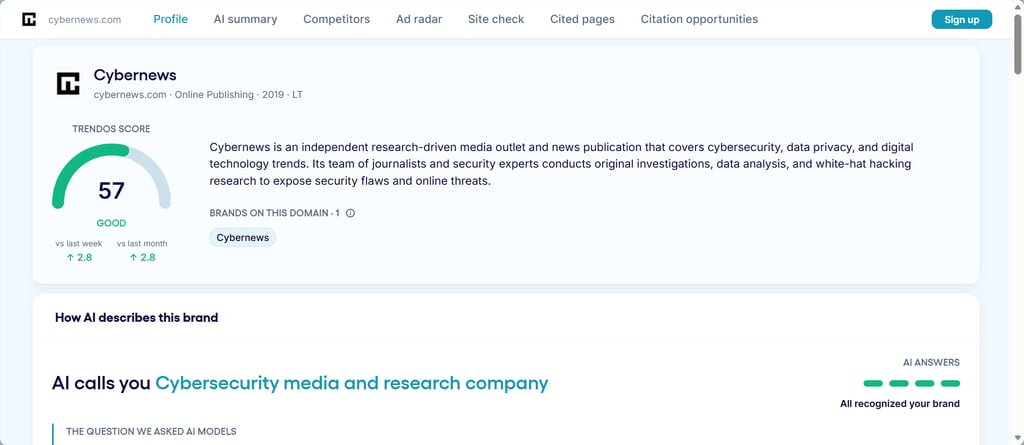
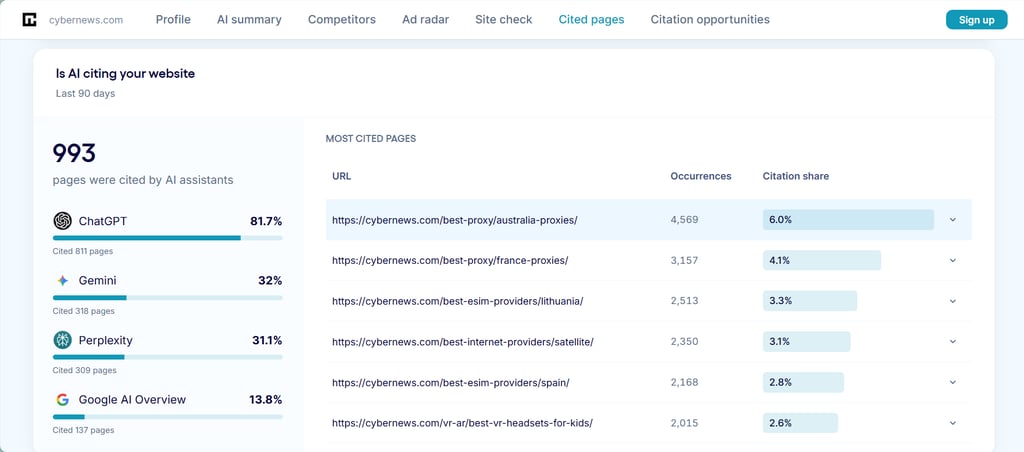
I ran a test on Cybernews and got its visibility score, sentiment trend, and a full breakdown of how each AI model describes the site. The major models did recognize it, and I could even see the exact citation sources shaping those answers, plus the pages pulling the most citations, which is genuinely useful if you’re deciding what content to write next.
But compared to other tools on my list, Trendos is heavily limited. Yes, it shows you what’s happening in AI search, but it doesn't tell you how to act on it, so you still have to pay for other execution tools.
Also, AI search updates continuously with fresh data and algorithm changes, meaning visibility scores can shift fast, so you have to adjust your content strategy every time to stay optimized, which really defeats the purpose of automation.
Best AI tools for startups: comparison
Here’s how my 5 best AI providers for startups stack up against each other.
| Provider | Best for | Key strength | Potential limitation | Ideal startup stage |
| Symphony by Wix | Founders building a website-driven business who want AI agents inside their existing workflows | Connection to Slack, CRM, calendars, payments, and your Wix back office; 6 built-in agents plus custom ones, all under human approval | Metered credits | Pre-seed to early growth, especially if you're on Wix |
| nexos.ai | Small teams looking for one platform to handle recurring tasks instead of several subscriptions | 200+ models in one workspace; no-code agents | Too much for solo founders | Seed |
| ChatGPT | Founders who need broad, flexible help | Wide general knowledge; Projects for collaboration; Scheduled Tasks for real automation | Still narrower than a real CRM or agent platform | Pre-seed through seed |
| HubSpot AI | Startups managing advanced sales processes and wanting AI inside the CRM | AI agents working with your actual deals and contacts; outcome-based pricing | Best features with Professional and Enterprise plans | Seed onward |
| Trendos | Teams tracking AI search visibility and spot marketing opportunities | Exploring brand mentions, sentiment, and citations across AI models | Information on what’s happening, not how to act | Any stage with active content or SEO efforts |
Which AI tool is best for different startup needs
At the end of the day, the best AI tool for you depends on your exact startup and what you’re trying to fix.
If you’re launching a website-based startup, Symphony by Wix is the strongest option. The platform doesn’t just connect to the tools you're already using. It also runs agents through one conversation and keeps your AI support sitting right next to your website, commerce, and marketing workflows instead of in a separate tab. For most early-stage startups, this covers the widest ground because it handles both your site and the workflows around it.
On the other hand, nexos.ai fits better if you need one workspace that replaces a stack of subscriptions and no-code agents that handle repetitive tasks.
For startups that want broad help across many tasks, ChatGPT is still a solid option with features like Projects and Scheduled Tasks for real automation, though it won’t replace your CRM.
As your startup grows bigger and starts scaling operations, specialized tools like HubSpot AI become key in working with your actual deals and contacts.
Meanwhile, Trendos is another specialized pick that helps you hunt for marketing opportunities by showing you exactly where your brand stands in AI search, how you’re being described, and which competitors are being recommended alongside you.
How to choose AI tools for startups
When searching for top AI services for startups, you should know that you probably don’t need custom AI development tools if your business is still young. You can get further faster with ready-to-use products. Once you build a workflow that’s genuinely unique and proven, then maybe you can push for something custom.
To find the right tool, focus on the challenges you're facing, not just the products' feature lists. So instead of asking what AI agent platforms are best for startups, confirm what’s actually slowing you down this month or look into that one repetitive task everyone on your team hates doing.
Once that’s settled, you can move to the more practical configurations like ease of onboarding, which determines whether you’ll actually use the thing, and pricing, which tells you if that saved time leads to saved resources, too.
Next up, you need to consider how much human interference is required. True automation should only loop you in when key decisions have to be made, not on every step. Collaboration features also make the tool easily accessible to the entire team, and integrations speed things up by working with the stack your startup already runs.
Top AI agents for startups also provide detailed analytics, so you know what works and can maintain full brand control to keep output aligned with your goals. As a founder, you should be able to review or override any output because the main vision is yours.
Data privacy is also non-negotiable and should be checked before connecting anything sensitive. Lastly, if you don’t plan to be a small startup forever, consider that the tool you choose should be able to grow with you.
Conclusion: the best AI tools for startups depend on what you need to scale first
All startups have distinct needs. When looking up top AI services for startups, you’ll find dozens. You should choose tools that remove the obstacle that’s slowing you down at this moment.
The other features might not even be relevant for your small business yet. Yes, HubSpot AI automates your CRM, but if you’re just starting out and your sales process isn’t too advanced, there’s barely any reason to use it. Same with Trendos and its AI search visibility perk. If you're still finding your footing, knowing where you stand in AI answers might not be the most important aspect.
That’s why I recommend Symphony by Wix. It provides a practical environment where agents work from a single conversation and handle everything from outreach and marketing to scheduling, research, finance, and design.
FAQ
What are the best AI tools for startups?
Symphony by Wix is my top pick if you’re just starting out, especially if your business is website-driven. There are other great tools like ChatGPT for general tasks, HubSpot AI for sales and CRM, nexos.ai for access to multiple models in one platform, and Trendos for AI search visibility.
What AI agent platforms are best for startups?
Symphony by Wix is the leader here. It’s an embedded business assistant with agents that live inside your website, operations, and marketing workflows and work with the same data and tools you’re already using.
What is the best AI sales automation for startups?
HubSpot AI is my pick for sales and CRM work. Its Breeze agents run inside the CRM, so they work with your actual deals and contacts rather than generic context. Still, it’s most useful once a clear sales process is in place.
Should startups use one AI platform or multiple tools?
Start with one strong platform, then add specialized tools only when you hit a limit it can’t cover. More tools early on means extra bills and more logins. Plus, it can create confusion and keep you from getting the output you want.
Do startups need custom AI development services?
No, most early-stage startups don’t, at least not at first. You can get by with ready-made platforms, and they’ll often be quicker and cheaper. As your business gets more unique and you gather more data, you can consider custom development.
Can AI help startups with marketing?
Yes, the best AI tools to boost marketing for startups help with content ideation, email drafting, sales messaging, competitor research, trend spotting, SEO support, and workflow automation.