How to choose a VPN in 2026
Our in-house cybersecurity experts and journalists, renowned for major reports like The Mother of All Breaches, conduct transparent, unbiased VPN testing and in-depth analysis.
With 750+ articles crafted based on real-world research, we empower readers to make informed purchasing decisions through first-hand expertise.
Learn more

Choosing a VPN in 2026 is more important than ever as online threats, data tracking, and geo-restrictions continue to grow. A reliable VPN protects your privacy, secures your connection, and unlocks global content. However, not all services deliver the same level of performance or safety.
With hundreds of options available, picking the right one can feel overwhelming. Factors like encryption standards, speed, server network, and privacy policies all play a crucial role in your experience.
In this guide, you’ll learn exactly what to look for in a VPN, helping you choose a service that fits your needs without compromising security or usability.

6 things to consider when choosing a VPN
You’ll choose the best VPN suited for your needs if you keep the must-have points in mind. From knowing the features to checking reviews and establishing your own needs, here’s what you need to do:
- Understand your VPN needs. Nail down your reasons for using a VPN and choose a provider that fits the bill.
- Evaluate VPN providers. Do the due diligence and make sure you choose a VPN that has the necessary security, features, customer service, and reputation.
- Server networks. Get a VPN with reliable international servers suitable for streaming, privacy, and entertainment.
- Pricing. Choose a VPN that hits the right balance of quality and value for money – it will be worth your time.
- Customer service. You may need help with your VPN, so download a provider with extensive support options.
- Make an informed decision. Don’t choose a provider until you’ve checked all the facts to find a reputable provider with everything you require.
1. Understanding your VPN needs
When choosing a VPN provider, think about what you’d like to get from the VPN. VPNs are beneficial in a broad sense, but they offer specific benefits too. Depending on your requirements, this could influence your decision-making.
You may want to unblock region-restricted content libraries on the major streaming sites or access geo-blocked live sports broadcasts. Perhaps you want to improve your gaming experience by lowering ping and escaping congested servers. If you’re an active torrent user, this is another area where a VPN becomes useful.
Think about the devices you want to use the VPN with and how many you might want to connect at once. Will the VPN be solely for yourself, or are you interested in sharing it across a household or work team?
Your location will also play a part. VPNs work in most countries, but if you’re located somewhere with internet restrictions, a VPN with varied servers can help you connect to sites you can’t usually use.
Nailing down the most important factors will help you pick the most suitable VPN provider for you.
2. Evaluating VPN providers
Reviewing and rating VPNs involves evaluating a selection of factors. From features to servers, speed, reliability, compatibility, and cost – here's what a premium VPN should provide.
Security and privacy considerations
The main point of a VPN is to keep you secure and private online. Strong VPNs will secure your traffic with modern AES encryption. A kill switch is also a vital feature to look for, as it will instantly cut the connection if your VPN connection drops. You'll never be at any risk of a data leak.
How a VPN handles your data is another consideration. If you’re trying to keep your online profile hidden and anonymous, you may be concerned about whether a VPN will store your personal details, browsing information, and payment info.
Look for VPNs with no-logs policies so that they won’t save any of your information. Even better if the VPN operates with RAM-only servers, as all user data is regularly erased from the servers.
Finally, location is also important. Not just your own (and whether VPN use is permitted), but also the jurisdiction in which the VPN is based. For instance, NordVPN is based in Panama, a jurisdiction famed for privacy.
On the flip side, some VPNs are based in the US and other members of the 14-Eyes alliance. This shouldn't be an issue if other security and privacy requirements are met, but it could still be a sticking point for privacy-focused users.
Reputation and experience
The VPN market is very crowded. So when you’re sifting through countless providers, you should look for VPN products that are well-established and respected. If you end up using an unproven or untrustworthy VPN, not only will you likely be bogged down by a weak product, your data and anonymity will be at risk.
Check out testimonials and online reviews. Platforms like Reddit are useful for genuine breakdowns of VPN user experiences – good and bad.

Seek out trusted websites that publish in-depth VPN reviews, compare different providers against each other, and see which VPNs consistently receive glowing reports from various sources.
Server network and locations
If your VPN provides thousands of servers in numerous countries around the world, you’ll be able to enjoy the most benefits.
For starters, you’ll get access to geo-blocked websites from anywhere. Streaming platforms like Netflix often have alternate content libraries in different regions, but the content is restricted to that specific region. Use a VPN service to change your IP address, and you can access content from any country – provided the VPN has that country in its server list. This also goes for accessing streams of live events like the NFL, EPL, and all the other major sports leagues.
You can also use VPN servers to access your restricted local sites when you're traveling overseas (like a work portal) and improve online gaming sessions by joining uncrowded servers as close to the game as possible (a great way to reduce ping and stop lag).
The more diverse the server list, the greater your content options are.
3. Features and performance
Once you’ve found a reputable VPN with worldwide servers, you should next take a look at the performance of its features and apps. Here are the topics to cover.
Connection speed and bandwidth
Connecting to a VPN will usually impact your internet speed, but it’s how a VPN deals with that that sets top providers apart from the rest. If your VPN provides reliable, consistent servers, you will still enjoy decent speeds.
You should also check which tunneling protocols the VPN supports. Efficient tunneling protocols will keep your speeds as close to the baseline as possible, so look for WireGuard, NordLynx, Lightway, and OpenVPN.
The amount of bandwidth your VPN uses will also impact your speed. If a VPN provider caps bandwidth, connections could slow down, so choose a product that doesn’t impose any bandwidth limits.
Device compatibility and simultaneous connections
We all use a number of devices in our day-to-day lives. So you should choose a VPN that supports multiple devices on all major platforms. Windows, Mac, Android, iOS, and Linux compatibility are the minimum. Premium VPNs will also support router installation and offer smart DNS features so you can connect to streaming sticks, smart TVs, and gaming consoles.
Simultaneous connections are the number of devices you can use the VPN on concurrently. Most premium VPNs offer between 5 and 10 simultaneous connections, which is plenty for most users. Some providers, like Surfshark, even offer unlimited simultaneous connections.
So if you’re thinking about sharing a VPN around your household, that could be very appealing.
Additional features and value-added services
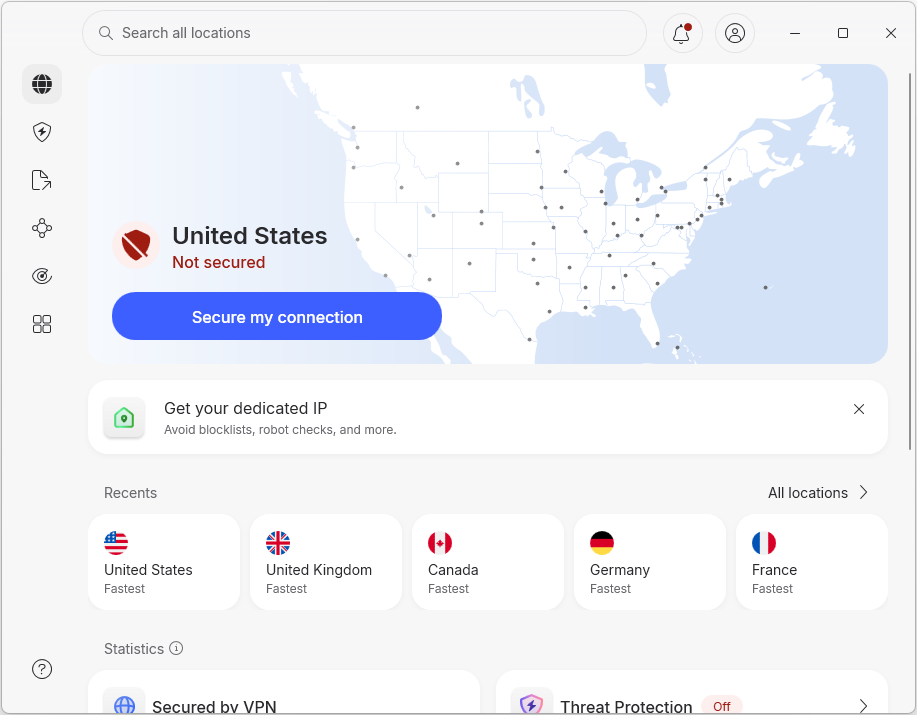
Aside from the basics, an attractive VPN will offer added value with extra features, such as ad-blockers, malware protection, and multi-factor authentication (MFA).
Smart DNS is a useful setting, as it enables you to unblock streaming content on devices that don’t support VPNs. If you’d like to use a VPN connection on some apps while keeping others on your regular connection, split tunneling is exactly what you need.
Some VPNs are also more suited for torrenting than others. For example, all of NordVPN’s servers are P2P-optimized.
These help optimize your downloads and uploads and ensure you’re protected from cyberthreats.
4. Pricing and plans
There’s no doubt that cost is an important consideration. After all, paying for a poor product is the last thing you want to end up with. One thing to note is that the longer the subscription, the cheaper the overall monthly cost will likely be.
Opt to pay for one month at a time, and you’re likely looking at around $10.00/month, if not more. But go in for the long haul, and you’ll see that the cost reduces significantly. And since VPN use is usually ongoing, it’s a wise move.
For instance, a two-year subscription to NordVPN costs just $3.49/month, while its one-month subscription is $14.99.
Don’t forget to check for trial periods too. If your chosen provider doesn’t explicitly have a free trial, it will still have a hassle-free money-back guarantee. You’ll usually get 30 days to change your mind, which gives you free use for a month.
5. User support and customer service
Don’t overlook the importance of customer service. If you run into technical problems while using a VPN, you’ll want a support network to help you solve the issue.
We recommend VPNs with 24/7 live chat, so you can get assistance and advice at any time. Email support is useful if the provider is known to respond swiftly to tickets.
A knowledge base is where the VPN will publish articles, guides, and tutorials about its products, features, and fixes. The more extensive the knowledge base, the easier it is to solve errors.
Finally, an online forum or community where you can find tips and hints will provide a place to ask questions and get help from real people who use the product.
6. Making an informed decision
As with all major purchases, don’t just take the plunge and sign up for the first VPN provider you find. Read reviews, consider all the points we’ve discussed in this guide (servers, speed, security, specs, features, cost, and support), and compare your options. Speak to people who’ve used VPNs and get their recommendations (you can do this with peers or even online forums).
Conducting your own research will ensure you get the right VPN for your needs, so make a shortlist of providers that stand out and try them out with free trials or money-back guarantees. This will give you a hands-on feel of different providers and help you decide which to join for a long-term subscription.
Final thoughts
Choosing the right VPN in 2026 comes down to understanding your needs and carefully evaluating providers. Focus on essential factors like strong encryption, a strict no-logs policy, fast speeds, and a reliable server network.
Whether you need a VPN for streaming, secure browsing, or bypassing geo-restrictions, the best choice is one that balances performance, privacy, and value. Take time to compare reviews, test free trials, and review pricing plans before committing. With the right approach, you can confidently choose a VPN that protects your data and delivers a smooth, secure online experience.
FAQ
What qualities should a good VPN have?
The best VPNs offer a fleet of global servers, strong security, speedy performance, encryption, and a kill switch. Plus, additional features like traffic obfuscation and smart DNS. Tick off all those boxes, and you’ll have a top-quality provider.
What VPN features are most important?
Servers, security, and speed are the three most important VPN features to look for. These are the main tools you’ll need to access restricted content, stream, and game without buffering. It will also ensure that you’re protected at all times.
What makes a VPN trustworthy?
Trustworthy VPNs will back up their promises with independent audits that verify their service. They’ll also have no-logs policies to ensure none of your data is ever stored. Ideally, the VPN won’t be based in 14-Eyes alliance countries either.
How do I know if a VPN is secure?
Secure VPNs will offer full AES 256 encryption, a kill switch, and additional safety settings like leak protection and traffic obfuscation. The provider will also have a no-logs policy, so your personal data won’t be stored.