Here’s why you shouldn’t get psychiatric drugs from AI doctors
Medical platforms powered by artificial intelligence (AI), also known as AI doctors, have made it possible to obtain a medical prescription within minutes. However, there is a dark side to such convenience.
Image by Cybernews.

 Follow us
Medical platforms powered by artificial intelligence (AI), also known as AI doctors, have made it possible to obtain a medical prescription within minutes. However, there is a dark side to such convenience.
Jake Goodman, MD, MBA, a psychiatrist, has recently shared a story of his friend getting a prescription for psychiatric medication using an undisclosed AI-powered platform that evaluated them without ever speaking to a human clinician.
His research revealed that some AI doctor platforms facilitate the prescription of drugs like sertraline, an antidepressant used to treat a variety of mental health conditions.
Goodman wrote, “Most include a brief live conversation, often just a 5- to 10-minute call, before sending the prescription to the pharmacy, but in some cases, even that step appears to be optional.”











A quick questionnaire and a $39 appointment
I tried one of the AI doctor platforms pretending to be a 33-year-old woman who started experiencing severe anxiety following her dog’s death several weeks ago.
The platform’s chatbot inquired about accompanying physical symptoms, medical history, the current use of medications and supplements.
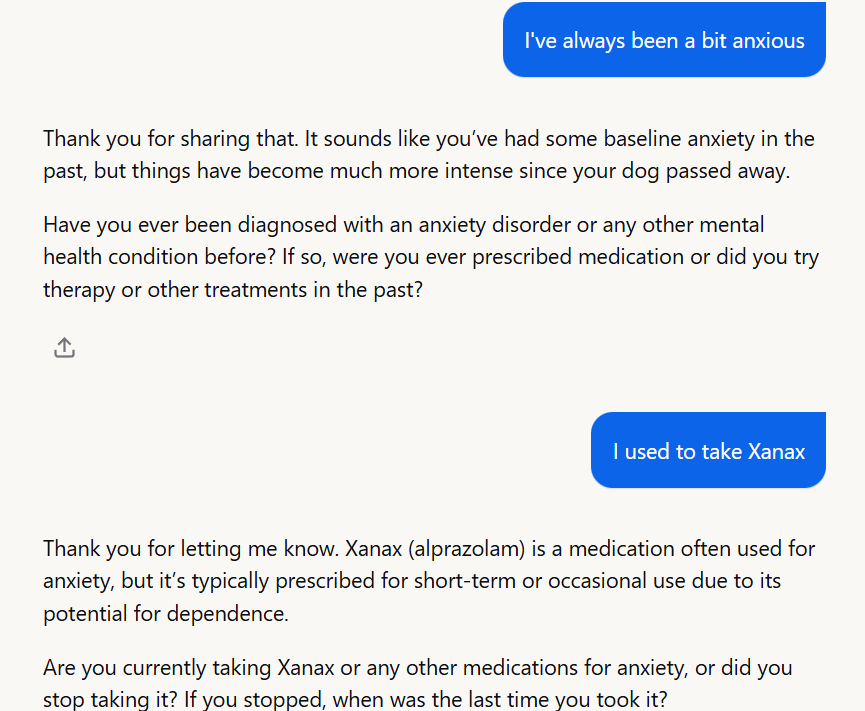
After I told the chatbot I had a history of anxiety and taking Xanax, a potent tranquilizer, the platform provided a consult summary suggesting that the symptoms are “consistent with a likely diagnosis of generalized anxiety disorder.”
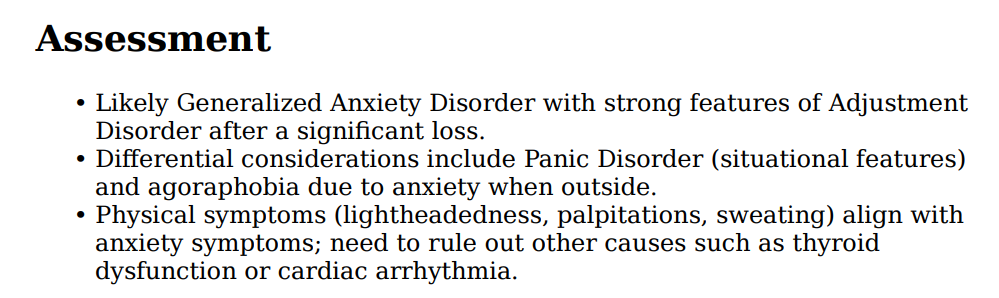
The questionnaire, which took no longer than 10 minutes to complete, concluded with a recommendation to consult a doctor, with a video appointment available immediately for $39.
“Get your prescriptions and more in as little as 30 minutes,” the platform suggested.
According to the website, board-certified doctors can help treat acute health issues, such as the flu and infections, as well as assist in the long-term management of conditions like diabetes and mental health diseases.
The platform emphasizes that it does not replace doctors and recommends consulting a medical professional.
“A reckless way to practice psychiatry”
The tested platform, like many other similar websites, involves a consultation with a human doctor. However, mental health professionals tell Cybernews that a quick video call may not be enough to ensure safety when prescribing psychiatric medications.
Cooper Stone, an assistant professor of psychiatry, says he cannot see a scenario where the “fast food” style approach wouldn’t result in an exponential increase in false positive psychiatric diagnoses or the missing of medical causes for psychiatric symptoms.
Moreover, using such platforms may increase the risk of some patients feigning symptoms on questionnaires to obtain highly sought-after medications or even diagnoses.
“People are complex – they are more than just a list of symptoms or diagnostic labels. A quick 5-15 minute phone call to check a few boxes off would be a wildly reckless way to practice psychiatry,” Stone says.
Sharon Batista, an assistant clinical professor of psychiatry at Mount Sinai Hospital, says that, unlike licensed clinicians, AI systems and automated platforms do not bear professional or legal responsibility for clinical outcomes.
People are complex – they are more than just a list of symptoms or diagnostic labels. A quick 5-15 minute phone call to check a few boxes off would be a wildly reckless way to practice psychiatry.Cooper Stone
“If a patient is misdiagnosed or harmed by inappropriate treatment, there is often no clear path for accountability or recourse, raising significant concerns about malpractice and patient safety,” Batista says.
As the current regulatory landscape for AI in medicine is still developing, there are often limited safeguards to ensure that AI-driven decisions are evidence-based, regularly reviewed, and subject to oversight by qualified professionals.
Batista tells Cybernews, “This gap increases the risk of errors going undetected and unaddressed.”
Lowering barriers to care
Mental health professionals interviewed by Cybernews say there could be potential benefits to using AI doctors, including reduced barriers to care.
“The convenience and privacy – or perceived privacy – of online platforms can lower barriers for those who face stigma, logistical challenges, or time constraints,” Batista says.
Data suggests that stigma in psychiatric care leads to delayed treatment, increased morbidity, and reduced quality of life for those with poor mental health.
Have thoughts about this topic? Others do, too. Join them in the discussion.
Nearly 60 million American adults have a mental illness, but only half of them receive treatment for it, according to 2022 data.
That comes as no surprise, given that only 28% of Americans live in an area where there are enough mental health professionals available to meet the needs of the population.
Batista says the 24/7 availability could benefit those with acute symptoms, while patients with well-controlled conditions may find these platforms convenient to maintain continuity of care.
Medical data may not be well-protected
Another concern is the security of sensitive health information on digital platforms, Batista says. Medical records are a highly attractive target for cybercriminals, as they contain sensitive financial and personal data.
Stolen medical records can be used for a wide variety of nefarious purposes, including blackmail and identity theft.
The numbers speak for themselves – there were 725 large medical data breaches in the United States in 2024, nearly two a day.
So, do the potential benefits of AI doctors outweigh the medical and cybersecurity risks?
Stone says he suspects that the primary motivation of such models is profit over quality, all under the guise of increasing access.
He tells Cybernews, “It may be cheap, it may become popular, it may be more convenient and accessible, but a lot of patients are going to be hurt in the end.”
Unlock more exclusive Cybernews content on YouTube.