Digital violence against women – fueled by AI – has doubled since 2020, UN report finds
The rise of AI is fueling online violence against women, especially those who work in public-facing jobs – including human rights defenders, activists, and journalists – increasing to an unprecedented level in just the past five years, a new UN report said on Tuesday.

Image by Cybernews

 Follow us
The rise of AI is fueling online violence against women, especially those who work in public-facing jobs – including human rights defenders, activists, and journalists – increasing to an unprecedented level in just the past five years, a new UN report said on Tuesday.
- UN report finds online abuse targeting female activists, journalists, and content creators has surged since the introduction of ChatGPT and other AI tools.
- 76% of women in public activism roles experience online violence, with AI-generated deepfakes and algorithms amplifying misogynistic attacks and triggering offline assaults.
- Advocates demand better detection tools and legal protections against weaponized AI, and Big Tech accountability for the 1.8 billion unprotected women globally.
Key Takeaways by nexos.ai, reviewed by Cybernews staff.
Described as a “chilling escalation,” the December report presents results from a 2025 United Nations survey of women in the public sphere from 119 countries, modelled on a similar study from 2020 on digital abuse and female journalists.
“Online violence is an escalating threat to women’s participation in public life and democratic deliberation in the 'AI Age,' especially in the context of rising authoritarianism, increased repression of women’s rights organizations, and networked misogyny, ” the 14-page report begins, mincing no words.
76% of women who identified as social media content creators and influencers, who focused on human rights, reported experiencing online violence in the course of their work.- Tipping Point: The Chilling Escalation Of Online Violence Against Women In The Public Sphere, UN Women survey






The report, commissioned by the United Nations Entity for Gender Equality and the Empowerment of Women (UN Women), further extrapolates that the online abuse aimed at women is, at times, a successful attempt to stymie women's hard-won freedoms of expression and gains in gender equality, as well as a gateway to “offline attacks, abuse, and harassment."

The release coincides with the launch of the UN Women-led initiative "#16Days of Activism," calling for safety, accountability, and justice online "for all women and girls," beginning on November 25th.
"It starts with one message...And then becomes a flood of online abuse," the global organization says.
What constitutes AI violence against women?
UN Women defines “technology-facilitated violence” as any act “committed, assisted, aggravated, or amplified” through the use of digital tools or technology for communication, such as social media, chat apps, generative AI tools, text messages, and email.
These “acts” include online harassment, threats, targeted surveillance, cyberstalking, doxxing, gendered hate speech, and gendered disinformation, extending to image and video-based abuse.






“AI-facilitated violence” takes it one step further, referring to digital abuse generated and spread by AI technology, resulting in “physical, sexual, psychological, social, political, or economic harm, or other infringements of women’s rights and freedoms.”
"Historically, 90-95% of deepfake videos are sexually explicit videos of women," says Sinead Bovell, women’s advocate and technology founder of WAYE Talks.
The findings escalate
According to the UN Women survey, 70% of participants in the fields of human rights, activism, and/or journalism, including media workers, writers, and other public communicators, reported experiencing online violence in the course of their work.
What’s more, the numbers were even higher at 76% for those who identified as social media content creators and influencers writing and commenting about human rights issues.
Of those 70%, about a quarter of women said they had experienced AI-assisted online violence, while 41% said they experienced offline attacks, abuse, or harassment linked to the online violence.
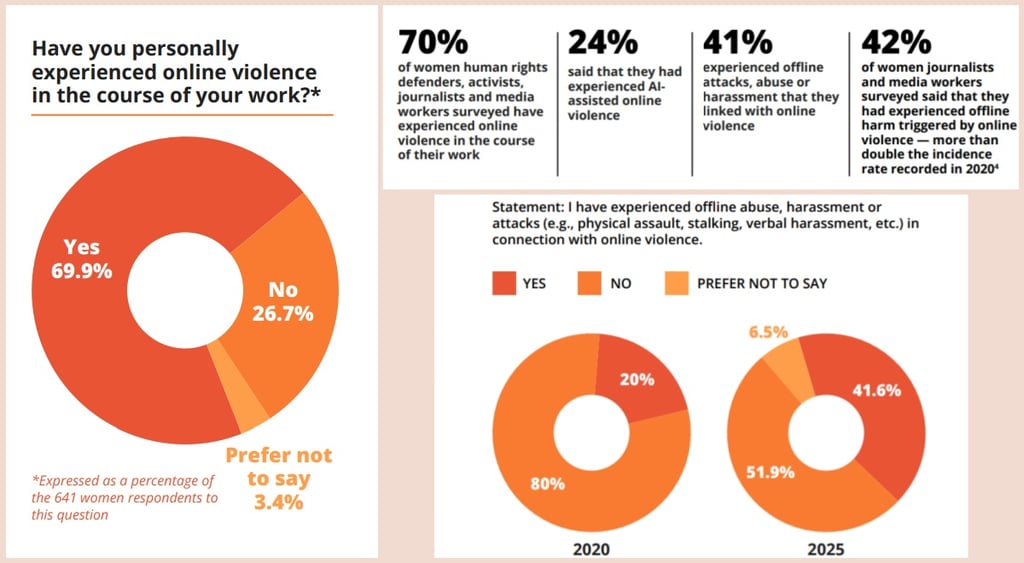
Sadly, for 42% of women journalists and media workers surveyed, the number of offline attacks triggered by online violence has more than doubled the rate recorded in 2020. This includes acts of physical assault, stalking, and verbal harassment.
Nearly a quarter (23.8%) of the women respondents said that they had experienced AI-assisted online violence, the UN survey also reveals.
What can be done?
UN Women says the mainstreaming of generative AI tools following the release of OpenAI’s ChatGPT in fall 2022 has only “supercharged the risks” of digital abuse toward women in public life.
“It had suddenly become much easier and cheaper to produce much more believable abusive content, such as AI deepfakes,” the report states.
The report also blames today’s algorithms – designed by big tech to maximize profits – which have been shown to quickly distribute content that amplifies hate, anger, and division.
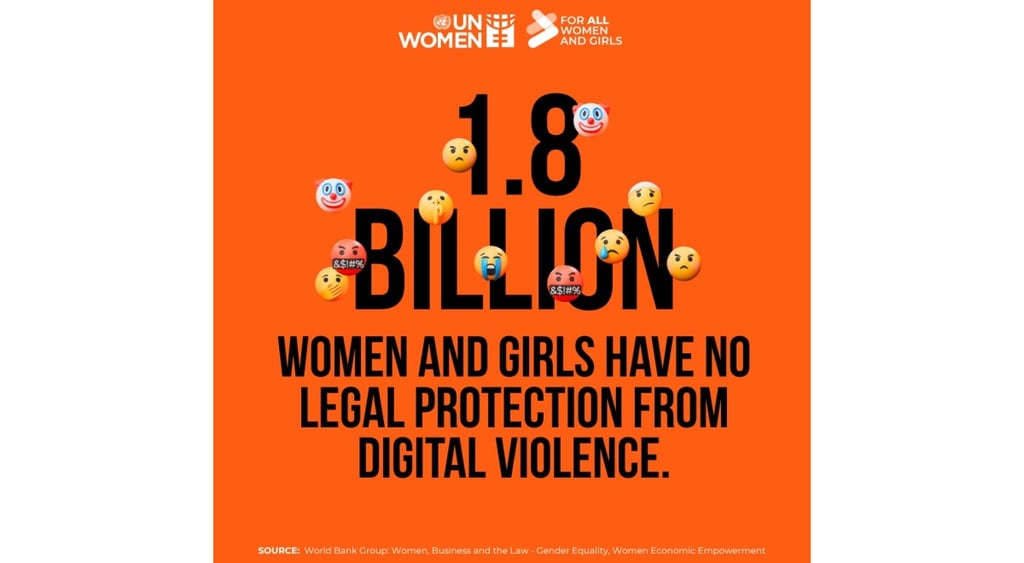
Statistics show there are 1.8 billion women and girls around the globe who have no legal protections from digital violence.
The advocates say the first step is to develop digital tools that can better “identify, monitor, report, and repel” AI-assisted online violence.
Next, UN Women says governing bodies and law enforcement must develop legal and regulatory mechanisms to support women in combating these online abuses.
And finally, the report says Big Tech companies must be tasked with preventing their technologies from becoming weapons to deploy against women in the public sphere, undermining a woman's right to gender equality, democratic participation, and freedom of expression.
Unlock more exclusive Cybernews content on YouTube.