Does your income have an impact on your AI use?
While low and middle-income earners choose between necessities and entertainment services, high earners would add AI services to their shopping cart.

Image by Cybernews

 Follow us
While low and middle-income earners choose between necessities and entertainment services, high earners would add AI services to their shopping cart.
It’s becoming increasingly difficult to deny that artificial intelligence has been integrated into nearly every aspect of our lives. A recent study on the fastest-growing brands of 2025, conducted by Morning Consult, a business intelligence platform, revealed that the use of AI tools has been growing rapidly among consumers who earn $100,000 per year.
In the report, the platform ranks the top 20 brands that have risen in popularity among the general population.
The research was conducted among more than 2,500 brands.
The ranking was determined by calculating the share of consumers who reported considering buying from a brand during the period from early July to the end of September 2025 and subtracting the share of consumers who reported the same during the period from January to March 2025.






The study revealed that AI companies, such as OpenAI and Gemini, gained popularity among users with higher annual incomes, with Gemini taking first place and OpenAI following in second.

Which AI chatbot is currently the most popular?
While the study notes that AI tools are no longer “new” or “emerging,” their popularity continues to grow as more consumers use them on a daily basis, whether for education, work, or entertainment.
Despite the statistics showing Gemini’s rapid growth among users, the report notes that when comparing the seven biggest AI chatbots (ChatGPT, Copilot, Gemini, Claude, DeepSeek AI, Grok, and Perplexity AI) based on key brand metrics (trustworthiness, ethics, social responsibility, relevance, and stakeholder value), the “front-runner” in most categories remains ChatGPT.
According to the Morning Star, OpenAI’s chatbot is “elevated by a much higher awareness than its competitors,” with 89% brand recognition by high-income consumers.
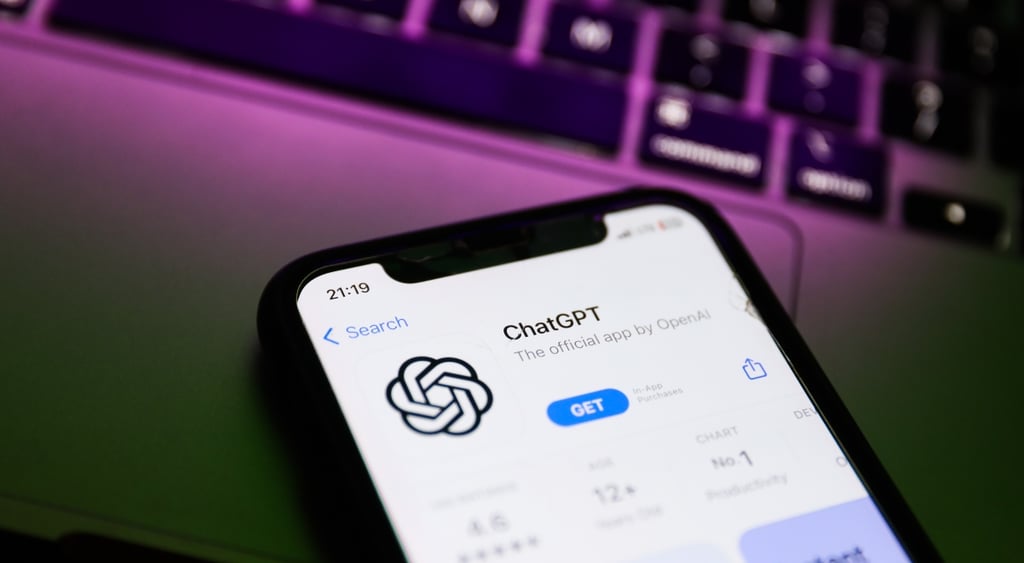
Is AI preferred by those with higher income?
The study also revealed what users prioritize based on their income.
While high earners are thinking of spending their money on AI-powered services, those considered middle-income consumers (earning between $50,000 and $99,000) tend to focus on delivery and entertainment services, such as those offered by DoorDash or MTV.
Meanwhile, the fastest-growing brands for low-income consumers (earning under $50,000) are related to everyday purchases and services, especially those that offer affordable deals, such as Discount Tire and Great Value French Potato Chips, according to the study.






Afraid to be replaced by AI, but still using it?
With the growth of AI, more people are concerned about the possibility of losing their jobs, as they may be replaced by AI. Could that prevent consumers from using AI?
The study reveals that the overall growth of AI chatbots has been noted among consumers who have “white collar” jobs, working as industry professionals, managers, administrators, and similar.
Nevertheless, the growth of AI tools has also been observed among “blue-collar” workers, particularly in the manufacturing and construction industries.
It has been previously reported that AI can, in fact, create new job opportunities, at least in software development.
Unlock more exclusive Cybernews content on YouTube.