Winter is coming: How can AI help in the event of severe weather approaching the US?
As the US faces severe weather, services and residents need all the information they can get to be fully prepared. This is where AI proves its reliability.
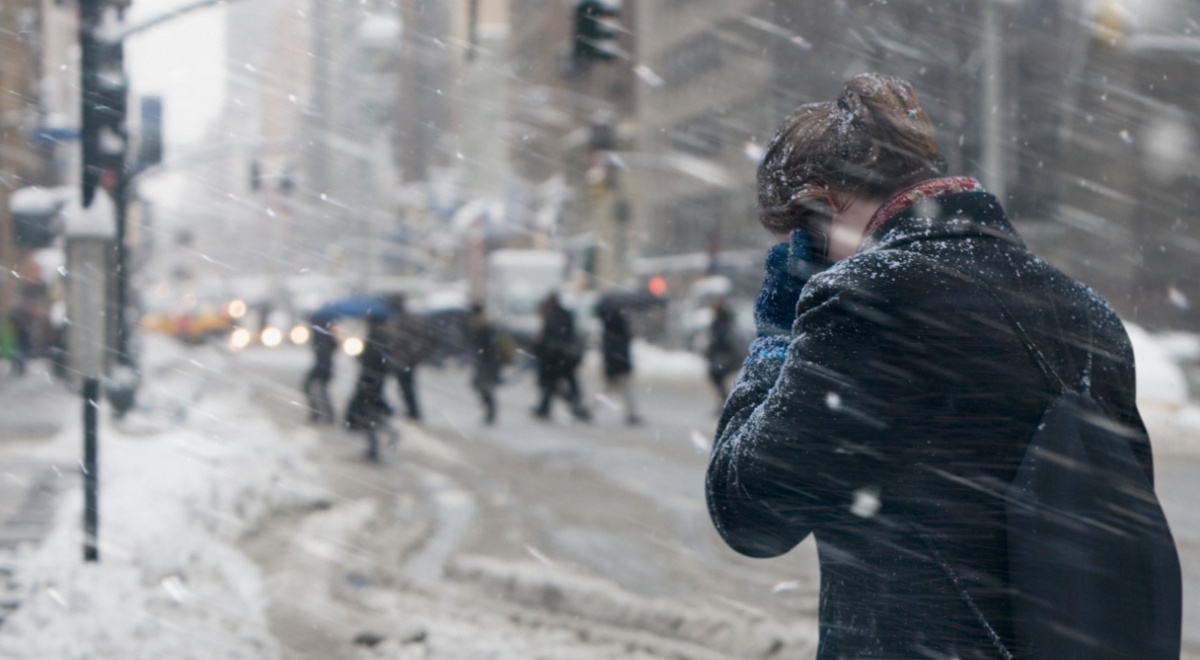
Image by Jose Luis Pelaez | Getty Images

 Follow us
As the US faces severe weather, services and residents need all the information they can get to be fully prepared. This is where AI proves its reliability.
As the US anticipates a major winter storm, could AI help forecast its severity and prepare for it?
The US is preparing for an upcoming winter storm, which is expected to hit on Friday, January 23rd, and last until the beginning of next week, according to CNN.
It has been reported that the storm is expected to bring sudden temperature changes across the country, with temperatures dropping by 40 degrees in a couple of days.
For example, on Thursday, the temperature in New York is 34°F, while on Saturday it's expected to drop to 6°F.






The drop in temperature may also be followed by heavy snowfall of 6 to 12 inches in various parts of the country, as well as roads getting covered by ice.
The news outlet also reported that it will follow any potential electricity outages that could also leave users without heat.

AI used for weather forecasting
Not being able to prepare for such situations in time might put one’s well-being at risk. That’s why weather prediction exists. However, it’s called prediction for a reason, which implies it might not always be very accurate.
AI is now used in many sectors, including weather forecasting.
Microsoft introduced its AI weather prediction model, Aurora, in 2024. The company shared that the model has been trained on “over a million hours of diverse weather and climate simulations.”
The conversation on this topic is live. Join in the discussion.
Because of this training, Aurora can predict the weather more accurately. This was later proven by researchers who claimed that Aurora already provides more accurate forecasts on weather in cities, air pollution, tropical cyclone paths, and ocean waves than traditional systems.
Google released its own weather forecasting model in March of 2025, later releasing an updated version under the name WeatherNext 2.
The company shared that its AI weather prediction model is eight times faster and with a resolution of up to one hour. The model was integrated into Google services such as Search, Gemini, Pixel Weather, and Google Maps.
Are AI models already pushing out regular weather forecasting systems?
These are only a few examples of companies working on AI-powered weather prediction tools, including the tech giant Nvidia.
These models work differently from regular weather prediction systems. However, the people behind creating these models can’t explain exactly how they work, notes Bloomberg.
It cites Todd Hutchinson, the director of meteorology at Windborne Systems, which collects atmospheric data, who calls such AI models a “black box” that can provide forecasts.
AI weather prediction models are built similarly to large language models (LLMs), but instead of being trained on text, they’re trained on data from temperature and humidity sensors.
The models then provide predictions that are more accurate than those from systems designed for weather forecasting. It’s also been emphasized that AI-powered models are faster and cheaper than the regular systems.
While AI weather forecasting models are useful and increasingly preferred over conventional systems, understanding how they work is important for their further application in understanding atmospheric processes.






AI used to cause fear during extreme situations
One explanation for AI's strong performance in weather forecasting is its ability to recognize patterns. But there might also be a chance that AI is basing its predictions on its own internal logic about the atmosphere.
While AI proves useful in this case, it’s worth remembering that the coin has two sides.
AI has also been used in multiple instances to create fake images that depict situations worse than they appear. This has already been the case during extreme weather events.
One such example is the flood of fake videos and images that emerged on social media during Hurricane Melissa.
If you search TikTok for Hurricane Melissa videos right now, you'll see a flood of AI-generated and fake videos.
undefined Shayan Sardarizadeh (@Shayan86) October 28, 2025
These AI videos include eye of the storm views from above, sharks swimming in floodwaters, huge waves battering towns, destroyed airports, and fake news reports. pic.twitter.com/ZEMeJdb2Dq
During this time, AI-generated images and videos circulated on social media, spreading misinformation about the actual situation, potentially putting people at risk.
Unlock more exclusive Cybernews content on YouTube.