Alibaba jumps on the “physical AI” bandwagon
Alibaba, the Chinese e-commerce and technology giant, has unveiled RynnBrain, its open-source artificial intelligence (AI) model specifically designed to power robotics.
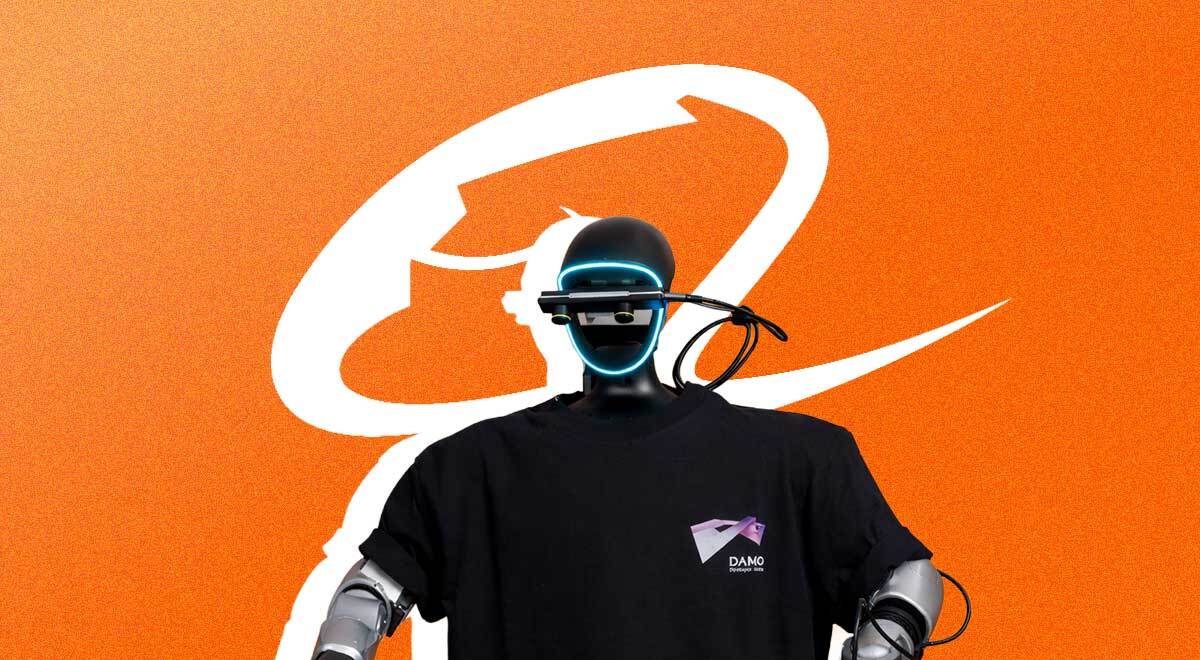
Image by Cybernews

 Follow us
Alibaba, the Chinese e-commerce and technology giant, has unveiled RynnBrain, its open-source artificial intelligence (AI) model specifically designed to power robotics.
Alibaba is the latest major company to join the race to develop software that moves beyond the virtual and allows robots to comprehend and act in the real world, a rapidly growing field dubbed “physical AI.”
RynnBrain is “an embodied foundation model grounded in physical reality” that moves beyond “passive observation,” according to an abstract published by Alibaba’s Damo Academy on Github, a developer platform.
“RynnBrain anchors its understanding in the physical world through comprehensive egocentric cognition, precise spatiotemporal grounding, and real task planning. This systematic upgrade enables active, physics-aware reasoning and complex task execution,” it reads.












In a video demonstration shared by the Damo Academy, a robot is seen carrying out a range of tasks, including organizing tableware in the sink, getting a bottle of milk from the fridge, and identifying fruits and putting them in a basket.
While these may seem like simple tasks, they require complex AI that enables the robot to perceive its surroundings, make decisions, and coordinate movements in real time.
RynnBrain is an open-source model, meaning developers can use it for free. This underpins Alibaba’s broader AI strategy, with several of its Qwen large language models also released as open source.
Last year, Alibaba CEO Eddie Wu said the company was investing heavily in AI infrastructure, including in a global “super AI cloud” to prepare for artificial superintelligence, or ASI, that’s expected to surpass human capabilities.
What is physical AI?
Like “superintelligence,” physical AI has become a buzzword in both Silicon Valley and China, with companies in both racing to tap into what’s expected to grow into a multitrillion-dollar industry.
Coined by Jensen Huang, the chief executive of Nvidia, physical AI is an umbrella term for machines that rely on AI, including robots, self-driving cars, and drones, among others, and many in the industry see it as the next frontier of technological development.
Physical AI systems are expected to make their own choices and complete tasks without constant human direction. Such systems are designed to interpret and analyze data rather than just process it, including how objects move and how forces interact with each other.
Nvidia has a number of models to train and run AI in robotics under its Cosmos brand, while Google DeepMind, the search giant’s AI department, is developing Gemini Robotics-ER 1.5.
The Taiwanese electronics manufacturer Asus has recently announced it would no longer make smartphones and will focus its resources on physical AI systems instead.
Unlock more exclusive Cybernews content on YouTube.