Anthropic launches Claude Science, unveils cheaper Sonnet 5 AI model
Anthropic on Tuesday dives headfirst into scientific research with the launch of Claude Science – an all-in-one AI workspace designed to “accelerate the pace of scientific discovery” – while also unveiling Claude Sonnet 5, its latest frontier AI model built for more autonomous coding and research tasks.

Image by gguy | Shutterstock

 Follow us
Anthropic on Tuesday dives headfirst into scientific research with the launch of Claude Science – an all-in-one AI workspace designed to “accelerate the pace of scientific discovery” – while also unveiling Claude Sonnet 5, its latest frontier AI model built for more autonomous coding and research tasks.
- Anthropic has launched Claude Science, a new AI workspace built to help scientists conduct research, analyze data, and manage complex computing tasks.
- Claude Sonnet 5 was also released with default cyber safeguards designed to detect and block dangerous cyber use in real time.
- The launches show AI companies are pushing beyond chatbots into scientific research, drug discovery, and more autonomous AI systems.
Key Takeaways by nexos.ai, reviewed by Cybernews staff.
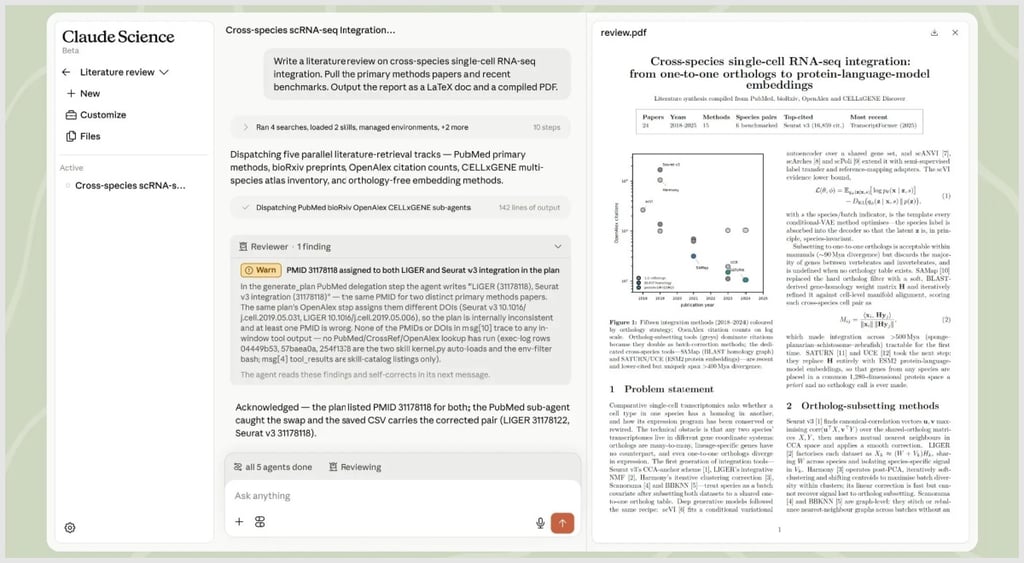
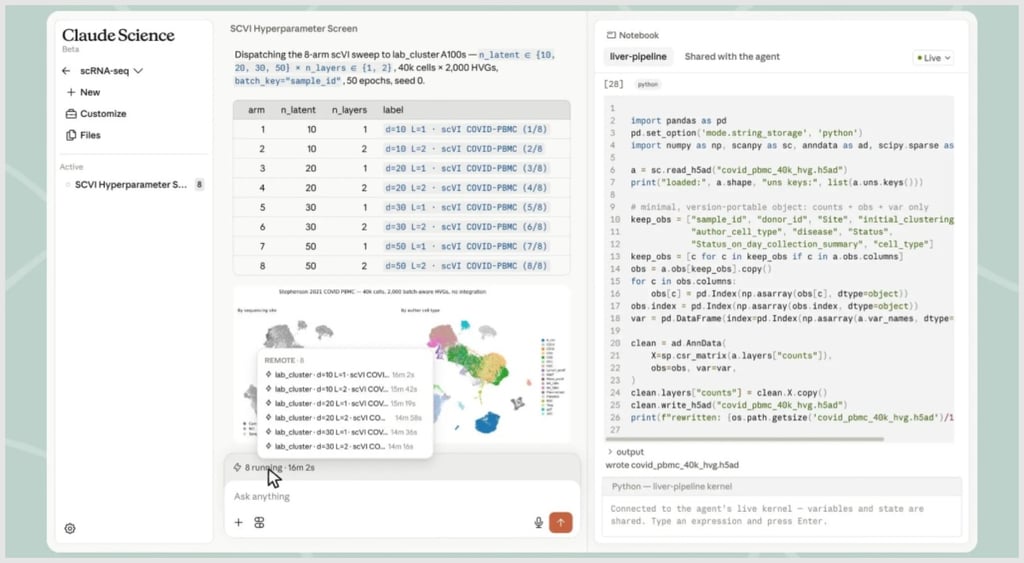
The new tool – described as an AI research workbench – was created to help scientists streamline research, analyze data, and manage complex computing workflows, the company said.
In development since October 2025, the specialized app is said to offer scientists a user interface specifically designed for conducting research, coding and computing all in one workspace.





What’s more, the app itself is designed to work on the researcher’s own device rather than in a web browser.






Anthropic contends that until now, scientists have been forced to conduct research across dozens of databases, while transitioning between various tools and multiple file formats.
That's besides the scientific knowledge and resources found across hundreds of specialized sources, including platforms, each with its own query language and schemas, as well as journals, preprint servers, and domain-specific open models, Anthropic said.
“Claude Science brings these fragmented tools into a single research environment where scientists can conduct all stages of their work – all while providing flexible access to computing resources,” the company boasted.
From research workbench to drug discovery
The tool comes pre-configured with more than 60 scientific databases and can render scientific artifacts such as 3D protein structures, genome browser tracks, and chemistry drawings, while also running on Anthropic's existing Claude models – all of which have undergone standard responsible scaling and biosecurity evaluations, it said.
The company also announced its own pre-clinical drug programs on Tuesday, using AI to focus on neglected diseases and develop new healthcare interventions, according to Anthrpoic's head of life sciences, Eric Kauderer-Abrams.
"These are areas that are outside the scope of what the traditional pharma and biotech landscape might consider attractive targets, but nonetheless have real burden associated with them," Kauderer-Abrams said at a press conference introducing the new initiative.
Starting Tuesday, Claude Science is publicily available in beta for Claude Pro, Max, Team, and Enterprise users.
And while several research organizations and companies were tasked with testing the platform before its release, Anthropic said it will continue to tweak the platform based on user feedback.
Anthropic releases Sonnet 5
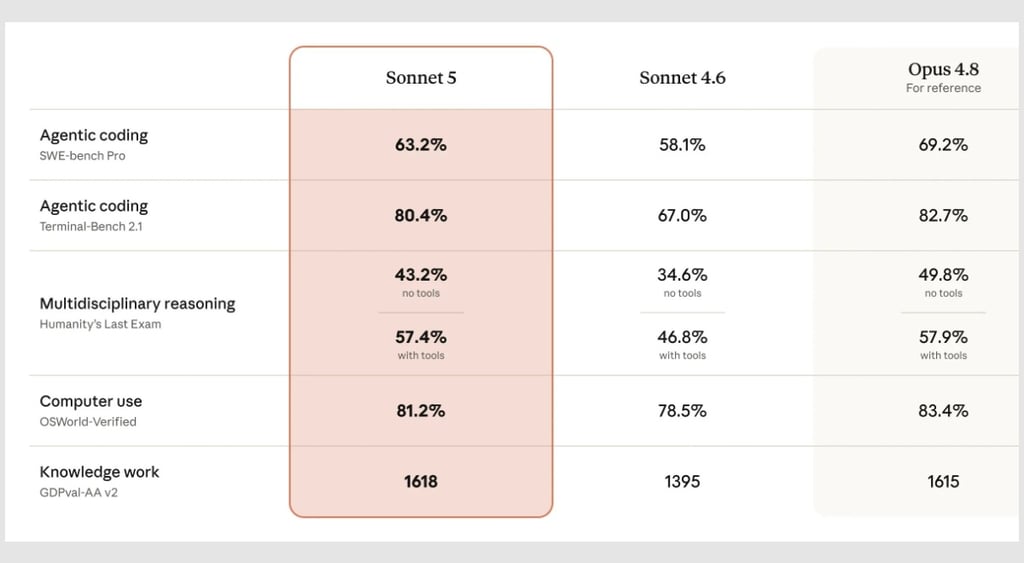
Separately on Tuesday, Anthropic announced the release of its upgraded Claude Sonnet 5, which the AI startup touts as its “most agentic Sonnet model yet.”
Anthropic said Sonnet 5 costs considerably less to run than its previous models, including Sonnet 4.6, and was designed to autonomously make plans, use tools like browsers and terminals, and handle sustained coding – all at a performance level on par with the powerful Opus 4.8.
Jake Williams, faculty at IANS Research, tells Cybernews Sonnet 5's release is “a huge win for security teams everywhere.”
“It's really encouraging to see Anthropic, a trusted LLM provider, release such a capable and cost-effective model,” Williams said.
Part of the excitement for Williams is that Sonnet 5 is "built for driving agents," largely due to its lower cost and stronger performance compared to previous models.
“Up to this point, we've seen organizations that can't deal with the very high costs of frontier models like Opus experimenting with down-market and offshore LLM providers,” Williams said.
The former NSA hacker and seasoned security researcher explained that organizations cutting corners to reduce overhead can face “very real security consequences, including compliance and governance issues – let alone data theft or malicious LLM outputs.”
Sonnet 5 is available starting Tuesday at an introductory price of $2 per million input tokens and $10 per million output tokens through August 31, 2026, before moving to standard pricing of $3 per million input tokens and $15 per million output tokens.
Sonnet 5 gets stronger cyber safeguards
"On agentic safety, the model is better at refusing malicious requests and resisting hijack attempts in prompt injection attacks,” the company said, adding that it also delivers lower hallucination and sycophancy rates than its predecessor, Sonnet 4.6.
Interestingly, when it came to measuring its ability to carry out "potentially dangerous" security capabilities, Anthropic noted that although it did not "deliberately train Sonnet 5 on cybersecurity tasks."
Still, the model was able to perform "routine, non-harmful cyber tasks," but was less adept at vulnerability exploitation than Opus 4.8 and Mythos 5.
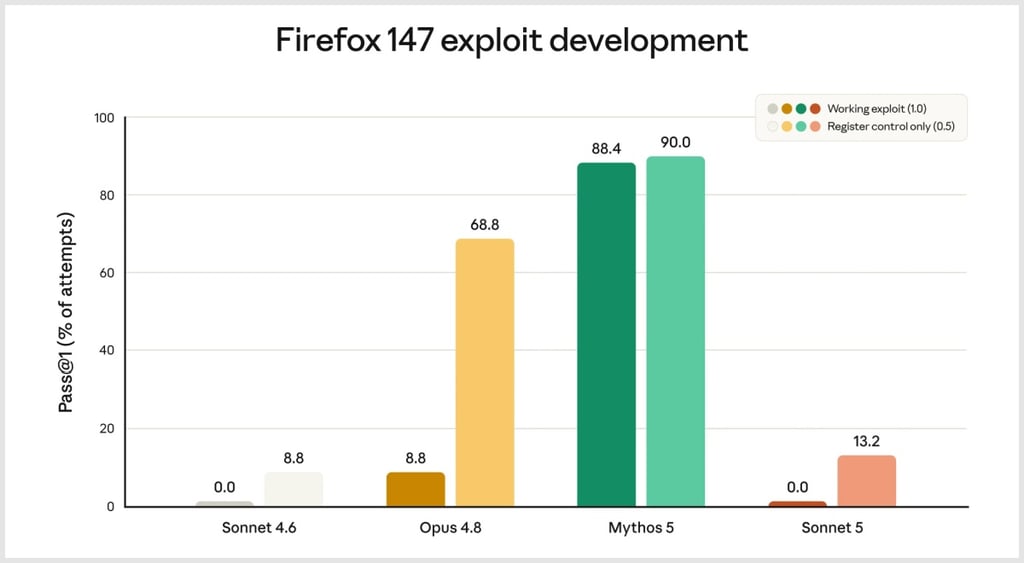
“Sonnet 5 was never able to develop a full working exploit,” Anthropic said.
Still, because of its higher general intelligence, the model was launched with cyber safeguards that can “detect and block dangerous cyber usage in real time,” enabled by default, although they are still less strict than Anthropic’s Mythos public-facing version, Fable 5.
Tuesday's launches come as the US Commerce Department officially lifted the Trump administration's export controls on both Mythos 5 and Fable 5, reversing restrictions imposed earlier this month on the Claude models over national security concerns.
Strong password generator

Unlock more exclusive Cybernews content on YouTube.