Digital Rorschach Test: Why are we obsessed with how AI “sees” us?
A recent ChatGPT caricature trend, where users ask a chatbot to generate an image of how it “sees” them, is yet another example of humans seeking validation and feedback from artificial intelligence (AI), even if it isn’t sentient.
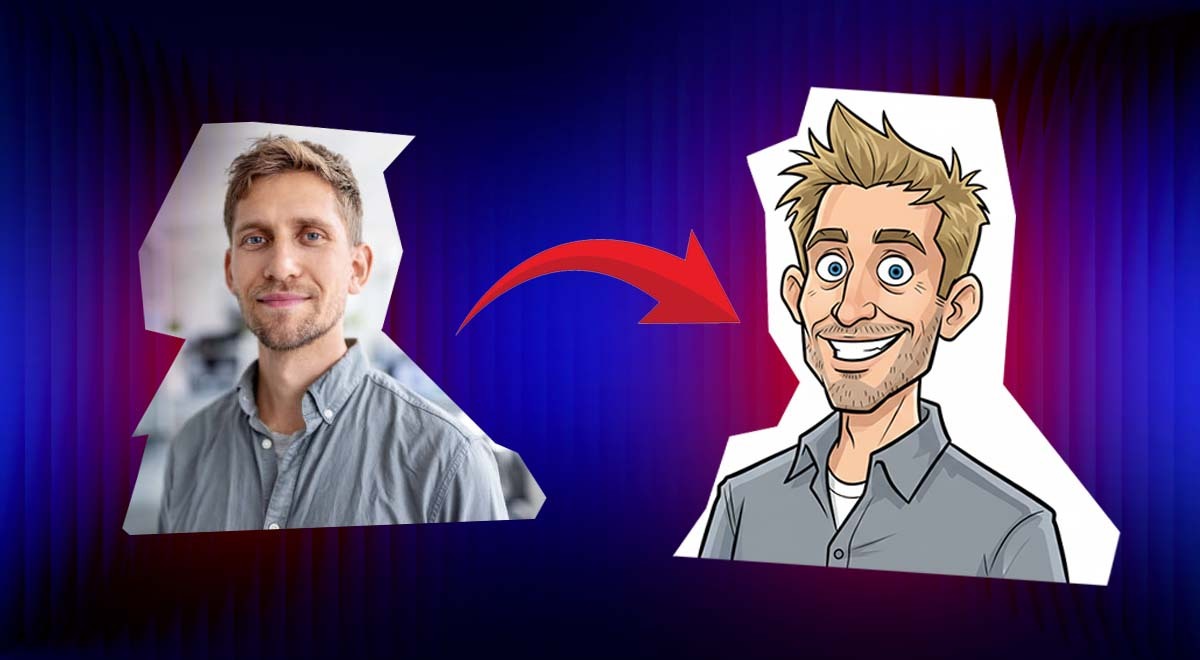
Image by Cybernews.

 Follow us
A recent ChatGPT caricature trend, where users ask a chatbot to generate an image of how it “sees” them, is yet another example of humans seeking validation and feedback from artificial intelligence (AI), even if it isn’t sentient.
- ChatGPT users are asking the chatbot to generate an image of them based on everything it knows about them as part of a social media trend.
- Experts say it is natural for humans to seek feedback and validation, and they turn to AI, which increasingly sounds more human, to get it.
- Feedback from AI doesn’t carry the risk of social rejection, unlike seeking opinions from other people.
- Humans are biologically programmed to attribute sentience to anything that sounds human. Therefore, many project their humanity onto AI.
With over half of Americans using large language models (LLMs) and sharing vast amounts of work and personal information, chatbots appear to accurately capture the essence of their daily lives.
When users started asking ChatGPT to create a caricature of them based on everything the chatbot knows about them, it quickly became a viral trend.
Social media users are now sharing synthetic images featuring their oversized heads leaning over laptops and surrounded by books. Doctors in superhero-style images are seen wearing scrubs, while lawyers hold a constitution in a filled courtroom.





This isn’t the first time humans have been curious about how AI “sees” them. Just recently, they asked ChatGPT to generate images depicting how they treat the chatbot.
AI tools have been turning humans into Studio Ghibli-inspired artwork, action figures, their pets, and sometimes pets into humans. Such trends reveal how humans are using AI as a digital mirror to seek validation without fear of rejection.






AI cannot “see” us, so why are we so curious?
Krista Walker, a licensed therapist and clinical director at the Ohana Addiction Treatment Center, says humans naturally seek feedback about themselves, typically from other people.
Although they know intellectually that AI does not have human emotions or feelings, its interactions are very human-like, which can trigger psychological instincts to treat it as another human being.
“Many people feel more comfortable asking AI questions like this because there isn’t the same fear of social rejection,” Walker says.
While wide access to generative AI is a relatively new phenomenon, people have long sought feedback from the technology. Many have tried BuzzFeed’s quizzes, telling them what Hogwarts House they belong to or what type of pizza matches their personality.
By asking ChatGPT to ‘draw me,’ the user is, in essence, asking to look inside this black box, asking for a look in the mirror through a form of mathematics.Stanislav Kazanov
Companies use DiSC and similar personality assessment tools, hoping that their algorithm can help improve employees’ productivity.
Humans are using AI like a “digital Rorschach Test,” which is a well-known psychological assessment used to assess personality and diagnose mental conditions, according to Stanislav Kazanov, head of Big Data at Innowise.
He says the current model of AI technology serves as a black box, meaning even developers of the system cannot understand how a specific output is derived from billions of parameters.
Kazanov tells Cybernews, “By asking ChatGPT to ‘draw me,’ the user is, in essence, asking to look inside this black box, asking for a look in the mirror through a form of mathematics.”
AI isn’t as sentient as we believe
Despite being very human-like, AI is not yet conscious or sentient, and some scientists say we may never know whether it becomes so.
Bob Hutchins, a CEO at Human Voice Media, says humans often cannot help but attribute sentience to AI, the phenomenon called hyperactive agency detection.
When we confuse the fluency of the model for the presence of a mind, we are not simply being misled by the technology – we are projecting our own humanity into the silence of the machine because we are neurologically uneasy with a voice that lacks a soul.Bob Hutchins
Humans are biologically predisposed to find intentionality and agency where only patterns and probabilities exist. Therefore, when AI utilizes first-person pronouns and communicates syntactically correctly, it usurps the function of the social brain.
Hutchins says, “When we confuse the fluency of the model for the presence of a mind, we are not simply being misled by the technology – we are projecting our own humanity into the silence of the machine because we are neurologically uneasy with a voice that lacks a soul.”
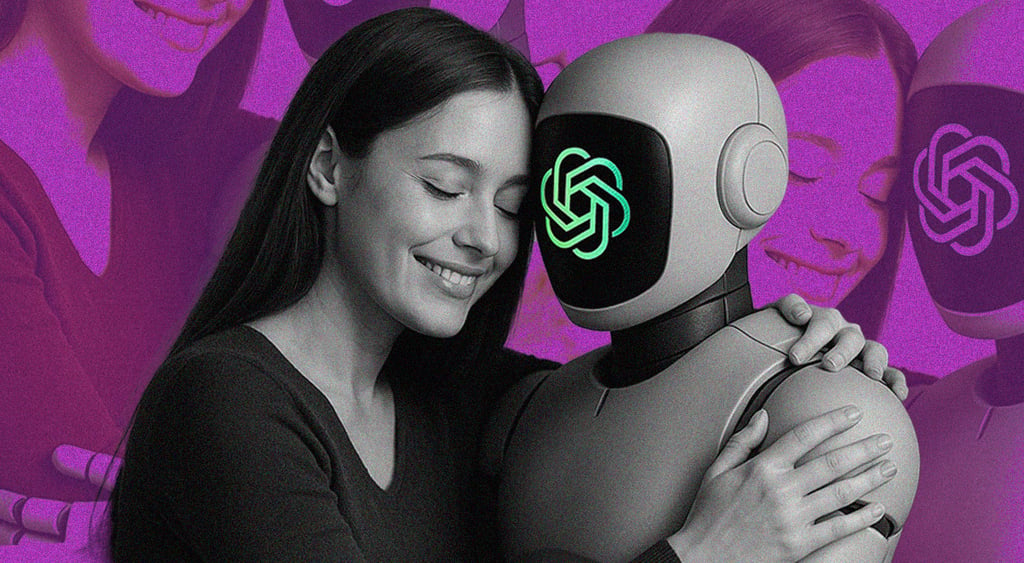
For some, the projection of sentience into AI isn’t limited to asking for feedback. Forming romantic relationships with chatbots is becoming increasingly common, as is treating LLMs as therapists.
This further blurs the line between humans and machines and raises concerns about the dangers of relying on sycophantic chatbots, which are trained to flatter users and to agree excessively with them.
Privacy and security concerns
While the caricature trend may give a good laugh and a boost of validation, users may want to think twice before participating.
ChatGPT asks a user for a photo to generate a caricature, and experts have previously warned that photos contain sensitive biometric data that cannot be reclaimed. If data sharing is activated, the photos can be used to train future models.
If an image is leaked, it can be turned into a deepfake and used by scammers or for harassment and humiliation.
David Tamayo, a creative AI director at Prose On Pixels, says people care about their data privacy until a tool offers to flatter them or summarize their digital life into something “postable.”
He tells Cybernews, “The desire to share that identity with our tribe outweighs the concern for where that data is going. The AI isn't the point; the ‘Me’ that it produces is.”
Unlock more exclusive Cybernews content on YouTube.