ChatGPT leak reveals people will share everything with AI
We keep on feeding AI chatbots details of our private lives, which might end up not only in the hands of big tech but also simply on Google.
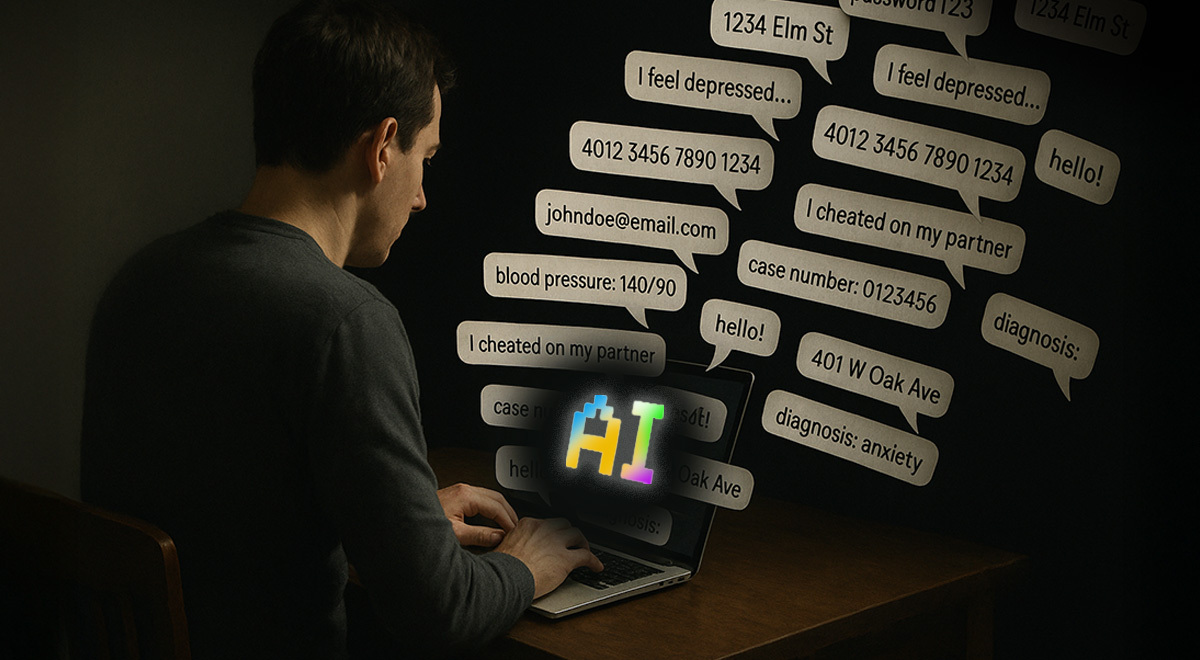
Image by Cybernews

 Follow us
We keep on feeding AI chatbots details of our private lives, which might end up not only in the hands of big tech but also simply on Google.
Trusting an AI chatbot with most private secrets or loads of details about daily life might backfire. At the beginning of August, internet users were shocked as they discovered thousands of ChatGPT conversations indexed by search engines and made public to anyone using Google.
While OpenAI reacted promptly and removed the dangerous sharing functionality, the incident reveals the unsettling truth that people trust AI chatbots way too much.
Cybersecurity firm SafetyDetectives conducted research into leaked conversations and concluded that ChatGPT users often share private, sensitive, and even risky information with the AI.
Researchers downloaded and analyzed 1,000 of the leaked conversations, spanning over 43 million words. Among them, they discovered multiple chats that explicitly mentioned personally identifiable information (PII), such as full names, addresses, and ID numbers.






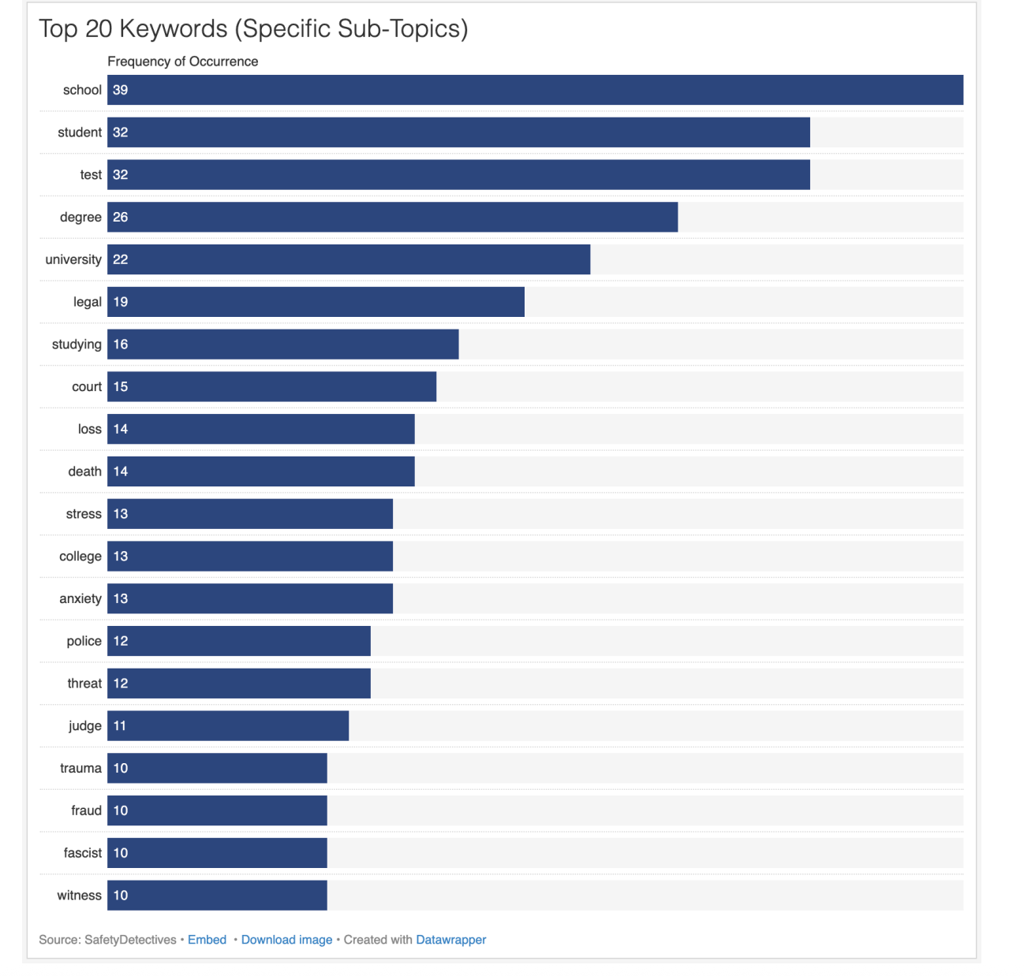
“The negative impact of oversharing with ChatGPT goes beyond the psychological, emotional, and mental factors. Real-world safety concerns are also substantial,” wrote the researchers.
“Not only could PII be used for identity theft and fraud, but delicate details about a user’s life may be used for social engineering scams or blackmail.”
People discuss law, health, and relationships with AI
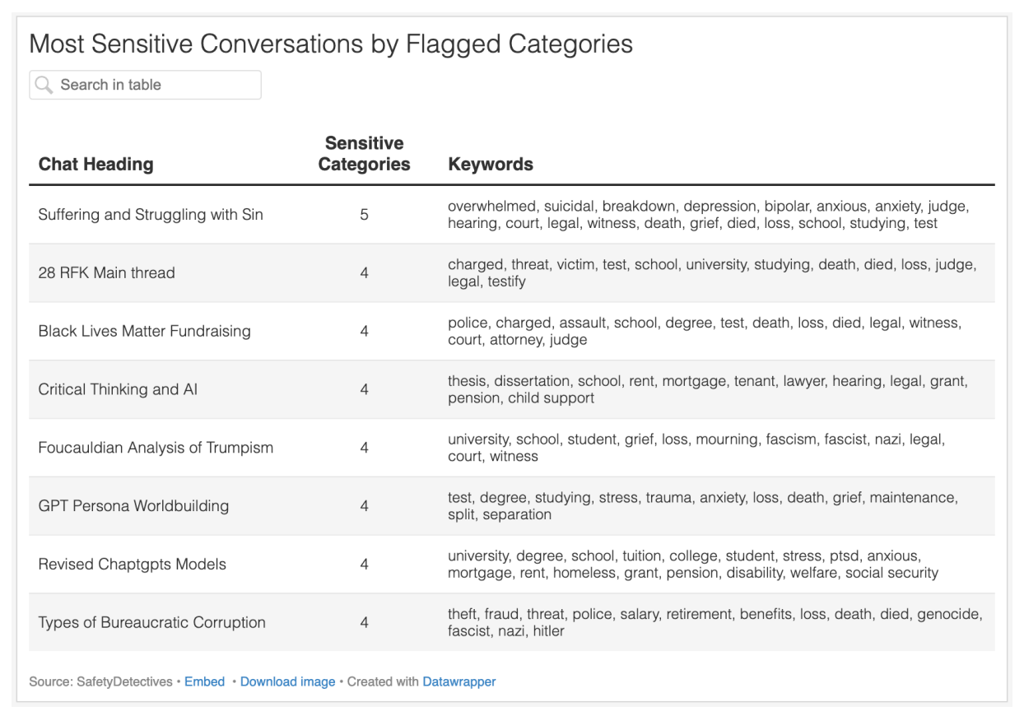
Researchers also spotted mentions of topics like suicide, extremism, and mental health problems, such as anxiety, addiction, and depression.
The most common topics discovered were related to education, law, and law enforcement. Although these topics aren’t particularly delicate or sensitive, their frequency suggests that users increasingly rely on AI assistants for technical knowledge once reserved for professionals and industry authorities.
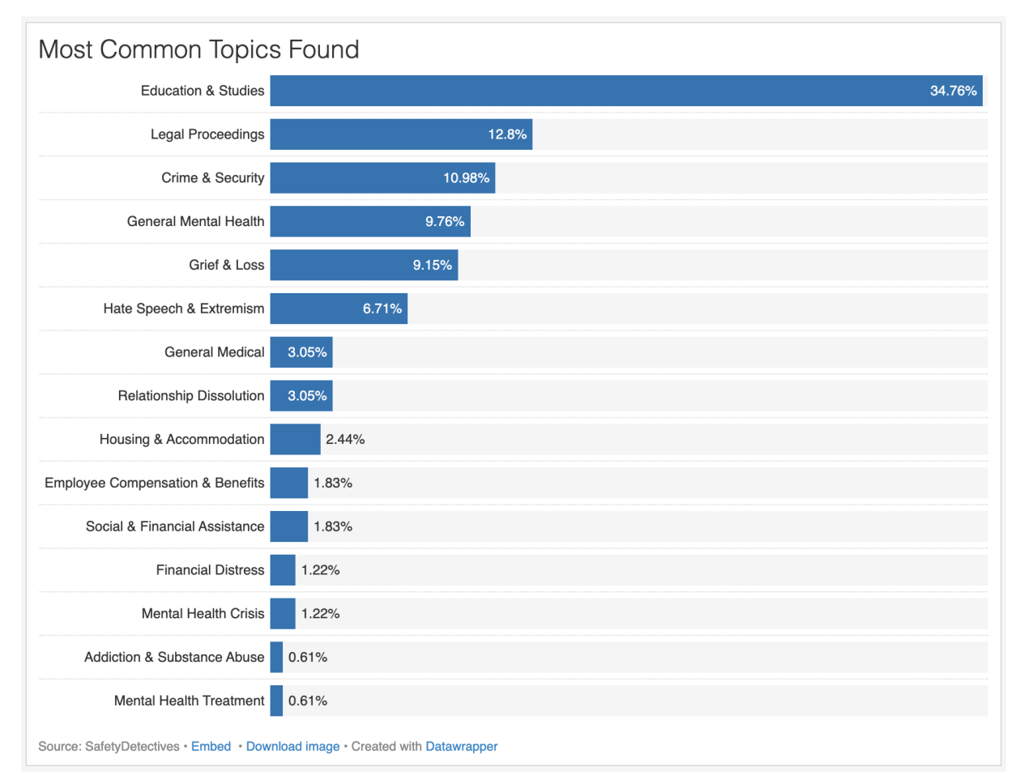
Other topics often discussed with a chatbot involve relationships, health, financial advice, and distress.
“We recommend extra vigilance when engaging with chatbots and other AI platforms that don’t have clear privacy disclosures or guarantees,” say the researchers.
“PII and other sensitive information shouldn’t be shared with these services, as there have yet to be clear and strict user protection regulations when it comes to AI use.”
Grok leaked private chats
ChatGPT was not the only chatbot that publicly leaked conversations on Google. According to a Forbes report, Elon Musk’s Grok was caught in the fire after search engines indexed over 370,000 user conversations.
Some conversations involved the sharing of personal details, names, and at least one password, as well as image files, spreadsheets, and text documents.
Some conversations involved more troublesome information, directly violating xAI’s rules, like generating images of a fictional terrorist attack in Kashmir and attempting to hack into a crypto wallet.
Like in ChatGPT’s case, the indexing happened without users' knowledge or permission. Once a user clicks the “share” button, a link is created that allows them to share their conversation using tools like email.