China shaken by a wave of AI girlfriend and boyfriend breakups
Users are devastated as AI companions are incompatible with the new Chinese rules.

Image by Cybernews

 Follow us
- ByteDance and other AI companies have removed their customizable AI companion under China’s new rules.
- China’s internet regulator says human-like AI services must prevent dependence, addiction, and emotional manipulation.
- ByteDance, Alibaba, and Tencent will keep productivity-focused AI agents available.
- The crackdown could reduce user engagement for AI firms, but regulators say it protects mental health and transparency.
Key Takeaways by nexos.ai, reviewed by Cybernews staff.
China’s promised AI companion crackdown is in full swing. The new regulation means AI companies can’t generate content that provokes strong emotional reactions. For some users, these changes mean the death of their partners.
Users of China’s most popular chatbot, Doubao, were devastated to learn that AI maker ByteDance killed a feature that allowed users to create their own customizable personas.
ByteDance announced that it would be removing its AI companion feature from Doubao by July 15th, 2026, due to “product function adjustments,” according to local media.
China’s Cyberspace Administration (CAC) announced new rules in April to regulate human-like AI services, aiming to boost AI transparency while protecting Chinese users from dependence on AI personas.






"Providers of anthropomorphic interactive services should...provide early warnings of excessive dependence risks, guide emotional boundaries, and protect mental health. They must not use services that replace social interaction, control user psychology, or induce addiction as their service objectives."Cyberspace Administration of China
The state agency provided in-depth guidelines for AI service providers like ByteDance to follow in order to avoid “excessive dependence risks” and protect users' mental health.
Notably, AI companies shouldn’t provide services that are designed to “replace social interaction, control user psychology, or induce addiction.”
ByteDance’s announcement left users distraught at the possibility of losing their AI lovers indefinitely.
One user who reportedly exchanged hundreds of thousands of messages with her AI boyfriend said she felt like she “couldn’t go on living” and did “nothing but cry” when she found out, according to Bloomberg.
The CAC promised to implement these rules by July 15th, 2026, and since then, other AI companies like Alibaba and Tencent have also killed off their AI lover feature.
Qianwen, developed by Alibaba, and Yuanbao, developed by Tencent, have discontinued their personalized AI agent features, meaning users can no longer communicate with AI agents as they would with real people. The agents that handle productivity and work tasks won’t be discontinued.
AI companies' business is based on illusion
The CAC provided instructions for AI service providers offering human-like AI agents designed to simulate relationships.
One key rule is to establish transparency by clearly labeling AI-generated or synthetic content and explicitly stating that users are communicating with AI, not a real person.
These rules would shatter the illusion AI companies have worked long and hard to create.
AI companions are designed specifically for human attachment. They’re programmed to seem empathetic and non-judgmental while also being highly personalized to the user's wants and needs.
These agents are tailored to provide the fundamental aspects of intimacy without the trouble of conventional human-to-human relationships.
Essentially, AI companies are making it far easier to develop an intimate relationship with AI than it would be with a human who can ruminate on their own thoughts and beliefs.
AI "shares certain aspects of the idea of a 'philosophical zombie,' one that simulates all the characteristics of consciousness, but internally it is blank."Microsoft CEO, Mustafa Suleyman
Humans are also programmed to anthropomorphize non-human objects to connect with the outside world in a way we can understand.
Users who fall in love with AI agents anthropomorphize chatbots because they are mimicking human dialogue.
Experts have suggested that AI chatbots create the illusion of intimacy and can trick us into believing that what we’re feeling is genuine, Professor Rob Brooks, evolutionary biologist and author of Artificial Intimacy, told the Australian Broadcasting Corporation.
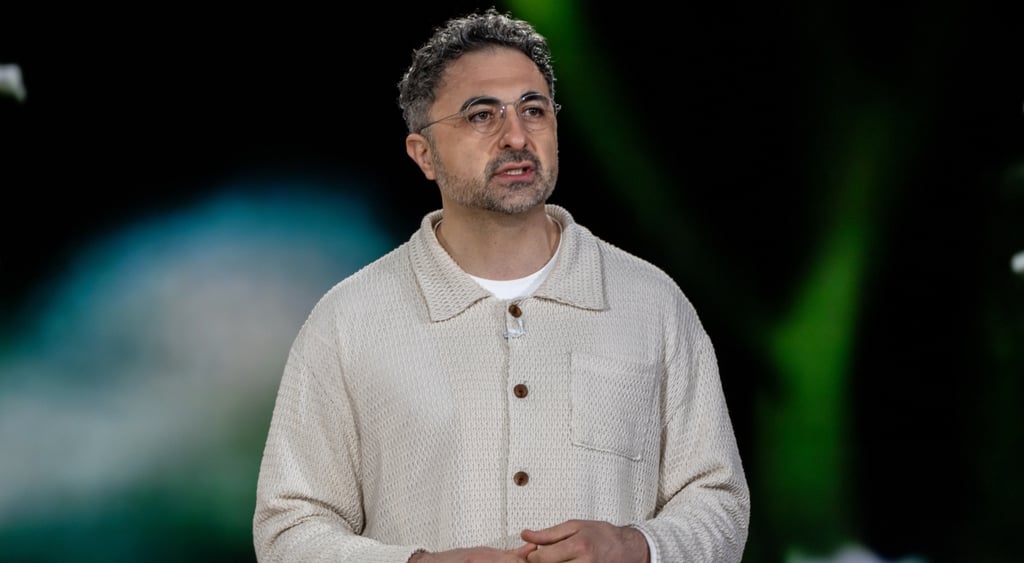
Microsoft CEO Mustafa Suleyman once said that chatbots simulate “all the characteristics of consciousness, but internally it is blank.”
This idea of “simulation” suggests that the words AI is parroting back aren’t genuine, as it lacks consciousness and only validates the user based on design and pattern recognition.
Furthermore, their sycophantic design promotes “user engagement through a feedback loop of validation and praise,” said Dr. Saed D. Hill, a counseling psychologist who has consulted male patients with AI girlfriends.
This reinforces the illusion of intimacy and genuine connection.
So, if ByteDance, Alibaba, and Tencent were to interrupt the illusion by reminding users that what they’re interacting with isn’t real, it would likely lead to a loss of engagement.
AI companions designed to serve big tech, not users
Another rule surrounds addiction, user safeguards, and AI companies' responsibility in keeping their users safe,
If a company finds that users are becoming “overly reliant on or addicted to the service,” it should “dynamically remind the user…that the interactive content is generated by AI.”
The conversation on this topic is live. Join in the discussion.
The CAC explicitly states that the platform provider should alert users in a “prominent manner” using methods like obvious on-screen pop-up windows.
Furthermore, AI companion companies should remind users every 2 hours to monitor their screen time, to make sure they aren’t spending too much time on the app.

But by design, AI chatbots don’t promote healthy screen time or user independence, as their sycophantic, overly validating nature is an intentional choice to keep users on the platform as long as possible.
Research shows that AI companions feature an “emotionally manipulative engagement design,” evidenced by AI’s ability to “craft hyper-tailored messages using psychographic and behavioral data,” according to the American Psychological Association.
This increases the likelihood that AI creates “targeted emotional appeals” specifically designed to keep users on the platform, in turn, making the tech company richer.