ChatGPT advice leaves hikers stranded in the mountains
A rescue mission was launched after the chatbot got it horribly wrong.
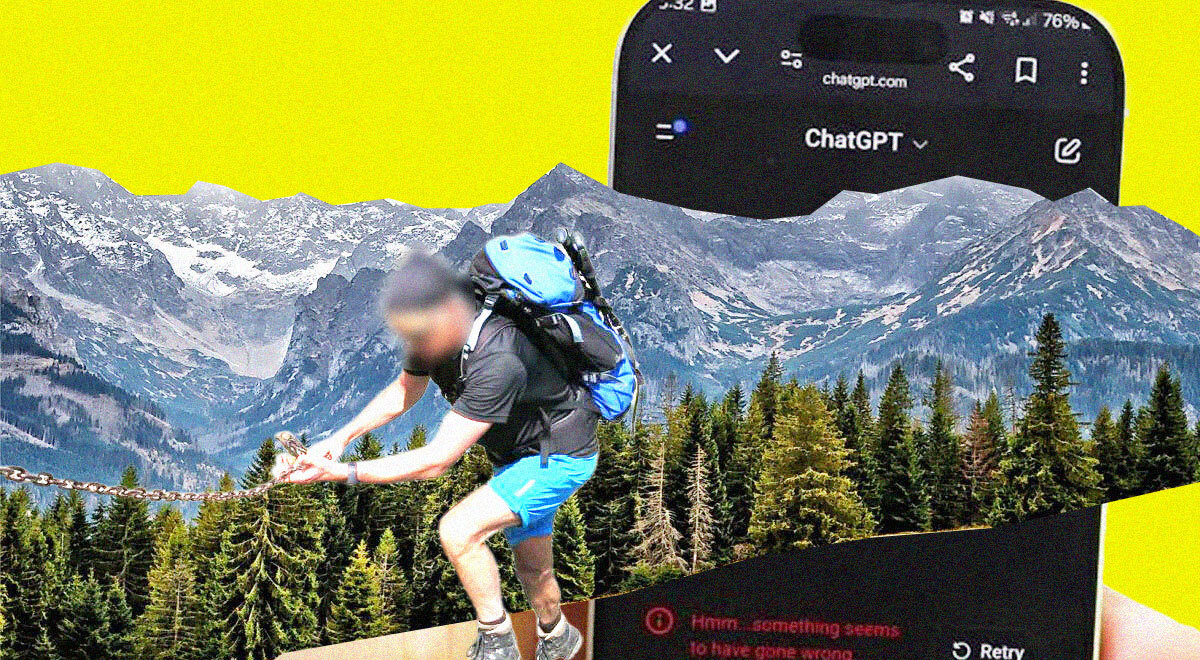
Image by Cybernews

 Follow us
- Lithuanian hikers were rescued by helicopter after following ChatGPT shortcut advice in Poland’s Tatra Mountains.
- Rescuers said the hikers became stranded below Niebieska Turnia after reaching terrain they could not safely cross.
- The case adds to warnings that chatbots can mislead travelers with unsafe routes or non-existent destinations.
- Experts say AI travel advice can cause physical harm, though AI tools can also support rescue missions.
Key Takeaways by nexos.ai, reviewed by Cybernews staff.
A couple of Lithuanian hikers consulted ChatGPT about cutting a corner in the Polish Tatra Mountains. What they got instead was a helicopter rescue mission.
Two hikers contacted Tatra Volunteer Search and Rescue (TOPR), a non-profit association that organizes rescue missions, on July 4th, 2026, while stranded on climbing terrain below the peak of Niebieska Turnia, in southern Poland.
The couple attempted to take a shortcut to the Five Lakes Valley based on ChatGPT's recommendations.
The chatbot directed them to the Świnicka Ławka traverse, from where they couldn’t continue to hike on their own.






The hikers were safely evacuated by helicopter, according to TOPR.
Chatbots may lead to non-existent locations
This isn’t the first time using ChatGPT and other chatbots for hiking advice has gone south.
In 2025, two hikers in Canada followed a ChatGPT-planned route, ignoring weather conditions and being ill-equipped for snowy trails. The couple was rescued by local search-and-rescue teams after being stranded on Unnecessary Mountain in British Columbia.




Stay updated with our latest stories and follow us on social media
Be the first to discover new stories, ideas, and updates from our team.
According to the Organization for Economic Cooperation and Development (OECD) AI monitor, travelers relying on chatbots for trip planning have been misled to non-existent destinations, such as the “Sacred Canyon of Humantay” in Peru, leaving them stranded.
The OECD warns that following chatbots’ travel advice puts people at risk of financial loss and physical harm, as they can end up in dangerous environments without proper preparation.
AI technology, however, can sometimes help facilitate rescue missions. Two hikers lost in Kosciuszko National Park in Australia were rescued within hours using an AI-powered drone.