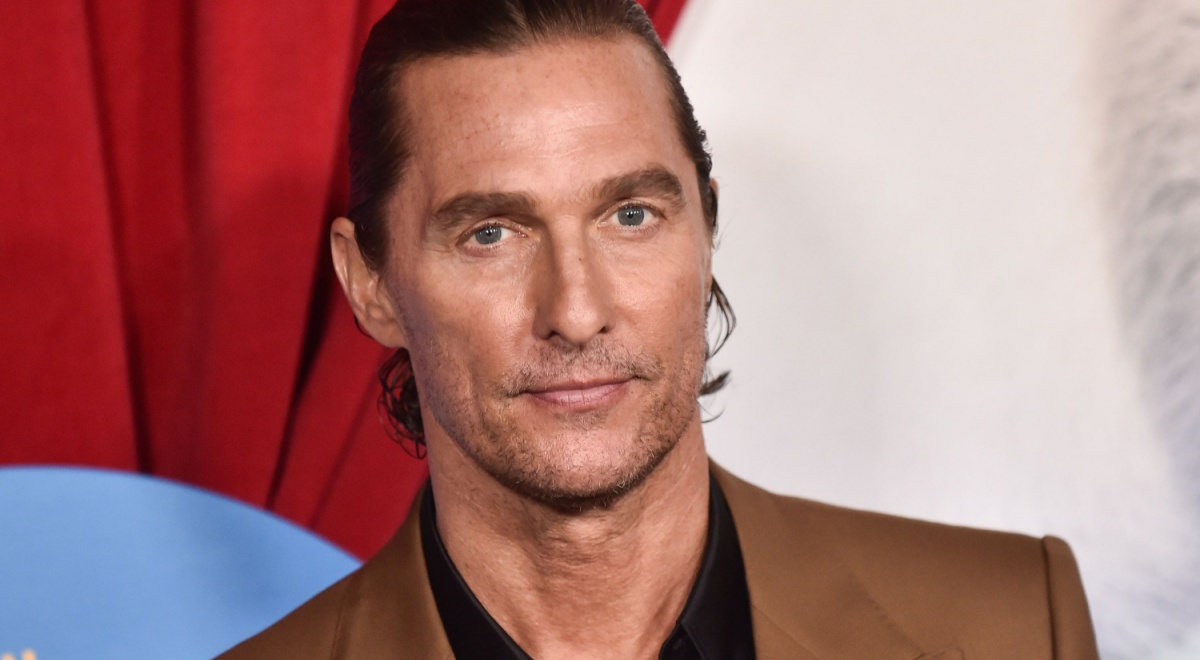
Matthew McConaughey on AI in film industry: it’s coming. Prep for it. Own your own lane
Award-winning actors Matthew McConaughey and Timothée Chalamet addressed the future of the film industry amid the AI boom during a CNN & Variety town hall event – and offered advice to the new generation of actors.

 Follow us
Award-winning actors Matthew McConaughey and Timothée Chalamet addressed the future of the film industry amid the AI boom during a CNN & Variety town hall event – and offered advice to the new generation of actors.
McConaughey spoke to Chalamet about the role that AI will (or already does) play in the industry.
McConaughey began with: “So first off…it’s coming. It’s already here. Don’t deny it.”
He added that it’s not enough to sit on the sidelines and make the moral plea that AI is wrong.
Instead, the actor suggests that it’s important to “own yourself”. As an actor, that includes owning your voice and likeness – so that your consent is required for the use of your persona. This way, he suggests, you retain agency.


"Trademark it, whatever you got to do. Own yourself. So when it comes, not if it comes, no one can steal you. They're going to have to come to you and go 'Can I?' or they're going to be in breach, and you'll have the chance to be your own agency and go 'Yeah, for this amount', or 'No'," he explains.
McConaughey has already followed his own advice and secured trademarks covering audio and video clips of his voice and likeness to guard against AI deepfakes and to retain rights. This includes McConaughey saying his iconic catchphrase “Alright, alright, alright” from the 1993 movie Dazed and Confused.
Although his attorneys at the time said that they weren’t aware of AI being used to manipulate his likeness, McConaughey is being proactive to make sure that the use of his personal brand is authorized.
Importantly, the actor is not against AI but advocates for the lawful use of personal brands. He himself is an investor in the AI audio company ElevenLabs and signed a deal in 2025 to provide a Spanish audio version of his newsletter, Lyrics of Livin’.






When talking about how exactly the use of AI will materialize in the film industry, McConaughey considers both scenarios where AI becomes its own category and where it infiltrates the traditional “human” category plausible.
“It’s damn sure going to infiltrate our category. Does it become another category? Will we be, in five years, having ‘the best AI film’, ‘the best AI actor?’ Maybe. I think it might be a thing that it becomes another category. I’m not sure. It’s gonna be in front of us in ways that we don’t even see. It’s going to get so good we’re not going to know the difference.”
“That’s one of the big questions right now: the question of reality,” he added. “It’s more hazy than ever. And in a very exciting way, I think, but also a scary way.”
“It’s not only coming, it’s here. I’d say prep for it and own your own lane, so when it comes, you can at least have your own agency.”
Chalamet then offered his thoughts on the world of AI and called it “a dual responsibility” for this “war to wage.”
“I think it's going to be you guys that figure out how to integrate it. There's a huge part of people that are in positions of power now, like myself, like Matthew, to safekeep so that doors stay open. That's extremely important. Some of the roles I got that helped kickstart my career, I wouldn't even know if they're available today. Not because of AI, but because of less TV being produced, less streaming being produced,” he said.
Chalamet is also not viewing AI as an inherently bad technological advancement, but thinks we should focus on the ethical integration of the tools, saying that a dreamer in him thinks: “If it enables a 19-year-old to produce something they couldn't otherwise because there's gatekeepers standing in the way, then…but ultimately, it's not my place to say.”
Chalamet added that this was the most serious question asked during the event because, as the actor put it, this is “the thing”.