Otter’s sneaky tool allegedly listens to users' meetings to train its AI models
Otter.ai is facing legal action after one user found that the artificial intelligence (AI) transcription company was using their conversations to train its AI models.

Image by Cybernews

 Follow us
Otter.ai is facing legal action after one user found that the artificial intelligence (AI) transcription company was using their conversations to train its AI models.
The software company, Otter.ai, which specializes in AI transcription, is being sued by plaintiff Justin Brewer, who claims that he “had his conversations intercepted by Otter.”
Otter’s most notable tool is called “Otter Notetaker,” which records meetings and transcribes conversations between participants.
But what many users may not know, and what the lawsuit alleges, is that Otter’s Notetaker tech sends data taken from these meetings to train its automatic speech recognition and machine learning models.
In short, this means that everything said during these meetings will be picked up by the company.







What’s particularly troubling about this is that those who aren’t Otter account holders are still affected, as all parties' words are shared with the company.
The lawsuit, found by The Register, questions Otter’s sticky consent practices, which puts the account holder in the position of asking the other meeting members for their consent to be recorded.
Lawyers claim that Otter “tries to shift responsibility” by “outsourcing its legal obligations to its account holders.”
The issue with this is that Otter doesn’t explicitly ask meeting members for their consent to be recorded or to use these recordings to train its AI models.
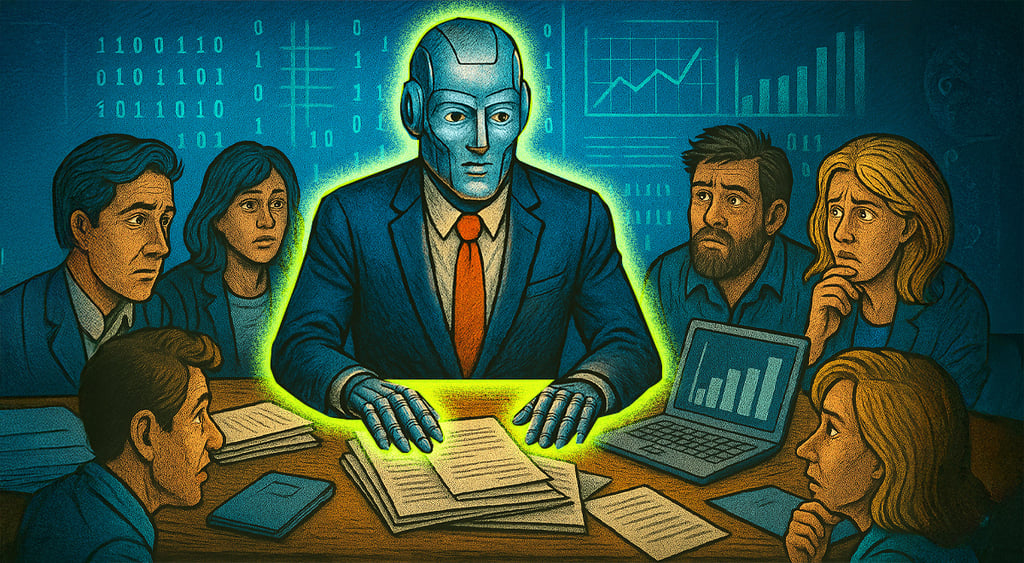
This could be particularly problematic, as many users may have already integrated Otter’s software into their Google Meet, Zoom, or Microsoft Teams meetings.
Which means that Otter’s Notetaker “may join the meeting without obtaining the affirmative consent” from any person in the meeting, including the host.
Many transcription tools that are integrated into a user’s device automatically record conversations without needing to manually launch the tech.
Therefore, it could be assumed that this tech runs in the background of most meetings, even those informal yapping sessions where personal information may be shared.





Why you should never share your personal information with AI
Sharing personal information like full names, email addresses, phone numbers, and, of course, any health data or financial information with chatbots and other AI models is never recommended.
This is because no tech is infallible, meaning that bad actors could always obtain access to a company’s database and could use this information for identity theft, phishing attacks, fraud, and much more.
Another issue with Otter Notetake running behind the scenes, particularly in a professional setting, is the release of sensitive company information.
If company secrets are being transmitted to Otter to be used in training, then this could lead to company-wide data breaches, and employees could even run the risk of breaking the terms of their contract or even laws, without even knowing it.