Was Putin’s New Year’s Eve speech AI? Can you spot the telltale signs?
The traditional New Year’s Eve speech of Russian President Vladimir Putin fueled speculation that it was generated with artificial intelligence (AI).
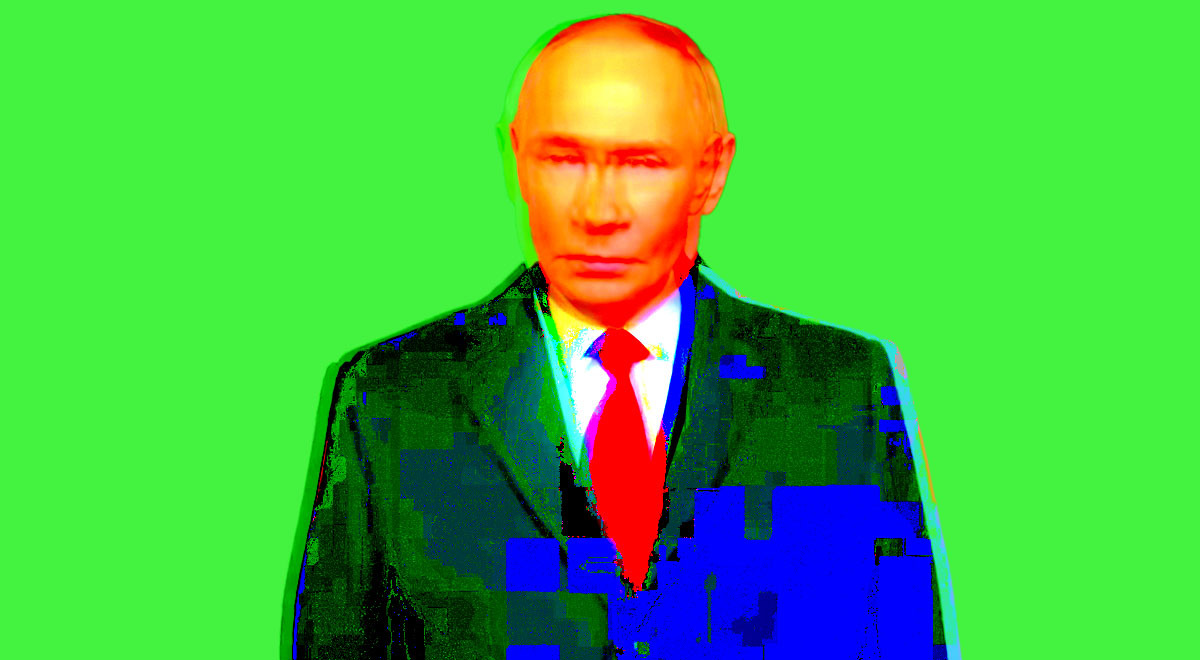
Image by Cybernews.

 Follow us
The traditional New Year’s Eve speech of Russian President Vladimir Putin fueled speculation that it was generated with artificial intelligence (AI).
Speaking minutes before midnight, Putin praised the troops fighting in the invasion of Ukraine, reiterating his belief in Russia's victory in the war that will hit the four-year mark this year.
While the video had the usual setting – the president speaking alone with the Kremlin building on the screen behind him – the way Putin looked and delivered the speech raised suspicions about the potential use of AI.
Russian-language comments on YouTube pointed out alleged discrepancies between the usual Putin and the one seen on the screen.









For example, a user noticed the absence of cough, which Putin has been suffering from in recent years, raising suspicions about potential health problems. Just days before the NYE, Putin was seen coughing while speaking at the annual question-and-answer event.
Others noticed that Putin didn’t use the usual phrase that “the year wasn’t easy,” especially given the country’s mounting economic problems and the military actions increasingly spilling into Russian territory.
Netizens also suggested that Putin’s head appears to move independently of his body, while the jacket sleeves look empty, as if there were no hands there.
In the 2023 annual Q&A, known as the Direct Line with President Putin, he spoke to an avatar of himself who asked a question about his doubles.
“You can talk like me and use my voice, my pitch, but I figured out that only one person could speak like me and use my voice, and this is going to be me,” Putin said.
The claim that Putin’s speech was AI-generated remains mere speculation. However, it reflects a worrying trend of being unable to distinguish between what is real and what is synthetic, as generative AI has become increasingly widely used.
A recent study found it has become virtually impossible to distinguish AI-generated photos from authentic ones, even when people are familiar with the person’s appearance, highlighting a new level of “deepfake realism.”
The mere existence of AI now raises doubts about the authenticity of images and videos. This is being exploited in the justice system, where defendants are increasingly claiming that legitimate digital evidence is a deepfake.
Unlock more exclusive Cybernews content on YouTube.