UK approves new nuclear plant amid growing AI energy needs
The British government has given the Sizewell C nuclear power plant the go-ahead after securing investment for a £38 billion ($51 billion) project.
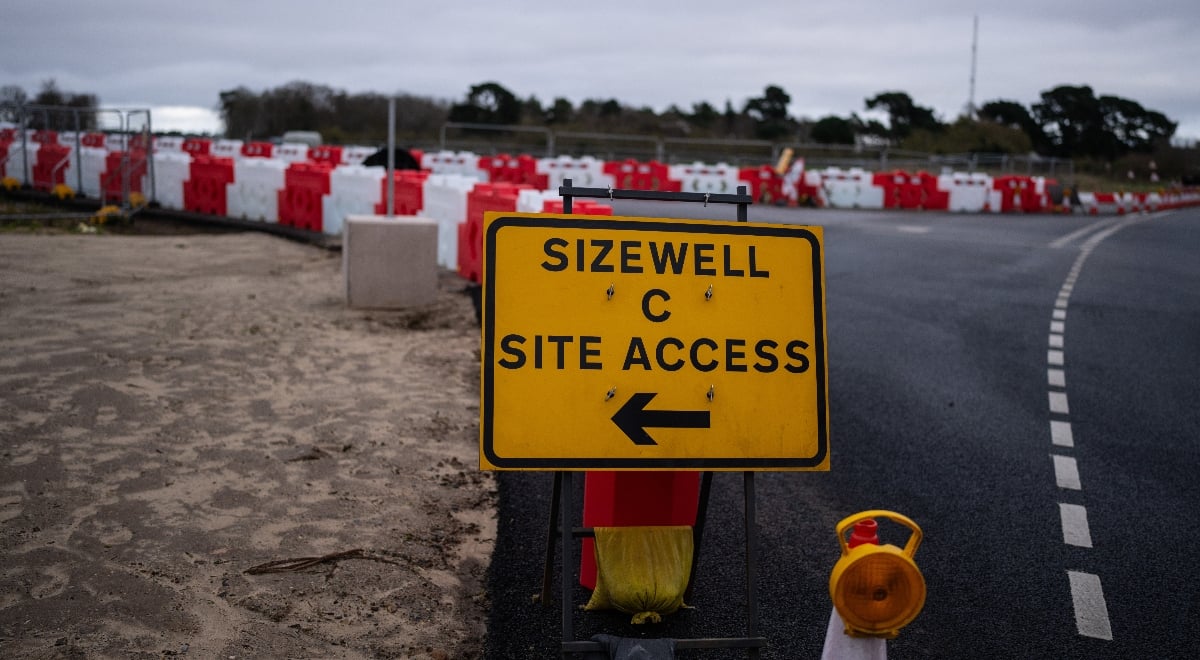
Image by Carl Court/Getty Images

 Follow us
The British government has given the Sizewell C nuclear power plant the go-ahead after securing investment for a £38 billion ($51 billion) project.
- The government approved the project after securing private backers, with the Canadian pension fund La Caisse investing in a 20% stake.
- The Sizewell C nuclear power plant in Suffolk is expected to go online in 2030s.
- Critics fear environmental impact, but supporters say that nuclear energy will help drive the AI boom.
The UK announced the decision after striking a deal with several private investors, who will join the multi-billion-pound project. It is expected to power six million homes when built and create 10,000 jobs at peak construction of the plant in Suffolk in eastern England.
Under the deal, the state will be the largest shareholder in the project with an initial 44.9% stake, according to the British government. The Canadian pension fund La Caisse will be the second-largest shareholder with a 20% stake, it was announced.
The British energy company Centrica will take 15%, and London-based Amber Infrastructure will hold 7.6%. They join the French state-owned energy giant EDF, which had already announced it would invest in a 12.5% stake – or £1.5 billion – earlier this month.






“Delivering next generation, publicly-owned clean power is vital to our energy security and growth, which is why we backed Sizewell C,” Chancellor Rachel Reeves said in a statement.
The Sizewell C nuclear power plant is expected to be operational by mid- to late 2030s. Although the first commercial nuclear power plant was opened in the 1950s, no new ones have been built in the UK since 1995.
Most of the UK’s existing nuclear power plants are likely to be phased out by the early 2030s, according to the government. That is why it is also exploring the use of small modular reactors in the country.
Another nuclear power plant, Hinkley Point C, is under construction in Somerset and is majority-owned by EDF. After years of delays and cost overruns, it is unlikely to open before 2030.
However, when the two new nuclear power plants and small modular reactors go online in the next decade, they will deliver more nuclear power to the grid than over the previous 50 years combined, the government said.
The UK’s nuclear program is now “the most ambitious for a generation,” it added.
“Environmental disaster”
Critics of the project say it is too costly and will have a negative environmental impact. According to the Together Against Sizewell C (TASC) group, the decision is “a financial and environmental disaster” and “a betrayal of future generations.”
“We are in a climate crisis that needs immediate action, yet this government has chosen to squander billions of public funds on a project that will not be operational until the late 2030s and has already seen a staggering 90% uplift in cost over the last 5 years,” TASC said in a statement.
The campaign group also said that the impact of additional sea barriers that will be needed for the plant needed to be assessed. In June, it lodged a legal challenge against the planned power station, claiming that it wanted to add additional coastal floor defences to the site that were not included in the original planning application.
Supporters of the nuclear revival in Europe and elsewhere argue that nuclear energy is the best and cleanest way to meet the rapidly growing energy demands of AI, which are expected to rise further amid a global data center construction boom.
Matt Garman, chief executive of Amazon Web Services, the world’s largest cloud computing company, said recently that the UK needs more nuclear power for AI. He told the BBC that nuclear power is a “great solution” to data centers’ energy needs and is “an excellent source of zero carbon, 24/7 power.”