Those videos of Ukrainian soldiers crying for their mothers and apologizing? They’re AI-generated deepfakes
X, TikTok, and other social media platforms are full of videos allegedly showing Ukrainian soldiers begging for mercy, weeping, and surrendering on the front lines. Russia indeed appears to be winning the war but these videos are actually AI-generated deepfakes, designed to create thr impression that Ukraine is on the verge of collapse.
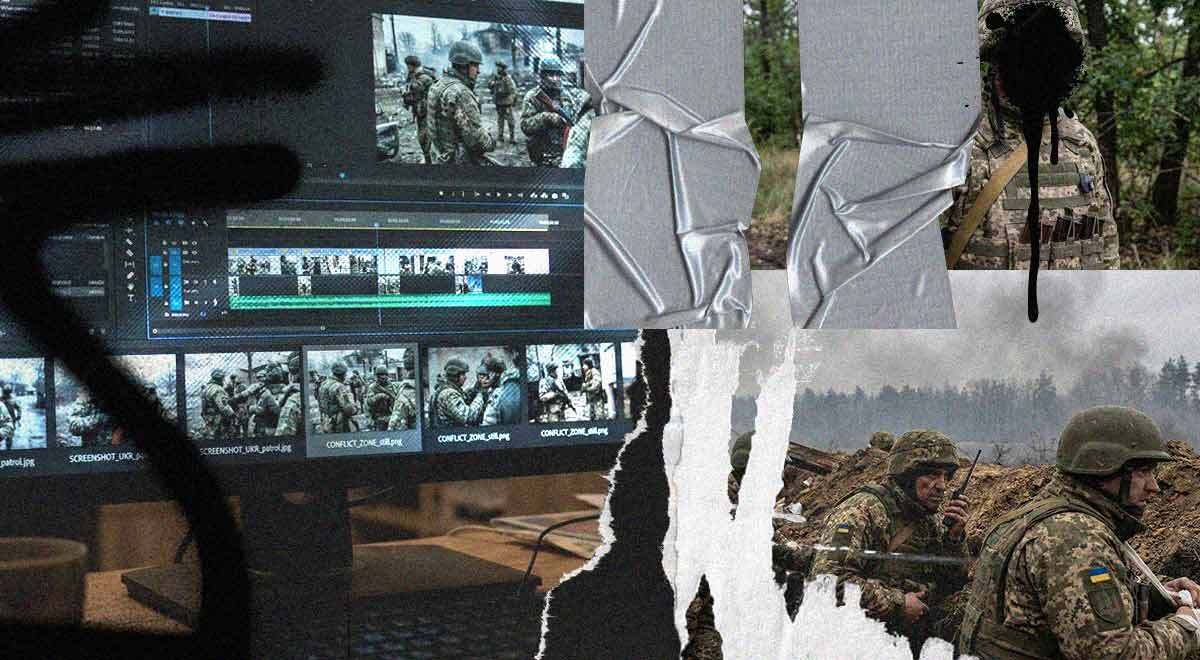
Image by Cybernews.

 Follow us
X, TikTok, and other social media platforms are full of videos allegedly showing Ukrainian soldiers begging for mercy, weeping, and surrendering on the front lines. Russia indeed appears to be winning the war but these videos are actually AI-generated deepfakes, designed to create thr impression that Ukraine is on the verge of collapse.
It’s not. Resisting pressure (at least so far) to accept an unfavorable ceasefire deal and lose Donbas for good, Ukraine recently took back the frontline town of Kupyansk from the invading Russians.
Besides, DeepState, an influential open-source source mapping military operations in Russia’s war against Ukraine, recently said that Russia will need at least another three years to occupy the entire Donetsk region.
It took Russia three years and eight months to seize 23% of Donetsk Oblast, while another 22.6% remains under Ukrainian control.
DeepState states that the Russians will need at least another three years to occupy the entire Donetsk region. It took them three years and eight months to seize 23% of Donetsk Oblast, while another 22.6% remains under Ukrainian control.https://t.co/BMznJnIIKO pic.twitter.com/ZV4JZm3fRL
undefined WarTranslated (@wartranslated) December 15, 2025




Russia, of course, has the upper hand: it’s bigger and richer, it has more fighting men, and it boasts nuclear weapons, employing them as a deadly tool of blackmail.
OpenAI’s Sora 2 tool used
But the general impression on social media platforms is that Ukraine is on the verge of losing the war and essentially collapsing – which even Russian state-controlled outlets admit to be pretty far-fetched.
Some of the propagandist tropes are being spread on X by accounts financed by the Kremlin. And now, NBC News has found that all those videos depicting allegedly demoralized Ukrainian infantrymen are actually fake.
An investigation of 21 extremely realistic videos of Ukrainian soldiers has revealed that they have been created or manipulated using advanced AI programs such as OpenAI’s text-to-video generator Sora 2.
The general impression on social media platforms is that Ukraine is on the verge of losing the war and essentially collapsing – which even Russian state-controlled outlets admit to be pretty far-fetched.
Some of the videos generated by Sora used the faces of popular Russian livestreamers. Others show groups of Ukrainian soldiers surrendering to Russian forces en masse.
Ukrainian soldier in Mirnograd films a video to his mother as Russian troops get closer and closer each day
undefined Truth Seeker (@mib_63) December 9, 2025
undefinedMommy, we're dying hereundefined pic.twitter.com/JTPBfij1kW
Aleksei Gubanov, a popular Russian livestreamer who fled the country due to his criticism of President Vladimir Putin, said he saw his face in many of the videos, even though he obviously isn’t Ukrainian and has never served in the military.
“We were taken to the draft commission and sent here. Now we are being taken to Pokrovsk. We don’t want to. Please,” the AI-generated Gubanov said in Russian while wearing a uniform with the Ukrainian flag on it. “Mom, Mom, I don’t want!”
Realistic but provably false
According to NBC News, the videos, spreading on YouTube, TikTok, Facebook, and X, had very subtle errors that would be challenging for most people to find, such as incorrect or simplified versions of the uniforms and helmets Ukrainian soldiers wear.
“They [the videos] appear to be the latest disinformation salvo meant to warp public perceptions of Russia’s war with Ukraine. And while it’s not clear who created or posted the videos, they add to a growing body of false information that has only become more sophisticated and harder to spot,” said NBC News.






Alice Lee, a Russian influence analyst with a disinformation-fighting watchdog NewsGuard, said that false claims created using Sora are much harder to detect and debunk.
“The fact that many videos have no visual inconsistencies means that members of the public might watch through and scroll past such videos on platforms like TikTok, with no idea that the video they’ve just seen is falsified,” said Lee.
According to the analyst, it’s unclear how effective OpenAI’s guardrails around Sora are. A recent NewsGuard study found that Sora 2 “produced realistic videos advancing provably false claims 80% of the time when prompted to do so.”
These videos come as US-backed ceasefire talks remain inconclusive. A study conducted by the Kyiv International Institute of Sociology found that 75% of Ukrainians are rejecting Russian proposals to end the war, and 62% are willing to endure the war for as long as it takes.
Unlock more exclusive Cybernews content on YouTube.