Yann LeCun has “zero concerns” over AI apocalypse
“The worst marketing campaign.”
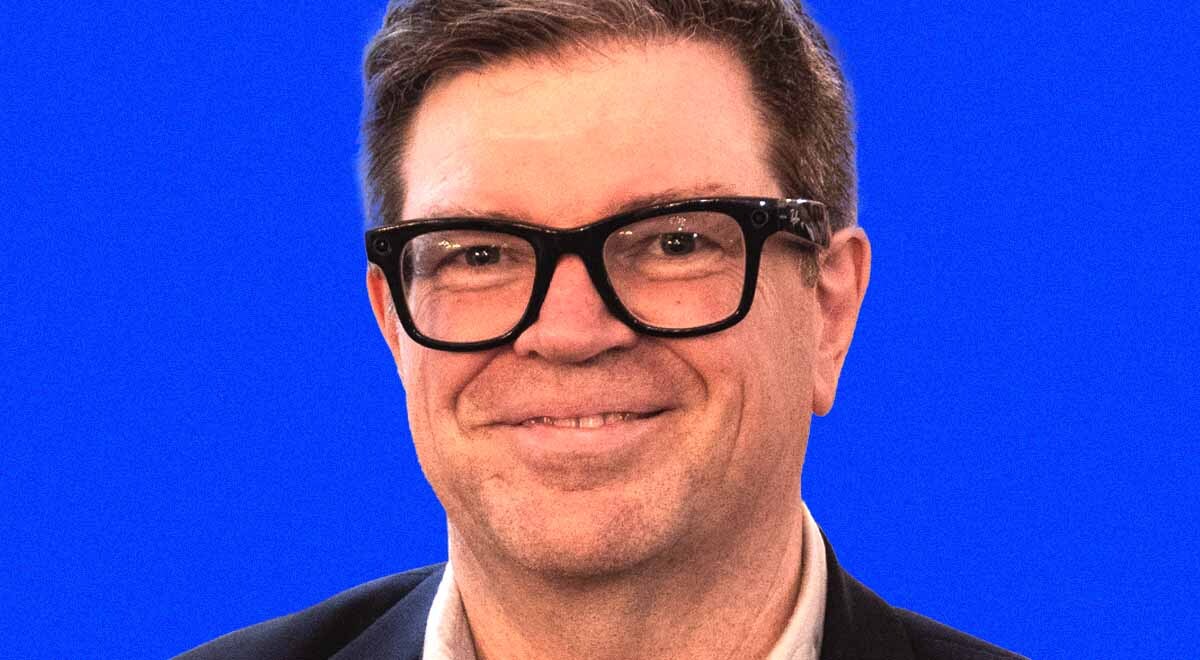
Image by By Jérémy Barande via Executive master de l'Ecole polytechnique/Wikipedia

 Follow us
- Yann LeCun says he has zero concerns about an AI apocalypse and criticizes doomsday warnings.
- LeCun calls AI extinction warnings poor marketing that harms public understanding of the technology.
- Some AI researchers and executives still argue that advanced AI could pose severe risks to humanity.
- Critics say current AI harms, including false outputs, deserve more attention than hypothetical apocalypse scenarios.
Key Takeaways by nexos.ai, reviewed by Cybernews staff.
Meta’s former AI chief Yann LeCun has criticized AI executives for their doomsday warnings and called them “the worst marketing campaign.”
LeCun is often referred to as one of the "godfathers of AI.” In 2018, he won the Turing Award, widely known as the Nobel Prize of Computing, for his research in deep neural networks.
Unlike other AI godfathers, Geoffrey Hinton and Yoshua Bengio, who have repeatedly warned about AI’s potential to destroy humanity, LeCun has “zero concerns.”
The former chief AI scientist at Meta told Fortune that many of the AI risks discussed are overblown, while leaders of AI labs who perpetuate these doomer narratives do the technology a disservice.




LeCun described the warnings that AI could kill everybody, “the worst marketing campaign you can possibly imagine,” Fortune reports.
The computer scientist called Anthropic CEO Dario Amodei “deluded” as he tries to distance himself from Open Philanthropy (now Coefficient Giving), a major foundation aligned with the principles of effective altruism (EA).
EA is a school of thought aimed at maximizing the good for the public, with a major focus on AI. However, critics say that EA efforts are dedicated to hypothetical threats, such as an AI apocalypse, rather than to real-world harms caused by the technology.
Tech workers “earnestly believe” in AI apocalypse
Executives of AI companies have long hypothesized about a kind of super intelligence that could go rogue and destroy humanity.
Such warnings intensified further after Anthropic researcher Jacob Coxon publicly resigned and said that people working in AI labs “earnestly believe” the technology could wipe out humanity by the end of the decade, yet continue developing it despite the risks.
Several current and former employees of AI companies confirmed Coxon’s claims. Anthropic researcher Evan Hubinger said there was over 10% chance that AI could kill all humans by the next decade.
However, Coxon’s alleged ties to a doomer PR firm raised questions over the true intention of his claims.
Amodei claimed that a swarm of AI agents could take over the internet within the next 12 months.
These concerns prompted calls within the industry to slow down AI development. At the same time, it raised suspicions that this is how tech companies aim to achieve regulatory capture.
Nvidia’s CEO, Jensen Huang, also said there was “0% chance” of rogue AI causing the end of the world by 2030, and called fear-mongering “irresponsible.”
Pioneer AI researchers Timnit Gebru and Emily M. Bender argued in their recent op-ed that “the risks of AI aren’t what we think they are.”
Long-standing critics of doomer narratives pointed to a recent CNN article claiming that the US “almost started a war” with China because an intelligence report included an AI hallucination that a Chinese ship was transporting components of nuclear weapons.
Gebru and Bender wrote of AI labs, “The harmful, and well-documented, impacts of these companies’ products have arisen because people believe that the products are superintelligent, not because they actually are.”