Best AI funnel builder
Being behind major reports like The Mother of All Breaches and RockYou2024, our in-house cybersecurity experts and journalists provide unbiased, real-world testing and in-depth analysis.
We maintain complete transparency by openly sharing our testing methodologies with our audience.
Learn more

AI funnel builders promise to create, launch, and optimize sales funnels using artificial intelligence. In this article, we break down what they actually do, how they work, and whether they deliver meaningful results.
Together with the Cybernews team, I tested 7 AI funnel builders: ClickFunnels 2.0, GetResponse, nexos.ai, Unbounce, GoHighLevel, Phonesites, and Landy AI. We looked beyond marketing claims to see if these tools actually work or if you’ll have to redo everything yourself. We also highlight which tools are best for simple funnels compared to interconnected, multi-step funnels.
Below, you’ll find an overview of each of our top picks, a side-by-side comparison, how AI improves funnels in practice, practical implementation steps, best practices, key features to look out for, common mistakes, and scenario-based recommendations.

Best AI funnel builder – shortlist
- ClickFunnels 2.0 – best AI funnel builder overall
- GetResponse – email-focused AI funnel builder
- nexos.ai – all-in-one AI system for building funnels
- Unbounce – AI funnel builder for landing pages
- GoHighLevel – all-in-one multi-step funnel builder
- Phonesites – mobile AI funnel builder
- Landy AI – AI funnel builder with prompts
The best AI funnel builders compared
Before we jump into detailed reviews, here are our top picks side-by-side.
| AI funnel builder | Rating | Standout features | Starting price | Free version | Best for |
| ClickFunnels 2.0 | Visual canvas, generative AI, strong automation | $81.00/month | ❌ No (14-day trial available) | Entrepreneurs, course creators, and growing businesses | |
| GetResponse | Email and marketing automation | $15.58/month | ❌ No (14-day trial available) | Smaller teams and businesses that want AI-powered email marketing on a budget | |
| Unbounce | Landing page builder, A/B testing | $22.00/month | ❌ No (14-day trial available) | Entrepreneurs and businesses relying on landing pages for conversions | |
| nexos.ai | Multi-AI model implementation | €19.50/month (~$22.34/month) | ❌ No (14-day trial available) | Teams working with multiple AI models, growing businesses, and SaaS companies | |
| GoHighLevel | All-in-one marketing platform, multi-step sales funnels, advanced automation | $97.00/month | ❌ No (30-day trial available) | Digital marketing agencies, businesses looking for an all-round AI marketing solution | |
| Phonesites | Mobile-optimized landing page, website, and sale funnel builder, SMS and email workflows | $29.00/month | ❌ No (14-day trial available) | Influencers, entrepreneurs, and small businesses working from their phones | |
| Landy AI | Prompt-based landing page builder, AI writer | $27.00/month | ✅ Yes (FREE Tester plan) | Freelancers, small businesses that prefer working with LLMs |
7 best AI funnel builders – our detailed list
Together with the research team, I spent some time reviewing a variety of different AI funnel builders to find the best ones. Below, you’ll find an overview of each of our top 7 picks.
1. ClickFunnels 2.0 – best AI funnel builder in 2026
| Rating: | |
| Standout features: | Visual sales funnel builder, content generation, workflow automation, all-in-one solution |
| Starting price: | $81.00/month |
| Best for: | Entrepreneurs, course creators, and growing businesses |
ClickFunnels 2.0 stood out to me as the best AI funnel builder overall because it delivers the most comprehensive set of AI-powered marketing features we tested. Instead of just building sales funnels, ClickFunnels 2.0 offers copywriting, workflow automation, real-time analytics, and more in a single ecosystem – no coding required.
ClickFunnels has been around since 2014 and has helped many online businesses create sales funnels and increase conversions. As of 2022, ClickFunnels 2.0 has been introduced as a new and improved version of the platform, providing AI-powered tools for optimization.
When we tested ClickFunnels 2.0, the visual funnel canvas stood out immediately. It maps the entire customer journey so it’s easy to follow and is great even for the more complex campaigns. It uses a drag-and-drop editor with real-time previews, which I found particularly useful.
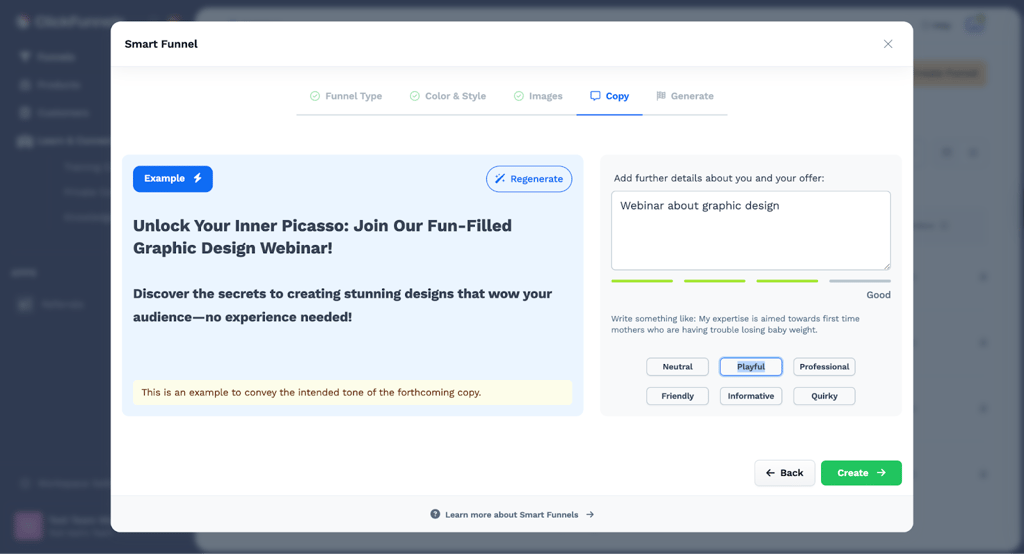
Besides sales funnel building, ClickFunnels 2.0 has solid tools for content generation. During our tests, it generated multi-step funnels with relevant copy in under 15 minutes – quite impressive. Still, I found that the generated content tends to be generic and needs human review, but that’s true for all of the AI tools on this list.
For AI-powered tasks, ClickFunnels 2.0 relies on Napoleon AI, which is its in-house AI assistant. You can ask it for help at any step of the way.
Since it’s an all-round tool, ClickFunnels 2.0 is also capable of workflow automations. Like funnel building, it relies on a visual system to set up automations, like sending follow-up emails or tagging contacts. This means you can build sequences based on events like purchases, form submissions, or contact tags.
Pricing starts at $81.00/month, which is on the more expensive side, but it’s more than worth it for an all-round tool like ClickFunnels 2.0. There’s a 14-day free trial and a 30-day money-back guarantee, so you can test it out risk-free.
2. GetResponse – AI email and marketing automation

| Rating: | |
| Standout features: | Email marketing and automation |
| Starting price: | $15.58/month |
| Best for: | Smaller teams and businesses that want AI-powered email marketing on a budget |
GetResponse shines as an AI funnel builder designed for email marketing. As such, it’s ideal for teams working with email outreach all while delivering ease of use, content generation, automation depth, and cost efficiency.
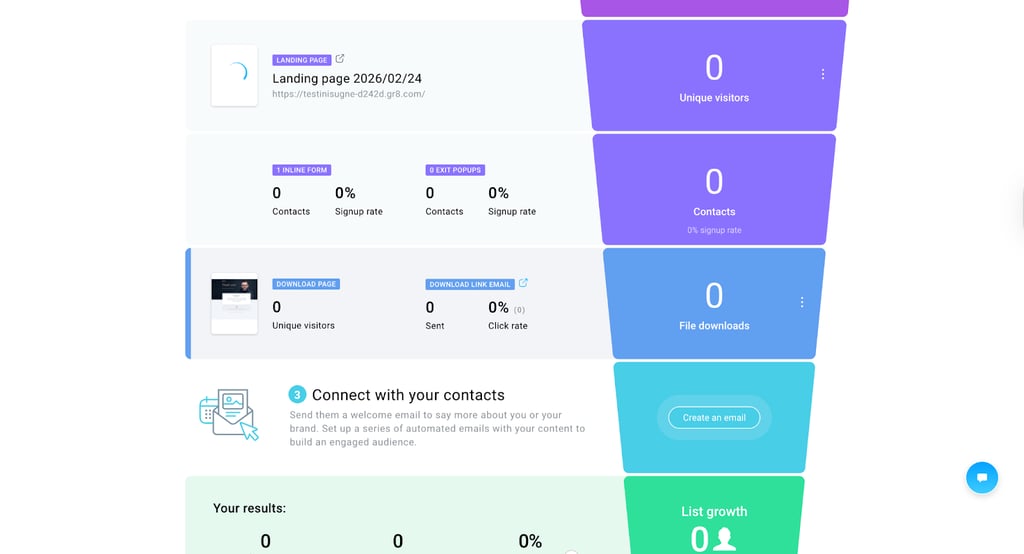
It’s important to note that GetResponse is not an all-round marketing platform. It can’t do it all, but it excels at a few niche categories: email, marketing, and automations.
Our research team spent some time testing GetResponse and we noticed that GetResponse is super easy to use – you don’t need any technical knowledge to navigate the platform and there are over 30 pre-made templates to help you set up your sales funnels. Like ClickFunnels 2.0, GetResponse has a drag-and-drop editor, which I found intuitive, though it’s not as flexible as I would like it to be, particularly when customizing elements like sign-up forms.
We also used it to generate some content for our marketing campaign. GetResponse uses GPT models to power its generative AI features like creating emails, subject lines, and entire campaigns. While it can save time, we noticed that the output can feel generic, especially for more niche projects, so human review can’t be eliminated from your workflows.
As for automations, GetResponse provides an easy-to-use, visual automation builder that lets you select conditions, actions, and filters to create multi-step customer journeys. However, automations are quite limited with the starter plan, so if they’re a priority, I recommend upgrading to get access to unlimited automation workflows.
Unlike ClickFunnels 2.0, GetResponse is significantly cheaper, starting at just $15.58/month. It’s one of the best budget-friendly AI funnel builders on this list, making it ideal for small teams and businesses that are just starting out or want to play around with AI-powered marketing features. There’s also a 14-day free trial you can use to test out the platform risk-free.
3. nexos.ai – all-in-one AI platform
| Rating: | |
| Standout features: | AI agent automation, multiple modules in one, suitable for beginners |
| Starting price: | €19.50/month (~$22.34/month) |
| Best for: | Teams working with multiple AI models, growing businesses, and SaaS companies |
nexos.ai isn't a traditional AI funnel builder and takes a more flexible approach through AI agent implementation. It doesn’t limit users to typical funnel structures and instead automates lead generation, content creation, prospect qualification, and outreach workflows using customizable AI agents. nexos.ai offers greater customization for businesses looking to automate the entire customer experience workflow rather than just build conventional funnels.
The platform provides access to multiple AI models, including OpenAI, Anthropic, and more, all in one convenient spot. It can be integrated with business systems, and, according to our nexos.ai review, you don’t need extensive technical knowledge to use nexos.ai AI agents.
While it doesn’t offer a full-on funneling service, nexos.ai can be easily set up to create a custom funnel builder. During my testing, I could use pre-built and custom AI agents to research incoming leads, generate emails and follow-ups, and qualify prospective leads. I didn’t have to do this manually, since the agents did it for me.
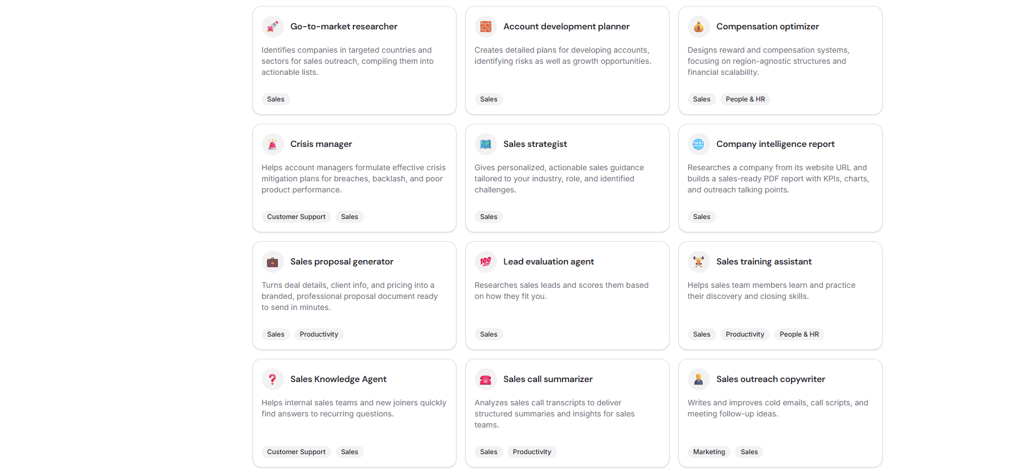
What’s more, the multi-model integration played to my advantage, too. I could set up one LLM to write the initial sales copy and ask another to look up qualifying leads. The freedom to switch out or replace the models also made the process more dynamic.
As an AI orchestration tool, nexos.ai can create automated workflows and execute tasks in sequence. However, there are certain aspects where nexos.ai falls short, for example, it won’t create landing or checkout pages, so you would likely need to use more specialized funnel builders mentioned in this list.
The price for nexos.ai starts at €19.50/month (or $22.34/month), with a 14-day money-back guarantee. The platform is ideal for users looking to integrate multiple LLMs into their project while implementing a basic funneling structure with AI agents.
4. Unbounce – AI-optimized landing page builder

| Rating: | |
| Standout features: | Landing pages, A/B testing |
| Starting price: | $22.00/month |
| Best for: | Entrepreneurs and businesses relying on landing pages for conversions |
While it’s not exactly an AI funnel builder, Unbounce made it to the third spot on our list because it excels at building and optimizing landing pages, which can be a critical part of a sales funnel.
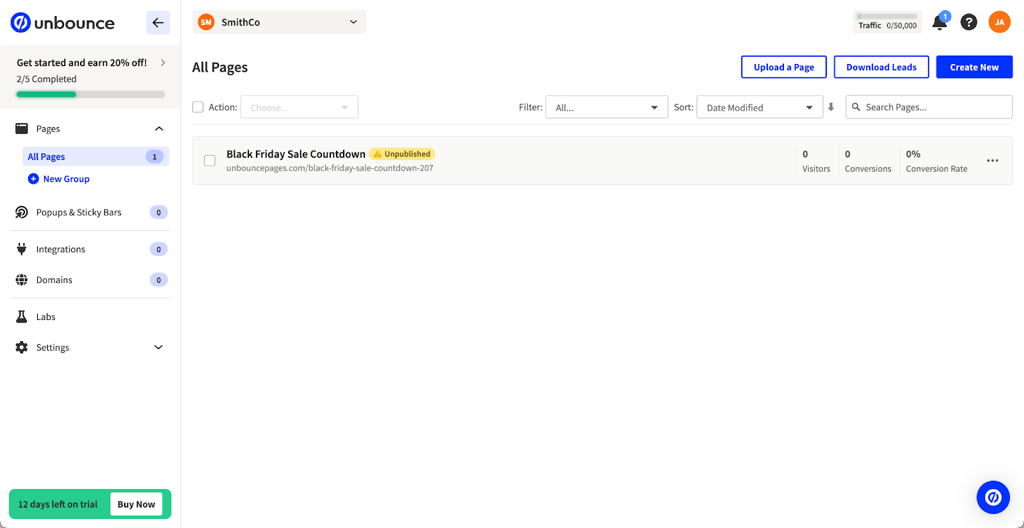
Unbounce lets you choose from over 100 pre-built landing page templates or build from scratch with a drag-and-drop editor. At first glance, I found it somewhat easy, but since it’s highly customizable, it can get pretty complicated. Still, it shouldn’t be a problem for a professional designer.
Another downside is that your landing page isn’t automatically optimized for mobile, so you have to make changes manually for smaller screens. On top of that, Unbounce is designed for single landing pages rather than a string of multiple, connected funnels, so it’s better fitted for those who need only one step of the customer journey.
But where is the AI? Unbounce’s Smart Builder uses historical conversion data to recommend layouts that are statistically more likely to perform well. There’s also a Smart Copy tool, which is great for drafting quick content for your landing page, though it’ll probably need human review.
There are no automation tools, but you can set it up with third-party integrations. Unfortunately, that can get expensive quick, so I don’t recommend Unbounce if you’re looking for automation workflows.
If you want to know how your landing pages are doing, Unbounce has got you covered. Its Smart Traffic tool routes visitors to the page variant most likely to convert based on device, location, and user behavior. It also supports standard A/B testing for your landing pages, although users have reported some discrepancies.
Unbounce’s Starter plan sits at a comfortable $22.00/month, which is still on the more budget-friendly side, even though there are cheaper options available. Still, the Starter plan doesn’t have all of the features, such as generative AI or integration support, which is quite disappointing. If you’re choosing Unbounce because of its A/B testing capabilities, you’ll have to get the significantly more expensive Experiment plan, starting at $112.00/month.
5. GoHighLevel – all-in-one AI marketing platform with multi-step funnels
| Rating: | |
| Standout features: | All-in-one marketing platform, interconnected funnels, advanced workflows |
| Starting price: | $97.00/month |
| Best for: | Digital marketing agencies, businesses looking for an all-round AI marketing solution |
Like ClickFunnels 2.0, GoHighLevel is an all-in-one marketing platform driven by AI. It’s a great option for agencies and businesses that heavily rely on digital marketing. That being said, because of its depth, GoHighLevel has a steeper learning curve and takes a while to configure. Still, there’s a comprehensive guide on almost every aspect of the platform, so you’ll have help along the way.
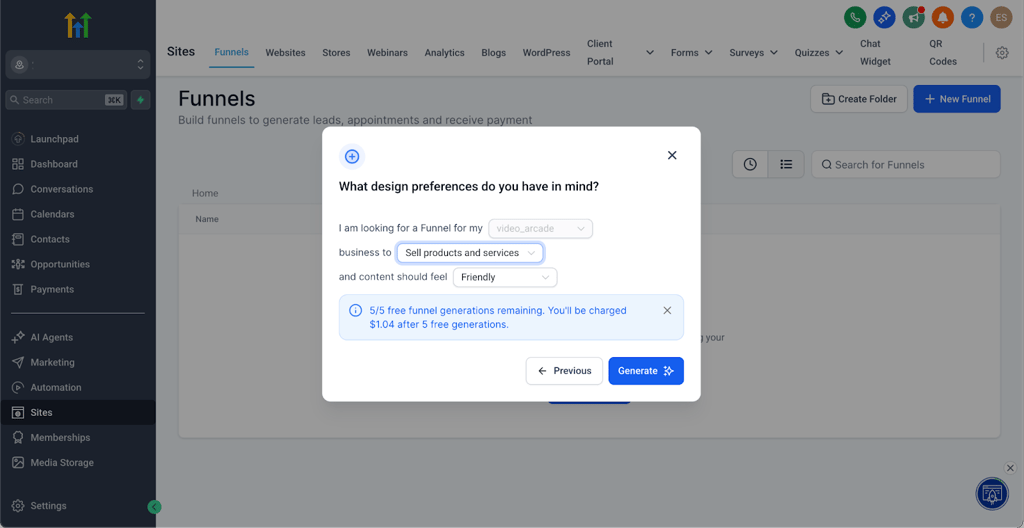
During our testing, GoHighLevel stood out with an intuitive drag-and-drop sales funnel builder. It uses predefined rows and columns, which limits its customizability and creative freedom, especially when compared to freeform tools. That being said, it ensures that everything you’ve created on GoHighLevel is automatically optimized for mobile, so you don’t need to make any manual adjustments yourself – super convenient.
What I like the most about GoHighLevel is that it supports interconnected, multi-step funnels, such as lead capture pages, booking forms, order pages, and upsells, making it easy to map out the entire customer journey in one platform.
Workflows and automations is where GoHighLevel truly shines. Workflows support advanced conditional logic, time delays, and triggers from form submissions, calls, payments, and CRM updates. Because the CRM, messaging, and funnels live in the same system, automations run without data sync delays. It’s all connected to its analytics dashboard, where you can see page views, opt-in rates, revenue generated, and pipeline health.
As for generative AI, GoHigh Level can do a lot, like generate social media posts or entire campaigns, but what surprised me most is that you can even create voice AI agents to manage calls. Still, for the average user, it’s probably most useful for generating funnels, particularly for people with limited experience, as you can select your industry, tone, and goals, and the guided wizard will generate a solid draft.
As for pricing, GoHighLevel is on the pricier side, with its Starter plan at $97.00/month. For small teams and growing businesses, it’s quite expensive, but for larger organizations, GoHighLevel’s flat rate makes it a cost-effective solution.
6. Phonesites – AI sales funnel builder on mobile
| Rating: | |
| Standout features: | Mobile-optimized landing page, website, and sale funnel builder, SMS and email workflows |
| Starting price: | $29.00/month |
| Best for: | Influencers, entrepreneurs, and small businesses working from their phones |
Phonesites is a mobile-first AI sales funnel builder that makes it easy to create landing pages, websites, and funnels on your phone. It has over 500 mobile-friendly templates and doesn’t require any coding skills to get started, which makes it ideal for freelancers or small businesses that are just getting started with these types of tools.
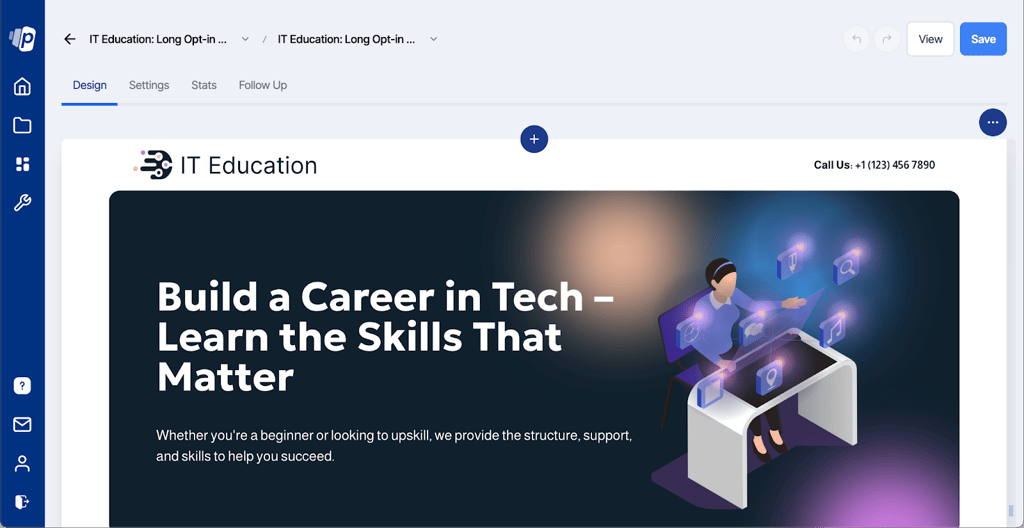
During testing, we found the whole process of creating funnels easy and quick. Phonesites is different from other tools we’ve discussed above because instead of a visual canvas, it’s a list of pages. It may seem limiting at first, but I found it actually streamlines the entire process – we were able to create a 3-step funnel in under 10 minutes.
Being able to build from your phone is a huge advantage, particularly for quick updates on the go. That being said, the main downside is that you always need to check if the page is working properly on the desktop, since it’s built with a mobile-first approach.
Another downside is that it doesn’t have advanced automations and workflows, so larger teams and businesses may find it limiting. Phonesites automations mainly focus on SMS and email follow-ups, which is not a bad thing, if that’s what you’re focusing on.
On the bright side, its AI Writer is a solid tool that can handle most copywriting tasks and even suggest improvements for your page. Still, it can sound too salesy and I found it usually requires someone to go over to add that human touch.
You can get Phonesites for just $29.00/month, which is a budget-friendly price for individuals and teams. That being said, I’m not a fan of the credit system for the AI writer, especially considering that it’s not that innovative of a feature. The starter plan only gives you 5 credits, which will run out fast, so I don’t recommend it for those who want generative AI capabilities.
7. Landy AI – prompt-based AI funnel builder
| Rating: | |
| Standout features: | LLM-based landing page builder, research, content generation |
| Starting price: | $27.00/month |
| Best for: | Freelancers, small businesses, brainstorming |
Landy AI made my list because it quickly generates landing pages based on your prompts. It’s not a comprehensive marketing solution like my other picks, but it’s a solid tool for creating landing pages.
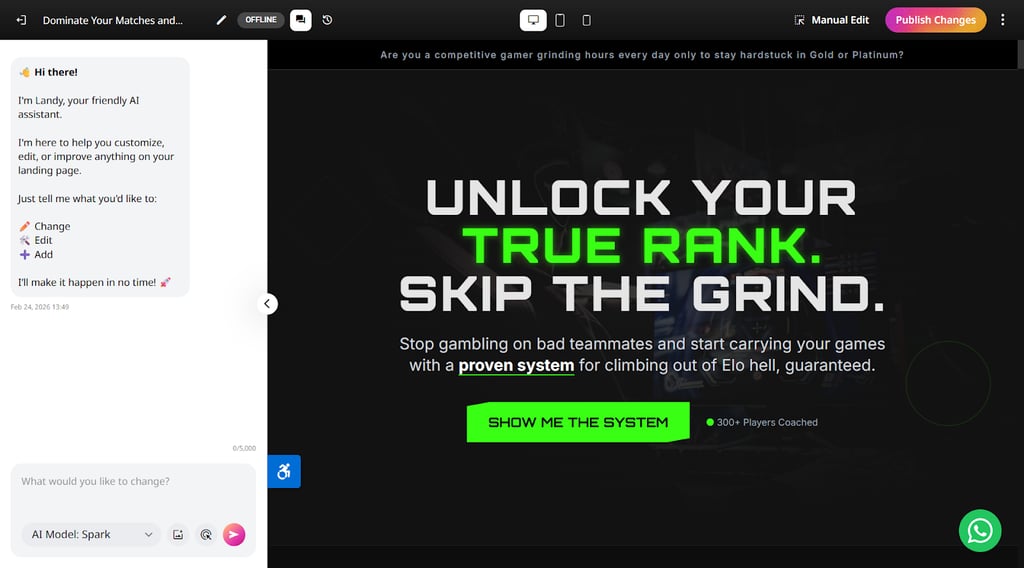
It kind of works like ChatGPT. You simply describe what you want and Landy AI generates the sales funnel. It took us less than a minute to get our first draft, but editing it was the hard part. Since there’s no drag-and-drop builder, you have to write out all of the changes you want made, which can prove challenging. Overall, I find it most useful for brainstorming and quickly seeing your ideas come to life.
Landy’s generative AI abilities are okay. As always, the output can be generic and too salesy, so you’ll need to review the text before it can go live. What surprised me most is that it can understand intent. For example, it can look at your website and copy your brand voice to ensure the generated output is in-line with your work.
During testing, our research team found that Landy AI excels at agentic emails. This means that it can draw information from your available knowledge base and answer questions directly instead of just pointing to a page.
You can’t natively set up workflows, but you can connect Landy AI to Slack, Google Workspace, and CRM giants (e.g., Salesforce or HubSpot) and go from there.
Landy AI is a budget-friendly option, starting at just $27.00/month and granting you 50 credits. Again, I’m not liking the credit system, as they hinder experimentation and can run out quickly. Still, there’s a free plan with 25 credits you can use to try out the service risk-free and decide if it’s worth it for yourself.
What is an AI funnel builder?
An AI funnel builder is essentially a marketing platform powered by AI. It helps you build sales funnels, which are a crucial part of any marketing strategy. Sales funnels show the customer journey throughout the entire buying process and are key to turning prospects into buyers.
Using an AI tool for building sales funnels optimizes the whole process. Instead of you having to manually create landing pages, write emails, reach out with follow-ups and upsells, an AI funnel builder will take care of content, routing, and optimization.
The main thing to note about AI funnel builders is that they’re comprehensive marketing tools. Unlike a basic landing page builder, which focuses only on creating a single web page, an AI funnel builder manages the full journey, such as lead capture, nurturing, retargeting, and checkout flows. It also goes beyond an email autoresponder, which typically sends prewritten sequences without deeper behavioral analysis.
During in-house testing, I noticed that most AI funnel builders typically focus on these three things: building sales funnels based on goals, generating content, and optimizing customer paths based on data.
How AI improves funnels in practice
AI funnel builders can minimize busywork, enhance your processes, and provide unique insights. Here’s a list of tangible benefits you can expect to see.
Faster funnel setup and iteration
Sales funnel AI tools let you go from brainstorming to production within minutes by generating page layouts, copy, and email sequences. During testing, we were able to create multiple sales funnel drafts in one session, whereas doing so without AI could take days if not weeks.
Smarter targeting and routing
AI analyzes user behavior like opens, clicks, pages visits, and more, and routes users through successful conversions. Simply put, instead of sending every user through the same sequence, the AI sales funnel adjusts paths based on intent. For example, automatic branching based on engagement levels can send highly engaged users directly to a limited-time offer, while lower-engagement visitors receive educational emails first.
Better message matching across steps
These tools align copy from ad to landing page to email sequence, maintaining consistent messaging across all campaigns. During testing, I noticed this is most visible in AI funnel builders that generate copy for multiple steps from a single brief.
Continuous optimization with less manual analysis
AI detects patterns in your sales funnel and suggests improvements or makes adjustments on its own. For some, this can replace A/B testing, but it can also complement it by automatically reallocating traffic to higher-performing variants while formal split tests continue running in the background.
Personalization at scale
An AI sales funnel supports segment-specific paths. It adjusts the path for each visitor based on different factors, making it feel personal and relevant.
5 practical steps to implement AI funnel builders into your workflows
If you’ve never worked with AI funnel builders, it may seem overly complicated. Here are 5 practical steps you can take to make the transition smoother.
Step 1. Map your current funnels and set clear goals
Start by identifying your key sales funnels (lead generation, webinar signup, product launch, trial sign-up, etc.) and choosing metrics for success (opt-in rate, cost per lead, sales conversion, LTV, etc.). Having clear goals is key when working with AI. This was especially apparent during testing, where funnels with clear goals were much easier to draft for and optimize.
Step 2. Choose one high-impact funnel to pilot
While it may be tempting to use AI on all of your sales funnels, I recommend starting out with one, preferably with decent traffic and clear business impact. Consider its complexity (structure, integrations, automation requirements, and more) when choosing an AI funnel builder for best results.
Step 3. Connect your stack and set up tracking
Before you can start optimizing it, you must integrate your sales funnel with a website/CMS or landing page host, email/SMS provider or built-in automation module, analytics and pixels. Once those are connected, verify that events (opt-ins, purchases, upsells) are set up correctly.
Step 4. Use AI to create and refine funnel assets
Now you can start playing around with the AI funnel builder. Input your brief and generate your first draft. Review the funnel structure and copy and set up automations. Ensure it follows your brand voice and style guidelines before going live.
Step 5. Iterate based on data, not vibes
Once you have some traffic, you can use the tool’s analytics to identify what works and what doesn’t. It’s great to pinpoint bottleneck steps, test new variants, and refine segments, timing, and messaging.
Best practices for maximizing the AI funnel effectiveness
Testing AI funnel builders gave us plenty of lessons. Here are some of them.
- Start narrow and expand. Starting with one sales funnel will minimize mistakes and help you understand what is working and what isn’t.
- Keep humans in the loop. Leaving your entire sales funnel in the hands of an AI funnel builder is not a good idea. AI can help you prototype, automate, and optimize, but human review is key, particularly for strategic decisions like offer structure, compliance, and tone.
- Align AI behavior with your brand and policies. Define tone, voice, and non-negotiable rules directly inside your prompts and templates. Specify what the AI can and cannot say, including restricted claims, discount limits, and positioning boundaries. This will also save time as you won’t have to make as many corrections.
- Test ideas, not just wording. AI funnel builders can do so much more than just write copy. Use them to brainstorm and experiment. Generate alternative value propositions and try different angles to find something that resonates with your audience.
- Treat funnels as living systems. Your sales funnel may be performing well now, but as products, market, and user behavior evolves, it may be soon underperforming. Revisit funnels regularly, review analytics and AI insights to make real-time changes before your funnel starts failing.
Key features to look for in an AI funnel builder
AI funnel builders are stacked with features, so it can be overwhelming to understand what’s actually needed and what’s just bloat. I compiled a list of key features to look out for when choosing an AI funnel builder:
- Visual funnel mapping. A visual canvas makes it easier to see the full customer journey and understand how everything connects. While not all of our tested AI funnel builders use a visual canvas, I liked that it gives you an overview at a glance – key if you’re managing multiple funnels.
- AI content and offer generation. Generative AI is a must for any AI funnel builder. Make sure there are tools like AI writers that can generate headlines, page copy, emails, SMS, and from a structured brief.
- Automation and triggers. Another essential part of an AI funnel builder, strong automations and workflows will minimize busywork and increase conversions. Look for conditional logic, behavioral triggers, and time-based actions.
- Segmentation and personalization. You should be able to target different audiences by segmenting them based on behavior, purchase history, or engagement level.
- A/B and multivariate testing. To understand what works and what doesn’t, you need to be able to test different paths. Look for the ability to test individual steps of the sales funnel as well as full-path variations.
- Integrations with your stack. Native integrations are ideal, so you don’t have to rely on third-party connectors for CRM, email, payment processors, webinar platforms, and ad platforms. If native is unavailable, make sure it supports apps you intend to use.
- Analytics and reporting. A solid analytics dashboard is a must. Look for clear metrics per step, funnel-wide stats, and attribution. Bonus points if it provides AI-driven insights.
- Pricing model and limits. Choose tools that have clearly outlined plans and pricing with full transparency about how plans scale with funnels, contacts, traffic, or features, so you don’t have any surprises.
Top mistakes to avoid when using AI for funnel building
Using AI to build and optimize your sales funnel can save time and uncover powerful insights, but only if you approach it strategically. Here are some common mistakes that can limit your results or even derail your funnel's performance.
- Expecting AI to fix a weak offer. AI funnel builders are here to help optimize your sales funnel, not turn a low-demand product into a highly-converting one. If your core value proposition is unclear or unattractive, no AI funnel builder is going to make it perform well.
- Skipping proper tracking and goals. Before jumping into generating sales funnels, it’s crucial to take some time to set realistic goals and expectations. Not only will this help you avoid optimizing noise, but it will also help you understand whether the tool is actually having an impact on your business.
- Automating too much, too soon. Tools with deep automation are complex and diving too deep can amplify mistakes. Start slowly and build from there.
- Ignoring audience segments. AI works best when it has context. In the case of AI funnel builders, it’s your audience. Using the same messaging for all of your audience segments reduces relevance and doesn’t let you use AI’s main strength – personalization.
- Not reviewing AI-generated content. During our testing, we noticed that AI tends to generate generic text that can sometimes sound too salesy or pushy. Not to mention that it may not align with your brand voice. That’s why it’s crucial to read through everything before going live.
- Forgetting about compliance and data privacy. If you’re dealing with user data, especially sensitive data, ensuring you’re compliant with local regulations is key. More comprehensive AI tools have built-in compliance tools, but less centralized ones may not. It’s your responsibility to ensure that user data is safe in your hands.
Which tool should you pick?
All of these are solid tools and can have a place in your business, but how beneficial they are depends on what you need. Here’s a quick breakdown of my top picks:
Choose ClickFunnels 2.0 if you want a visual canvas for building funnels, need lots of pre-built templates, and like a strong community. Choose GetResponse if you mainly work with email marketing and want integrated funnels. Choose nexos.ai if you work on a team building AI-powered funnels for multiple clients. Choose Unbounce if you are part of a PPC/paid traffic team focusing on landing, prioritize A/B testing, and need solid integrations.
Choose GoHighLevel if you want white-label style CRM, need an all-in-one platform, and prioritize AI writers. Choose Phonesites if you are in a small team or a solo user and need quick mobile-first funnels. Choose Landy AI if you prefer working with LLMs like ChatGPT and want a prompt-based funnel generation.
Quick decision guide
| Goal | Start with |
| Quick and easy first AI funnel | Phonesite or Landy AI |
| All-in-one platform with deep automation and built-in CRM | ClickFunnels 2.0 or GoHighLevel |
| Single landing pages with A/B testing | Unbounce |
| Budget-friendly AI funnel builder setup | GetResponse or Phonesite |
| Manage multiple AI models, agents, and workflows from one platform | nexos.ai |
All in all, you can’t have it all – AI funnel builders either excel at AI-driven, quick setup or are comprehensive tools that demand time and resources but provide deep automation, insights, and analytics.
FAQ
What is an AI funnel builder and how is it different from a landing page builder?
An AI funnel builder is an AI-powered platform that builds multi-step customer journeys. Unlike a basic landing page builder, it focuses on optimizing the full path from awareness to conversion, ensuring every step works together to drive results.
Do I need a lot of traffic before an AI funnel builder is worth it?
No, you don’t need a lot of traffic to use an AI funnel builder. Small businesses with less traffic can benefit from personalization, reduced manual workload, and unique AI insights.
Can I connect AI funnel builders to my existing email and CRM tools?
Yes, most AI funnel builders support thousands of integrations with popular email marketing services, payment tools, and CRMs.
How do I measure whether an AI funnel is actually performing better than my current setup?
You can measure whether an AI funnel builder is performing better than your current setup by comparing measurable benchmarks like conversion rates. Track performance before and after implementation, and allow enough time to reach statistically meaningful results.
Are AI funnel builders safe to use with customer data and payment information?
Yes, AI funnel builders are safe to use with customer data provided that they follow standard security practices and are compliant with data privacy regulations.