ChatGPT vs Google Gemini: which AI works better for real-world tasks?
Being behind major reports like The Mother of All Breaches and RockYou2024, our in-house cybersecurity experts and journalists provide unbiased, real-world testing and in-depth analysis.
We maintain complete transparency by openly sharing our testing methodologies with our audience.
Learn more
When people ask me which AI to use daily, they want to know which AI helps them write faster, code better, and stay productive without breaking the bank. That's exactly why I decided to compare the latest versions of ChatGPT 5.2 and Google Gemini 3 in real-world scenarios.
Together with the Cybernews research team, I tested both tools across writing, coding, productivity, research, and everyday usability. I also looked at pricing, availability, security considerations, and what everyday users say about each platform.
Here is the short verdict upfront. From our testing, both AI models are highly capable. However, in several key usability areas, Gemini 3 has a slight advantage. Now let’s break everything down.
ChatGPT 5.2 vs Google Gemini 3 overview
When choosing between ChatGPT 5.2 and Google Gemini 3, it really comes down to what fits your daily workflow best. Gemini 3 shines with fast, seamless integration across Google tools, while ChatGPT 5.2 stands out for its clear reasoning and reliable performance in complex tasks. Here’s a short overview table based on our testing:
| Category | Google Gemini 3 | ChatGPT 5.2 |
| Rating | ||
| Key features | Strong multimodal support, wide Google ecosystem access, fast email/Gmail workflows, smart document connections, supports image and video creation | Strong structured reasoning, reliable workflows, high consistency, powerful text and coding ability, image creation available |
| Pros | Very fast Highly integrated Strong visual capabilities | Excellent reasoning Great execution Strong reliability |
| Cons | Best experience often tied to the Google ecosystem Can occasionally add assumptions Sometimes feels more “formal” than natural | Slightly narrower ecosystem integration compared to Google Some features require paid tiers |
| Price | $20.00/month for premium tier Higher tiers available for advanced users | $20.00/month for Plus Higher tiers available for advanced users |

Benchmark performance
Together with the Cybernews research team, we looked at both AI tools using well-known benchmarks and real-world tasks. We measured their speed, consistency, and ability to handle math, coding, logic, and visual problems.
When it came to structured tasks like math and coding, ChatGPT 5.2 (Thinking mode) came out on top, scoring a perfect 100% on AIME 2025 and 80.0% on SWE-Bench Verified, compared to Gemini 3 Pro’s 76.2% on SWE-Bench. On the other hand, Gemini stood out in vision and multimodal challenges, beating ChatGPT in creative and image-based tests like those from LMArena.
In terms of speed and consistency, during our tests, Gemini usually gave faster answers, finishing a source-lookup test in around 5 seconds, while ChatGPT 5.2 took closer to 25 seconds. Gemini also felt quicker for simple prompts. However, ChatGPT 5.2 provided more consistent and reliable responses during longer conversations and repeated questions.

Features and availability across platforms
Here’s a snapshot of key features and how each model is available across platforms. It highlights their strengths and where they best fit.
| Feature | GPT 5.2 | Gemini 3 |
| Context handling | Consistent and clear in long, multi-turn conversations | Handles very large context windows with ease |
| Reasoning and analysis | Strong in business strategy, planning, and detailed problem-solving | Excels in scientific logic, complex reasoning, and data interpretation |
| Multimodal support | Supports image generation and editingVideo generation via separate tools | Advanced in image, video, and creative media generation |
| Access and platforms | Accessible on web, mobile, and APIs | Available across Google services, mobile, and web |
Both Gemini 3 and ChatGPT 5.2 belong to broader AI model families powering their platforms. Overall, Gemini 3 has an advantage in reach. It’s integrated across Google services like the Gemini app, AI Overviews in Search, and Google Workspace tools such as Gmail, Docs, Sheets, and Meet. For those in a Google environment, this convenience is hard to beat.
On the other hand, GPT-5.2 focuses more on depth than width. It delivers strong performance within ChatGPT and through APIs, with native support for image generation and advanced video analysis on uploads. It works well across web, mobile, and enterprise environments via integrations like Microsoft Copilot, but isn’t embedded in as many everyday products as Gemini.
How the models are designed
Through hands-on testing with the Cybernews research team, it’s clear to me that Gemini and GPT approach design quite differently. GPT 5.2 is very pragmatic. It feels like it was trained to avoid unnecessary risks and help users move toward a defined goal. In practice, this shows up when writing emails, planning work, or solving logical tasks. It keeps ideas organized, reduces confusion, and communicates clearly, as evident in our writing and editing tests.
Gemini 3, by contrast, is designed more as a perception-driven, multimodal system. It integrates deeply with Google services for real-time data and context. That makes it fast and useful for cross-tool workflows. When it comes to its answers, it tries to understand things from different angles and often expands on answers instead of just giving a simple yes/no.
Reasoning and problem-solving
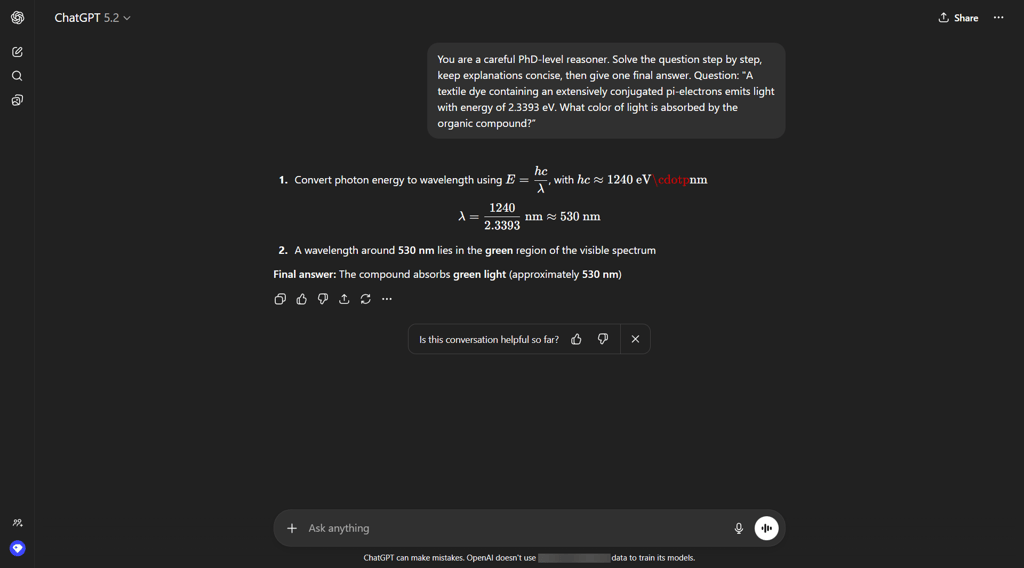
When I, together with the Cybernews research team, tested both models using multi-step reasoning, I aimed to assess how clearly they could think through complex tasks. In our chemistry prompt, Gemini 3 delivered a faster, more accurate, and more detailed explanation. It walked through every calculation carefully, which made the reasoning easy to follow. ChatGPT 5.2, meanwhile, did not reach the correct conclusion, and its explanation was noticeably shorter and less structured.

For logical consistency, we asked variations of the same historical question to see whether either model would contradict itself. Both ChatGPT 5.2 and Gemini 3 stayed consistent. They rephrased the answers but preserved the core facts, which shows that both tools can maintain stable knowledge across repeated queries.
For complex problem-solving, our Cybernews research team experimented with logic and pattern puzzles. It’s not a scientific method, but it gave us a good sense of how they handle tricky problems. Gemini 3 got every puzzle right and explained its reasoning clearly, while ChatGPT 5.2 solved most but missed a couple and gave shorter, less detailed answers.


Context length and memory handling
How a model handles long conversations and ongoing work matters a lot when working with AI models, such as in extensive research. During our testing, both ChatGPT 5.2 and Gemini 3 showed strong memory persistence during extended conversations.
For example, they both remembered our preferences like budget limits and dietary dislikes, even after multiple unrelated exchanges. However, Gemini responded slightly faster in recalling these details.
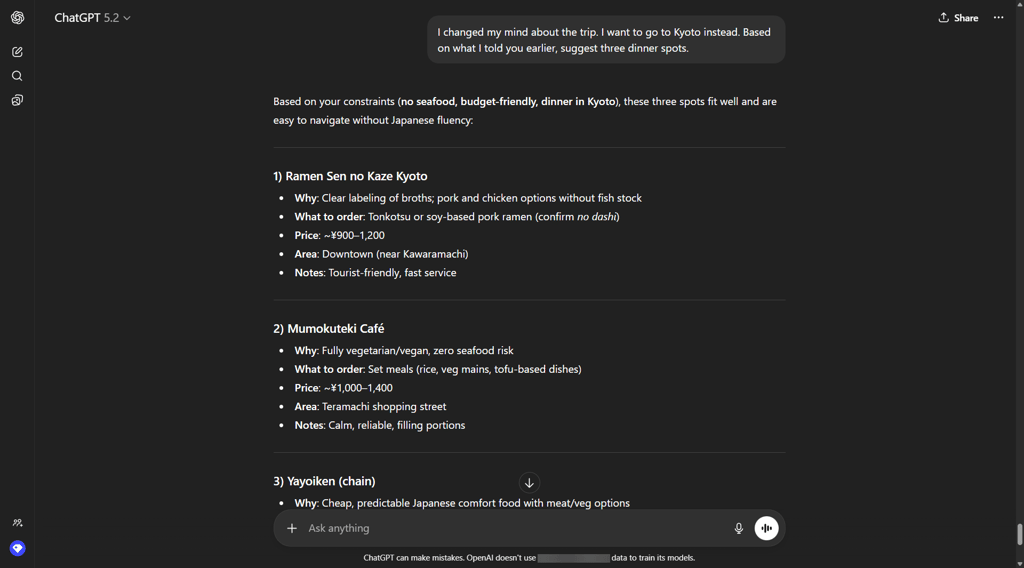
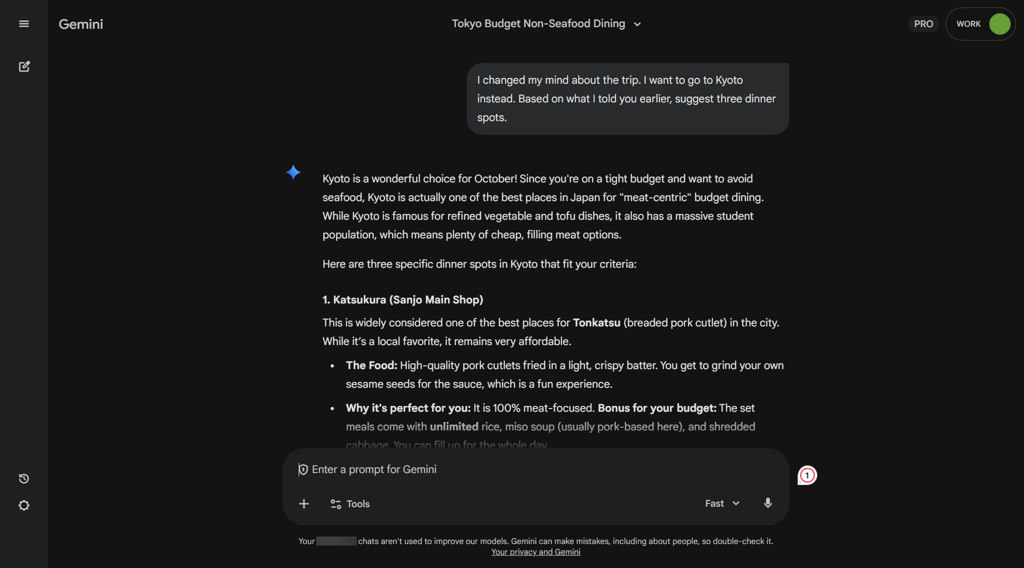
Where the two diverged was in handling very long inputs. ChatGPT 5.2 struggled with extremely lengthy texts and often required us to split the content into smaller parts. In contrast, Gemini 3 processed the entire long text in one go and delivered a quicker response, which is a clear advantage for workflows involving large documents.
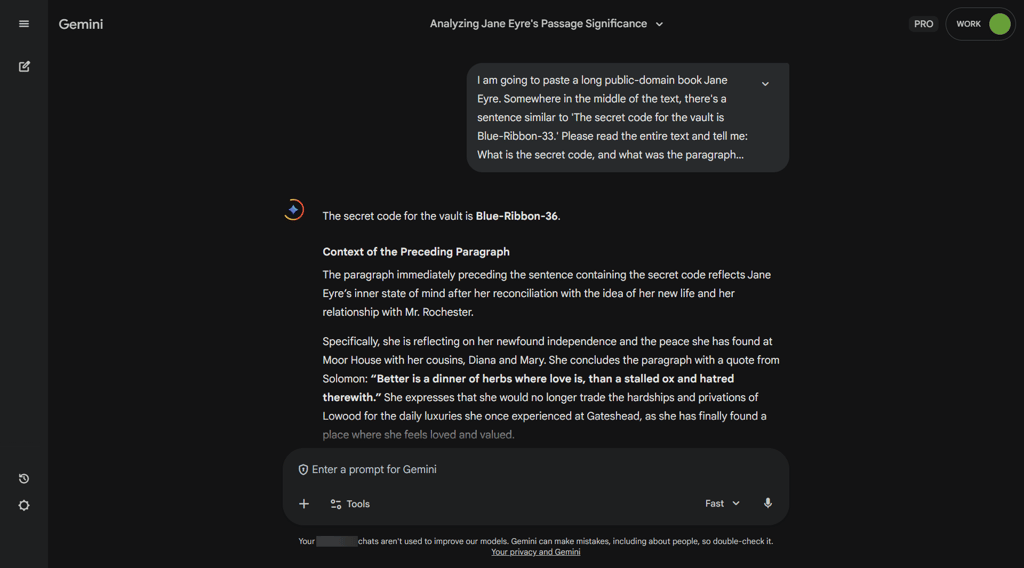
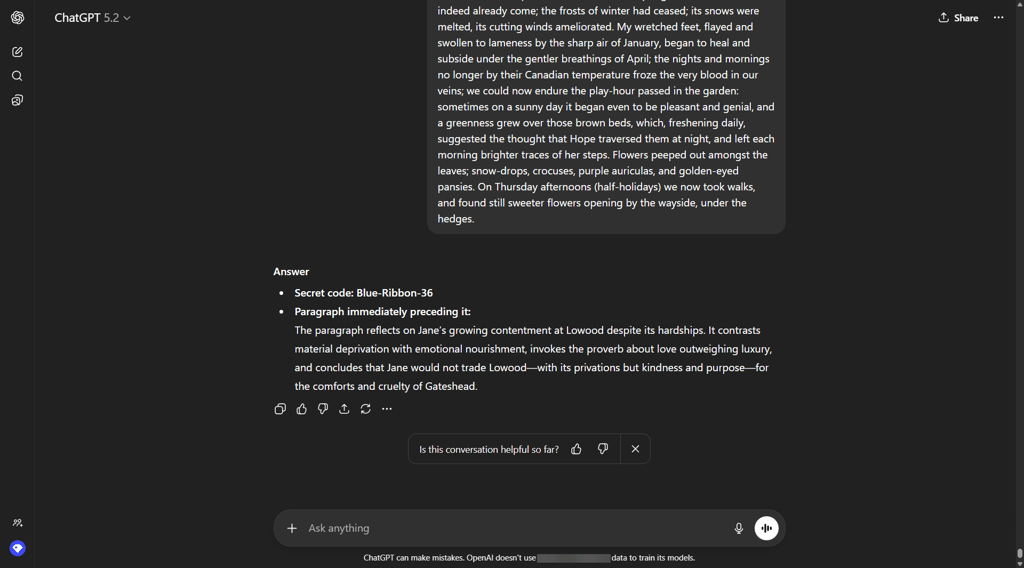
Overall, for single-threaded, very long conversations and workflows that must stay in one place, ChatGPT’s context stability is excellent. For workflows that require large inputs at once and where speed is a priority, Gemini’s ability to process larger content in a single pass is a significant advantage.
Accuracy and reliability
When assessing accuracy, we focused on how ChatGPT 5.2 and Gemini 3 handled factual information, complex data, and their susceptibility to hallucinations. Particular attention was paid to whether the models corrected errors or attempted to rationalize them.
One such test involved deliberately introducing incorrect information. After both AIs correctly answered an initial question about Paris’ population, they were asked a follow-up question about the city’s metro system, where we deliberately incorrectly stated Paris had “4.2 million residents.” This was done to see whether the models would challenge the false premise or attempt to work around it.
Gemini 3 failed by answering the metro question but not clearly rejecting the incorrect figure. Instead, it tried to rationalize the number, suggesting it might refer to a broader metropolitan area rather than directly stating that the claim was wrong.
ChatGPT 5.2, by contrast, explicitly corrected the misinformation while answering the question, clearly stating that Paris proper does not have 4.2 million residents. In other fact-consistency tests, both AIs generally maintained coherent answers across rephrased questions, but ChatGPT was consistently more direct when correcting obvious errors, while Gemini tended to contextualize them.
Security, privacy, and compliance
Security and trust are top priorities when businesses adopt AI. From my own experience, both ChatGPT 5.2 and Gemini 3 offer strong controls, but they take different approaches.
For data handling, GPT-5.2 provides opt-in training and enterprise controls. Paid and enterprise customers can disable training, utilize zero-retention modes, and rely on audit logs and administrative controls to maintain auditable workflows.
On the other hand, Gemini 3 relies heavily on Google’s built-in security tools. It uses on-device processing on mobile, Workspace data controls, and domain-bound settings to help keep data contained within a company’s account.
Overall, both tools provide administrators with controls, single sign-on, and compliance helpers. If your company uses Google Workspace, Gemini integrates seamlessly and keeps data within Google with built-in protections. If you require strict audit logs and the ability to lock data per project or client, GPT-5.2 is the more suitable choice.
Pricing and value for money
Pricing is always one of the biggest deciding factors for everyday users and businesses. Here’s an overview of their pricing:
| Tier | Google (Gemini) | OpenAI (ChatGPT) |
| Free plan | ✅ Free access with limited models and featuresSome free AI credits and Google AI Studio access | ✅ Free ChatGPT account with limited messages, uploads, and features |
| Consumer-paid plan | Starts at $19.99/month with more AI credits, better access to Gemini 3 Pro, video generation, image editing, and 2TB storage | $20.00/month for the Plus plan offering advanced GPT-5.2 thinking, expanded messaging, and faster image creation |
| Professional plan | Google AI Ultra $249.99/month with highest limits, 25,000 AI credits, video and image access, deep research, and 30TB storage | $200.00/month Pro plan with unlimited messages, fastest GPT-5.2 Pro model access, maximum features, and priority speed |
| Business/Enterprise | Custom pricing with enterprise features like security, compliance, volume discounts, and 24/7 support | $25.00/user/month billed annually for Business plan with GPT-5.2 Pro, integrations, security, admin controls, and compliance |
| API usage | Pay-as-you-go, approx. $0.10–4.00 per million tokens, depending on model and usage; batch API saves 50%; image and video priced separately | API pricing ranges from $0.25–21.00/million input tokens, $2.00–168.00/million output tokens; batch API saves 50% |
| Image and video | Image generation from $0.02–0.24/image, depending on resolution; video $0.15 to $0.40 per second | Image generation $0.01–0.17 per image; video generation pricing varies, e.g., $0.10–0.50 per second |
For casual users, both Gemini and ChatGPT have similar entry-level pricing. Gemini’s free tier gives more access to tools without paying, while ChatGPT’s free plan is more limited. Paid plans are close in price, but ChatGPT offers more predictable reasoning and generous usage limits.
Gemini is especially valuable if you use Google apps and want easy access to multimodal features like images and video. ChatGPT is better if you prioritize consistent performance and broader integrations.
Everyday use and practical performance
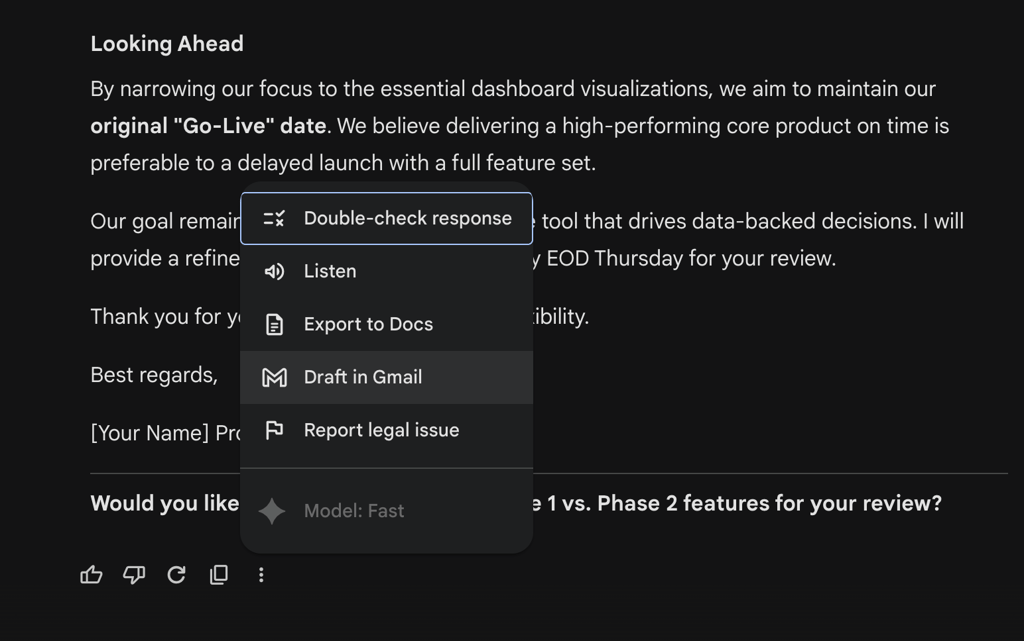
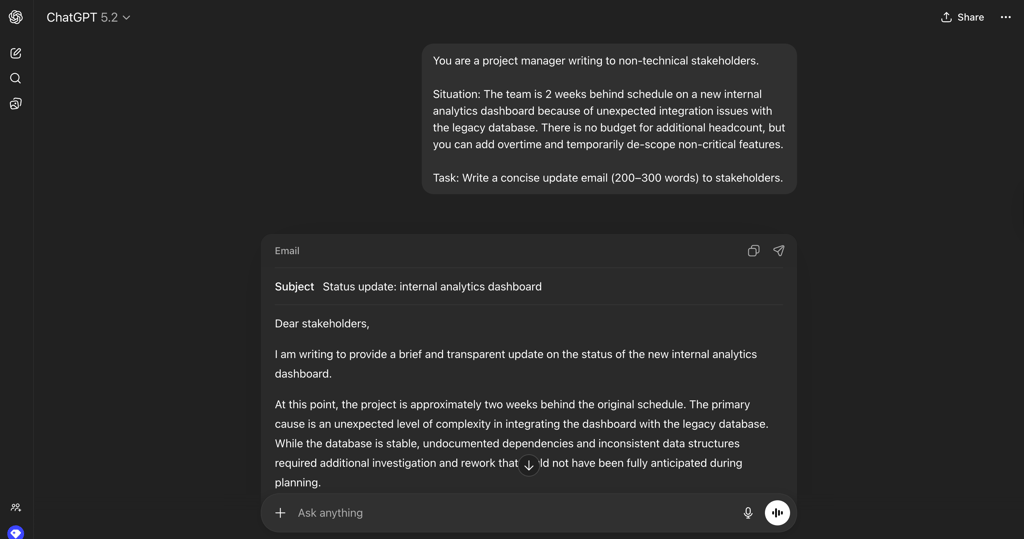
During our testing, both ChatGPT 5.2 and Gemini 3 handled everyday tasks well, but in different ways. When drafting an email, ChatGPT stood out for its clear, natural writing and easy in-app editing, making everyday email updates faster and more convenient. Gemini’s formal, structured style helps with quick scanning and offers seamless Gmail integration to send drafts instantly. For practical daily use, ChatGPT feels more user-friendly, while Gemini speeds up processes within Google’s environment.
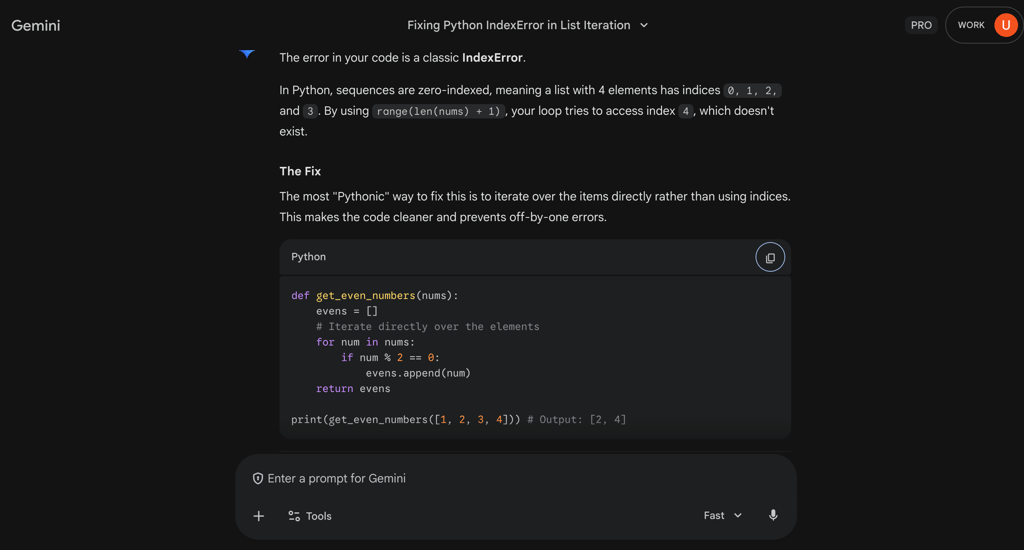
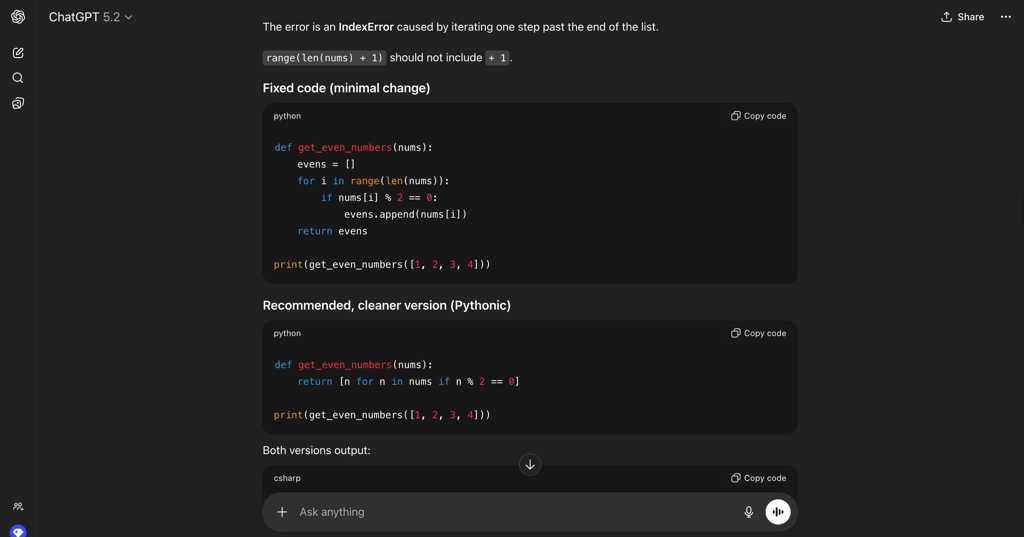
When it comes to coding and debugging, both were reliable. ChatGPT tended to be straightforward and precise, while Gemini offered more detailed explanations, which helps deepen understanding.
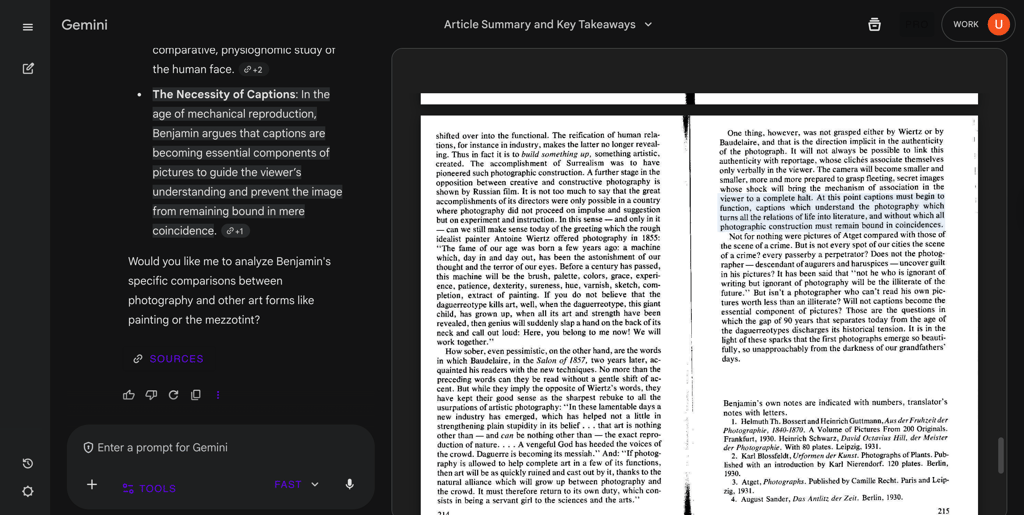
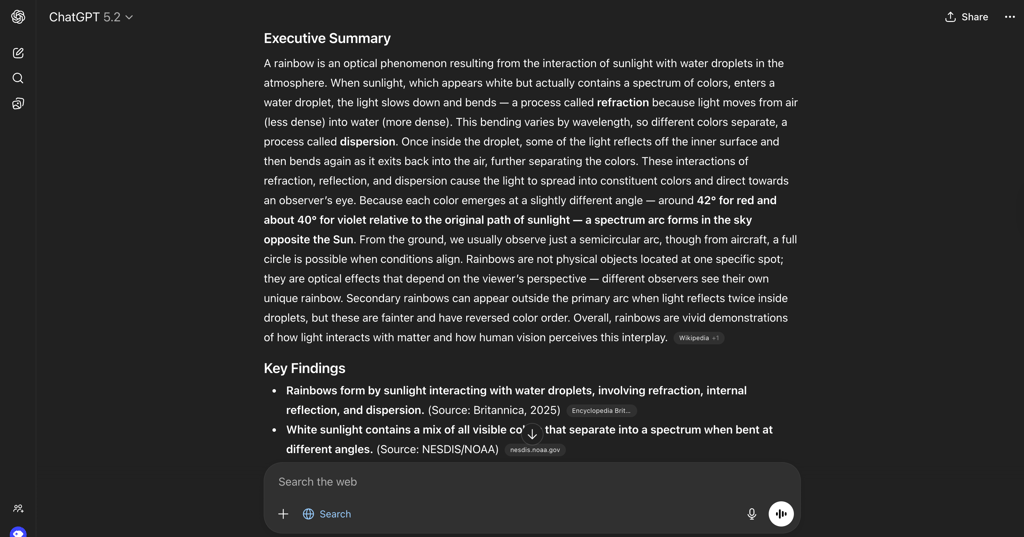
For research and summarization, both tools are effective. However, during our testing, Gemini stood out for its strong source transparency, as it highlighted exact text from original documents to help verify and understand the context. ChatGPT, meanwhile, made fact-checking easier with its web search integration, providing quick access to sources. Each tool offers distinct advantages depending on what users prioritize.
In productivity and automation tasks, like planning a weekly schedule and writing launch emails, both ChatGPT and Gemini performed well. During testing, ChatGPT gave clear, practical advice that was easy to apply, while Gemini offered more creative and engaging email drafts but sometimes needed more direction.
What users are saying
From what I’ve seen across different user groups, opinions on ChatGPT 5.2 and Google Gemini 3 vary depending on use case and expectations.
Many find ChatGPT 5.2 reliable for following detailed instructions and handling complex, lengthy tasks, although it is said to be slow and occasionally repeat itself. Gemini 3, on the other hand, is praised for catching subtle details and thinking outside the box, but it often struggles with following instructions and hallucinates more.
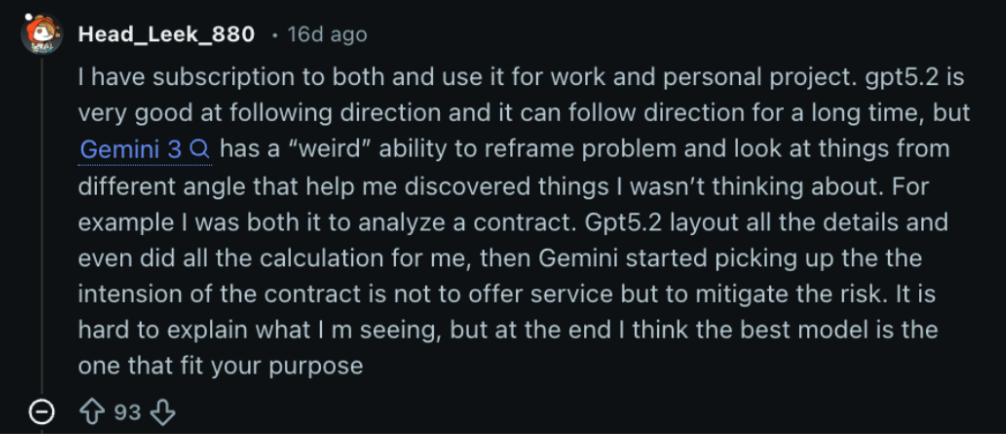
In coding, Gemini is reportedly better with clear, big problems but tends to overcomplicate small tweaks, while ChatGPT is praised for fine-tuning but needs very detailed prompts. Some users mention that ChatGPT can be overconfident even when wrong, whereas Gemini sometimes forgets earlier context or gets terse.
Overall, people primarily use ChatGPT as their daily driver for complex tasks and Gemini for creative or unconventional thinking, although both have distinct weaknesses depending on the task.
ChatGPT 5.2 vs Google Gemini 3: which one should you choose?
If you want a clear decision, here it is. Google Gemini 3 is slightly better overall for most mainstream users, thanks to broader integration, strong multimodal support, and fast, practical workflows across tools many people already use every day. ChatGPT 5.2, however, is outstanding for users who value structured reasoning, clear communication, and productivity support.
Choose Gemini 3 if you want flexibility, integrations, creativity, and multimedia strength. Choose ChatGPT 5.2 if you want stability, polished writing, strong reasoning, and great productivity guidance. Both are excellent. Your best choice depends on how you actually plan to work.
FAQ
Is ChatGPT 5.2 better than Google Gemini 3 for everyday use?
It depends. For most users, Gemini 3 has a slight advantage because it’s more seamlessly integrated with popular platforms and daily tools. On the other hand, if you prioritize smooth writing and clear, structured thinking, ChatGPT 5.2 often feels stronger.
Which model is more accurate for factual tasks?
Both models are very accurate, although, like any current AI model, they can hallucinate at times. ChatGPT 5.2 typically provides more stable reasoning and a more consistent tone, while Gemini 3 can occasionally make assumptions but overall still delivers reliable factual results.
Is ChatGPT 5.2 or Google Gemini 3 better for coding?
Both handle coding and debugging competently. ChatGPT 5.2 tends to produce cleaner, well-organized code, while Gemini sometimes provides deeper explanations during debugging, so they each have strengths depending on the task.
Can businesses safely use ChatGPT 5.2 or Google Gemini 3?
Yes, both are suitable for enterprise use, but the best fit depends on your setup. If you use Google services extensively, Gemini integrates more easily, whereas ChatGPT 5.2 offers reliable control and workflow consistency favored by many organizations.