Elementor review: what makes it stand out?
Our in-house experts conduct internal independent, hands-on testing and transparent reviews of web hosting providers by using custom-built tools or utilizing industry-recognized tools and methods to ensure impartial and evidence-based assessments.
Using the same criteria for all services, we share our detailed methodologies and practices to help customers make informed hosting decisions.
Learn more

Elementor is a leading WordPress website builder trusted by millions for its intuitive drag-and-drop interface and robust design features. Its popularity stems from empowering users, from casual site owners and digital marketers to agencies and freelancers – to create professional, visually stunning websites without writing a single line of code.
According to W3Techs, as of October 2026, Elementor is used by 12.4% of all websites globally, making it the most popular WordPress page builder available.
Elementor truly makes web design accessible to everyone, regardless of technical skill. In this article, I partnered up with the Cybernews research team to review its pros and cons, standout features, performance, and interface. Keep reading to find out if it’s a good fit for your project’s needs.
Elementor overview
| ⭐ Rating: | |
| 🥇 Overall rank: | #16 out of #43 |
| 💵 Price: | From $4.99/month |
| 🪄 Ease of use: | Extremely easy to use |
| 🎨 Templates: | 330 |
| 🏢 Business features: | Custom hosting options, automated resource scaling, security audits, and more |
| 👨💻 24/7 live support: | Yes |
| 🔥 Coupons: | Cybernews Website Builder Coupons |
Pros and cons of Elementor
Key features of Elementor
Elementor’s feature set goes far beyond the basic page building – it offers powerful tools that allow for comprehensive yet easy and flexible website creation. For this review I spent several hours exploring and testing its intuitive editor, customization options, and smart features like Elementor AI, covering everything from online stores to pop-ups for a complete web design experience.
Drag-and-drop editor
One of the standout features that drew me to Elementor in the first place is its intuitive drag-and-drop editor. From the moment you open the builder, you can see exactly what your website will look like as you work – no more guessing or constant previewing. The interface is clean and user-friendly, allowing you to simply pick up any element – like text, images, or buttons – and place it exactly where you want on the page.
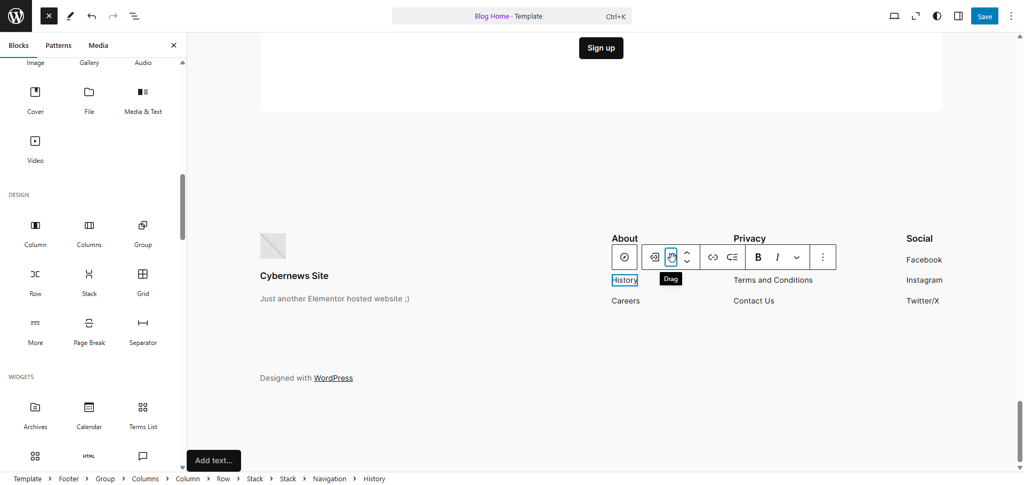
Real-time editing is a game-changer. As I made changes to my website, whether it’s adjusting layouts, tweaking colors, or resizing images, I saw the results instantly. As such, I found this immediate feedback not only speeds up the design process but also makes it much easier to experiment and get creative without fear of breaking the site.
Elementor’s editor also offers handy features like copy-paste for sections, undo/redo, and responsive editing, so you can easily fine-tune how your site looks on mobile, tablet, and desktop. It’s approachable and easy to learn for beginners, while more advanced users will appreciate the depth of customization available.
Overall, the drag-and-drop editor is what makes Elementor such a powerful and enjoyable tool for building WordPress websites. However, compared to the best drag-and-drop website builders on the market, Elementor definitely lacks built-in AI-powered suggestions that Hostinger and IONOS have already incorporated. There is a separate Elementor AI site planner, but you need an additional subscription for it.
Theme builder and dynamic content
Elementor’s Theme Builder lets you control every part of your website’s design, far beyond what most WordPress themes allow. I found it easy to create and customize headers and footers with it, replacing the default theme elements with my own designs. This means the logo, navigation, and CTAs will always look exactly how you want, no matter which page a visitor lands on.
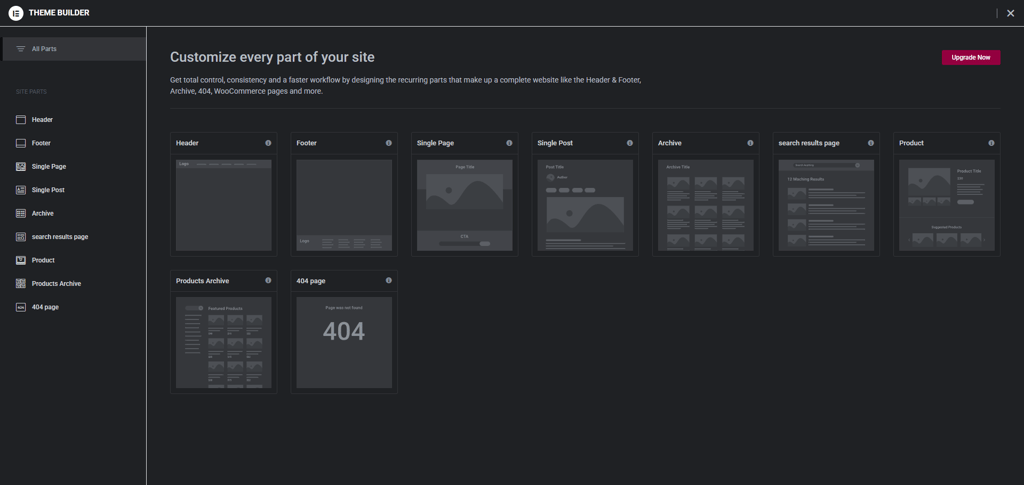
What really sets the Theme Builder apart is its support for dynamic content. For example, when building a portfolio or product listing, I can pull in dynamic fields – like project titles, images, or prices – directly from custom post types or WooCommerce products. This way, I was able to design a single template and have it automatically populate with the right content for each item or product, saving time and ensuring consistency across the site.
Assigning templates to specific pages, categories, or products is also simple, giving you precise control over where each design appears. Whether you’re building a blog, shop, or portfolio, Elementor’s Theme Builder and dynamic content tools let you create a fully customized, professional website without touching any code.
WooCommerce integration
Elementor integrates seamlessly with WooCommerce, making it easy to build and customize a fully functional online store without coding. With this web builder, you can use dedicated WooCommerce widgets to add product grids, Add to Cart buttons, price displays, and customer reviews directly onto any page, all while maintaining a consistent, branded look.
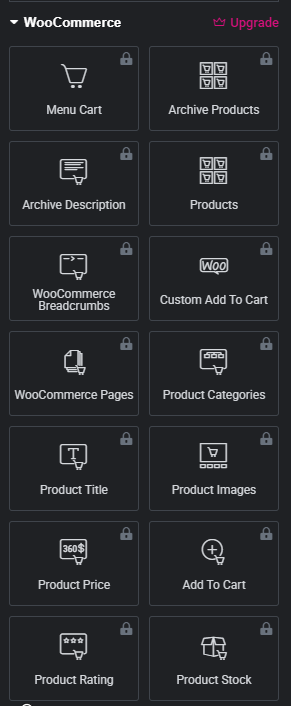
The Theme Builder lets you design custom templates for product archives, single product pages, and even the cart and checkout process, ensuring a smooth and visually appealing shopping experience for your customers. At the same time, there is a wide array of pre-made WooCommerce templates available, covering order confirmation, checkout, search results, catalog pages, and more.
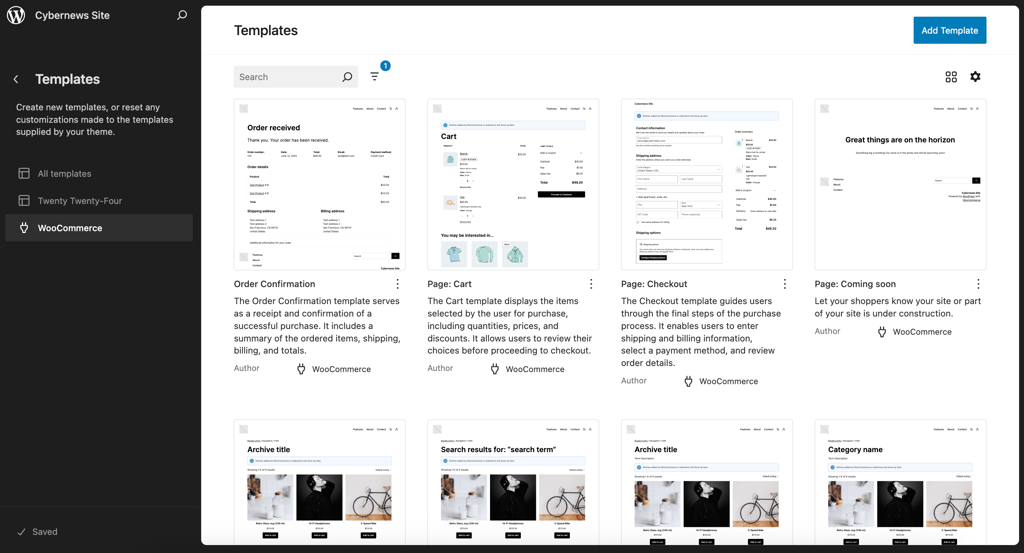
Advanced styling options allow you to tailor every store element, from product galleries to upsell sections, helping boost engagement and sales. Whether selling a few items or managing a large catalog, Elementor’s tools streamline the process and keep everything organized.
If you’re considering starting your own eCommerce business, such as selling shoes or niche products, I recommend visiting our dedicated Cybernews page for practical tips and platform comparisons: how to sell shoes online.
Popup builder
Elementor’s Popup Builder is a powerful marketing tool that lets you create eye-catching popups with the same editor you use for the rest of your site.
To do so while customizing your theme, you only need to open Elementor’s handy Finder feature (Ctrl/Cmd+E), which lets you look for settings, features, elements, and all. In the search field, you type in “Add new popup,” come up with a name for it, and click Create Template, which will open a template library in the Popup tabs for you. Then you can click Insert to add a ready-made popup to your page or click Exit to move from the library to a popup builder where you can create a new one entirely from scratch.
This way, you can design everything from email opt-in forms and newsletter signups to countdown timers for limited-time offers, all with full control over layout, style, and triggers.
What sets Elementor apart is the ability to target popups based on user behavior – like exit intent, time on page, or specific locations – so you can show different messages to visitors from different regions or at key moments in their journey. This makes it easy to display geo-targeted banners for local promotions or special events.
However, it’s worth noting that this functionality is only available on the Pro version, keeping your customization options pretty minimal on a regular plan.
Widget variety and customization options
Elementor provides a vast library of widgets that cover everything from basic site building to advanced, professional features.
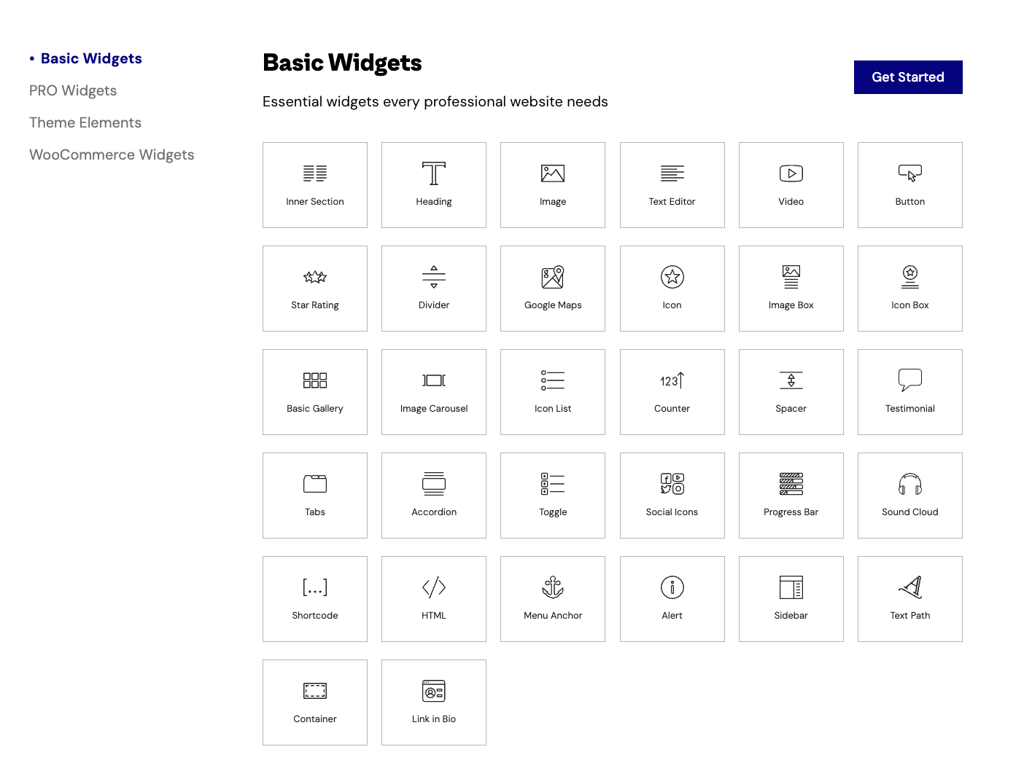
With the Basic (free) plan, you get essential widgets such as Heading, Image, Text Editor, Button, Image Gallery, and more – perfect for creating attractive, functional pages easily. These core widgets are easy to customize, letting you adjust layouts, colors, and spacing to match your brand.
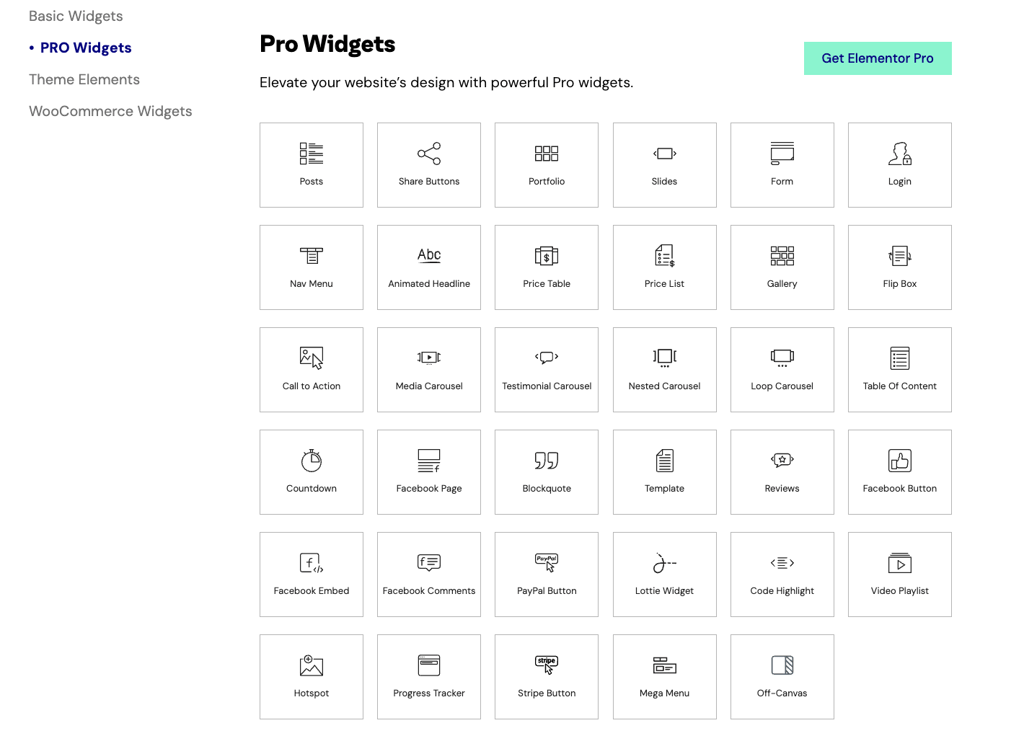
Upgrading to Elementor Pro unlocks a much broader set of tools. The Essential plan includes 57 Pro widgets, 10 cloud templates, and the Theme Builder, allowing you to design headers, footers, and other key site parts, plus use the Form Builder for basic marketing needs.
The Advanced Solo plan expands this to 86 Pro widgets, adding advanced marketing integrations, the Popup Builder, and eCommerce features for eCommerce sites. Upgrading to Advanced or Expert plans doesn’t affect the number of widgets available but significantly increases the number of cloud templates from 30 to 5000.
Pro widgets include Forms, Slides, Posts, Portfolios, Pricing Tables, and more, allowing you to build interactive, conversion-focused sites.
With both free and Pro plans, Elementor makes it easy to create unique, professional websites without coding. However, the paid Pro versions ensure deeper customization and flexibility.
Elementor AI
Elementor AI offers a suite of smart features designed to speed up website creation, but as mentioned above, it’s a separate paid service, not included in Elementor plans. This is a downside since it not only costs more – the cheapest option starting at $3.99/month, with a 12-month upfront payment of $48.00 – but also has limited numbers of credits and AI Notetaker sessions on all Elementor AI subscription plans.
This tool helps with AI-generated container layouts, as well as image, text, and even code generation. Here are its most standout features:
- AI Site Planner. With it, you can instantly generate detailed sitemaps and wireframes by answering guided questions about your website’s goals and structure. This tool accelerates project planning and helps you visualize site architecture before design begins.
- AI Context. This feature learns your brand’s tone and business details from your input, ensuring all generated content – text and images – aligns with your unique voice and maintains consistency across your site.
- Wireframe-first workflow. This approach enables you to start projects with wireframe layouts, making collaboration and iteration with clients easier. You can quickly generate and customize structural layouts before adding detailed design elements.
- AI Copilot. This feature acts as a creative assistant within the Elementor editor. It appears in pop-ups, suggesting layouts, containers, and text elements as you build. It learns from your feedback and continuously refines its recommendations to match your style and workflow.
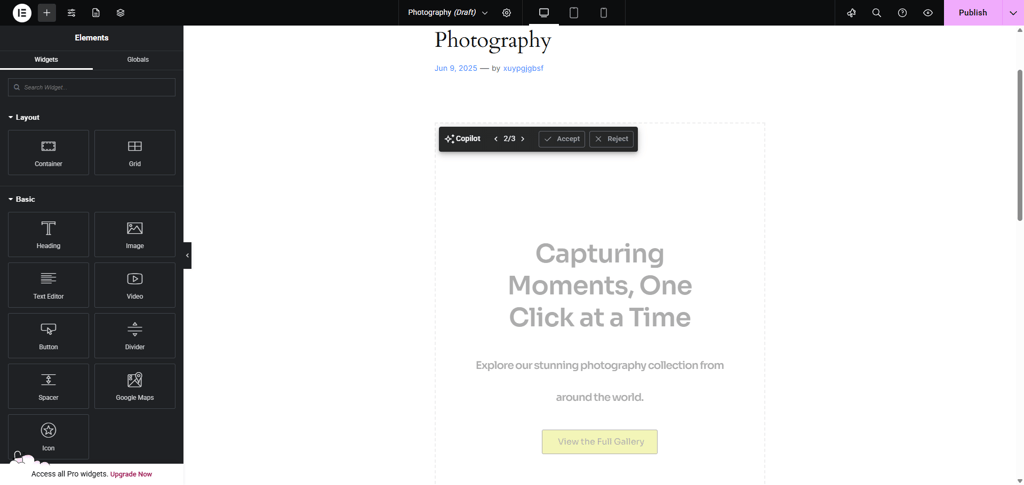
However, if you’re not subscribed to Elementor AI, you won’t see any of its suggestions or functionality within your Elementor builder. Visual tools like image generation or advanced content suggestions are unavailable.
In my experience, the AI’s most accessible feature was assisting with template creation and suggesting tone of voice, but deeper AI-driven design or content generation wasn’t available without a subscription.
Hosting availability
Web hosting is essential for making your website accessible online. It provides the storage, bandwidth, and security your site needs to run smoothly. Elementor simplifies this process by offering integrated WordPress and WooCommerce hosting solutions, so there is no need to search for separate providers or manage complex setups. With just a few clicks, you get a fully optimized environment for WordPress and Elementor, including automatic backups, SSL, CDN, and robust security features.
Elementor’s WordPress single-site hosting plans cost $8.99/month for the Host Cloud plan (10GB storage) and $14.99 for Host+ Cloud (20GB storage), making it affordable for beginners. The multi-site Host Cloud X3 plan costs $24.99/month and offers advanced resources for 3 auto-scaling sites (40GB storage, 30GB bandwidth, 30 days’ backup). All plans are billed annually and include free domain, free migration, premium SSL, enterprise Cloudflare CDN, and 24/7 expert service.
Hosting for WooCommerce starts at $14.99/month for the Sell XL plan (25GB storage, 100GB/mo bandwidth, 14 days' backup) and can be upgraded to the Sell XXL plan (60GB storage, 150GB/mo bandwidth, 60 days' backup) for $24.99/month. Both plans are single-site only.
Elementor hosting comes with a 30-day money-back guarantee.




Our in-house research team and expert writers work hand in hand to regularly test hosting services and provide accurate and fact-checked information. Discover the ins and outs of how we test and evaluate website hosting providers.
Elementor editor pricing: free vs Pro plans
Elementor offers a free plan for basic site building and four tiers for its Pro plan with advanced features. Here’s how the main options compare:
| Plan | Technical details and features | Price |
| Free | 1 site, drag-and-drop editor, 30+ basic widgets, 30+ templates | $0.00/month |
| Pro Essential | 1 site, 80+ free and Pro widgets, Theme Builder, Popup Builder, Form Builder | $4.99/month |
| Pro Advanced Solo | 1 site, 100+ free and Pro widgets, WooCommerce Builder, custom code & CSS, display conditions, advanced integrations, and extensive marketing features | $6.99/month |
| Pro Advanced | Up to 3 sites, all Pro features | $8.25/month |
| Pro Expert | Up to 25 sites, all Pro features, and Premium customer support | $16.99/month |
All paid plans include a 30-day money-back guarantee and offer lower monthly rates with longer subscriptions.
Elementor templates: design variety and flexibility
Elementor’s template library is a standout feature, offering over 100 professionally designed layouts for a wide range of industries – from portfolios and business sites to restaurants, online stores, and creative agencies. Each template is crafted to look modern and polished, making it easy to launch a visually impressive website in minutes, even if you have no design experience.
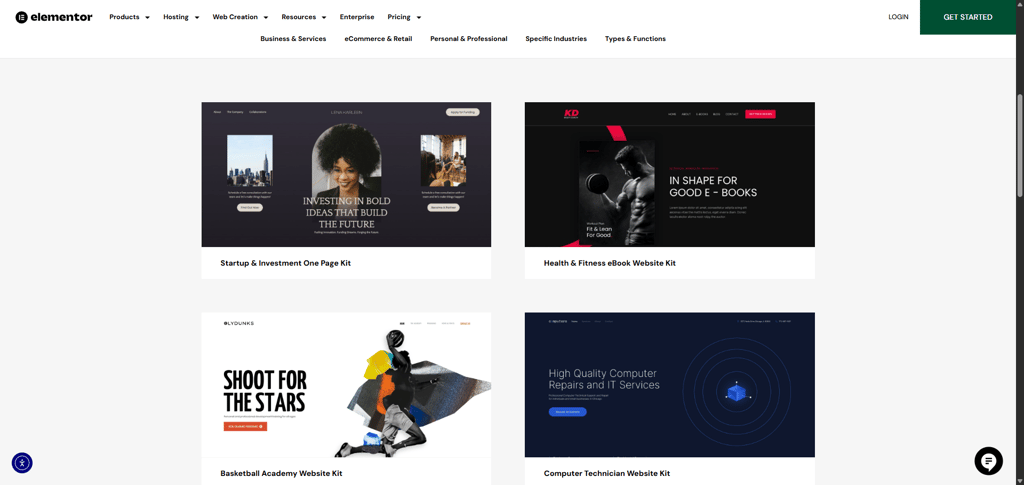
A huge advantage of Elementor is its flexibility to mix and match individual sections from different templates. You can easily combine a hero section from one layout with a contact form from another, allowing you to build a truly unique site tailored to your specific needs. All templates are fully mobile responsive, ensuring your site looks great on any device without extra tweaking.
Elementor AI’s template suggestions further enhance the experience by recommending layouts based on your site’s goals, industry, or even the content you’ve already added. This effectively streamlines the design process and helps you find the perfect starting point.
Additionally, I found that within WordPress, you can access templates designed for specific themes you’ve installed, giving you even more customization options.
Elementor interface walkthrough: easy to understand and manage
Elementor’s interface is designed for clarity and ease of use, making both website creation and site management straightforward even for beginners. When you log into the WordPress dashboard with Elementor installed, you’ll notice a clean, minimal layout that highlights essential tools without overwhelming you.
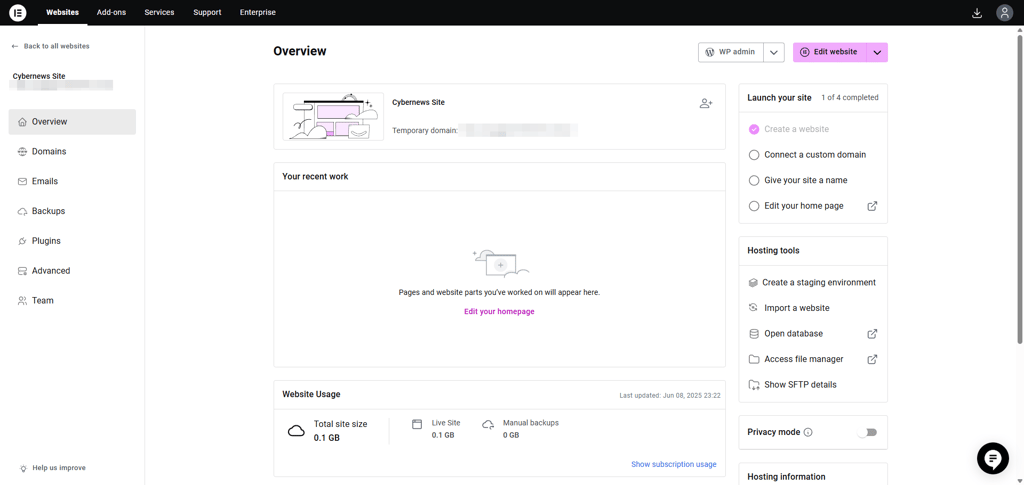
The Elementor web dashboard is neatly organized into sections: Overview, Domains, Emails, Backups, Plugins, Advanced, and Team. The Overview tab gives you a snapshot of your site’s status, including your current domain, recent changes, website usage (with live site size and backup stats), and a progress checklist for key setup steps like connecting a domain or editing your homepage. Hosting tools – such as creating a staging environment, importing a website, or accessing SFTP and database details – are just a click away.
A privacy mode toggle lets you control site visibility for search engines and visitors, while detailed hosting info (like PHP version, memory limits, DDoS/WAF/CDN status) is also always accessible. The Domains section allows you to connect or purchase domains and manage DNS records. Email authentication ensures reliable delivery from your custom domain set in WordPress or third-party apps, not your default Elementor domain.
Backups, Plugins, and Advanced settings are all managed through intuitive cards and lists, showing backup history, plugin statuses, and advanced hosting, performance, and security tools.
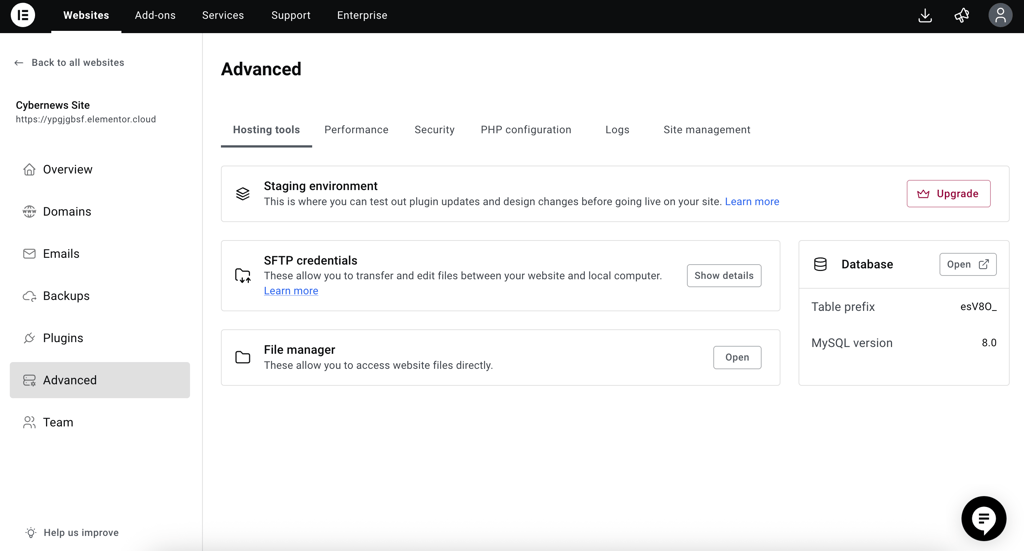
Within the Advanced section of Elementor’s dashboard, I found many subsections for granular control over your website’s technical, performance, and security settings:
- Hosting tools. You access a staging environment for safe testing, retrieve SFTP credentials for secure file transfers, use the built-in file manager, and view database details like your table prefix and MySQL version.
- Performance. Elementor lets you optimize your site with page caching (which reduces loading time by serving your content from a global delivery network), block search engine indexing when needed (helpful when your site is still a work-in-progress), clear WordPress revision history (reduces database size), and enable media fallback to ensure content displays smoothly.
- Security. Strengthen protection by resetting WordPress login attempts, blocking XML-RPC (a common attack vector, enabled in Elementor by default for your security, which blocks unauthorized apps from accessing your site remotely), and restricting traffic by country.
- PHP configuration. Easily view and adjust PHP versions, manage extensions and settings, and enable debugging for both WordPress and PHP, which displays all scripting errors, notices, and warnings on your live site, allowing you to troubleshoot issues.
- Logs. Monitor PHP errors and server-side problems that occurred in the last 3 hours. Access logs directly from the dashboard to quickly identify and resolve problems.
- Site management. Transfer your website, delete the entire site or just its content, and set maintenance preferences for scheduled server updates and checkups.
The Team section lets you add or manage collaborators, making Elementor ideal for agencies and group projects. Responsive controls throughout ensure your site looks great on any device, with easy toggling between desktop, tablet, and mobile views.
After a closer look at Elementor’s interface, I can conclude that it’s easy to understand and manage. Still, it’s also designed for users who want full control over their hosting environment, performance optimization, and security, all from a single, easy-to-navigate dashboard.
Performance: does Elementor slow down your website?
Many users have raised concerns about Elementor’s impact on website speed, reporting slower load times and lower performance scores. To address these claims, we looked at how Elementor evolves and what happened during our performance and speed testing.
Elementor has made significant updates to combat code bloat and improve performance:
- Optimized DOM Output reduces unnecessary HTML wrappers, resulting in a leaner, faster-rendering site.
- Improved Asset Loading ensures that only the CSS and JavaScript needed for each specific page or widget are loaded, cutting down on file sizes and HTTP requests.
- With Conditional CSS, styles are only loaded when their corresponding elements are present, further shrinking the CSS footprint.
- Font loading is also more efficient, thanks to Inline Font Icons (SVGs instead of bulky font libraries) and optimized Google Fonts settings, which prevent render-blocking and speed up text display.
Elementor also encourages best practices, like using fewer widgets and columns and loading your custom fonts locally, and recommends lightweight themes such as its own “Hello” theme for optimal results.
Additionally, Elementor incorporates native lazy loading for images, videos, and even background images, ensuring media is only loaded as users scroll. Element Caching helps widgets load instantly on repeat visits, improving server response times.
While Elementor sites can still be slowed down by poor design choices or heavy use of widgets, these built-in optimizations, combined with smart design and external caching, allow users to build visually rich websites without sacrificing speed.
In our stress test, the system handled 7,300 requests flawlessly with zero HTTP failures, demonstrating excellent stability under load. The peak request rate reached 47.33 requests per second, and 95% of responses were delivered within just 47ms, indicating very fast and consistent response times throughout the test. There were no spikes or failures, reflecting strong reliability and responsiveness.
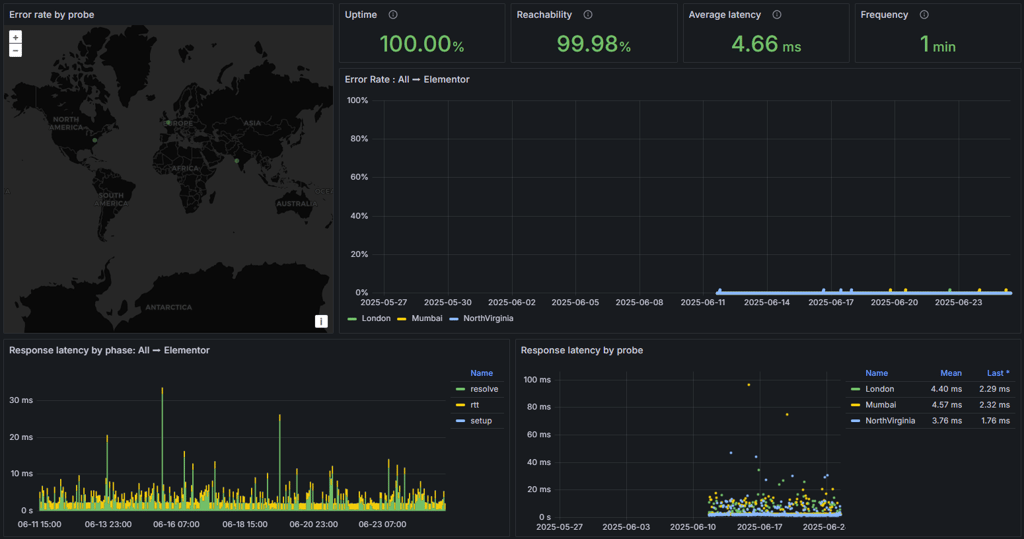
Overall, Elementor maintained 100% uptime during this period, which makes it competitive with industry-leading providers like Hostinger Web Builder.
Elementor support: help when you need it
Elementor offers a variety of support options to help users of all experience levels. Its knowledge base is extensive, intuitive, and easy to navigate. The standout Elementor Academy provides structured video courses and lessons, much like Udemy, making it a fantastic resource for learning at your own pace.
Here’s a quick overview of all available support channels.
| Support channel | Elementor |
| AI chatbot | ✅ Yes |
| Live chat | ✅ Yes, but only with a Platinum Support subscription |
| Phone support | ❌ No |
| ✅ Yes, but only with a Platinum Support subscription | |
| Ticketing system | ✅ Yes |
| Help center | ✅ Yes |
| Social media/forums | ✅ Yes, on Facebook and Discord |
| ✅ Yes, but only with a Platinum Support subscription | |
| Personal account manager | ✅ Yes, but only with a Platinum Support subscription |
However, live chat support is rather disappointing. In my experience, connecting to a real agent was difficult and unsuccessful. I waited for 15 minutes after being notified an agent would connect, but no one showed up, and then the chatbot often looped me back to email support despite me already being a paid customer.

Pro users have access to a ticketing system, which delivers helpful responses. Still, it can be frustratingly slow, especially when you need a reliable web builder for a small business with immediate assistance.
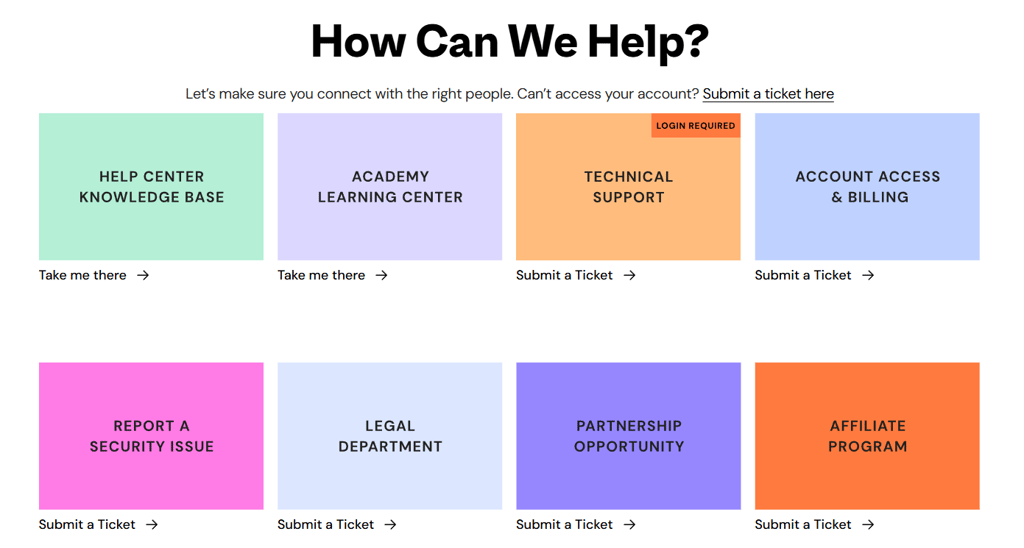
I found it interesting that, in addition to paying for your web builder’s plan, Elementor also offers a Platinum Support subscription, which includes additional services, such as a dedicated account manager and multi-channel priority support with direct access to experts. Handling your requests this way might be much more convenient and practical. However, it’s an expensive, separately paid plan, which adds $99.00 to your monthly Elementor billing.
Community forums on Discord and Facebook – a quite unique set of social media channels – are active and helpful, though not every topic is covered. Overall, Elementor’s self-help resources are excellent, but live support needs to be more responsive to provide satisfying results.
Elementor video recap
Here’s our concise video tutorial that highlights Elementor’s key features and benefits. It gives you a quick overview of how to make the most of it and avoid the most common confusions. Watch to see Elementor in action and discover how it can transform your web design process.
Conclusion: is Elementor worth your attention?
Elementor remains one of the most user-friendly WordPress builders, thanks to its intuitive drag-and-drop editor, vast template library, and robust customization features. Its main drawbacks are a noticeable impact on site speed, a learning curve for beginners, and a lack of reliable customer support. Yet for most users – from freelancers to agencies – Elementor is a solid choice for building beautiful, flexible websites without coding.
However, there are alternatives like Wix that offer greater simplicity, while Hostinger provides a low-cost, fast setup – see our Wix vs Hostinger comparison for more web builder options that can meet your needs.
Overall, Elementor is still a top WordPress builder, but it's wise to weigh your needs and explore competitors before deciding.
FAQ
Is Elementor suitable for complete beginners?
Yes, Elementor is designed for beginners. It offers an intuitive drag-and-drop interface and extensive guides in the Elementor Academy. You can build and customize pages without coding, making it accessible even if you’re new to web design.
What are the main differences between Elementor free and Pro?
The free version includes basic widgets and templates, while Pro unlocks advanced widgets, theme building, marketing tools, WooCommerce support, and premium support. Pro is a handy choice for users needing more design flexibility and business features.
Can I use Elementor with any WordPress theme?
Yes, you can since Elementor works with most WordPress themes. Elementor’s own themes or other well-supported options are recommended for the best compatibility and performance, but you’re not limited to a one specific theme.
Can I build a website without Elementor?
Yes, WordPress offers its own block editor (Gutenberg) and supports other page builders. Elementor is optional, but it simplifies design for those wanting visual control without coding.
Is Elementor SEO-friendly?
Elementor is SEO-friendly, generates clean code, and supports best practices. It integrates with popular SEO plugins and allows you to optimize headings, images, and metadata for better search engine visibility.