Bluehost review 2026: is it a good choice for you?
Our in-house experts conduct internal independent, hands-on testing and transparent reviews of web hosting providers by using custom-built tools or utilizing industry-recognized tools and methods to ensure impartial and evidence-based assessments.
Using the same criteria for all services, we share our detailed methodologies and practices to help customers make informed hosting decisions.
Learn more
Bluehost is one of the most popular hosting providers on the market. Also, WordPress.org has recognized it as the best hosting for WordPress. Our team at Cybernews also ranked it among the top three web hosts, and for good reason. In my opinion, Bluehost is an excellent option for beginners and has made notable improvements in performance and ease of use.
In this latest October review, I thoroughly reassessed Bluehost, along with the Cybernews research team, in key areas such as ease of use, pricing, and performance. This evaluation includes both in-house testing and user reviews, providing a detailed look at Bluehost’s features, functionality, pros and cons, and pricing. Read on to see my genuine insights on this provider.
Bluehost review 2026: my verdict
Choose Bluehost web hosting if you want a reliable, user-friendly platform that’s great for beginners and small to medium-sized businesses. Its easy setup, solid WordPress integration, and essential security features make it a strong choice for straightforward website management.
However, if you need high-traffic or resource-heavy sites, you may want to explore other options. Our testing shows that some providers deliver faster speeds despite Bluehost's solid performance.
| Bluehost | |
| ⭐ Rating: | |
| 💵 Price: | From $1.99/month |
| 📑 Uptime guarantee: | 99.9% |
| 🔥 Coupons: | Bluehost coupon 78% OFF |
| Storage space (from): | 10GB SSD |
| ✂️ Free domain (first year): | Yes |
| 💾 Automated backups: | Free automatic weekly backups |
| 💰 Money-back guarantee: | 30-day |




Our in-house research team and expert writers work hand in hand to regularly test hosting services and provide accurate and fact-checked information. Discover the ins and outs of how we test and evaluate website hosting providers.
Bluehost pros and cons
Not sure if Bluehost is good for you?
Answer 3 quick questions and we'll help you find a hosting provider that matches your needs.


Find web hosting match
Three simple questions. We’ll point you the right pick. No email, no sign up.
What type of website are you building?
What matters most to you?
How experienced are you with web hosting?
Best web hosting pick for you

Hostinger
Launch your site quickly with beginner-friendly tools, strong performance, and easy management. A solid choice for business websites and online stores that need speed without extra complexity.
Best web hosting pick for you

WordPress.com
Build and manage your WordPress site without worrying about much of the technical setup. You get a streamlined platform for publishing, updating, and growing your WordPress site from one place.
Best web hosting pick for you

IONOS
A strong choice if you want hosting at a very low starting price. It gives users plenty of flexibility while still keeping the core setup relatively straightforward.
Bluehost hosting plans and pricing
When I first looked into Bluehost, the pricing seemed fair. Its shared hosting starts at just $1.99/month if you catch a deal, making it more affordable than some other providers like GoDaddy. It's a good entry point for small sites, but like most providers, that low rate only lasts for the first term, and renewals are noticeably higher.
All Bluehost plans support WordPress, which is convenient. But once you go beyond basic hosting, prices ramp up fast. For example, its VPS plans start at $4.69/month. In contrast, Hostinger offers VPS from just $5.84/month. That’s a huge difference if you’re on budget, though Bluehost does offer more resources and support in those higher tiers.
For different needs, there are also VPS, managed WordPress, and dedicated servers.
| Type of hosting | Starting price | Best for |
| Shared hosting | From $1.99/month | For personal blogs, small businesses, and low-traffic websites in general |
| WordPress hosting | From $1.99/month | Any WordPress website – small to medium projects |
| WooCommerce hosting | From $13.99/month | eCommerce, both growing and established companies |
| Cloud hosting | From $75.00/month | Bigger businesses, especially with high traffic, anyone looking for enhanced reliability and security |
| VPS hosting | From $46.99/month | Medium to high-traffic sites, custom projects, or larger business needs |
| Dedicated hosting | From $144.19/month | High-performance needs, large-scale sites, or full control over the server |
Regardless of where your project stands, you'll find a hosting plan that’s perfectly tailored to your needs.
There's a 30-day- money-back guarantee, which is standard in the industry. It only applies to hosting services, not extras like domains or add-ons. Payment methods include credit cards, PayPal, and checks.
In general, it's well known that web hosting pricing can often be a detailed and complex topic, which is why we've created a separate guide just for it: Bluehost pricing: everything you need to know. This guide covers all the key aspects, including starting prices, renewal rates, special offers, domain registration, email hosting costs, refund policies, and payment methods. Plus, we offer recommendations on which Bluehost hosting plan is best suited for different types of projects.
Bluehost hosting starts at $1.99/month for shared plans, with WordPress, WooCommerce, VPS, and dedicated options available at higher tiers. Its pricing is on the more affordable side, cheaper than some, like GoDaddy, but still more expensive than Hostinger, starting at $2.69/month. Renewal rates rise steeply, so long-term costs may outweigh the low starting price.
Hosting management: is Bluehost easy to use?
For me personally, Bluehost was easy enough to use. To illustrate my point, I did a deep dive into the whole process of using Bluehost, from setting up a new WordPress site to managing domains and email accounts.
Overall, Bluehost makes domain management, backups, and email easy, and cPanel tools are simple to access when needed. The setup is the same across all plans, so upgrading doesn’t change much. I went through creating an account, installing WordPress, and trying the AI site builder. Keep reading to see what was smooth and what took a bit more time.
Bluehost setup process
I went through Bluehost’s setup process, and I can confidently say that it’s one of the easiest compared to other providers like HostGator or SiteGround. For example, SiteGround’s setup process is a bit complex, as there are multiple options for every step that could confuse total beginners. With Bluehost, I required just a few simple steps to get everything up and running.
The entire process is streamlined, and I appreciated the clear guidance provided at each step, from choosing a domain to installing WordPress. For anyone, Bluehost makes the whole experience smooth and stress-free, ensuring you can focus on your website without getting bogged down by technicalities. Here are the steps I took while setting up a website with Bluehost:
-
When I created my account and logged in, I went straight to the Hosting section in the Bluehost dashboard. That’s where the main setup tools are. It’s not cluttered, and things are labeled clearly, which I appreciated.

-
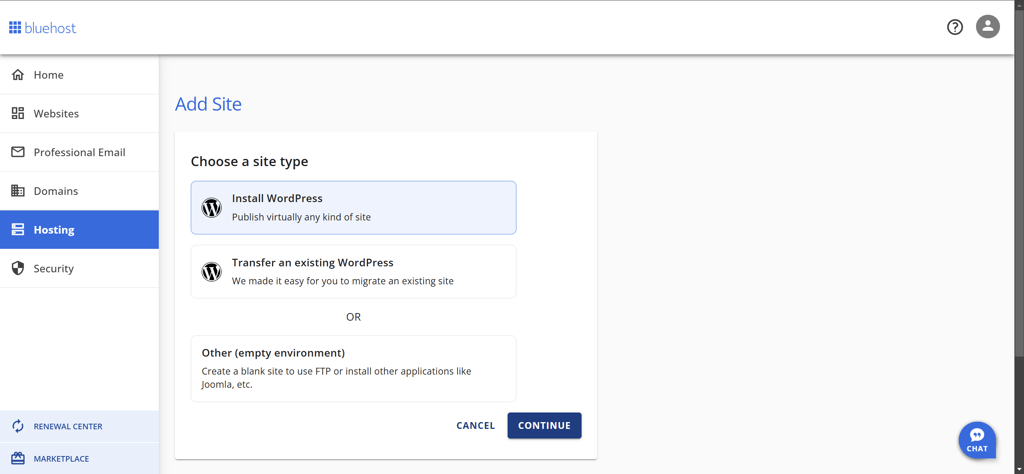
From there, I clicked the Add Site button. Bluehost gave me three options: installing WordPress, transferring a WordPress site, or creating an empty environment. I chose the standard WordPress install to see how smooth it would go.
-
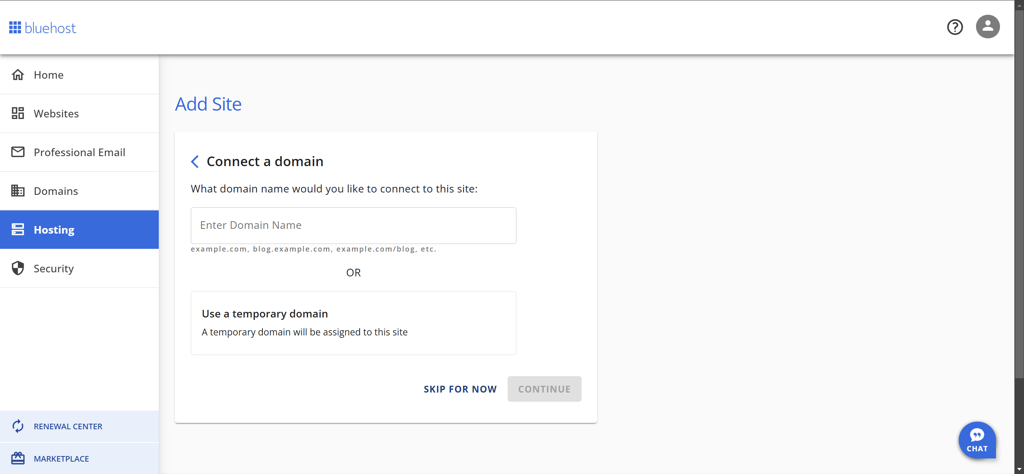
After that, I just had to enter a site title and connect a domain. I used an existing domain I already owned, and the process went through without any issues.
-
Once the site was created, an Edit Site button appeared next to it. Clicking that launched a few setup paths: the AI Site Creator, a manual step-by-step guide, or a WordPress import. I tried the AI option.

-
I'd say the AI tool is good enough for basic setups. It asks a few questions and generates a clean layout you can adjust later. Not something I’d rely on for a large enterprise build, but for a fast start, it worked well.

When I set up my site with Bluehost, it only took a few clicks to add a domain and install WordPress. The dashboard was clean, and the steps were clearly labeled, so I never felt lost. Compared to hosts like SiteGround or HostGator, the experience was noticeably easier.
Bluehost web hosting panel and web control panel
Bluehost uses a custom, user-friendly dashboard as the main control panel, with full access to cPanel available for more advanced management. The custom interface handles core tasks like launching WordPress, managing domains, email accounts, and backups.
This setup is consistent across all major plans – shared, WordPress, VPS, and dedicated. Even the entry-level tiers come with multi-site support, SSD storage, free SSL, and other essentials, all managed through the same unified interface.
The Bluehost cPanel can be accessed by going to the Settings of your website and selecting the Advanced section. There you will be able to find the following features:
- SSH keys
- Redirects
- File Manager
- FTP Access
- Databases
- PHPMyAdmin
- Cron Jobs
- Error Logs
- Access Logs
- SSL Logs
- cPanel
These tools may sound complex, but with the provided helpful instructions, they are very easy to manage. Also, they provide users with the opportunity to have full control over their website.

For domain management, Bluehost’s native system really impressed me. It’s intuitive and straightforward, making things like registering domains or managing DNS settings feel effortless. I found myself breezing through tasks that usually feel more complicated with other providers.
For domain management, Bluehost’s native system really impressed me. It’s intuitive and straightforward, making things like registering domains or managing DNS settings feel effortless. I found myself breezing through tasks that usually feel more complicated with other providers.
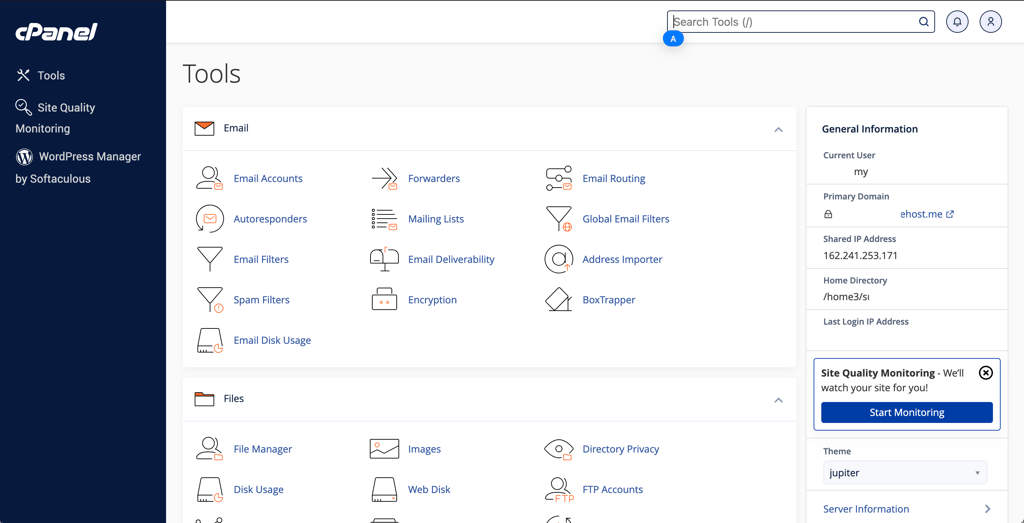
Bluehost uses an intuitive custom dashboard for everyday tasks like installing WordPress, managing domains, email, and backups. If you need more control, you can open cPanel from the advanced settings to access tools like FTP, databases, PHPMyAdmin, and error logs.
WordPress website creation with Bluehost
Creating a WordPress website with Bluehost is straightforward, thanks to its all-in-one setup and WonderSuite – a website-building toolkit. WonderSuite includes an AI-powered setup wizard, pre-built design blocks (WonderBlocks), and a guide. WordPress.org officially recommends Bluehost, so you’re working with a trusted provider from the start.
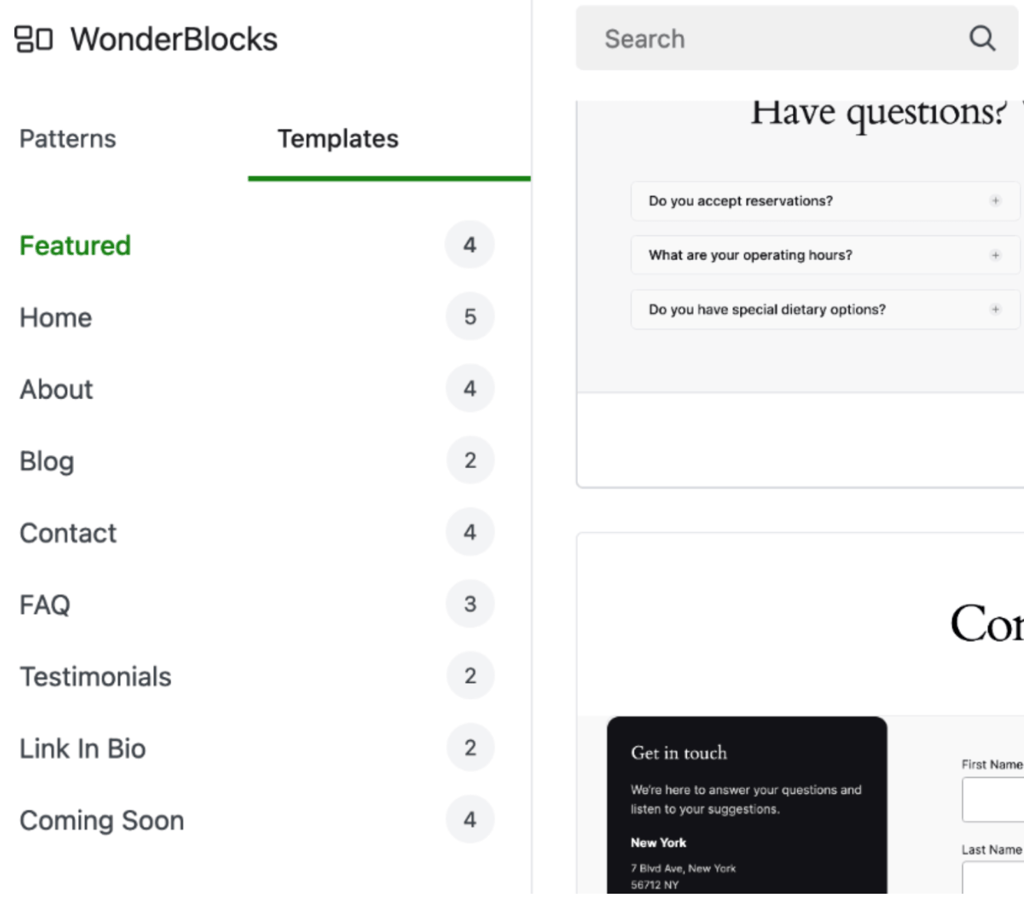
After the AI tool asked a few setup questions, like my site type, goals, and experience level, it automatically suggested a layout and dropped me into the builder. From there, I clicked on WonderBlocks, which opened the main editor where I could choose from a variety of Templates and Patterns to start customizing the site.

The Patterns column had pre-made content blocks, such as Features, Hero, and so on, that I could drop into any page. I used a few of them to build out the homepage quickly. It’s not drag-and-drop like Elementor, but it’s structured and beginner-friendly.
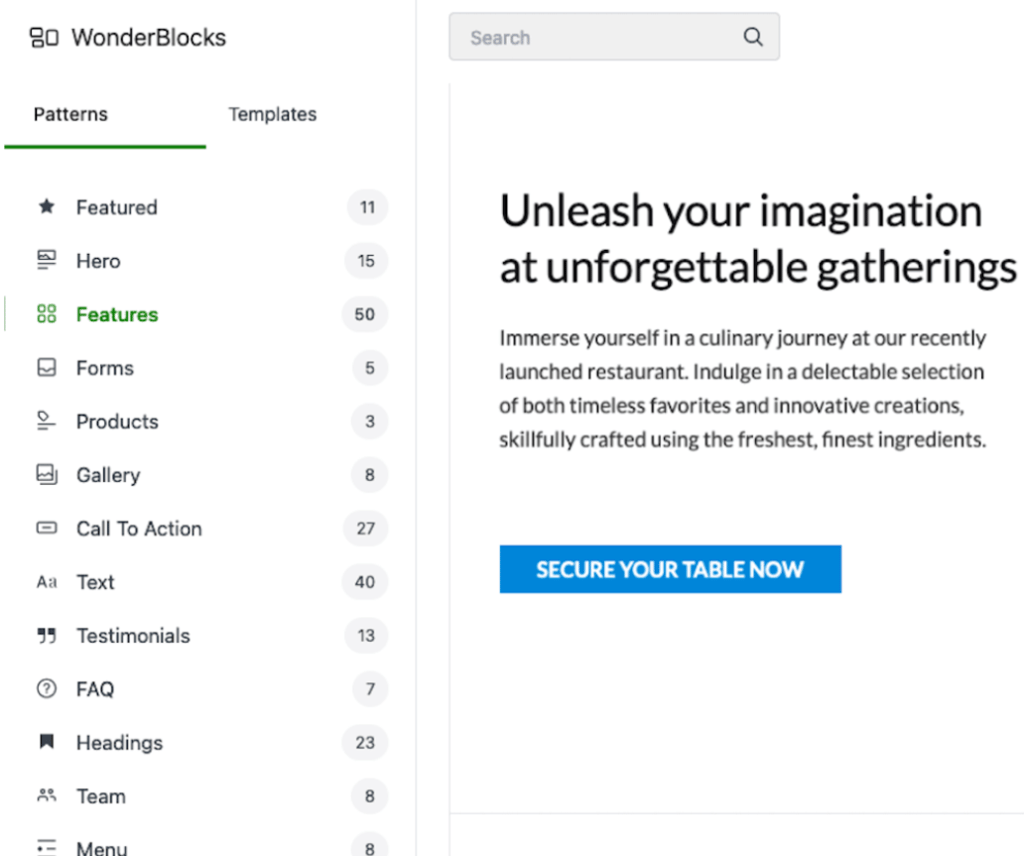
Under Templates, I could tweak things like fonts, colors, logos, and layout presets. It gave me more control than a basic theme, but not as much freedom as a full-blown builder.
Upon launching any of your websites, Bluehost automatically publishes them and installs several handy plugins. During setup, Bluehost offered me Yoast SEO, Jetpack, and OptinMonster. These were solid picks, but I suggest reviewing each one before keeping it, as some may be unnecessary depending on your site.
If you want to migrate an existing site, follow these steps:
- Enter the URL of your existing WordPress site that you want to migrate
- Install the Bluehost Site Migrator
- Copy and paste the transfer key to complete the transfer
- After that, the Site Migrator does most of the work to migrate your WordPress website
The Bluehost Site Migrator plugin is already included, and in case you run into any issues, the support team is quick to assist and guide you through the process.
Creating a WordPress site with Bluehost was simple. The AI setup wizard suggested a layout, and WonderBlocks let me drop in pre-built sections to build pages quickly. I could customize fonts, colors, and layouts, and helpful plugins like Yoast and Jetpack were ready to go.
Website migration to Bluehost
Before jumping into the migration, I noticed Bluehost also offers a paid site migration service from the Marketplace in the dashboard. If you prefer not to handle things yourself, you can request a full website or email migration by clicking Claim Offer under the Site Migration section.
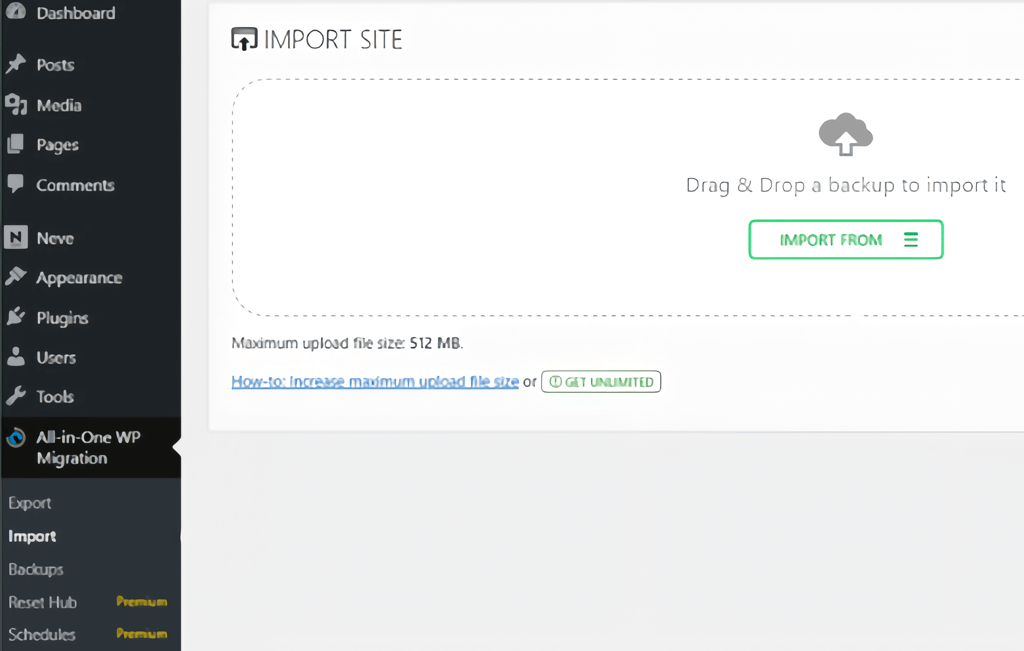
I used a plugin-based migration method with All-in-One WP Migration to move my WordPress site. I installed and activated the plugin on my old site, made a full backup, and exported the site file. Then, I set up WordPress on Bluehost, installed the same plugin there, and imported the file. After that, I updated the permalinks and tested the site to make sure everything transferred correctly. It was quick, and using the plugin made the whole process easy.
If you're not on WordPress, the process is more manual. You’d have to export your database and move files via FTP using tools in the control panel. Bluehost does offer cPanel migration and the option for a full manual transfer, but there’s no guided flow like with WordPress.
I also had to update my DNS settings through my domain registrar. Bluehost provides the nameservers, and I just replaced the old ones. It took about 24 hours to fully change.
I moved my WordPress site with the All-in-One WP Migration plugin by exporting from my old host and importing into a fresh install on Bluehost. To finish, I updated my DNS settings with the nameservers Bluehost provides. The plugin made the actual migration simple, but it’s worth noting that DNS propagation was the only part that took time, taking about a day to fully update.
Bluehost marketing tools
At the basic level, Bluehost offers a few simple tools to get you started. You get the free version of Yoast SEO, which is helpful if you’re new to SEO, as it guides you on keywords, titles, and readability. It also includes Creative Mail for email marketing, which lets you send basic newsletters. It’s not very advanced, but it works fine for simple campaigns. There’s also a Pro email trial, mainly for branded email addresses rather than marketing features.
With the eCommerce plan, you get some extra tools for selling products, like custom email templates, memberships, and affiliate programs. These are useful if you’re running a small online store, but compared to other providers that are specifically built for eCommerce, like Shopify, Bluehost’s marketing features feel pretty basic.
On the cloud plans, Bluehost upgrades to Yoast SEO Premium, which adds helpful SEO features like internal linking suggestions and support for multiple keywords per page. It also includes global edge caching, which improves site speed globally, helping SEO since fast sites rank better.
Overall, Bluehost’s marketing tools cover the essentials well, especially if you’re starting out or running a small site.
In essence, Bluehost’s marketing tools cover the essentials. At the basic level, you get Yoast SEO for SEO guidance and Creative Mail for simple newsletters. Higher plans add more, like Yoast SEO Premium and global edge caching, which help with site speed and search performance.
Bluehost business email
Bluehost includes a professional one-month email trial ($2.99/month after the free trial) with any shared, WordPress, or eCommerce hosting plan, which allows you to create an email using the domain of your website and manage it from the Webmail dashboard. You can create emails through cPanel, which is found in the Bluehost main control panel.
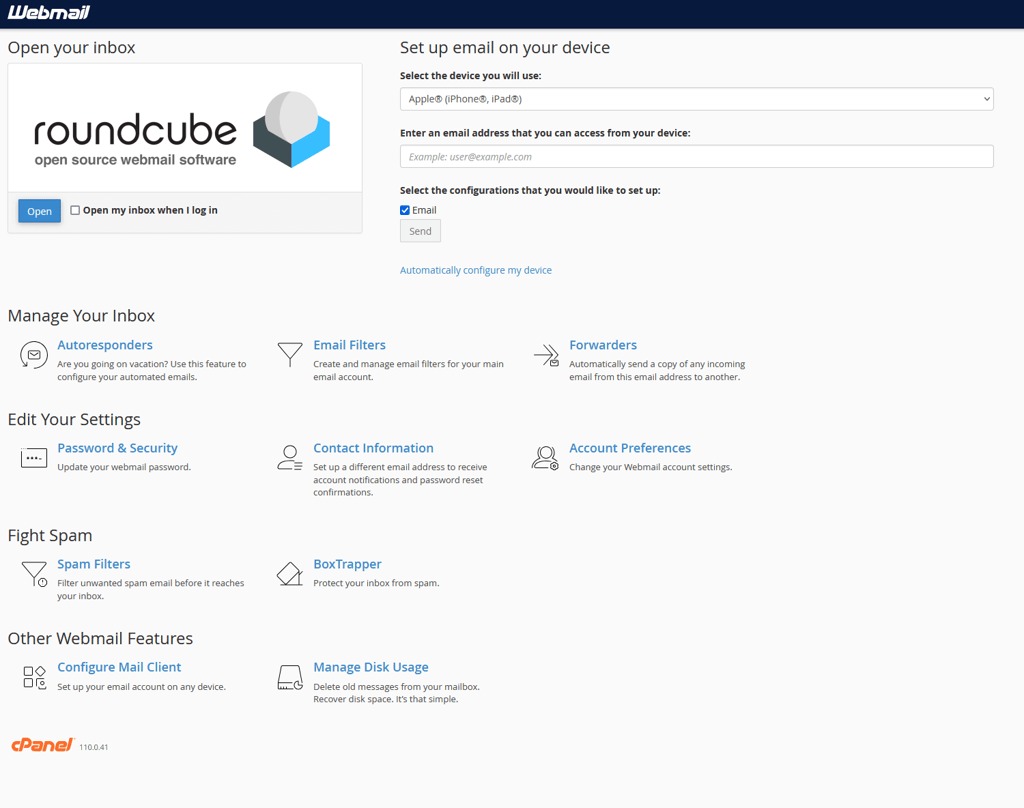
You get handy features like webmail access, spam filters, auto-responders, and even a mobile app. But it’s important to note: if you want more than one mailbox or extra features, you’ll pay more, and the free option is only temporary.
Compared to other providers in this price range, Bluehost is a solid all-in-one solution, especially if you want everything managed under one roof. However, if you want more advanced tools, Google Workspace and Microsoft 365 would be a better fit, but they’re pricier, starting at $6.00 and $12.50 per user per month, respectively.
Bluehost is a good fit if you want easy integration with your website and don’t mind paying after the first month, but there are cheaper and even free alternatives if email is your main focus.
Bluehost gives a one-month professional email trial with all plans, letting you create emails with your domain and manage them via Webmail or cPanel. The renewal is cheaper than other providers like Google Workspace or Microsoft 365, but it's less advanced. Extra mailboxes or features cost more after the trial.
Performance – Bluehost speed, uptime, and stress testing
To test the performance of Bluehost, with the Cybernews research team, I conducted a series of tests, including uptime and response time, as well as how fast a site loads and how many visitors it can handle at once. All 2025 July tests were done on a shared hosting plan and with a fully built site to simulate how a host would perform in real-life scenarios as best as possible. Therefore, some results, such as load speed and server response time, may be higher than with an empty site.
| Metric | Result |
| Uptime | 100% |
| Largest Contentful Paint (LCP) | 0.897s |
| Time to First Byte (TTFB) | 0.462s |
| Stress test (50 virtual users) | Passed |
| HTTP failures | 0 |
Overall, Bluehost’s performance is very positive. It loads websites quickly, and there are no issues with downtime. It also handles spikes in traffic quite well and provides an overall reliable performance, perfectly suitable for small-to-medium sites.
Bluehost uptime and response time
Uptime is all about keeping your site as available to users as possible. During the 30 days of testing, Bluehost delivered a solid 100% uptime. While it might not offer an official guarantee like Hostinger’s 99.9% or SiteGround’s 99.99%, what really stands out for me with Bluehost is its real-world reliability. Even without a formal promise, I’ve experienced very few interruptions, and for most websites, that’s what really counts.

Server response time, also known as TTFB, is how long it takes for the host server to process a website visitor's request to reach the website. Server response time also includes latency (visible in the image), which is essentially the minimum time a server requires to produce any kind of response (not including processing time). Therefore, the overall server response time is always higher than the latency.
In my experience, Bluehost’s uptime has been impressively reliable, delivering a perfect 100% over the testing period. While it doesn’t officially promise 99.9% like Hostinger or 99.99% like SiteGround, its real-world performance is just as good.
Bluehost speed test
The next test shows how fast a fully built WordPress website can load when tested in different locations. Largest Contentful Paint is the main indicator of this site's loading speed. Our Bluehost website is hosted in the US, so that’s where we got the fastest result – the LCP is 0.897s.
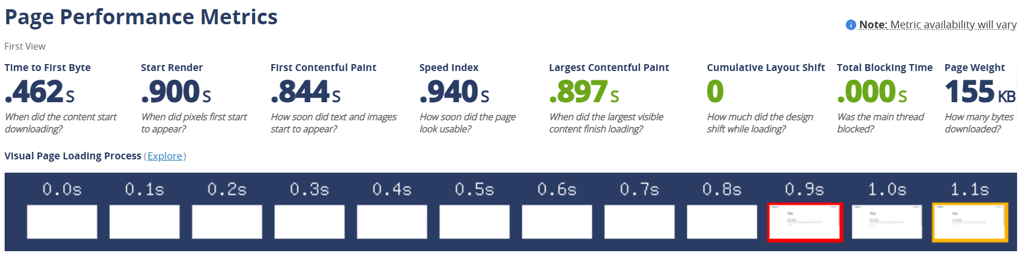
Also, LCP is the most important result, as Google takes it into consideration when ranking your site. It’s an indicator for the visitor that the website is loading properly. The benchmark for LCP is up to 2.5 seconds, and Bluehost passed comfortably. It even came out ahead of Hostinger’s 0.982s result, not by much, but still an impressive win.
In the Bluehost speed test, the site loaded impressively fast with an LCP of 0.897s, well under Google’s 2.5-second benchmark. It even came out slightly ahead of Hostinger’s 0.982s result, which makes it a strong performer.
Bluehost stress testing
In the last test, I wanted to see how well Bluehost can handle increased traffic on the site – this is called stress testing. Our research team sent 50 virtual users (VU) to our Bluehost site and monitored the server response time and request handling.
Bluehost handled 50 virtual users without any failure. In the best-case scenario, the blue line, which indicates server response time, should remain flat as the number of visitors (purple line) increases. During our testing, the research team saw basically zero spikes in the response time, which is a good result. The server also handled all the requests just fine.
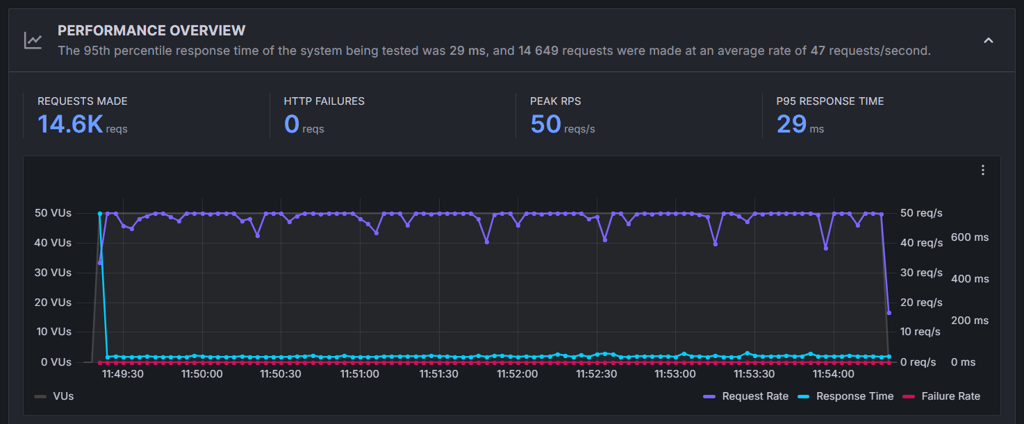
During testing with 50 virtual users, Bluehost held up well. Response times stayed steady, and all requests were handled without failures.
Bluehost security and backups
Bluehost has plenty of security features. However, in my view, while you’re not left unprotected, if you want daily backups, malware scans, or advanced firewalls, you’ll need to purchase additional protections either via Bluehost or a third-party provider to feel fully secure.
What you get for free:
- Free SSL certificate. Every Bluehost plan gives you an automatic Let’s Encrypt SSL, which is all that many personal or small business sites will ever need.
- Weekly backups. You can roll back your site once a week if something breaks. It’s helpful, but not enough if you update a large amount of content daily.
- Basic spam filtering and firewall. Bluehost includes standard spam filters for email and a server-level firewall for everyone. These provide basic protection against common threats but lack advanced features.
- Cloudflare CDN and DDoS protection. The built-in Cloudflare CDN improves load times and offers some protection against traffic floods automatically.
Where you’ll need to pay extra:
- Daily backups and one-click restore. This is the first upgrade I’d call worth paying for. Still, some hosts, like SiteGround, already include daily backups by default.
- Malware scanning and removal (SiteLock). It’s good for peace of mind since it automatically checks and cleans your site. The free firewall and spam filter only block obvious junk traffic, so this upgrade fills an important gap.
- Premium SSL certificates. They add things like business verification and extra warranty, which can give visitors extra confidence, especially if you’re running a bigger online store. However, most sites are fine with the free SSL.
- Web application firewall (WAF). This adds stronger protection against targeted attacks, but unless you run a bigger site, you might not notice the difference.
- Dedicated IP and priority support. A dedicated IP can help with security and performance, while priority support gets you faster help from the Bluehost’s team. However, most regular blogs or small business sites won’t need these, but they can certainly be useful for some.
With all plans, Bluehost gives you basic protection with free SSL, weekly backups, spam filtering, and a Cloudflare CDN. If you want daily backups, malware scans, stronger firewalls, or a dedicated IP, you’ll need to pay extra. For small blogs or personal sites, the free tools are usually enough, but bigger or business sites might need the paid features, which Bluehost delivers if required.
Bluehost support
Bluehost offers support via 24/7 live chat and phone, plus an extensive knowledge base covering a variety of topics.
| Support type | |
| 24/7 live chat | ✅ Yes |
| ❌ No | |
| Phone line | ✅ Yes |
| Knowledge base | ✅ Yes |
| FAQ | ✅ Yes |
In my experience, Bluehost's live chat support has been somewhat disappointing. While I was connected to agents in seconds, the communication didn’t feel professional, and the answers that I was expecting were vague. I got the impression that the agents don’t necessarily care about the quality of customer service very much. This stands out, especially compared to Hostinger’s support, which has been noticeably professional and efficient. They’d help with everything, even web development issues. That’s why I was surprised to find that this is not the case with Bluehost.

As a whole, Bluehost's customer support is questionable. The answers are quick, but not entirely helpful. Most times, you’ll have to resort to browsing the knowledge base to find the answers you need.
In my experience, Bluehost’s support is fast but not always helpful. Live chat and phone are available 24/7, but I often had to rely on the knowledge base to get clear answers.
Video review
If you’d rather watch than read, check out our video review of Bluehost for a full look at its features, performance, and ease of use.
Bluehost review: final word
Bluehost is one of the best website hosting services for WordPress I’ve ever gotten to try out. A huge reason for that is the fact that it’s suitable for a wide range of websites. A user-friendly interface and intuitive panel make any process stress-free. Bluehost’s official recommendation from WordPress is definitely a plus that not many hosts can boast of.
With the in-house Bluehost website builder, you get everything you need in one place, and the combination of that with cPanel makes managing your hosting fairly convenient. The security features cover the basics well, though some advanced protections require additional purchases, which is something to keep in mind.
The hosting plans are affordable and inclusive, with shared hosting plans starting from $1.99/month.
All in all, Bluehost is a great hosting provider, whether you're a beginner, an advanced user, or a web professional. It’s a great, affordable, and easy-to-use option for new websites and small to medium-sized businesses.
Here’s a quick summary of the Bluehost review findings:
| Feature | Beginner-friendly and business-oriented provider | |
| Pricing | Bluehost plans are affordable, starting at $1.99/month. They include all essentials, such as a domain name, an SSL certificate, and generous server resources, for a smooth start. | |
| Ease of use | Most of the processes are automated, and the provider has many tools to make life easier, including business-focused integrations, staging, and a convenient website management area. | |
| Performance | In the performance department, Bluehost showed good results. It was up 100% of the time and loaded websites quickly. | |
| Security | Bluehost includes the ultimate basics that will help to keep your website secure. However, other security essentials like backups and malware detection are paid for. | |
| Support | Bluehost live support is not very helpful, and I could get better answers to my questions in the knowledge base. |
More web hosting reviews from Cybernews:
SiteGround review: explore the power and precision of hostingLiquid Web review: dive into premium hosting performance and reliabilityHostinger review: navigating the affordable and reliable hostingHostPapa review: elevate your website with hosting excellence
Bluehost FAQ
What exactly does Bluehost do?
Bluehost is one of the biggest web hosting providers that offers server space to store your website and its contents. If you’re about to start your online journey, it might be useful to look into this provider, as it has quite affordable hosting plans.
Is Bluehost a good web hosting company?
Yes, Bluehost is one of the best web hosting providers on the current market. It offers a variety of web hosting plans for small and large businesses, as well as individual creators. Our testing showed excellent performance results and reliable website security systems, complete with additional tools like a website builder and more.
Is Bluehost good for beginners?
Yes, Bluehost is good for beginners since it’s easy to use. This provider combines its own website management tools and cPanel, so you get useful features and a user-friendly interface.
How much does Bluehost cost per month?
Bluehost prices for the most popular shared hosting options start from only $1.99/month. The entry plan includes 1 website and 10GB SSD storage, which is perfect for a small blog or a business landing page.
Is Bluehost worth the price?
Yes, Bluehost is worth your money since it has affordable and inclusive hosting plans, simplistic site management, and reliable server performance. Bluehost offers quite flexible web hosting options, which are suitable for both small blog writers and experienced business owners.
Is Bluehost owned by GoDaddy?
No, GoDaddy doesn’t own Bluehost. Bluehost is owned by Newfold Digital, which is a company that offers web presence solutions. It also owns HostGator, Network Solutions, Web.com, and a few more web hosting and web builder services.