What magicians taught the CIA about spycraft, and why it matters in the age of AI
As the world grapples with AI-generated deepfakes, misinformation, and sophisticated social engineering scams, a former CIA officer argues that the underlying principles of deception have changed less than you might think.
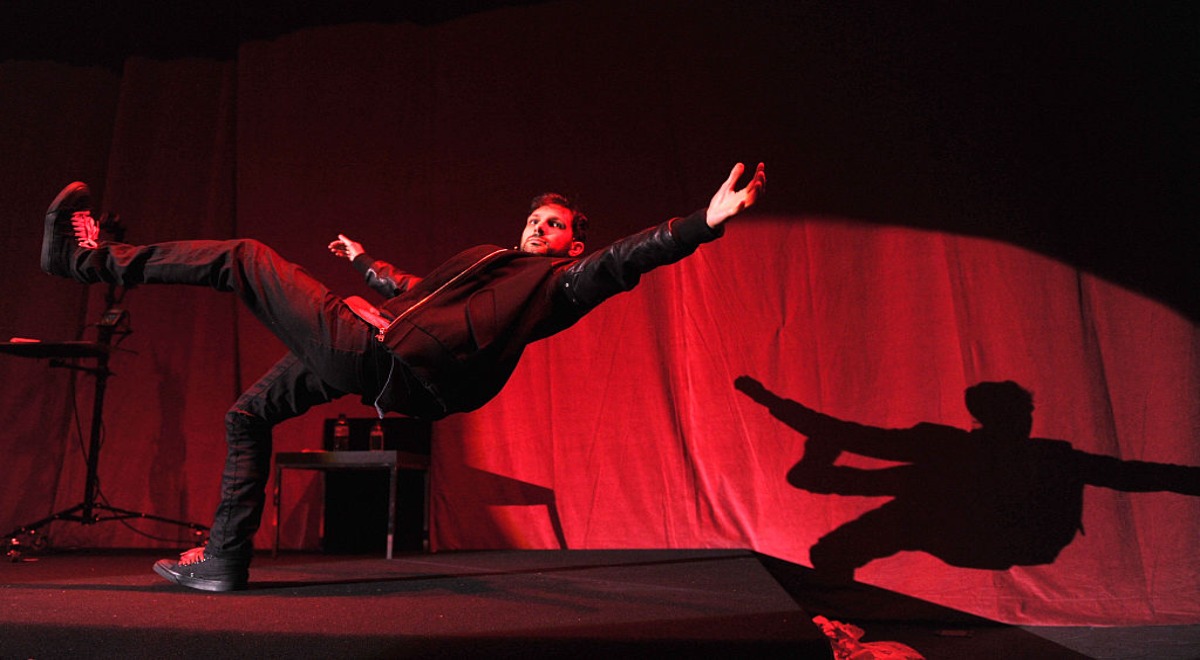
Dynamo: Photo by Brian Rasic/Getty Images

 Follow us
As the world grapples with AI-generated deepfakes, misinformation, and sophisticated social engineering scams, a former CIA officer argues that the underlying principles of deception have changed less than you might think.
- The CIA went to magic clubs to learn spycraft. At Infosecurity Europe 2026 in London, former CIA Chief of Disguise Jonna Mendez revealed that the agency studied magicians to understand deception and how to control what people expect to see.
- The trick is the belief, not the illusion. Mendez told Cybernews at the event that this insight drove real operations – including Argo, where a fake Hollywood production convinced Iranian authorities that six American diplomats were a Canadian film crew.
- AI is the new stage, same old magic. Deepfakes and voice cloning are modern extensions of tricks intelligence agencies have used for decades. The goal hasn't changed: exploit the assumption of trust. Technology changes, human behavior doesn't.
Key Takeaways by nexos.ai, reviewed by Cybernews staff.
Jonna Mendez, whose former CIA job title, rather intriguingly, was “Chief of Disguise,” claims threats such as deepfakes and voice cloning are extensions of tradecraft that intelligence agencies have used for decades.






The technology may be new, she told delegates at a recent Infosecurity Europe keynote, but the objective remains the same: manipulating people rather than systems.






Speaking to Cybernews at the London-based event, which was populated by vendors touting AI, cybersecurity platforms, and software tools, Mendez pointed out that security breaches still begin with human manipulation.
"Deepfakes, synthetic identities, voice cloning, and impersonation are modern extensions of old espionage principles. They take it to a new level, " said the former CIA technician.
FX and the art of illusion
Mendez, who spent 27 years at the CIA developing disguises, concealment devices, and covert communications techniques, said that getting a target to trust you is still the main aim, whether that’s online or face-to-face.
"The goal of most intelligence operations is to convince a person somewhere to cooperate with us and to tell us the information that we cannot find otherwise," she said.
This focus on human behavior led the CIA to seek lessons in the clubs of New York and glitzy hotels of Vegas, where Mendez spent hours studying professional magicians and illusionists at work.
While Mendez confesses she never quite cracked the illusionist David Copperfield's flying trick, another training exercise with the CIA in particular left a lasting impression.
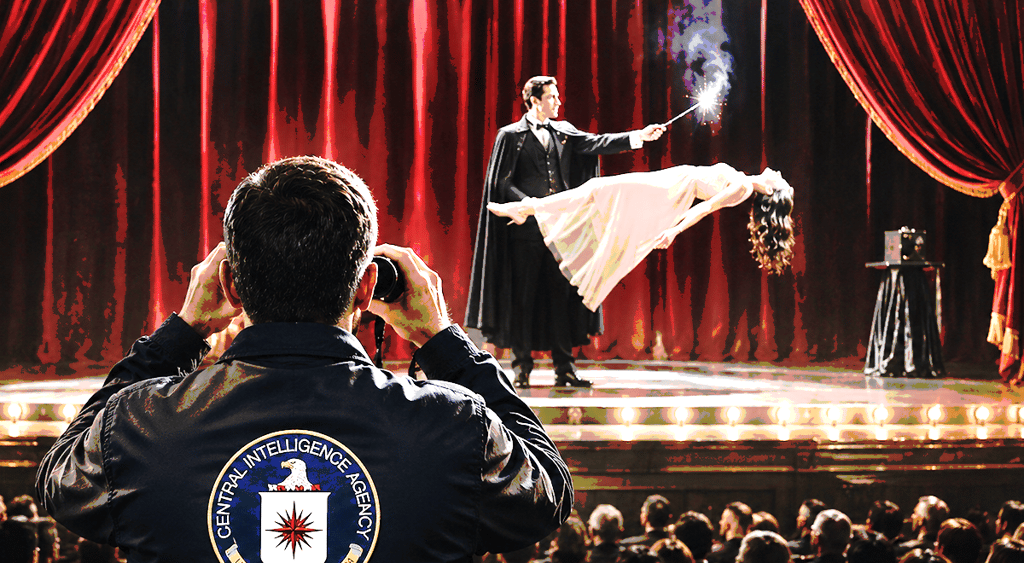
A magician appeared to throw ten knives into ten balloons without missing a target.
”And yet never threw a single knife,” she explains.
She reveals that it was an assistant, hidden behind the balloons, who burst them while the audience of agents watched exactly what they expected to see.
"Usually when you're watching a magic act, it goes quickly. You don't have time to study it," she said.
"Your eye has trouble sorting out how that happens."
According to Mendez, CIA officers worked with illusion designers and prop builders to understand how their tricks were engineered. Still, she’s careful not to reveal too much.
I'm worried about the magic community coming after me if I tell you how they do some of this stuff."Joanna Mendez, former CIA chief of disguise.
“You might think I’d be worried about the CIA coming after me when I'm telling my CIA stories,” she joked.
“But I’m not as worried as I am about the magic community coming after me if I tell you how they do some of this stuff.”
The magic behind Argo
Mendez's husband also championed the use of illusions in spycraft. Tony Mendez was the CIA officer – who also happened to be an expert counterfeiter – portrayed in the Oscar-winning 2012 film Argo, based on a book penned by both Mendezes.
During the Iran hostage crisis, Tony Mendez helped orchestrate the rescue of six Americans from Iran by creating a fake Hollywood science-fiction film as cover.
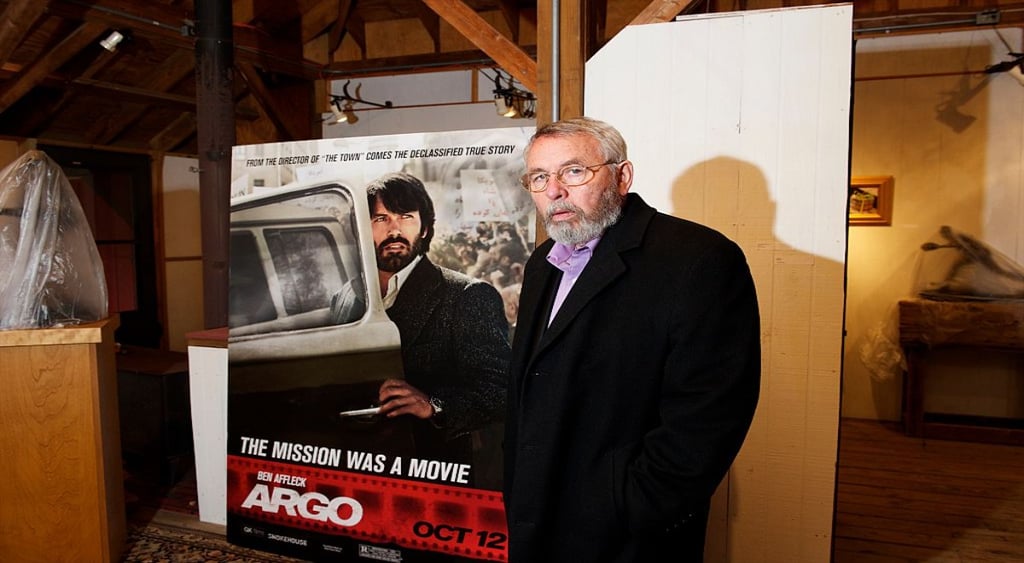
The Argo operation was an exercise in what Jonna Mendez calls "human magic" – not supernatural tricks, but the painstaking creation of a believable illusion.
She says the operation drew heavily on the techniques of magicians and Hollywood special-effects artists, building an entire fake film production to convince Iranian authorities that six American diplomats were a Canadian movie crew.
“The success of the operation rested not on technology, but on understanding how people perceive reality and what they are willing to believe,” she said.
“It was one of the most amazing operations that I was ever part of," she added.
Human intelligence in the AI era
Moving into the present, Mendez says that the challenge with AI-powered deepfakes is that deception only works when the recipient trusts the source.
“The deceiver needs to exploit the assumption of truth,” she adds.
This is why Human Intelligence (HUMINT) – the practice of gathering secrets from people rather than machines – remains key to espionage.

While AI can support this objective by scooping up and analyzing vast amounts of information about individuals, revealing insights that would otherwise be missed, she explains that recruiting those sources remains a very human task.
The challenge, Mendez says, is to understand what motivates individuals with access to valuable information and to devise “a deception program” that will persuade them to divulge it.
Of MICE and traitors
Mendez points out that most traitors are seen as disloyal only in the country they have betrayed, and that individuals generally do not regard themselves as such. They’ve often told themselves that they are the hero of the story.
“The Rosenbergs betrayed America’s nuclear program and were executed for treason. But in Cuba, they are considered heroes, and there are statues of them,” she points out.
“Many traitors are driven by ego, resentment and feelings of being overlooked.”Joanna Mendez, former CIA chief of disguise.
According to Mendez, the 4 key motivators for espionage recruitment are known as MICE: Money, Ideology, Compromise, and Ego. That last one is important, she adds.
“Many are driven by ego, resentment, or feelings of being overlooked.”
James Bond was “kind of an idiot"
Popular culture often portrays intelligence work through the lens of James Bond, with the MI6 department Q providing the fictitious agent with the latest gadgets to support his missions.
The CIA had its own version of this, with a team made up of engineers, physicists, chemists, photographers, and counterfeiters, of which Mendez and her husband were members.

However, she adds that spies, known as CIA field officers, struggled with technology.
“The CIA had its own version of Bond, but we thought he was kind of an idiot,” Mendez admitted.
"He would break the gadgets. He would lose them. He would leave them on the subway."Jonna Mendez, former CIA chief of disguise, on the task of being a field agent's IT support
Eventually, it became Mendez's job to travel with a field officer and offer IT support. While she didn’t always enjoy the work, she says she relished the opportunity to travel around the world.
Rectal toolkit
Many of the tools these agents carried would seem primitive by modern standards. Before smartphones and digital storage, intelligence collection often relied on miniature cameras hidden inside everyday objects.
One example Mendez showed delegates was a camera concealed inside a pen.
"That pen would hold 100 photographs," she said.
Operating in Moscow during the Cold War could be so dangerous that CIA officers often avoided direct meetings with sources altogether.
Instead, messages would often be exchanged through concealment devices and encrypted communications.

A roll of coded instructions might be hidden inside a walnut shell and used to decipher a shortwave radio transmission. "Basically, spies have always communicated in encrypted code," she said.
Some concealment devices were considerably more unusual. During her keynote, Mendez showed delegates an oblong capsule containing emergency tools designed for operatives entering hostile territory.
"It's a rectal capsule," she revealed.
"Who in the world would use that? Well, somebody's parachuting out of a plane into enemy territory where there's a good chance they're going to be captured and strip-searched."
According to Mendez, the CIA also maintained a collection of modified rat carcasses used as concealment devices in Moscow.
"A dead rat is a universally despicable thing, so no one is likely to go anywhere near it,” she reasons.

"But you would not believe how much stuff you can get into a dead rat, how many rubles. How many emeralds. How many rolls of film..."
"A dead rat is a universally despicable thing, so no one is likely to go anywhere near it."Jonna Mendez, former CIA head of disguise
The animals were prepared in CIA laboratories, fitted with hidden compartments, and treated with Tabasco sauce to prevent dogs and other animals from carrying them away.
Now you see her…
This principle of concealment eventually led Mendez into the field that would define her career. As head of disguise at the CIA, she helped develop increasingly sophisticated masks that could dramatically alter an operative's appearance.
The disguises became so convincing that she once demonstrated one in front of President George H.W. Bush at a meeting in front of staff at the Oval Office.

"I sat there and said, 'I'm wearing a mask, and I'm going to take it off now and show you how it works,'" she recalled.
Bush remained unconvinced. "He got up, and he walked over, and he walked all around. He admitted that he couldn’t tell it was a mask until I took it off."
The technology allowed officers to alter apparent age, ethnicity, and, in some cases, gender. Older disguises were particularly useful because elderly men were often perceived as less threatening than younger ones.
In True Face
While her husband, who died in 2019, saw his story brought to the big screen, it is now Jonna Mendez's turn in the spotlight.
Her 2024 memoir, In True Face, which chronicles Mendez’s rise from CIA secretary to senior intelligence officer, conducting Cold War operations around the world, has now been optioned by Hollywood.
Has your password leaked?
This sharp, elegant septuagenarian was surrounded by attendees at Infosecurity Europe and seemed to have time for everyone. Yet whatever the question, her answer invariably returned to the same theme: technology changes, human behavior doesn't.
AI may transform the tools of espionage, but successful deception still depends on mastering the sorcery of understanding how people think, what they trust, and what they expect to see.
Unlock more exclusive Cybernews content on YouTube.