A fake Instagram account costs just 8 cents. It’s breaking democracy
New research reveals the shockingly low cost of mass online manipulation, with fake Instagram accounts available for as little as $0.08. This underground bot market, fueled by virtual SIM farms, is undermining trust, skewing elections, and gaming algorithms – all for pennies.
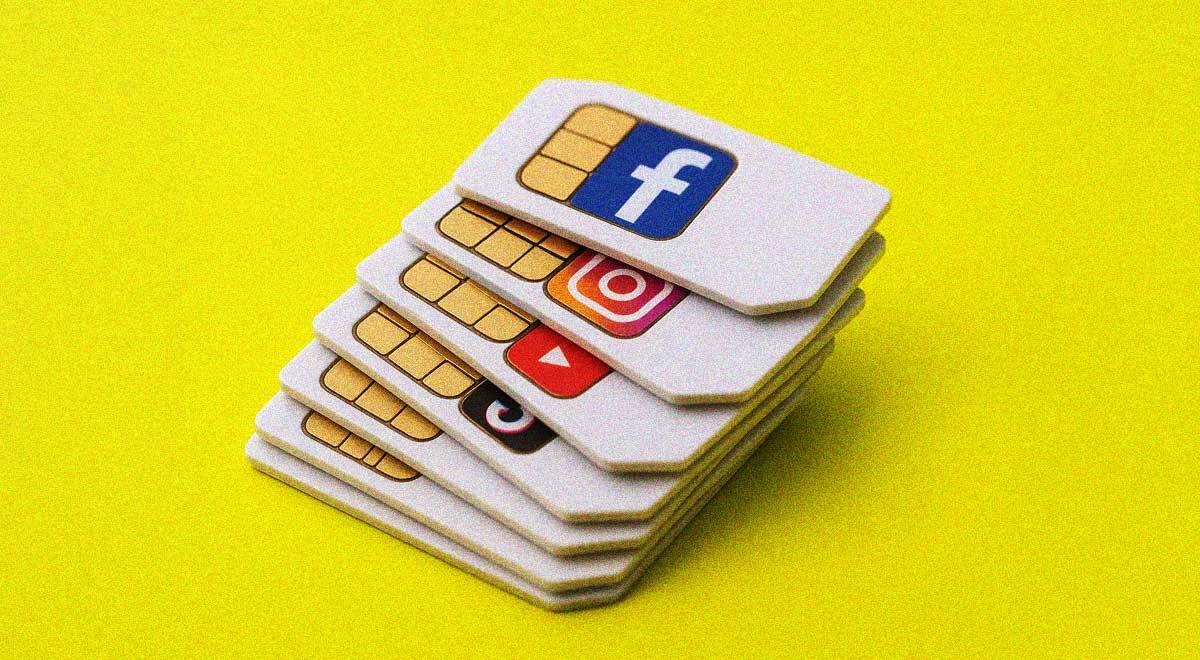
Image by Cybernews

 Follow us
New research reveals the shockingly low cost of mass online manipulation, with fake Instagram accounts available for as little as $0.08. This underground bot market, fueled by virtual SIM farms, is undermining trust, skewing elections, and gaming algorithms – all for pennies.
In a world of fake news, fake audiences, fake political movements, and fake reviews – the wheel keeps on turning, and the churn keeps on happening.
It’s really harsh on our nervous systems and cognitive capabilities to consume so much information. We know this, but personally, I had never considered the economics of it until I read about some research this week.
Bots cost pennies
Cambridge’s new Online Trust and Safety Index (COTSI) has tracked real-time prices across 500+ platforms, ranging from major social media sites like X and Instagram to chat platforms like Telegram, ride-hailing apps like Uber, and dating platforms like Tinder.






The industrialization of fake engagement is so cost-effective that it only costs $0.08 to set up a fake Instagram account using a burner SIM and a duplicitous phone number.
And despite some of the apps being mainstream, the bulk of the activity goes below the radar.
“We find a thriving underground market through which inauthentic content… is readily and openly for sale,” Dr. Jon Roozenbeek, the senior author of the study, revealed.
When the cost is so derisory, it surely must compromise the integrity of commerce in general, elections, and life in general.
“All this activity requires fake accounts, and each one starts with a phone number and the SIM hardware to support it,” explains Roozenbeek.
And these SIMs don’t have to be physical, not these days. There are tens of thousands of virtual SIMs on the market (as well as physical ones) that are proliferated and rerouted by SIM farms (a large‑scale physical operation managed online).
These farms supposedly pose as data‑privacy companies, but, conversely, feed bot networks.
Farms feeding fake accounts
COTSI has been tracking daily prices that vary significantly worldwide. There are affordable places to purchase a SIM, such as Russia ($0.08), the UK ($0.10), and the US ($0.26). The reason for these low prices is that weak SIM ID requirements, coupled with high vendor supply, result in rock-bottom prices.
Then there are expensive places like Japan ($4.93) and Australia ($3.24), the context being that strong SIM registration laws + ID requirements drive prices up.
“Nations in which SIM cards are more expensive have higher prices… likely to suppress rates of malicious activity,” outlined co‑lead author Anton Dek.
Therefore, building these bot armies to effectively spam citizens makes more sense in the cheaper locations. They call it the “online manipulation economy,” and this “inauthentic activity” ranges from vanity metrics to outright rage‑baiting.
“A sophisticated bot can run an influence campaign through hundreds of fake accounts,” said Roozenbeek.
“Generative AI means that bots can now adapt messages to appear more human and even tailor them to relate to other accounts. Bot armies are getting more persuasive and harder to spot.”

Campaigns run automatically
Influence operations during election time are also a cornerstone of this shady activity, gradually eroding a population's trust and covertly pushing hidden agendas.
“Bots can be used to generate online attention for selling a product, a celebrity, a political candidate, or an idea. This can be done by simulating grassroots support online, or generating controversy to harvest clicks and game the algorithms,” explains Roozenbeek.
The researchers identified seventeen major vendors, with four of the top ten being used at any given time, thereby dominating the market.
Crucially, COTSI is monitoring hundreds of platforms, listed by vendor and country. Impersonation scams are rife, with threat actors hosting domains in the guise of prominent companies such as X, Uber, Discord, Amazon, Tinder, and the gaming platform Steam.
This creates a false sense of trust, with the customer falling for the bait.
Meta, Grindr, and Shopify rank among platforms with the cheapest fake accounts for sale, at a global average of $0.08 per verification. This is followed by X and Instagram at an average of $0.10 per account, TikTok and LinkedIn at $0.11, and Amazon at $0.12.
Global manipulation market
Despite the wide-ranging price index, the authors found that the major customer bases for such underhanded activity are located in Russia and China, with the research team pointing out that Russian grammar seems to be used frequently when things are translated into English directly.
What was also found was a kind of pecking order, with A‑league hackers remaining covert so still in operation, and less experienced menaces also taking on smaller gigs:
“It is hard to see state‑level political actors at work, as they often rely on closed‑loop infrastructure. However, we suspect some of this is still outsourced to smaller players in the manipulation market,” said Dek.
A sizable 90,000 fake views and 200 fake comments for a social media post can be purchased for the modest price of just under $12.






Unlock more exclusive Cybernews content on YouTube.