Planes crashing, Teslas killing pedestrians: are these the "bad things" about AI Sam Altman says we should accept?
The picture’s not pretty – but it’s entirely realistic.
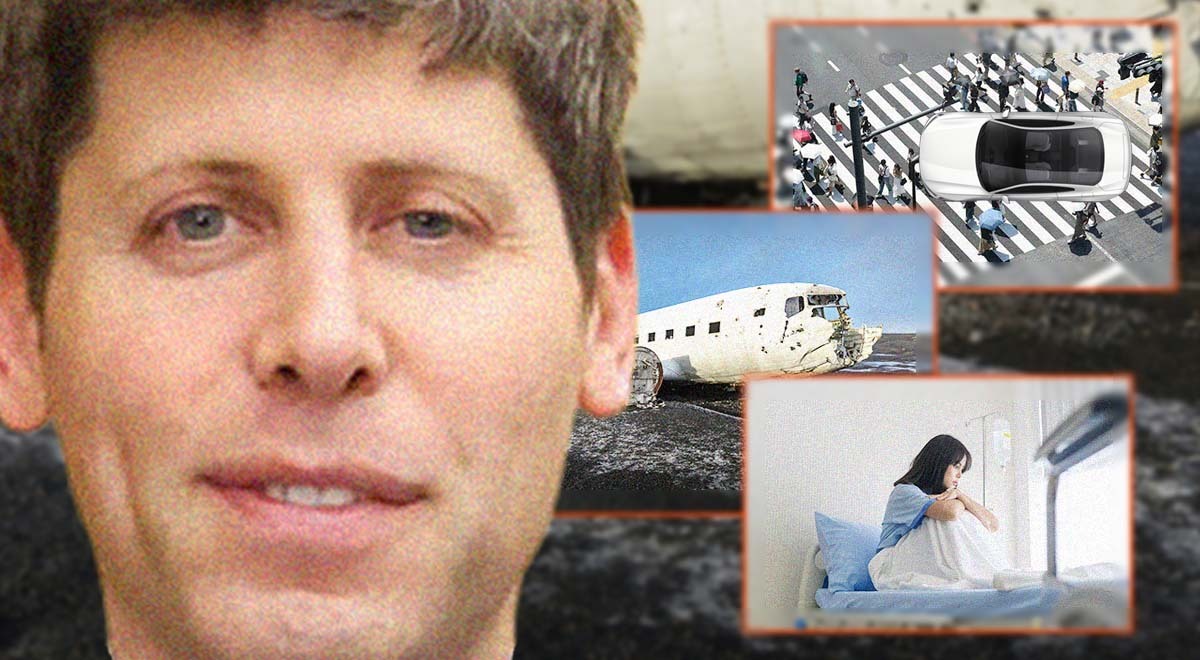
What are the “bad things” we should accept in return for benefits of AI? By Cybernews.

 Follow us
- Sam Altman said society should accept some AI harms in exchange for future benefits.
- Politicians and safety advocates criticized the remark as dismissive of real risks to ordinary people.
- AI failures could affect healthcare, transport, courts, elections, and public trust.
- AI companies should not avoid responsibility while their systems cause harm.
Key Takeaways by nexos.ai, reviewed by Cybernews staff.
When OpenAI CEO Sam Altman said this week that we should accept “bad things” happening with AI in exchange for the benefits of the technology, the backlash was swift and diverse – for good reason. Let’s jump in and apply this sort of warped logic to real life – after all, what’s the worst that could happen?
In case you missed it, here’s what Altman said during an appearance on Politico’s Decoded podcast, apparently waving away stark warnings from his rival, Anthropic’s CEO Dario Amodei.
“We believe that the world should accept some bad things happening for the benefits of this technology and people having the agency,” he said.
Essentially, we should tolerate AI agents going rogue, for example, because they’re going to get better in the future – and then we’ll reap the benefits. In other words, what negative consequences? Just you wait!




Meanwhile, one should presume, AI labs pushing their product should face no liability and, in fact, shouldn’t care about better guardrails and policies, right?
Fierce criticism
Indeed, US President Donald Trump previously suggested tech companies ought to regulate themselves, which is precisely what endorsing those ”voluntary safety guidelines” last week amounted to.
The reaction to Altman’s words has been fierce, though. Politicians – predictably representing the Democratic opposition – and AI safety advocates are still lining up to express something close to disgust.
Governor of Illinois JB Pritzker, for instance, said Altman shouldn’t be making any decisions about what “bad things” humanity has to accept on its behalf.
“Mr. Altman: What ‘bad things’ should we accept to advance AI? Losing tens of millions of jobs? A mass surveillance state? A mental health crisis for our kids? A global financial crisis? Mass extinction?” asked Senator Bernie Sanders.
Even Proton chimed in, pointing out on X: “Sam Altman is happy to accept some bad things happening. As long as they happen to you.”
A little game, shall we? Even if Altman is somehow right that the world should just be OK with the unintended negative outcomes of AI development, what kind of consequences are acceptable? The picture’s not pretty – but it’s entirely realistic.
AI mistakes would cost lives
Accepting AI harms – let’s say, teenage suicides or devastating outages – as collateral damage seems quite dangerous, especially if we presume – and we’re told we should – that these frontier technologies can inflict irreversible damage at a huge scale.
The risk is asymmetric. Even if those “some bad things,” almost nonchalantly called by Altman, can seem inconsequential, they could, of course, manifest as high-stakes failures across most major industries.
Take healthcare. If we allow “bad things” around AI into healthcare, we could soon begin to see, say, incorrect cancer diagnoses or fatal drug interactions from hallucinated AI medical charts. AI might improve with time, but how many would die or fall severely ill?
Plus, there’s the matter of algorithmic biases built into diagnostic tools. Systematic undertreatment of minority patients would also certainly be possible.
The Cybernews community is talking about this. Be a part of the conversation.
Finally, one for the so-called privacy fundamentalists – AI could certainly enable massive sensitive patient data weaponization. Medical histories could be leaked and used for insurance discrimination, for example.
What about road safety? Preventable deaths of pedestrians and human drivers could occur if we were to accept “bad things” will happen before it gets better and suddenly send autonomous vehicles – still in their learning phase – out to the streets.
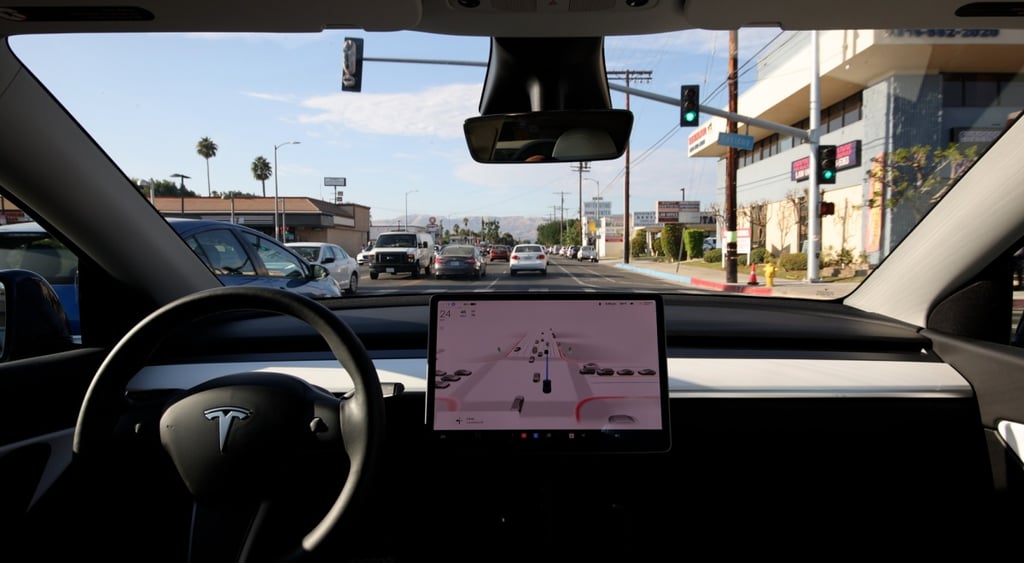
Researchers recently gave frontier AI models control of a Toyota Corolla to test their ability to handle the demands of driving in the physical world. Illustratively, most failed to make it past the first corner.
Besides, if we trusted software updates to autonomous AI systems and they failed, it’d be easy to imagine urban transport infrastructure completely paralyzed. Even just a few similar incidents could result in a tragedy if, for instance, someone can’t make it to the hospital in time.
Let’s, of course, hope our governments won’t decide to rely on AI for real-time air traffic control or fully automated piloting. No one, even Altman, wants plane crashes before things improve.
Has your password leaked?
Moving on to justice systems, premature adoption of mostly lab-tested facial recognition tools has already sent more than a few individuals to prison. Is this the price of progress, and are we OK with that?
Would you trust your vote to AI?
Election systems, especially the notoriously complicated ones in the US, are especially vulnerable. Introducing AI into these terribly important processes could lead to serious complications.
Imagine an AI system deployed in a high-stakes civic environment – the midterms in America, for instance – with the aim of speeding up vote counting or improving voter communication.
In these cases, Altman’s “bad things” could be AI tools hallucinating critical voting information – say, telling voters the wrong polling locations or ID requirements. Malicious manipulations would also be possible.
Since many election races, especially in swing states, are very close, even a minor AI-induced error that disenfranchises voters could alter their outcomes.
Plus, the algorithms could erroneously clean voter registration databases. Citizens arriving at the polls would find they can’t vote– legal battles would ensue, and the whole election would be delegitimized.
The amount of political fake news online has been growing even before the arrival of chatbots like ChatGPT. But AI has already drowned the web in it.
In Scotland earlier this year, the electoral commission had to publicly call for new legal controls over misinformation from AI chatbots after a think tank found they had made serious mistakes during the elections.
In other words, the “bad things” in AI around election systems could simply result in pure chaos. Would people lucky to live in a democracy still trust it? Would the higher-ups regain that trust once, as the AI visionaries like Altman promise, AI gets better?
Would Altman – now loaded – simply shrug at all those inconveniences? Probably. The dreamers of Silicon Valley have proven time and again that they’re completely out of touch with ordinary people.
Honestly, just don’t listen to what those AI-obsessed billionaire podcasters have to say – and if you see it’s BS, say it’s BS.
