Fargo IRL: another AI facial rec error sends innocent granny to jail for six months
Fargo, the TV series, is fantastic in depicting the absurdity of it all. It turns out that real life in this North Dakota city can be just as farcical: A 50-year-old woman had to spend months in jail after cops, using an AI facial recognition tool, wrongly flagged her as a suspect in a bank fraud case.

Image by Cybernews.

 Follow us
Fargo, the TV series, is fantastic in depicting the absurdity of it all. It turns out that real life in this North Dakota city can be just as farcical: A 50-year-old woman had to spend months in jail after cops, using an AI facial recognition tool, wrongly flagged her as a suspect in a bank fraud case.
The problem, according to North Dakota radio station WDAY, was that Angela Lipps – a grandmother of five – has lived her entire life in north-central Tennessee, about 1,000 miles from Fargo, and has never even visited North Dakota.
Still, US marshals arrested her at gunpoint last July. Lipps spent nearly four months in a Tennessee county jail and was then flown to North Dakota to fight the charges.






They stemmed from surveillance footage Fargo detectives viewed while investigating bank fraud cases in April and May 2025. The footage, according to WDAY, showed a woman using a fake US Army military ID to withdraw tens of thousands of dollars.




She lost her house, her car, and her dog
Investigators then used an AI facial recognition tool to identify Lipps as the person in the video. Court documents showed that a detective agreed that the suspect’s facial features, body type, and hair were a match to those of Lipps.
But, of course, the cops didn’t even think to double-check the AI’s lead and simply forwarded the information to their colleagues in the Fargo police department.
The Fargo cops didn’t bother to question Lipps at all. The first time they interviewed her was in December.
Lipps says that the police didn’t even offer to cover her trip home, so she was stuck in Fargo. A local nonprofit eventually financed her journey back to Tennessee. No one even apologized.
A lawyer’s intervention finally saved Lipps from further trouble. Jay Greenwood produced bank records showing that Lipps was more than 1,200 miles away in Tennessee at the time when the bank fraud was perpetrated, and the woman was released from jail on Christmas Eve.
“If the only thing you have is facial recognition, I might want to dig a little deeper,” Greenwood told WDAY.
The holiday, though, wasn’t a happy one for Lipps. She says that the police didn’t even offer to cover her trip home, so she was stuck in Fargo. A local nonprofit eventually financed her journey back to Tennessee. No one even apologized.
“I had my summer clothes on, no coat, it was so cold outside, snow on the ground, scared, I wanted out but I didn’t know what I was going to do, how I was going to get home,” Lipps said, adding that she lost her home, her car, and her dog during the time she spent in jail.
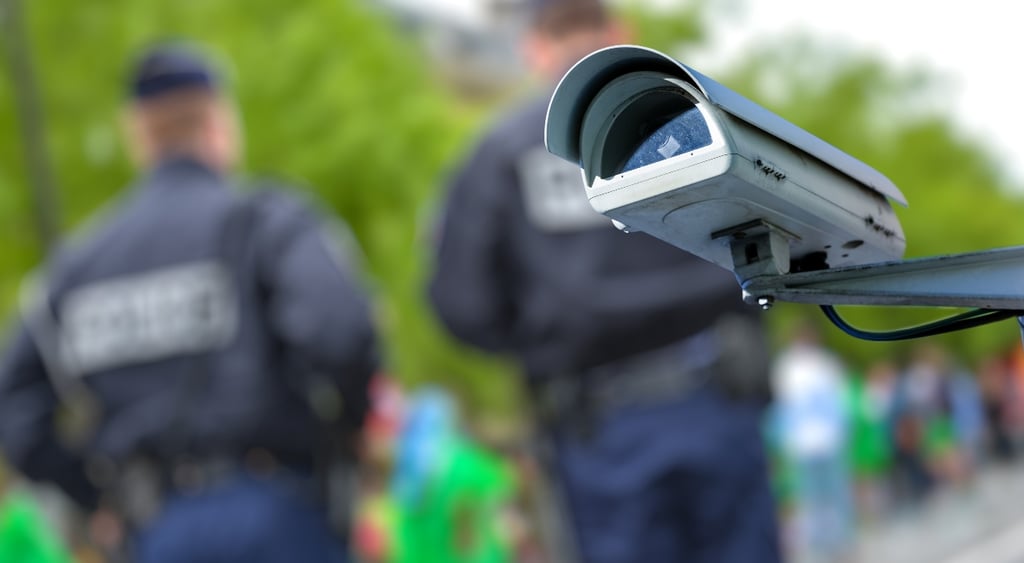
This isn’t the first time AI-powered facial recognition has led to a wrongful arrest in the US.
In April 2025, New York cops detained Trevis Williams based on a facial recognition match from grainy CCTV footage, despite Williams being much taller than the suspect in the video.
And in February, a Detroit woman sued the city’s police department after being arrested when a facial recognition tool falsely identified her as a murder suspect.
Great in the lab, far worse on the street
Privacy activists and rights defenders see a lot of issues with the technology. The Electronic Frontier Foundation (EFF) has consistently said facial recognition was an alarming development in government surveillance.

Check if your data was exposed
Find out if your email and related personal information have appeared in known data breaches.
“Facial recognition undermines individual privacy, and it is too dangerous when deployed by police. Communities everywhere must move to protect themselves and safeguard their civil liberties, insisting on transparency, clear policies, public accountability, and audit mechanisms,” the EFF said last year.
And in August 2025, researchers from the University of Oxford said that facial recognition systems are mostly tested in the lab and thus aren’t actually as effective on the street, where the police use them.
According to academics, the deployment of the technology is often justified by impressive accuracy statistics. Indeed, for the latest and best-performing models, standardized evaluations now report figures as high as 99.95% accuracy.
Facial recognition undermines individual privacy, and it is too dangerous when deployed by police.The Electronic Frontier Foundation.
“Out of context, these numbers suggest that facial recognition has progressed to be extremely accurate. But there’s a problem: these near-perfect numbers fail to reflect reality. Facial recognition appears to be significantly less accurate in real-world settings,” said the researchers.
That’s because these are lab evaluations conducted in controlled settings, “creating a misleading picture of how these systems truly perform when confronted with diverse, messy, and unpredictable real-world environments.”
According to the Oxford trio, these types of evaluation fail to reflect real-world conditions, where images may be blurred or obscured – like a rainy street or a crowded stadium, for example.
Unlock more exclusive Cybernews content on YouTube.