US CyberCom on blackouts, narrative warfare, and the ethics of digital power
Military operations in Venezuela and, most recently Iran, have put cyber power at the centre of high-stakes military missions. But when digital capabilities can black out cities and influence political outcomes, who decides how far they should go?

Image by Cybernews

 Follow us
Military operations in Venezuela and, most recently, Iran, have put cyber power at the centre of high-stakes military missions. But when digital capabilities can black out cities and influence political outcomes, who decides how far they should go?
- Cyber has moved from afterthought to core strategy Ed Cardon, who led US Army Cyber Command from 2013 to 2016, says cyber is no longer seen as a "bolt on". US Cyber Command now integrates cyber from the outset – treating it as "just another tool in the box."
- Transparency is a double-edged sword Retired JSOC commander Stanley McChrystal warns political leaders now reveal covert capabilities for messaging wins. While this can deter adversaries, it helps them develop countermeasures.
- Walking the ethical tightrope McChrystal cautions that improving capabilities means resisting the temptation to mirror adversaries like Russia's Wagner Group. The challenge: becoming more effective without abandoning legal and moral constraints.
- AI demands speed and simulation AI has compressed "breakout time" to "a matter of minutes." McChrystal says preparing for wars "we cannot yet see clearly" requires aggressive simulation: testing agentic AI, surfacing consequences, and ensuring human accountability.
Key Takeaways by nexos.ai, reviewed by Cybernews staff.
For two former commanders, credited with shaping the US military’s doctrine for cyber and counterterrorism, that question is shaping how democracies think about power, deterrence, and responsibility in the age of digital warfare.






Former Army Cyber Command leader Ed Cardon and retired Joint Special Operations Command (JSOC) commander Stanley McChrystal reflected on the impact of cyber, AI, and information warfare on the battlefield with Cybernews at a recent SimSpace conference in Florida.




Venezuela and the layering of commands
For Cardon, who led Army Cyber Command from 2013 to 2016, overseeing its rapid expansion from a few hundred personnel into a 20,000-strong force, the Venezuela operation was a rare, high-profile indicator of how far his former unit has come.
While he was in command, cyber was commonly regarded as a bolt-on by other military branches, with digital capabilities introduced late into planning and treated as support tools rather than central components.
“It was normally like, ‘Oh yeah, we have these cyber forces. What are we going to do with them? How can they help me with the plan I already wrote?’
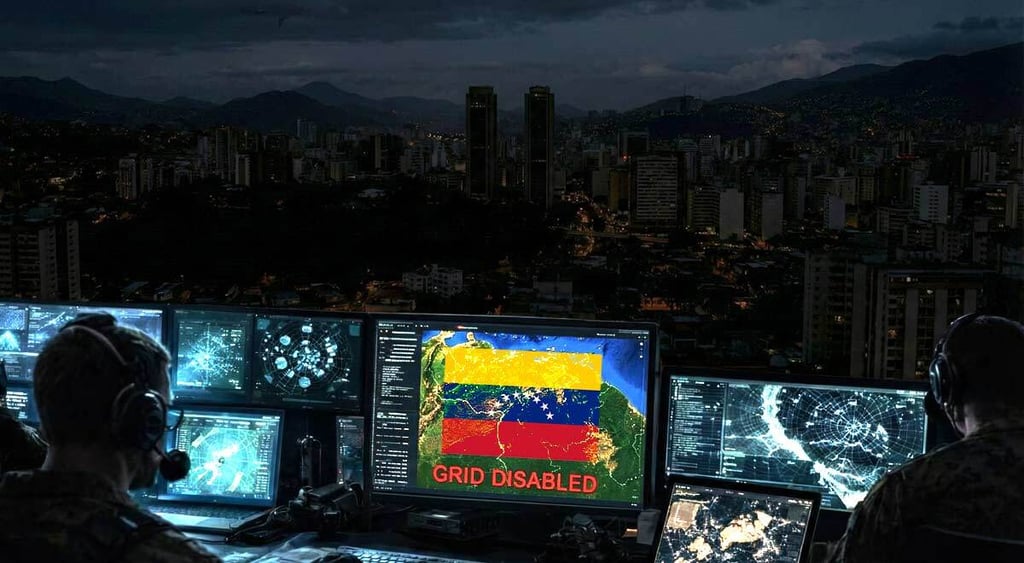
He adds that Operation Absolute Resolve – the joint military and law enforcement mission to capture and remove President Maduro from power – shows how cyber is now considered from the outset in operational planning, alongside intelligence, space, and kinetic (physical) operations.
The fact that cyber’s role was publicly acknowledged in this operation, via President Trump's assertion that “the lights of Caracas were turned off due to a certain expertise that we have,” reflects a new willingness by the Pentagon to showcase its capabilities and while our conversation pre-dated the US-Israeli strikes on Iran, the use of cyber has been more publicly reported on than in previous campaigns.
Cardon adds that previously classified campaigns against ISIS’s digital infrastructure are also now being retrospectively celebrated. This is indicative, he adds, of a growing recognition that the public needs to understand how and why the army is using cyber.
He cites NPR's 2019 report detailing Operation Glowing Symphony, a 2016 global campaign by US Cyber Command and the NSA to disrupt ISIS’s propaganda network. The offensive mission used phishing and malware to delete files, lock users out, and dismantle the group’s digital infrastructure.
"These campaigns show that offensive cyber is not so scary. It's just another tool in the box that could be used to accomplish missions."Former Army Cyber Command leader Ed Cardon
“Secret until it happens”
Elite forces general Stanley McChrystal – credited with transforming US JSOC during his leadership from 2003 to 2008 – is more cautious.
There was a time, he reflects, when covert operations stayed covert to protect capabilities. Now, political leaders use the demonstration of those capabilities as a tool of coercion – or domestic messaging.
“It’s self-aggrandizing for them, and I don't think it's good. We used to do covert things covertly. I think we've changed our interpretation of ‘covert’ to mean ‘secret until it happens’," he adds.
He warns that while public acknowledgement can deter adversaries, it can also accelerate their ability to develop countermeasures.
Offensive cyber is hard
Venezuela raises uncomfortable questions for McChrystal. If such operations are not conducted in formal wartime conditions – many argue Operation Resolve was essentially a law enforcement matter – then where do they sit ethically and politically?
“It involved espionage, infrastructure attacks, and kinetic force, all brought together to arrest one man. We weren’t at war with Venezuela, yet people were killed. That kind of action has to be justified in the court of public opinion,” he says.
Both men pushed back against a persistent assumption that offensive cyber – proactive, actions designed to target, disrupt, and degrade an adversary’s infrastructure – is easy. That all you have to do is find “a way in” to systems and work your magic.
“You’ll hear this thing that offense has all the advantages,” Cardon says.
“Actually, offensive cyber is really hard.”
Reaching a digital target, Cardon explains, involves navigating fragile and constantly changing infrastructure where networks update, hardware changes, and connections fail.
Even when access is achieved, maintaining persistence is difficult. The cyber terrain shifts continuously.
Despite these challenges, McChrystal believes that offensive cyber is something Western nations will need to get better at.
“We’re going to have to get better at it. But we've got to avoid the temptation to get better by being more like them,” he warns.
Power without becoming Wagner
By “them”, he refers to state-aligned hacking groups associated with Russia, China and North Korea. By using contractors rather than uniformed troops, states can distance themselves from controversial actions, blur accountability, and operate in legal gray zones.
When Cybernews asked McChrystal whether he thought that the US might ever rely on something akin to Russia’s Wagner Group for deniable operations, he was blunt.
“That’d be problematic. I’d be uncomfortable with that.”
The Wagner Group, a Russian state-backed private military network, has operated in Ukraine, Syria, and across parts of Africa, often advancing Moscow’s strategic interests while giving the Kremlin a layer of plausible deniability.

The temptation to create off-the-books proxies may grow as cyber operations become more central in operations. But the cost, he warns, could be measured not only in operational risk, but in legitimacy.
“I haven't seen that happen. But it's something to always be cautious about,” he says.
“The temptation in conflict is always to mirror the enemy’s methods, but at some point abandoning legal and ethical constraints risks placing your nation on the same moral plane as those you oppose."Joint Special Operations Command (JSOC) commander Stanley McChrystal
Battle for the narrative
While McChrystal didn’t mirror the enemy's methods in earlier conflicts, he learned from them.
As a JSOC commander in 2023, his mission was counter terrorism across 27 countries.
Early in the conflict, he admits that US forces struggled to keep pace. More information did not equal more understanding. Different teams saw different fragments of reality without a shared picture.
Meanwhile, his nemesis in Iraq, Abu Musab al-Zarqawi, was turning Al-Qaeda into a slick media organization with an asymmetrical leadership structure.
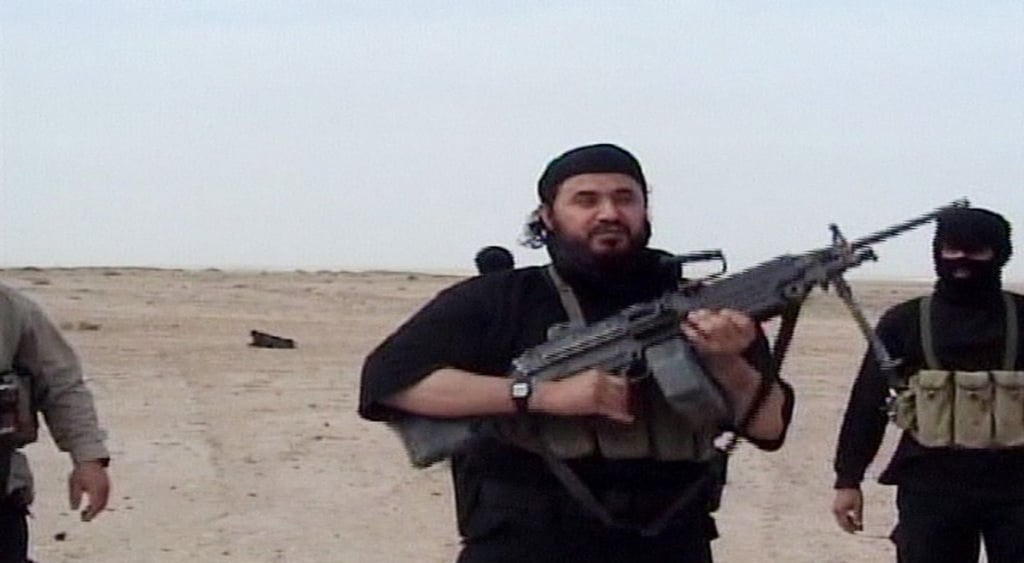
“He gave his members enough autonomy so they could operate effectively, but he made sure that they stayed focused,” he notes.
A car bombing often involved three vehicles: one to guide, one to detonate, and a third to film. Within hours, professionally edited footage would circulate online.
“They became masters of influencing people. If a bomb goes off in your area, you are terrorized. If a bomb goes off two cities away, that’s less impactful – the bomb goes off and you see it on video – over and over – and it’s well produced, with a music soundtrack. Suddenly, it feels closer.”
Owning mistakes quickly and publicly
Once JSOC realised it needed to be deliberate in how their operations impacted public opinion the tide began to turn.
Cardon, who served as a first commander during this period, said that around 2006, commanders were given the agency to make decisions about messaging without having to constantly seek permission from their superiors.
“We were just told: try not to be wrong,” Cardon recalls.

Check if your data was exposed
Find out if your email and related personal information have appeared in known data breaches.
One of his counter-propaganda initiatives, he said, involved keeping a printer in the back of his truck so that teams could distribute their own messages immediately.
“Soldiers used to tear Shia militia posters down. But what was far more effective was that we’d print and hand out leaflets at the scene and put them next to the leaflets of the militias. That used to make them really angry!”
Cardon also learned to acknowledge mistakes quickly and publicly rather than allow rumors to shape perception.
“There were some pretty serious incidents with some of our soldiers, and it was important to get ahead of the narrative.
That meant: ‘yes’, 'it was our soldier’, and ‘yes, we're prosecuting’. Some people would say, ‘but we're admitting fault,’ and I’d say, ‘well, they have a video – what more do you need to look at?’ So I just took the risk and did it.”
AI, simulation, and preparing for the unknown
If Iraq marked the age of networked insurgency, AI may be ushering in something different again. What form will the next iteration of conflict, “War 4.0”, take?
The simple answer, says McChrystal, is that we don’t yet know.
“We know there will be technologies, but it’s like mixing a cocktail that you’ve not made before – you don’t really know how it’s going to land.
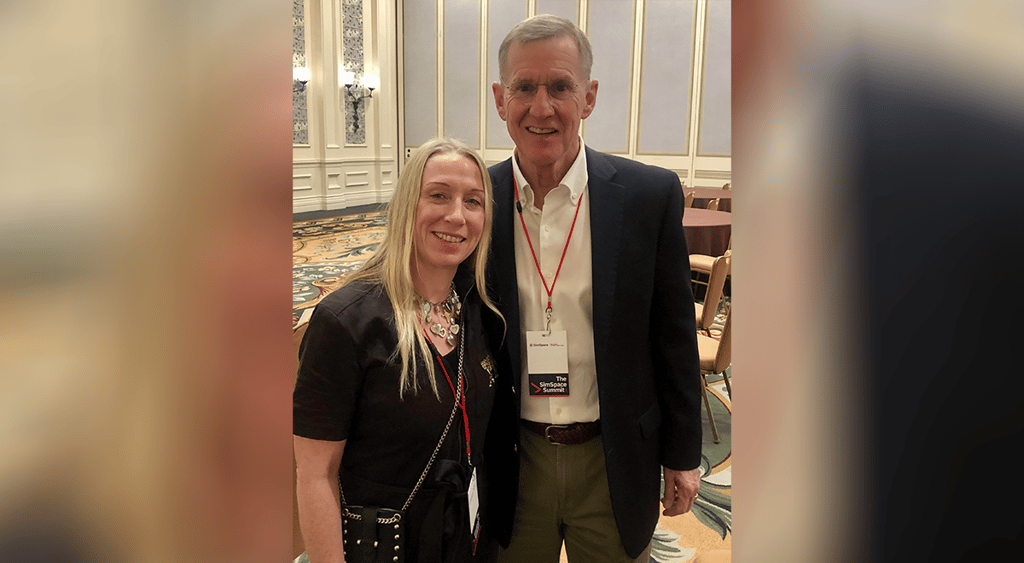
For McChrystal, technology doesn’t reduce complexity – it increases it, he says, “which makes the requirement to operate as a team become even more important.”
He thinks it’s important that cyber people are informed early on in the planning of a military operation. And he adds that even if they’re used to working remotely, there needs to be “boots on the ground” when they're working on a campaign.
“They can’t be culturally disconnected because they don't know us.”
Breakout time: “a matter of minutes”
For Cardon, the concerning aspect of AI is speed: “There's no time anymore. Once they gain access to your devices, it’s a matter of minutes,” he says, referring to "breakout time" – the speed at which an attacker moves from an initial breach to other systems.
So how do you prepare leaders for conflicts you can’t yet fully imagine?
It’s worth noting that our meeting predated recent tensions between AI firms and the Pentagon over military collaboration – highlighting how rapidly the issue of military AI is moving.
Cardon thinks the answer is simulation, and confronting the implications of AI before they appear on a real battlefield.
By simulation, he means realistic, repeatable digital environments such as cyber ranges that replicate cyberattacks, operational decisions, and real-world consequences so teams can rehearse safely.
“I’ve always been a huge believer in simulation,” Cardon said.
“Running scenarios repeatedly – and changing conditions each time – builds adaptability across a force.”
It also raises hard questions about automation. As AI advances, there may be moments when humans are no longer directly “in the loop,” much like modern smart weapons operate autonomously once deployed.
The task, Cardon argues, is to test these systems aggressively.
"Break these [agentic AI] systems, act as the adversary, and surface unintended consequences and legal dilemmas before they happen in reality."Stanley McChrystal
He asserts that even when agentic AI makes the final decision, commanders must remain accountable when things go wrong, which is why trust must be earned through rehearsal.
It’s the only way of preparing for wars that, as McChrystal puts it, “we still cannot see clearly”.
*Cybernews travel and accommodation for the SimSpace Summit on 2-4 February was covered by the event organizers .
Unlock more exclusive Cybernews content on YouTube