Best air purifier for home: top picks & buying guide 2026
Being behind major reports like The Mother of All Breaches and RockYou2024, our in-house cybersecurity experts and journalists provide unbiased, real-world testing and in-depth analysis.
We maintain complete transparency by openly sharing our testing methodologies with our audience.
Learn more
Air quality in a modern environment may contribute to a range of health problems. From air pollutants such as smoke to allergens and VOCs (volatile organic compounds), all can easily enter your home.
The good news is that some air purifiers can help lower indoor air pollution and potentially reduce health risks, with certain types also helping eliminate unpleasant odors.
A great purifier can help with certain floating pollutants, sucking them in and recirculating clean air. However, once pollutants are settled on the ground, air purifiers become much less effective, which is why it’s best to use them regularly.
This makes finding the best air purifier for your needs crucial, and it’s where my list can help. As a Cybernews expert, I led a team of dedicated researchers to find the best air purifiers on the market.
Best air purifiers for home: shortlist
- Clairu – top-rated air purifier for everyday home use
- Levoit Vital 200S-P – ideal for large spaces and whole-home air purification
- Shark NeverChange – excellent for eliminating smoke and precise air quality readings
- PuroAir 240 – ultra-quiet air purifier with trusted certifications
- Coway Airmega Mighty – advanced 4-stage filtration for cleaner, healthier air
Best air purifiers compared
Now that you’ve seen our top picks, it’s time to quickly compare the products based on their main features, including coverage area, clean air delivery rate (CADR), noise level, and replacement filter cost. Please note that the replacement filters have an average price, as they are often sold by different stores at varying prices. So, here’s the overview:
| Device name | Coverage area | CADR | Noise | Filter cost |
| Clairu | 441–645sqft | N/A | 36dB | No filter |
| Levoit Vital 200S-P | 1,875sqft | Smoke: 250CFM | 24dB | ~$20 |
| Shark NeverChange | 650sqft | N/A | 33.8–62dB | ~$20 |
| PuroAir 240 | 1,000sqft | N/A | 22–52.2dB | ~$10 |
| Coway Airmega Mighty | 361sqft | Dust 246CFM | 24.4–53.8dB | ~$16 |
Best home air purifier devices: our top picks
You’ve seen them compared, so all that’s left is to dig a bit deeper into each product. Let’s take a look.
1. Clairu – overall best air purifier for home use
| Coverage area | 441–645sqft |
| CADR | N/A |
| Noise | 36dB |
Even though it might not be the obvious top pick, we’ve chosen Clairu for its simplicity and effectiveness, all at a very low price. It’s at least five times cheaper than the alternatives, yet covers a fairly broad area of up to 645 square feet.
You can combine several across the house for maximum effectiveness, while the device doesn’t use an air filter, so you don’t have to worry about upkeep costs.
Clairu uses a different technology from traditional air purifiers: advanced negative ionization. It can emit up to 20 million negative ions per second to remove pet dander, dust, and odors.
Despite being different from its competitors, the device is still relatively quiet. You just plug it in and leave it to do its job.
2. Levoit Vital 200S-P – best for covering a large room or entire home
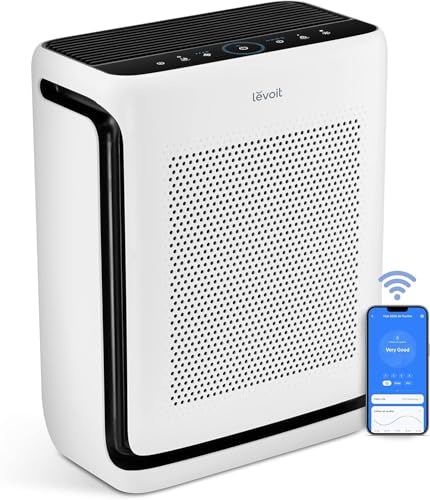
| Coverage area | 1,875sqft |
| CADR | Smoke: 250CFM |
| Noise | 24dB |
The Levoit Vital 200S-P air purifier is an excellent choice if you’re looking to purify a large space, as it can cover up to 1,875 square feet. It’s certified by the Association of Home Appliance Manufacturers (AHAM), an independent organization that tests air cleaning products.
The unit is somewhat bulky, with its dimensions being 15.6"D x 8.5"W x 19.8"H and a weight of 13.2 pounds. However, it’s also primarily designed for larger homes, so this shouldn’t be an issue for the ideal customer.
The best room air purifier for larger homes is also reasonably quiet in its low-power modes, and its replacement HEPA filters are reasonably priced, as many customers have attested.
3. Shark NeverChange – great for smoke removal and better air quality
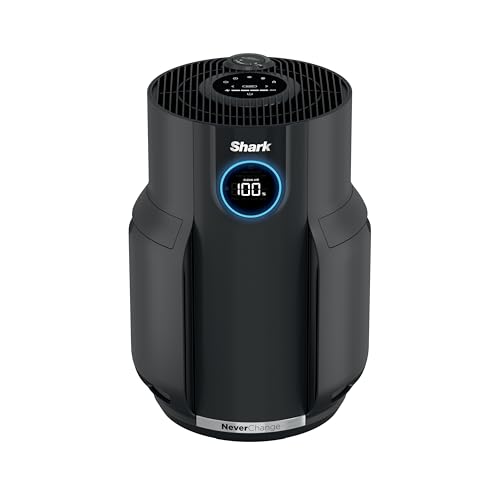
| Coverage area | 650sqft |
| CADR | N/A |
| Noise | 33.8–62dB |
The Shark NeverChange air purifier, made by SharkNinja, is a powerful device that effectively helps remove both smoke and odors simultaneously. Moreover, it uses HEPA filters that go beyond the requirements, removing 99.98% of micro, small, and large particles.
The company doesn’t publish CADR ratings, but promises an extensive coverage of 650 square feet. It promises to pull in larger particles like dander and hair, preventing buildup on HEPA filters, which can improve longevity.
The Shark NeverChange is a contender for the best HEPA air purifier, accurately displaying air quality on a sizable and clearly visible display.
4. PuroAir 240 – very quiet air purifier with several certifications
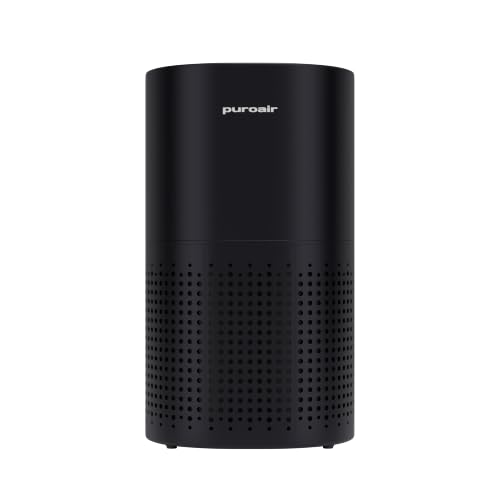
| Coverage area | 1,000sqft |
| CADR | N/A |
| Noise | 22–52.2dB |
PuroAir 240 is a strong air purifier for large rooms and spaces up to 1,000 square feet.
It’s capable of filtering 99.9% of pollutants through its 3-layer filtration system with a pre-filter, HEPA filter, and activated carbon. The filters can remove particles that are up to 700x smaller than human hair.
It boasts several certifications, including CARB, ISO, ETL, Energy Star, and UL. It’s very quiet, producing only 22dB of noise at the lowest setting, and is made to operate 24/7 if necessary. The manufacturer also offers a 2-year risk-free warranty.
5. Coway Airmega Mighty – air purifier with a 4-stage filtration system
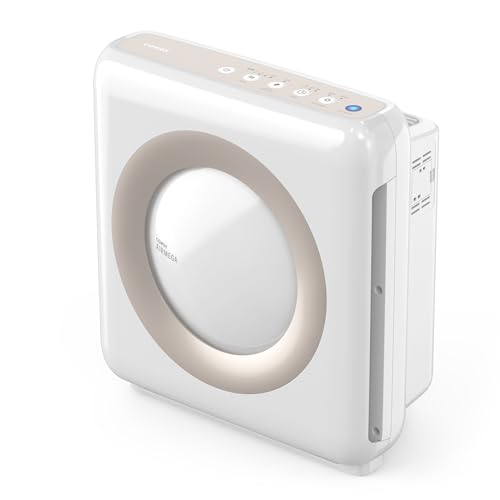
| Coverage area | 361sqft |
| CADR | Dust 246CFM |
| Noise | 24.4–53.8dB |
The Coway Airmega Mighty is an air purifier using a 4-stage filtration system with a pre-filter, deodorization filter, True HEPA filter, and vital ion. According to the manufacturer, this makes it capable of capturing up to 99.97% of particles like allergens, certain pollutants, and pollen.
The device is much smaller than standard air purifiers and very easy to carry, so you can move it between rooms as needed. This might compensate for the smaller area coverage compared to competitors.
The device comes with different fan speeds and an auto mode that optimizes the speed based on air quality. A bright LED indicator shows you the quality at all times. You also have the option to use a timer to leave the device on for 1, 4, or 8 hours.
How did we select the best air purifiers for home use?
To select the best air purifiers on the market that appeal to a broad range of customers, I employed the tried-and-true Cybernews methodology, which focuses on extensive research and analysis of customer feedback.
Moreover, I also focused on reviewing manufacturer specs and product documentation to determine filtration efficiency, energy use, coverage area, and maintenance costs. Here are the criteria I focused on with each product:
- Specifications and product details (60%). I spent the most time on this, analyzing the product’s coverage area, HEPA filters, noise level, CADR rating, and more.
- Customer feedback (25%). Products like air purifiers are best evaluated by the customers themselves, which is why I researched the feedback from major retailers.
- Maintenance costs (15%). Almost every air purifier uses a replaceable HEPA air filter, which is why I have also taken into account their costs and how long they tend to last.
How to choose an air purifier: key criteria
Here’s an overview of the main criteria you should use when picking the best air purifier for allergies and other particle removal:
- Usage of HEPA filters. The best purifiers use HEPA filters, so it’s best to focus on those, especially the ones that use True HEPA filters.
- Space coverage. Depending on the size of the space you want to cover, you’ll want to consider an adequate air purifier. Most will state the size of the room or home they can cover, typically in square feet.
- Clean Air Delivery Rate (CADR) value. It’s not always available as the manufacturer needs to go through the AHAM certification program. Still, when they have, you’ll get a value that reflects the volume of clean air the device can produce at its strongest setting.
- Noise level. If you don’t want to hear the purifier constantly like a vacuum cleaner, it’s important to check the noise level, typically shown in decibels. Everything below 50dB should be ok, as that’s about the noise a typical refrigerator makes.
- Maintenance and filter replacement costs. Maintenance is usually straightforward and incurs no costs, but the filters must be replaced. That’s why it’s essential to consider their costs and longevity, which can be determined from user reviews.
- Energy efficiency. Air purifiers consume very little electricity, but it’s always better to opt for energy-efficient models, like those with an Energy Star certification.
- Design, portability, size, and footprint. Depending on how you intend to use the device, consider some or all of these aspects.
- Smart features and connectivity. If features like connection to Alexa, voice activation, air quality sensors, and display are important to you, check what the device you’re considering offers.
Usage tips & best practices
Let’s review some essential tips and how to best use an air purifier for dust and other pollutants:
- Proper placement. An air purifier may cover a broad area, but its placement still affects how well it circulates air. It may be optimal to place the device in the central area of a room, rather than in corners or behind furniture.
- Running schedule. The most effective way to use air purifiers is to leave them on continuously, even if it’s on auto or low settings.
- Seasonal use. The most critical period for use is during allergy season, which, in the US,is spring and summer. If you live in an area prone to wildfires, you should have it on during the wildfire season. Also, consider using it during the fall and winter when indoor heating is on and your windows remain closed, which can lead to more indoor pollutant buildup from cooking and pets.
- Maintenance. If your device has a pre-filter designed to catch larger particles, it’s important to clean it every 2–4 weeks. This will extend the life of the HEPA filter, which can’t be washed and has to be replaced every 6–12 months.
- Integration with ventilation and HVACs. Air purifiers are complementary to ventilation and HVAC filtration. In homes where HVAC filtration is weak or ineffective at removing fine particles, a portable air purifier can provide additional targeting of smaller pollutants.
- Upgrading. You should consider getting a replacement unit or a better air purifier if your unit isn’t cleaning the air as effectively as it used to or if it’s becoming too noisy.
Conclusion
Air purifiers are excellent solutions for helping reduce pet dander, dust, and even outdoor pollutants from indoor air, with certain options being able to lessen unpleasant odors. To find the air purifier best suited for your needs, you need to determine the size of the room, as its effectiveness depends on the amount of space you want to cover.
Moreover, you need to consider how sensitive the device is, the cost of its replacement filters, and the noise it produces. Above all, think about your budget and how much you’re willing to pay for the solution.
All in all, evaluate every best air purifier for home use that I’ve reviewed here, consult my buying guide, and determine the ideal product for you.
FAQ
Does an air purifier really remove viruses and bacteria?
Some air purifiers are capable of capturing certain viruses and bacteria from the air. However, they can’t remove pollutants that are already on the ground. To add, air cleaning shouldn’t be the only measure to protect from infections.
How often should air purifier filters be replaced?
Pre-filters should be washed every 2-4 weeks, HEPA filters need changing every 6-12 months, and activated carbon filters should be replaced every 3-6 months. The exact time depends on your environment, usage patterns, and other factors.
Can an air purifier handle cooking smoke?
Yes, if it has a HEPA filter to capture smoke particles and a carbon filter for odors. Remember that an air purifier can’t be a substitute for a kitchen hood.
How noisy is too noisy for a purifier?
Anything above 50dB might be too noisy if the noise is constant, while anything above 30dB is high for a bedroom. Bear in mind that air purifiers produce different noise levels depending on the setting they are on.