Garmin Venu vs Vivoactive: which smartwatch fits your lifestyle better?
Being behind major reports like The Mother of All Breaches and RockYou2024, our in-house cybersecurity experts and journalists provide unbiased, real-world testing and in-depth analysis.
We maintain complete transparency by openly sharing our testing methodologies with our audience.
Learn more
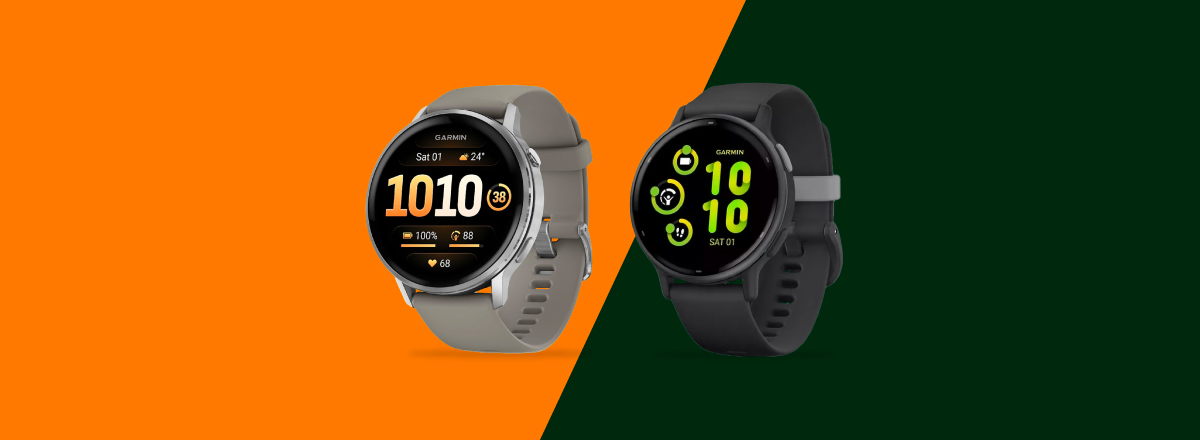
Fitness-oriented smartwatches have been a thing for a while now, and Garmin dominates the field. Its Venu series stands out with AMOLED displays, fancy finishes with premium materials, and loads of energy-tracking and fitness features.
Still, I’ve seen a fair number of users turn to more affordable alternatives within Garmin’s lineup, like Vivoactive. Even though it’s a more cost-effective option, it still tops premium models like Venu with a longer battery life and advanced health and wellness insights.
So, I’ve decided to make an all-around Garmin Venu vs Vivoactive comparison guide to help all those who are still weighing their options. With some help from the Cybernews research team, I’ve analyzed official specs, Garmin product sheets, and aggregated user feedback.
I’d give a shoutout to Garmin Venu for its more vibrant display and general appeal. Still,if you prioritize battery life, I recommend checking out Vivoactive.
Garmin Venu vs Vivoactive overview
To get you fully-prepped for the following Garmin Venu vs Vivoactive comparison guide, I’ve created an all-around comparison table:
|
|
|
| Title | Garmin Venu | Garmin Vívoactive 5 |
| Price | $410.00 $449.99 -9% | $198.00 $299.99 -34% |
| Rating | 4.8 | 4.6 |
| Key features | AMOLED display, integrated music storage, advanced health tracking, Body Battery energy monitoring | Transflective display, extended battery life, comprehensive GPS tracking, customizable data fields, durable build |
| Best for | Users focused on high-quality display and smartwatch aesthetics | Outdoors fitness enthusiasts |
| More info | Buy on Amazon Details | Buy on Amazon Details |
About Garmin Venu
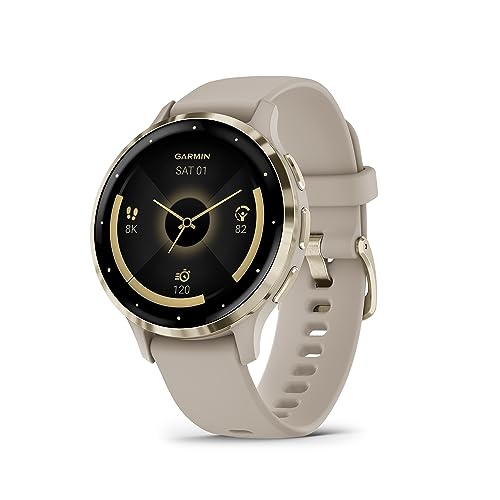
While putting together this Garmin Venu vs Vivoactive comparison guide, I was extra careful not to overcomplicate things with cross-generation references. You see, the Venu lineup was in its 4th generation coming into this guide, so I picked the most popular model: Garmin Venu 3S.
It’s a fitness-focused smartwatch with a bright AMOLED display and more of a lifestyle-oriented design. I’d even argue you can wear it as an everyday smartwatch, as no one would notice it’s a fitness-specific device.
That high-end display isn’t just for show, though. It’s packed with on-screen notifications, workout data, and fitness-tracking specs. I’d say it’s ideal for users who appreciate both performance metrics and the sheer aesthetics of it.
While putting together this Garmin Venu vs Vivoactive comparison guide, I was extra careful not to overcomplicate things with cross-generation references. You see, the Venu lineup was in its 4th generation coming into this guide, so I picked the most popular model: Garmin Venu 3S.
It’s a fitness-focused smartwatch with a bright AMOLED display and more of a lifestyle-oriented design. I’d even argue you can wear it as an everyday smartwatch, as no one would notice it’s a fitness-specific device.
That high-end display isn’t just for show, though. It’s packed with on-screen notifications, workout data, and fitness-tracking specs. I’d say it’s ideal for users who appreciate both performance metrics and the sheer aesthetics of it.
About Garmin Vivoactive
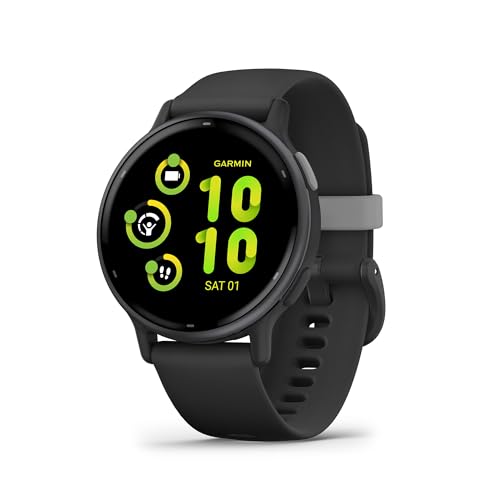
Since I’ve picked 3S as the first contender, it was only fair to compare it to Vivoactive 5. The 6th gen is already out, but I feel like this one hits the spot in terms of value for your buck. It’s been Garmin’s mid-range fitness smartwatch model for years, and for a good reason.
It comes with a sporty design of a similar AMOLED screen, only at a fraction of the cost. The thing is, this is the first Vivoactive watch to use an AMOLED screen instead of a transflective display. Since transflective screens were better suited for outdoor conditions, the gap between the two is much narrower in this generation.
The battery life is also extended from 10 to 11 days on a full charge, another benefit over its main competitor. I’d say it brings great value for those who prioritize functionality over form and aesthetics.
Garmin Venu vs Vivoactive: features compared
With my fellow Cybernews tech experts, I’ve put together this head-to-head comparison to help you make an informed choice:
|
|
|
|
| Title | Garmin Venu | Garmin Vívoactive 5 |
| Price | $410.00 $449.99 -9% | $198.00 $299.99 -34% |
| Display type | 12-inch AMOLED | AMOLED |
| Resolution | 390 x 390 | 390 x 390 |
| Battery life | 10 days on full charge | 11 days on full charge |
| Memory storage | 8 GB | 4 GB |
| Operating system | Garmin OS | Android/iOS |
| Water resistance | 5 ATM | 5 ATM |
| Weight | 39g | 36g |
| Materials | Stainless steel bezel, silicone band | Anodized aluminum bezel, silicone band |
| GPS | Built-in GPS | Built-in GPS |
| More info | Buy on Amazon Details | Buy on Amazon Details |
As you can see, both Venu 3S and Vivoactive 5 feature AMOLED displays, though 3S’s is better suited for indoor use. Vivoactive 5 is a better outdoor option, and it consumes a bit less power while used on a full charge.
While both feature advanced capabilities like Health Snapshot recordings, morning reports, and sleep coaching, Venu 3S is the only one with an integrated mic and speaker. That makes it a better option for taking phone calls and using voice assistants.
Although both smartwatches offer a wide range of features, Venu 3S wins with its integrated music storage, built-in speakers, and a mic.
Garmin Venu vs Vivoactive: design, display, and build quality
In terms of design, I’ve got to give props to Venu 3S, as it’s simply more polished. It features a stainless steel bezel with a somewhat matte finish. It’s a higher-quality material than the anodized aluminum bezel on Vivoactive 5.
Display differences have been reduced in this generation, as Vivoactive now also features a 1.2-inch AMOLED screen, which is nearly identical to that of Venu 3S. There are subtle differences, though, as the Venu model is more suitable for indoor use, while Vivoactive follows the transflective screen legacy; as such, it’s still optimized for outdoors.
I’d say that the biggest difference is that Vivoactive prioritizes function over aesthetics, while Venu 3S delivers the best of both worlds. I’ve also noticed slightly different button designs, with Venu side-buttons more refined and glossy, which gives this smartwatch a slight edge for everyday use.
With a refined design and more options in terms of colors, Garmin Venu 3S claims the throne in this category.
Garmin Venu vs Vivoactive: fitness and workout tracking
Garmin is renowned in the world of fitness tracking, so both the Venu and the Vivoactive series excel in this regard. They support running, swimming, cycling, and strength training performance tracking features, as well as custom workouts. I was also surprised to learn that both feature wrist-based heart rate tracking, morning reports, and meditation insights.
So, what’s the difference, you may ask?
I’d say it’s mainly in the animated workout guides with on-screen instructions, courtesy of the innovation that went into making Venu 3S. Other than that, users report equal satisfaction rates regarding GPS tracking precision, refresh rates, and tracking modes.
With a nearly identical lineup of fitness and workout tracking features, Vivoactive 5 wins in this category, mainly because of its affordable price.
Garmin Venu vs Vivoactive: health features
If it’s health-tracking features you’re after, I have to say neither of these devices prioritizes them. Still, they do a decent job with the features at hand. The newer models, like 3S and Vivoactive 5, have made significant progress with 24/7 heart rate monitoring, sleep tracking, and stress tracking.
Pulse oximetry, measuring blood oxygen saturation levels (SpO2), is available on both devices. However, keep in mind that it tends to consume power more quickly on Venu 3S. I was also surprised to find so many health-tracking features aimed at women, like menstrual cycle logging and pregnancy tracking.
There’s also the addition of the two-minute Health Snapshot feature in both models. It gives you a quick wellness report that can even be exported and shared with healthcare providers.
Both do a great job in terms of health-tracking features, but once again, Garmin Vivoactive 5 is the more affordable option.
Garmin Venu vs Vivoactive: display choice vs battery trade-off
While the original Garmin Venu had a 5-day battery capacity, Venu 3S has been tweaked to support up to 10 days of runtime. The same goes for Vivoactive 5; however, this one can last a day longer for a total of 11 days on full charge.
The display quality is equal between the 3S and the Vivoactive 5 models, but differences become more apparent further down the lineup. Previous Venu models already had AMOLED displays, but the Vivoactive series mainly used LCD screens with transflective displays for better outdoor visibility.
Although visibility performance is nearly equal in the latest generation, I’d still recommend older Venu watches for indoor activity and Vivoactive for outdoor exercise. Both 3S and 5-gen Vivoactive feature a similar “always-on” display functionality, though the latter maintains longer battery life with the feature enabled.
Garmin Venu models with AMOLED screens across the lineup take the crown in this category.
Garmin Venu vs Vivoactive: price, colors, and sizing available
I noticed significant price increases compared to the previous models ahead of the Garmin Vivoactive 6 release. The Venu lineup also follows this trend, as the newest 4th-gen model comes with quite a price tag. It’s advisable to follow up on these price spikes and check for available discounts, as they seem to drive price movements.
A direct Garmin Vivoactive 5 vs Venu 3 price comparison makes sense for the previous generation models, and they follow this trend:
- Garmin Venu 3S. Starts at $449.99 on the official website, discounted to around $379 on Amazon.
- Garmin Vivoactive 5. Starts at $199.99 on the official website, discounted to around $184 on Amazon.
Garmin Venu 3 also comes in 7 different colors. You can choose from rose, white, orange/black, French gray, pebble gray, sage gray, and ivory.
As for Vivoactive 5, it comes in 4 color options: orchid purple, ivory, black, and navy.
With more color options, Venu 3S beats the likes of Vivoactive 5 in this category.
Garmin Venu vs Vivoactive: smartwatch features
While Venu 3S with Garmin’s more advanced OS is a stronger option than the Android/iOS-compatible Vivoactive 5, the emphasis remains firmly on fitness tracking.
Third-party integration and the app ecosystem are very basic and limited compared to major smartwatch platforms like Apple Watch or Wear OS. Still, Venu 3S gets my vote, as it comes with phone call integration and smart assistant compatibility.
Vivoactive 5 is a pretty basic fitness-tracking device, but for what it’s worth, it does a great job in that regard. You can still get basic music playback with it, though it lacks an integrated storage like Venu 3S. Both models support Garmin Pay contactless payments.
Thanks to a more capable OS, Garmin Venu 3S tops Vivoactive 5 in this category.
What do users think about each model?
Based on feedback from Reddit and similar platforms, I gathered unbiased views on the Garmin Vivoactive 5 vs Venu 3S. I’d say that Venu 3S is ultimately a better option due to its indoor display quality and an elegant design that rivals pretty much any other smartwatch for everyday use.
On the flip side, Vivoactive 5 users are satisfied with all the fitness-tracking features youget for the price. It’s also a simpler option for exercise, and most users favor the better battery life at a more affordable price.
Thanks to stronger reviews for fitness features and battery life, Vivoactive 5 takes the lead in this category.
Final verdict: which model should you choose?
After everything we’ve covered in this guide, the choice is clear: you should go for the Garmin Venu series if you value a vibrant display and stylish smartwatch design. If you’re after better battery life with more outdoor fitness insights, opt for the Vivoactive watch.
It’s all a matter of preference. I recommend exploring the full lineups across generations for a thorough comparison. If you still can’t make up your mind, just go with the one that suits your workout preference.
Other reviews from Cybernews:
Best Fitbit for men in 2026: top picks by use case, budget, and lifestyle
Fitbit Sense 2 vs Versa 4: which Fitbit smartwatch is right for you?
Garmin venu 3 vs 3S: how do they compare?
Best budget smartwatch in 2026: what you can expect for less
FAQ
Which model has better battery life for GPS workouts?
Garmin Venu 3S offers the longest GPS battery life for workouts, with Vivoactive 5 trailing by just a couple of hours.
Is Garmin Venu better than Vivoactive for everyday smartwatch use?
Yes, the Venu series is a better choice than Vivoactive for everyday use. It features a sleeker design with a high-quality stainless-steel bezel and built-in speakers and mic.
Do Garmin Venu and Vivoactive support the same health features?
Yes, the recent generation of Venu and Vivoactive devices (3S and the 5th-generation Vivoactive) support the same range of health features.
Can I use Garmin Pay on both Venu and Vivoactive models?
Yes, you can use Garmin’s contactless payment system on both Venu and Vivoactive models.
Which watch is better for outdoor activities and hiking?
The Vivoactive model is a better fit for outdoor activities and hiking, with deeper tracking insights and longer battery life.