Hume Band 2.0 vs Oura Ring 5: which device builds true resilience in 2026?
Being behind major reports like The Mother of All Breaches and RockYou2024, our in-house cybersecurity experts and journalists provide unbiased, real-world testing and in-depth analysis.
We maintain complete transparency by openly sharing our testing methodologies with our audience.
Learn more

Two very different wearables are chasing a similar goal: helping you understand your health in more ways than just counting steps. One is worn on your wrist, while the other fits around your finger. The first focuses on tracking how your body changes over time and longevity, while the second is known for monitoring sleep, recovery, stress, and daily health.
Suffice to say, the Cybernews team and I had to investigate and compare the two wearables, and things do get interesting quickly.
While both gather a lot of health data, they don’t always agree on what matters most. This difference makes comparing Hume Band 2.0 and Oura Ring 5 more interesting than you might expect.
Because of that, we had to try both devices to see how they perform. We looked beyond what companies claim to find out how helpful their insights are, how easy they are to use, and whether either one can actually help you build better habits.
As far as fitness trackers are concerned, Hume Band 2.0 is my top choice for more than one reason. While Oura Ring 5 has a stronger established smart ring ecosystem, sleep/stress/heart health, broader official validation language , Hume’s longevity focus is stronger, with no required subscription for core data (plus optional Premium coaching).
Hume Band 2.0 vs Oura Ring 5 overview
It’s already evident that these two wearable devices have varying priorities. But, before I dive deeper into the differences, I thought I’d give you a quick overview of their key features:
| Device | Hume Band 2.0 | Oura Ring 5 |
| Rating | 4.8 | 4.6 |
| Weight | 8.6g | From 2g (depending on size) |
| Display clock | ❌ No | ❌ No |
| GPS | ❌ No | ❌ No |
| Water resistance | IP68 (up to 1m/3.2ft for up to two hours) | Up to 100m (328ft) |
| HSA/FSA eligible | ✅ Yes | ✅ Yes |
| Battery life | Up to 14 days | 6–9 days |
| Price | From $249 (with current discounts) | From $399 |
| Subscription cost | None required, Premium from $8.99/month | $5.99/month or $69.99/year (Oura Membership is required for full functionality) |
| Coupons | Hume Band up to 44% OFF | Oura Ring 10% OFF + free membership |


Our team of in-house researchers, writers and editors reviews and analyzes health tech products using a research-driven approach. We gather data from multiple sources, fact-check all information, and conduct our research based on peer-reviewed studies, expert opinions, consumer ratings, and regulatory approvals.
You can learn more about how we test health tech products here.
How we test smart devices (methodology)
Spec sheets only tell a part of the story. That’s why here, at Cybernews, we look far deeper than manufacturer claims before we recommend something. Here’s what we focus on:
- Feature accuracy and tracking performance (35%). We start by looking into the device’s sensors to gauge their tracking accuracy.
- User experience (25%). The build quality, comfort, and user-friendliness of the accompanying app are vital, and that’s something we evaluate through user feedback.
- Value for money (20%). Having the latest features doesn’t necessarily have to break the bank, so we compare each device’s price tag with what it offers.
- Battery life and charging (10%). As we’re a long way from set-it-and-forget-it devices, we check how far each wearable can push on a cycle and how fast it charges back.
- Third-party compatibility and ecosystem (10%). Last but not least, we examine how well each device integrates with third-party systems.
What is Hume Band 2.0?
Hume Band 2.0 is a wearable you fit on your wrist focused on longevity analysis and metrics with health tracking in mind. According to Hume Health, it continuously tracks core biometrics such as heart rate, heart rate variability (HRV), blood oxygen levels, skin temperature, sleep stages, activity, strain, and recovery.Unlike its predecessor, Hume Band 2.0 also adds blood pressure trend tracking, which monitors your pulse and looks for changes over time.
Where it aims to shine is in how it interprets that data. Hume Health builds your wearable experience around features such as: Metabolic Capacity, Metabolic Momentum, Health Score, and Chronic Illness Detection. Essentially, it markets the device as a tool that understands how your daily habits may impact your long-term health.
Hume Health adds that the Hume Band doesn’t require a subscription for use or access to core metrics and raw data. However, if you want more (like AI coaching and deeper analysis), there’s Hume Premium. Also, the optional Hume Pod adds body-composition tracking to this system.
What is Oura Ring 5?
In the last few years, Oura has become a household name in the health-focused wearable space. The Finnish company’s latest gadget, Oura Ring 5, is a sleek, minimalist smart ring made from lightweight titanium. The price starts from $399 for their basic models, and goes up to $499 for more premium finishes.
On the other hand, Hume Band focuses deeply on longevity language, but Oura Ring 5 takes a more familiar smart-ring approach. Oura markets Ring 5 around heart health, sleep, stress, activity, women’s health, and metabolic health. Features include Daytime Stress, Cardiovascular Age, Cardio Capacity, and Oura Advisor.
Even though it is sold from $399, there’s also an Oura Membership costing $5.99/month or $69.99/year in the US. Remember, membership unlocks full functionality.
Hume Band 2.0 vs Oura Ring 5: design and comfort
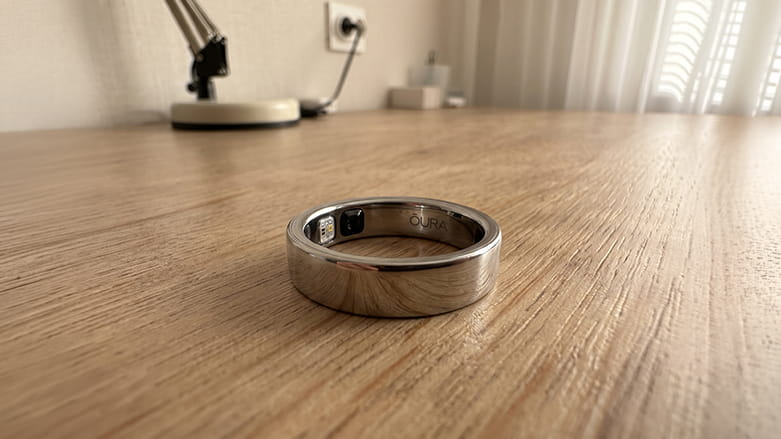
These two health trackers’ designs are very different. For one, Oura Ring 5 is built more like jewelry, while Hume Band 2.0 is a sportier, wrist-worn strap with a sensor.
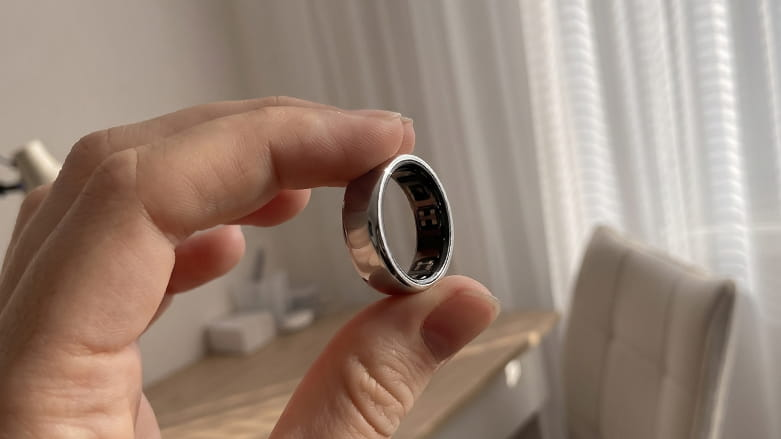
Let’s start with Oura Ring 5. I quickly noticed that Oura Ring 5 feels much slimmer than the previous version. Oura made the ring 40% smaller, with a width of 6.09mm and a thickness of 2.28mm.
I could definitely feel the difference. It doesn’t feel as bulky as Oura Ring 4 and is less noticeable when I am typing, sleeping, or doing daily chores. The six finishes, including the new Deep Rose and updated Gold, also help you forget you’re even wearing a health tracker.
There is only one catch. Oura decided to drop some sizes, so Ring 5 is limited to 6–13, whereas Ring 4 comes in 4–15. I think that’s something to keep in mind, and I would recommend getting a sizing kit before you order the actual ring.
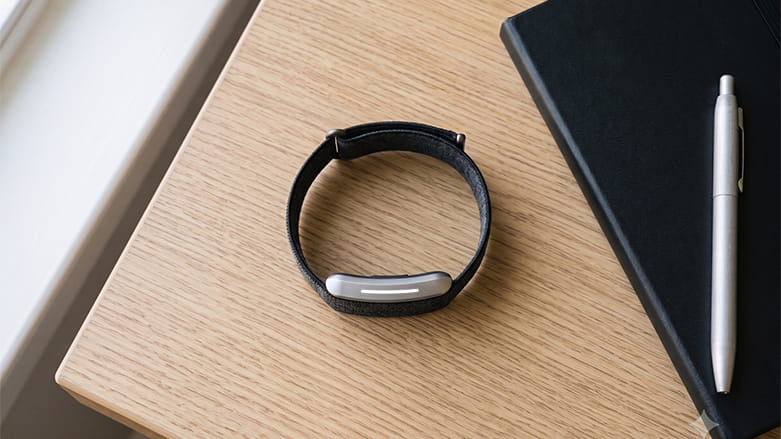
Hume Band 2.0, on the other hand, is as simple as it gets. It now features the UltraLux strap, making it more comfortable than the previous version. The band feels softer and is nicer to wear, even if you have it on all day and night. If you’ve owned a fitness tracker or smartwatch, this is right up your street.

Hume Band 2.0 vs Oura Ring 5: sensor suite and data accuracy
Both Hume Band 2.0 and Oura Ring 5 offer an array of sensors that track your core biometric signals that people expect from premium wearables, but each makes its case in a different way.
For example, Oura Ring 5 comes with a new sensor system that has 12 signal pathways and precise sensor domes. It uses red and infrared LEDs to measure blood oxygen, and other sensors track heart rate, HRV, temperature, movement, and activity.
Oura says its pulse signal can be up to 100 times stronger than wrist-based wearables, which is worth noting when comparing it to Hume Band 2.0. But personally, both devices were equally helpful for tracking trends.
Oura Ring 5 also has a very clear women’s health advantage here, adding features such as cycle insights, period prediction, fertile window tracking, and pregnancy insights. For women who want these insights alongside their usual health data, I think Oura is ahead in this area.
Hume Band also provides many of the same metrics, including heart rate, HRV, blood oxygen, skin temperature, sleep stages, activity, strain, and recovery. On the sensor side, it uses five LEDs and four photodiodes.
However, it offers something that Oura doesn’t. And that is blood pressure trend tracking. So, instead of a standard blood pressure reading, Hume uses pulse data to show possible changes over time.
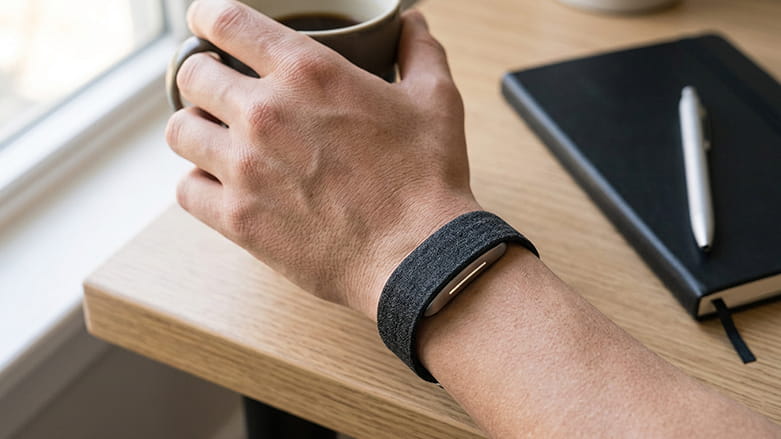
Moreover, Hume Band takes readings and turns them into trends, including: Metabolic Capacity, Metabolic Momentum, and Chronic Illness Detection. Chronic Illness Detection, for example, includes Sleep Apnea detection (SpO2 sensing), and the AI-powered early detection system continuously scans for hidden risks, according to Hume Health.
In addition to Metabolic Capacity and Metabolic Momentum, Hume Band 2.0 now tracks Biological Age and Pace of Aging. I found these useful because they give you a bigger picture of how your habits may be affecting your overall health.
Hume Band 2.0 vs Oura Ring 5: battery and charging
Battery life and charging are where you can easily separate these two devices. Oura says that Ring 5 can last six to nine days, depending on settings, use, and size, adding that it should charge in 20 to 80 minutes (depending on battery level).
I found it fairly true, with my ring usually lasting around a week before I needed to reach for a charger. And since we are talking about charging, Oura introduced an optional portable charging case. I think it’s a pretty handy addition if you’re traveling a lot.
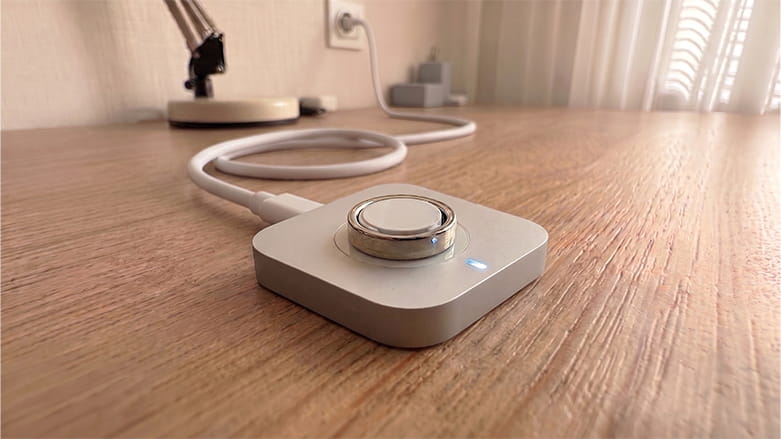
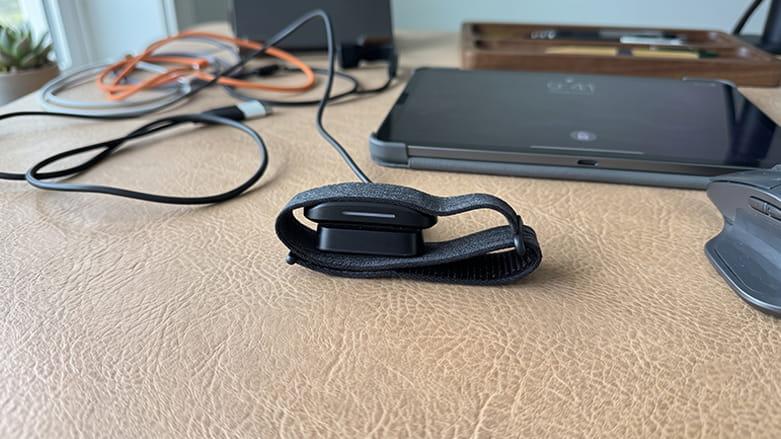
Hume Band is somewhat stronger in the battery-life department, claimed to last up to 14 days. It reaches a full charge in about 30 minutes, according to Hume Health.
Being honest, this battery upgrade impressed us. The previous Hume Band lasted only around four to five days, so getting up to 14 days is a pretty noticeable step up.
Hume Band 2.0 vs Oura Ring 5: app ecosystem and AI insights
While both wearables offer robust accompanying apps, there are certain differences between the two. Oura’s app has more structure to it overall. You’ll see Today, Vitals, and My Health on the Oura app.
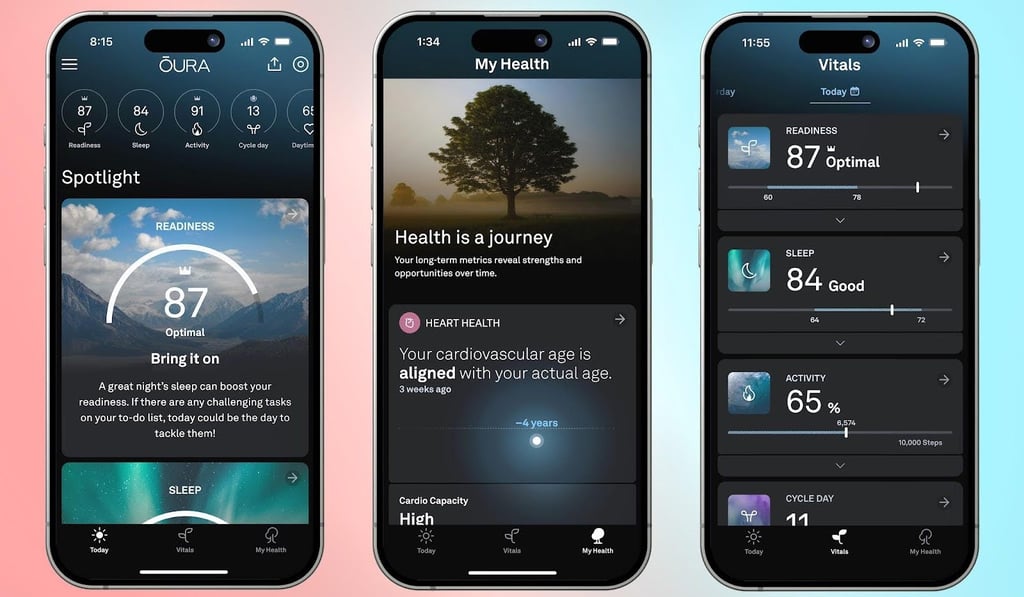
It’s simple to switch between core metrics, daily updates, and some long-term trend views. The app not only does well with sleep, readiness insights, and activity, but also goes deeper into areas such as stress, heart health, women’s health, and metabolic health.
Moreover, the Oura app has expanded.
It added three new features. The first one is Health Radar, which checks your health data for potential changes and points out anything unusual. Then you’ll find GLP-1 Insights. It may help users to track health changes while using GLP-1 medications. And finally, Oura now offers AI medical guidance through Counsel Health.
As for Hume Health, the app is visually simpler, and there’s a significant focus on long-term health. You’ll see Metabolic Capacity, Metabolic Momentum, and Health Score, plus the app’s My Day guidance (for recommendations and daily targets).
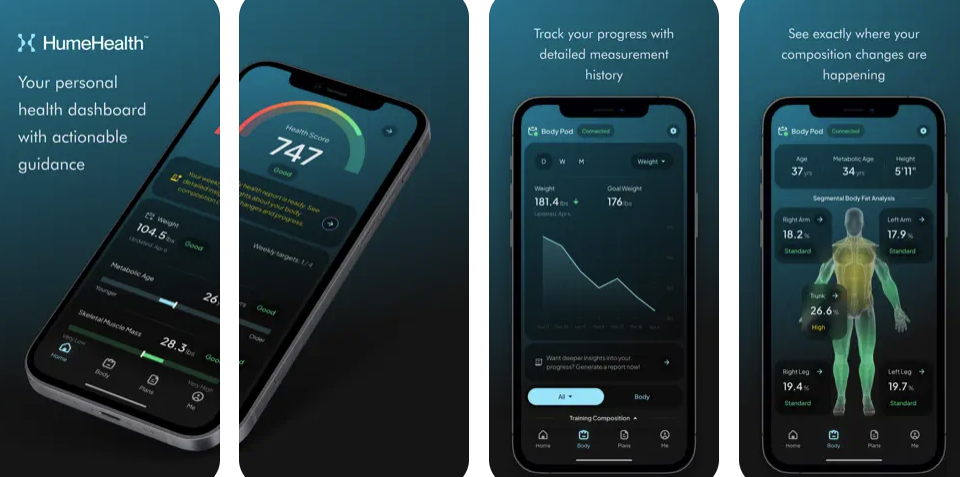
Depending on your weekly score, which is essentially an easy-to-understand longevity number, the app will adjust its AI-powered insights. You’ll receive personalized recommendations on how to improve your sleep and rest quality and achieve optimal body recovery. If you get Premium, you’ll have deeper reports and analysis, plus AI guidance.
Additionally, Hume Band 2.0 will soon add nutrition tracking, though it’s not available yet. If this feature works well, it may help link your eating habits to your overall health trends.
Third-party app compatibility
I also looked at how easy it was to move my data out of the Hume Health and Oura apps.
Oura Ring 5 connects with Apple Health and Google Health Connect, so you can keep your sleep, activity, and other health data in one place. It also works with services like Strava, which is useful if you already track your runs or bike rides there.
There is a slightly different story with Hume Band 2.0. Even though it links to popular health platforms, its options are not as wide.
Because of that, Oura comes out ahead. If you use several health and fitness apps, having more ways to share your data can make things easier.
Hume Band 2.0 vs Oura Ring 5: price, plans, and value
Neither of these devices is cheap. Costs are also structured differently. Hume Band, with an additional discount, now costs $249 without a mandatory subscription (core metrics plus raw data included). Hume Health’s Premium starts at $8.99/month if you need AI insights, personalized coaching, and deeper analysis. And with coupon code CYBER20, you can now shave 45% off Hume Band’s price.
On the other hand, Oura Ring 5 starts at $399 and can go up to $499, depending on the color. Unlike with Hume, most features are locked behind a $5.99/month or $69.99/year membership.
Use-case scenarios
Before I wrap up, I wanted to include a few use cases that can help you decide between the two wearables:
- The everyday athlete. Daily fitness enthusiasts, gym goers, and athletes will appreciate Oura Ring 5’s reliable sleep, HR/HRV, recovery, and readiness tracking. The app is as practical as it gets, making the smart ring the better choice in these situations.
- The biohacker. Users who are all about pushing the limits of personal optimization will most likely prefer Hume Band 2.0. It’s appealing because of how Hume Health provides the data through Metabolic Capacity, Metabolic Momentum, and long-term health trends. It also looks the part, with its futuristic design.
- The longevity seeker. People who care about long-term health could also benefit more from picking up Hume Band 2.0 over Oura Ring 5. Hume Band explicitly processes metabolic and aging metrics, with AI-powered long-term health insights.
Final verdict and recommendation
Ultimately, both Hume Band 2.0 and Oura Ring 5 are excellent wearables with plenty to offer, but they clearly have different users in mind. If you’re wondering whether Hume Band 2.0 or Oura Ring 5 is better, or Hume Band vs Oura accuracy, the answer is: it depends on your use case.
Oura Ring 5’s insights into sleep, recovery, stress, heart-health, and even women’s health features are packaged into a well-rounded app ecosystem. It’s aimed at users looking for a jewelry-like wearable that’s discreet.
Hume Band 2.0 is for those who like the longevity-first approach. It provides core metrics without mandating a subscription. Features like Metabolic Capacity and Metabolic Momentum trends make it the smart move for long-term health tracking.
Other reviews you might be interested in:
Hume Band vs Whoop: which device builds true resilience?
WHOOP vs Oura: which wearable tracks your health better?
Oura Ring vs Garmin: which wearable tracks your health better?
Oura Ring vs Apple Watch: which health & fitness tracker is right for you?
FAQ
Do I need a subscription to use the Hume Band 2.0 or Oura Ring 5?
No, you don’t need a subscription to use either. However, the distinction there is that Hume Band 2.0 offers all core functionality and raw data access without a paid subscription, while the Oura Ring 5 limits the daily scores and insights you can see unless you purchase an Oura Membership.
Can Hume Band 2.0 or Oura Ring 5 detect early signs of illness?
Oura Ring 5 has a Symptom Radar feature, which attempts to detect sickness through temperature, respiratory rate, HR/HRV, and sleep tracking. Hume Band 2.0 claims it may be able to detect early signs of chronic illness through sleep tracking and other biomarkers. As opposed to Oura Ring 5, Hume Band 2.0 explicitly markets a Chronic Illness Detection capability that may be able to indicate early signs of illness. Neither of these devices are professional medical devices. Always speak to a doctor if you have a chronic illness.
Does Hume Band 2.0 track sleep?
Yes, Hume Band 2.0 does offer detailed sleep tracking. It measures your sleep duration and quality and uses this data to evaluate both immediate restfulness and long-term body recovery.
Is the Hume Band 2.0 waterproof?
Hume Band 2.0 is IP68-rated, which translates to being water-resistant up to 1m or 3.2ft. It can be submerged for up to two hours at this depth, according to Hume Health.
Does Oura Ring 5 track workouts?
Yes, Oura Ring 5 can track workouts. The smart ring can automatically detect what you’re doing via Automatic Activity Detection to recognize over 40 activity types. It measures calorie burn, heart rate zones, and activity strain. However, workout tracking is a secondary feature to sleep and recovery features.