Oura Ring vs Apple Watch: which health & fitness tracker is right for you?
Being behind major reports like The Mother of All Breaches and RockYou2024, our in-house cybersecurity experts and journalists provide unbiased, real-world testing and in-depth analysis.
We maintain complete transparency by openly sharing our testing methodologies with our audience.
Learn more

The wearable health tech market is projected to hit $118 billion by 2033, and for good reason, as these devices have evolved beyond step-counting tools to advanced health monitors capable of tracking everything from sleep quality to cardiovascular health.
At the forefront of this charge are two standout devices: the Oura Ring, a sleek, sensor-packed ring offering elite health, sleep, and fitness tracking with a fashionable touch, and the Apple Watch, a versatile smartwatch and mini-phone that blends peak tracking with Apple’s trademark smart connectivity.
Both have gained significant popularity in recent years, offering a unique set of benefits. But if you’re looking to get into the wearables game, how do you know which is best for you? Well, the Cybernews team and I set out to compare both devices, spending days analyzing features, specs, and browsing through dozens of user reviews. Let’s explore both devices in detail.
Oura Ring vs Apple Watch overview
In this Apple Watch vs Oura Ring comparison guide, I’ll review in detail various key aspects of the two devices. But before we dive into that, let’s explore this table that compares their main features side by side, so you know what you’re getting into.
| Key features | Oura Ring | Apple Watch |
| Rating | 4.8 | 4.6 |
| Price | $299-$449 (depending on the model) | $399 |
| Wearable Style | Ring | Watch |
| Battery Life | Up to 7 days (5-6 days real-world) | Up to 18 hours |
| Connectivity | Android and iOS | iOS only |
| Water-resistance | Titanium-based and submersible up to 100m | Submersible up to 50 m |
| Metrics tracked | Readiness score, cardiovascular age, activity rating, heart rate, sleep score, average HRV, cardio capacity, and menstrual cycle monitoring. | Step counting, walking and running pace, cardio fitness, standing time, blood oxygen, training load, distance, oxygen saturation, body temperature, fall detection, Activity, calories burned, heart rate variability, electrocardiogram (ECG) |
| Money back guarantee | 30 days | 14 days |
| Colors | Black, Silver, Brushed Silver, Stealth, Gold, Rose Gold | - |
| Memberships | Oura app, $5.99/month | Apple Health, free |


Our team of in-house researchers, writers and editors reviews and analyzes health tech products using a research-driven approach. We gather data from multiple sources, fact-check all information, and conduct our research based on peer-reviewed studies, expert opinions, consumer ratings, and regulatory approvals.
You can learn more about how we test health tech products here.
How we test health devices (methodology)
When reviewing health devices, my tech team and I prefer the analytical approach, as we get to focus on real user experiences, hard data, and proven analysis to bring you the best and most unbiased information about the products. It’s the same process we applied during this Oura vs Apple Watch guide, prioritizing factors that matter most to real users. Here’s how we weighed our testing:
- Accuracy of tracking (30%). While it’s almost impossible to get 100% accuracy on any wearable health tech, metrics like heart rate, sleep stages, step counting, and other activities must be consistently accurate over time to guide users.
- Depth of health insights (25%). The quality of personalized recommendations and visualization is important, as not everyone is good at reading the raw data.
- Comfort and design (15%). Since users spend most of their time wearing these devices, they must be comfortable.
- Battery life and charging speed (10%). Better battery life and faster charging speed mean better user experience.
- App usability and ecosystem (10%). Better UI implies smoother experience, including better data monitoring.
- Real-world user reviews (10%). It’s important to know what users think and get insights into how certain features truly work.
Oura Ring vs Apple Watch: key similarities
At first glance, the Oura Ring and Apple Watch may appear worlds apart. One is a simple ring, and the other is a smartwatch loaded with modern features. But if you ignore the visual differences, you’ll find that they both share lots of similarities, especially when it comes to health tracking:
- Health and Activity Tracking. Both monitor heart rate, steps, calories, and basic workouts.
- Sleep Insights. They also analyze different stages and provide nightly reports, though Oura’s are more detailed.
- Notifications. Each delivers smartphone alerts, but Apple’s are more robust, and you can even receive notifications directly on the watch.
- Compatibility. Both are compatible with smartphones. While Oura can work on both Android and iOS, the Apple Watch is only compatible with the latter.
- Design. Both devices are sleek and modern. Oura is subtle jewelry and can go with almost any style, while Apple Watch lets you change the straps to fit whichever vibe you’re looking to match.
Oura Ring vs Apple Watch: fitness tracking
When it comes to fitness tracking, these two wearables take generally different approaches. The Apple Watch is like an overly active workout buddy, with built-in GPS, automatic workout detection, and over 80 activity modes, including even swimming and surfing.
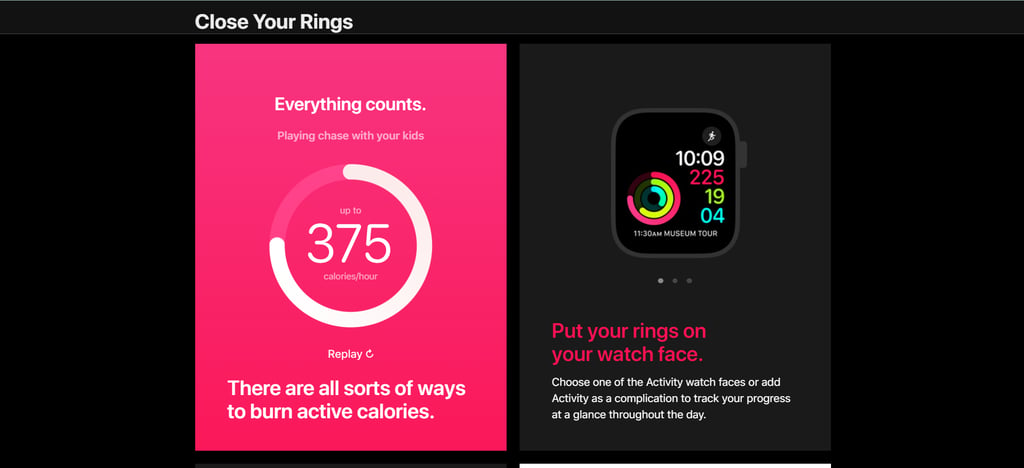
It also delivers real-time stats on your wrist that you can check easily, like heart rate zones, calorie burn, pace, and an estimate of how much weight you’re lifting in the gym. Then you have Activity Rings that turn fitness into a fun game.
The Oura Ring operates more silently. It focuses on your body’s overall readiness rather than the specifics of your workout. Yes, you get the basics like steps, calories, and even basic activity detection(walking, running, cycling, and over 30 more), but no GPS routes or rep counts. Certain users have even complained that lifting weights with the Oura Ring isn’t really comfortable.

The ring’s strength lies in recovery insights, as it can tell you when the best time for intense workouts is or if it's better to rest based on HRV, sleep data, and temperature. The Apple Watch is the clear winner, thanks to its detailed workout metrics and even coaching, but the Oura Ring shines for recovery-focused fitness users. It’s not a bad idea to pair both to achieve your different goals.

Oura Ring vs Apple Watch: health and wellness metrics
Both the Apple Watch and Oura Ring are really elite at tracking health and wellness metrics. Here’s how they compare where it matters most:
-
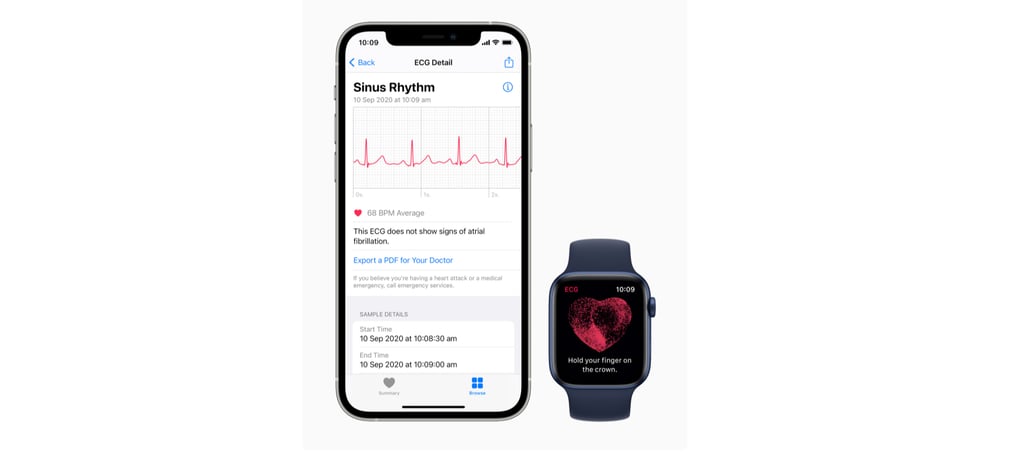
Heart Rate Monitoring. The Apple Watch sets a high standard for cardiac monitoring with its FDA-cleared ECG app that’s designed to record heart rhythms and detect atrial fibrillation (AFib). Research has even shown that its optical heart sensor maintains an accuracy of 95% in general. Users also receive instant notifications for abnormal rhythms and can share PDF reports with doctors. Oura rings focus more on long term heart rate trends compared to instant alerts. It features PPG sensors that collect frequent night time readings and can help identify gradual health changes over time.
- HRV and Stress Tracking. Oura has a Readiness Score, which analyzes nightly HRV trends against your personal baseline and recommends when to push workouts or just rest and recover. Apple Watch counters with real-time HRV during mindfulness exercises, but it lacks Oura’s predictive analytics.
- Blood oxygen levels (Apple) vs respiratory rate (Oura). Apple Watch’s blood oxygen sensor (SpO2) can be useful for detecting sleep apnea, especially when paired with third-party apps. Meanwhile, Oura monitors breaths per minute throughout sleep, making it easier to detect early signs of respiratory illness.
- Menstrual and cycle tracking. Both devices track menstrual cycles via basal body temperature, with Oura capable of integrating with top apps like the FDA-approved Natural Cycles for contraception. The Apple Watch relies more on the data you enter, but it also offers the added advantage of seamless data sharing with apps like Clue and Flo, which Oura can't match. To connect your Oura to Flo, you'll need Apple Health as an intermediary; however, not all data will be synced automatically.
The Apple Watch wins for emergency health features like ECG and fall detection, but the Oura Ring remains one of the best options for better long-term wellness tracking.
Oura Ring vs Apple Watch: sleep tracking
Sleep tracking is one of Oura Ring’s standout features. Its infrared PPPG sensors can detect micro-awakenings and precise transitions between REM, deep, and light sleep. It doesn't just track, but also provides a daily Sleep Score and can even detect small temperature changes that may hint at a potential illness.
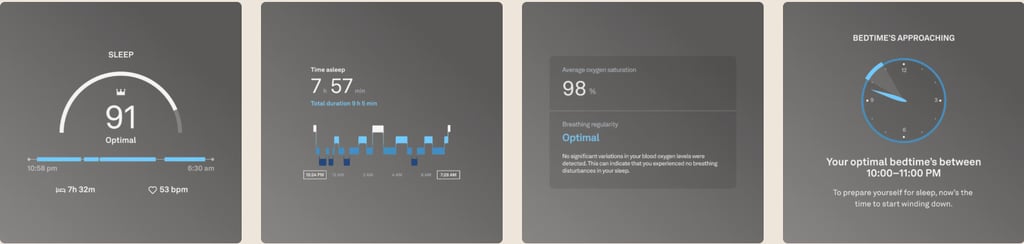
The Apple Watch has stepped up its sleep game recently, but it's playing catch-up in some areas. While it now tracks sleep stages and has even introduced a Breathing Disturbances metric, which uses the accelerometer to detect interruptions to normal respiratory patterns during sleep, it’s not as detailed as the Oura Ring sleep tracker.
Plus, let’s face it, which is more comfortable to wear to sleep, a ring or a watch? Many users, including me, will agree that the ring is less intrusive. That said, overall, I give the sleep tracking crown to Oura due to its range of features and overall comfort.
Oura Ring vs Apple Watch: battery life
As you’d expect, the Apple Watch with a screen has less battery life than the Oura Ring. It also has several other apps unrelated to fitness or health in general, and they all contribute to the battery's lifespan.
Your Oura Ring can go up to 7 days without charge, though most users have reported between 5 and 6 days, which is still very impressive. The Apple Watch provides up to 18 hours of battery life after an overnight charge. However, over time, this duration decreases, and you may need to charge it daily, which isn't ideal for continuous activity tracking.
Oura Ring wins in the battery category, but you can extend your Apple Watch’s battery life by using Theater Mode or Low Power Mode.
Oura Ring vs Apple Watch: company policies
After purchasing the Oura Ring, you’ll need to sign up for a membership on the app to enjoy the device’s full features. It costs $5.99/month or £69.99/year, but you can still enjoy basic tracking without it. Meanwhile, Apple Health features are included with watchOS, and Apple's ecosystem integrates seamlessly with the Health app for improved data visualization across all your devices.
As for return policies, you have 14 days from the purchase to return your Apple Watch and 30 days for the Oura Ring, as long as it's fully functional and undamaged. Both devices also come with one-year warranties, with Apple offering an optional AppleCare+ plan for an additional $79 for extra protection.
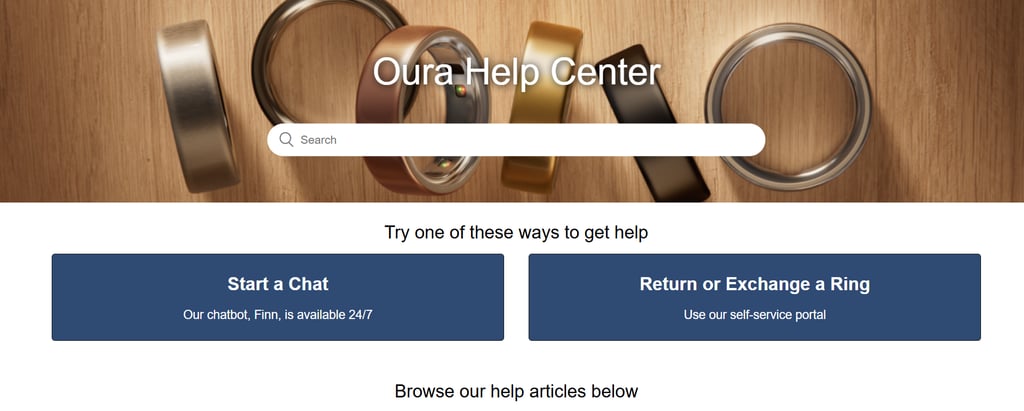
Many users also report that Apple’s support is way more responsive, especially with the in-store Genius Bar access for hardware issues. Oura’s support relies on email, social media, and Finn, the chatbot, though I couldn’t get the bot to load during this review. The Oura support team is also pretty active on Reddit and frequently replies to posts about serious issues.
Overall, Apple’s no-subscription model and better customer support give it an edge over Oura in this category, as many people may not be comfortable adding yet another subscription to their lives.
Oura Ring vs Apple Watch: customer reviews and testimonials
To get a better idea of what users think about these devices, I spent time scouring forums like Reddit and expert review sites. I did notice some patterns, with the Oura Ring consistently earning praise for its sleep tracking. Many prefer the ring’s temperature-based cycle predictions, especially for hormonal health monitoring.
The week-long battery life and simple design also received frequent shoutouts, as no one wants to miss charging their device daily or have to sleep with a bulky watch. There was just one common complaint – Oura’s $5.99/month paywall for premium features.
However, the Apple Watch clearly dominates fitness tracking in user reviews. There were lots of praises for its real-time workout metrics, modes, and GPS accuracy. Some even stated that the Activity Rings were great motivators, particularly for gym-goers and runners.
Final verdict: Oura Ring vs Apple Watch
Based on our in-depth research and testing here at Cybernews, I recommend the Oura Ring for individuals focused on sleep, recovery, and minimal distractions. In contrast, the Apple Watch is better suited for active, data-driven users who seek an all-in-one smartwatch.
You should choose Apple Watch if:
- You need comprehensive fitness tracking with GPS and workout modes
- You want smartwatch features like calls, texts, and apps
- You prefer real-time health alerts, with features like ECG and fall detection
- You’re already invested in the Apple ecosystem, as it makes syncing easier
You should choose Oura Ring if:
- Sleep tracking and recovery are your top goals
- You want discreet, comfortable 24/7 wear
- You prefer a longer battery life of up to 7 days
Other reviews you might be interested in:
Hume Band vs Oura: which device builds true resilience?
WHOOP vs Oura: which wearable tracks your health better?
Acer FreeSense Ring vs Oura Ring: which smart ring tracks better?
Oura Ring vs Garmin: which wearable tracks your health better?
FAQ
Can you use an Oura Ring and Apple Watch together?
Yes, many users pair them together, with Apple Watch for workouts/ notifications, while Oura handles sleep tracking and recovery. The data also syncs to Apple Health, but you will need to pay Oura’s monthly subscription of $5.99.
Is the Oura Ring more accurate for sleep than the Apple Watch?
Yes, studies have shown that the Oura Ring is 5% more accurate than Apple Watch in four-stage sleep classification and also has the highest sensitivity for wake detection and deep sleep detection compared to Apple Watch.
Do you need a subscription for Oura Ring and Apple Watch?
Yes, Oura requires a $5.99/month subscription for advanced insights, but Apple Watch’s core health features are free. If you want more workouts, you might need Fitness+, which also costs a monthly subscription fee.
Which is more comfortable to wear all day - Oura Ring or Apple Watch?
Most users find Oura to be comfortable, as its weight range of 3.3 to 5.2g won't be a significant burden on your finger. Most Apple watches weigh over 34g, which can feel bulky during sleep or workouts.