WHOOP vs Oura: which wearable tracks your health better?
Being behind major reports like The Mother of All Breaches and RockYou2024, our in-house cybersecurity experts and journalists provide unbiased, real-world testing and in-depth analysis.
We maintain complete transparency by openly sharing our testing methodologies with our audience.
Learn more

The booming wearable health tracker industry seems to churn out new tools almost daily. Yet, gadgets from well-established brands like WHOOP or Oura continue to rank among the most popular and widely used ones. For that reason, my team at Cybernews and I have taken it upon ourselves to see what the fuss is all about.
We’ve spent days comparing WHOOP and Oura in terms of design, features, usage, and pricing, as well as reading user and reviewer feedback. You’ll find everything that we’ve learned in the following article. As a result, it should help you choose the best fit for your needs and lifestyle.
Our Cybernews team favors the Oura Ring for its well-rounded wellness tracking, minimalist design, strong battery life, and affordability. However, WHOOP shines for athletes who need in-depth training insights.
Oura Ring vs WHOOP overview
Before we delve further into our Oura vs WHOOP comparison, let’s map out their key features. We’ve laid them out in the table below, and unpacked the pros and cons right after.
| Feature | Oura | WHOOP |
| Rating | 4.8 | 4.6 |
| Weight | ~3.3-5.2g (varies with ring size) | ~26.5g |
| GPS | ❌ No | ❌ No |
| Water resistance | Up to 100 meters | Up to 10 meters |
| HSA/FSA compatibility | ✅ Yes | ✅ Yes |
| Battery life | Up to 8 days (quick charging in 20 minutes) | 5 days (charges in 110 to 152 minutes) |
| Third-party integration | Hundreds of platforms, including Apple Health, Google Fit, Strava, and Natural Cycles) | Apple Health, Training Peaks, Health Connect, Strava, Cronometer, Withings, Hyperice, and Pliability |
| Price | $349-$499 (depending on the color) | Included in the subscription plans |
| Subscription cost | $5.99/month or $69.99/year | $199-$359/year |


Our team of in-house researchers, writers and editors reviews and analyzes health tech products using a research-driven approach. We gather data from multiple sources, fact-check all information, and conduct our research based on peer-reviewed studies, expert opinions, consumer ratings, and regulatory approvals.
You can learn more about how we test health tech products here.
How we test smart devices
My colleagues and I stuck to the Cybernews’ standard health methodology when comparing the Oura Ring vs WHOOP bracelet. You can learn more about the criteria we rely on below.
- Feature accuracy and performance (35%). Our priority was to check what capabilities these gadgets offered and how they measured up in practice. We looked at WHOOP and Oura’s sleep, heart rate, blood oxygen, steps, and workout tracking through the lens of real users and reviewers.
- User experience (25%). We evaluated the design and comfort of the hardware and interface, as well as the navigation and ease of use of the accompanying apps. This helped us understand how user-friendly and practical each wearable is for daily use.
- Battery life and charging (10%). Our team dug into users’ testimonies about battery life and charging setup. These insights revealed how well the devices aligned with the demands of busy lifestyles
- Third-party compatibility and ecosystem (10%). To see how convenient WHOOP’s and Oura’s trackers were, we checked how easily each integrated with other tools and platforms. We also considered how they worked with the solutions each brand offered within their own ecosystems.
- Value for money (20%). Lastly, my colleagues and I considered whether the functionality and features WHOOP vs Oura Ring came with justified their price.
Oura Ring vs WHOOP: cost and value
At face value, WHOOP and Oura run neck and neck in the price-to-value game. Both have steep prices and require a paid membership to work. But once you dig into the details, you realize they are far from the same.
Oura comes with a one-time hardware cost between $349 and $499, followed by a fairly modest $69.99 yearly subscription that unlocks all its features and app. There are no paywalls or gotchas – you get what you pay for.
WHOOP 5.0, on the other hand, skips the upfront hardware fee and offers a lifetime guarantee but hits hard with its $199.99 annual membership. And that’s for the lowest membership tier, which excludes many of its most notable features, such as stress and health tracking, on-demand AFib detection, and blood pressure insights.
WHOOP’s band also charges upgrade fees to all users who switch to a new membership tier or the new generation of this tracking solution. Depending on the upgrade, these can come up to over $300, while offering few extra features and capabilities, according to long-time users.
WHOOP vs Oura Ring: design and comfort
WHOOP and Oura’s most prominent difference is obviously their design, simply because one is a band and the other a ring.
Oura Ring looks like a regular accessory, although slightly chunkier than a regular one. It comes in 12 sizes and several different colors and finishes, so you can easily blend it with the rest of your jewelry and wear it daily.

At around 3 grams, Oura Gen 4 is also quite light for a tracking device, but crafted from durable titanium and water-resistant to 100 meters. Based on what I’ve gathered, it holds up through everything from gym sessions to showers. That said, if you’re not a ring person or work with your hands a lot, it might feel intrusive.
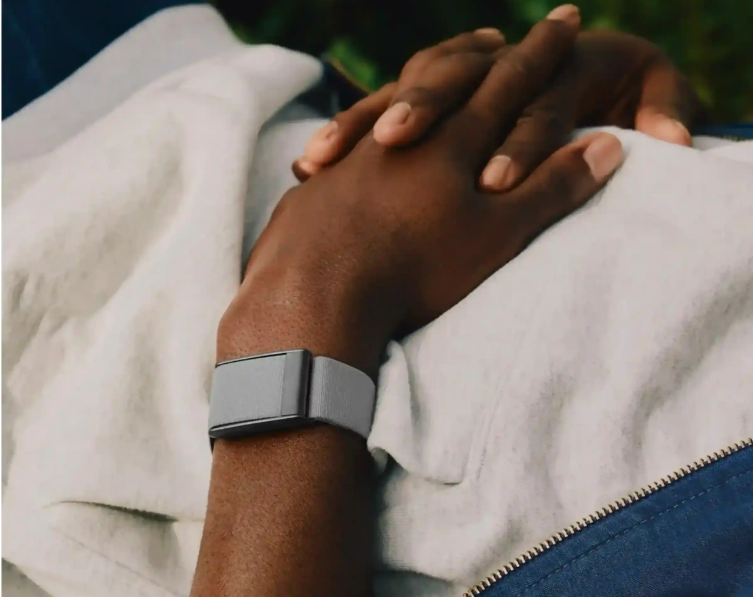
WHOOP doesn’t blend in as well. It’s a screenless device weighing over 20 grams that attaches to an interchangeable band. However, it’s highly adjustable and offers more ways to wear. You can easily fit it around your wrist or biceps, or even tuck it into your activewear. As long as it fits snugly, it does its job well, which is why many athletes swear by it.
Oura Ring vs WHOOP: sleep tracking
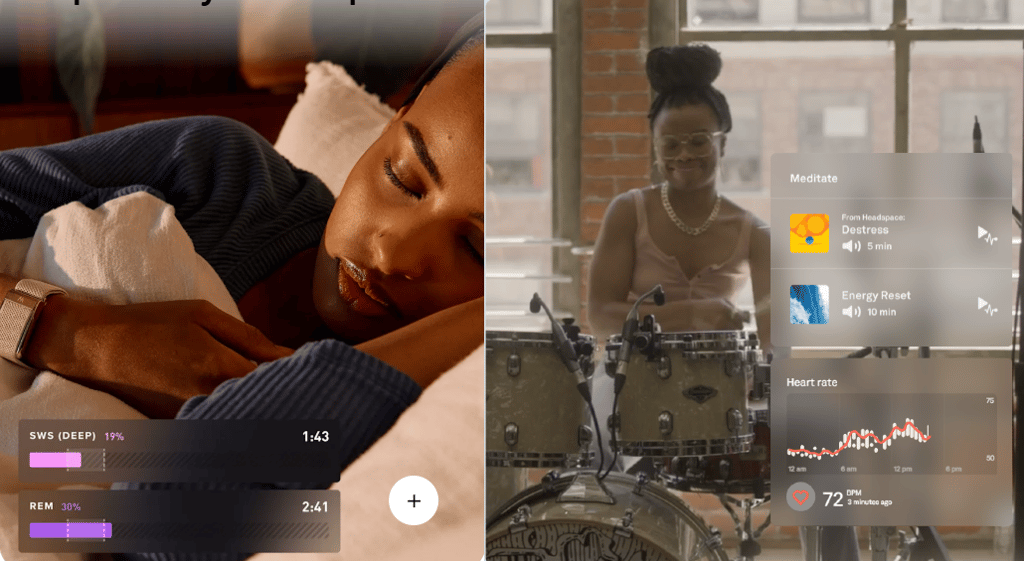
Sleep tracking is another area where the WHOOP vs Oura comparison gets tricky. Both let you set sleep goals through their apps and measure sleep efficiency and hours you’ve spent sleeping. They also offer resfulness data and give an overall sleep score.
WHOOP gets praise for adapting to your body’s natural rhythm. It picks up on and adjusts to unique patterns, making it a better fit for users with irregular schedules. Oura, by contrast, sticks to a more fixed scoring method, which might feel a bit rigid if you’re a night owl or don’t go to bed at the same time every night.
But where Oura really stands out, in my team’s opinion, is attention to detail. It breaks down sleep stages, distinguishes naps from your main rest cycle, and reports on how long it takes you to fall asleep. It’s also less polarizing comfort-wise because of how small and unnoticeable it is, compared to heavier and chunkier WHOOP, which can get in the way, no matter how you wear it.
Oura Ring vs WHOOP: health and activity tracking
Whether you go for WHOOP or Oura Ring, you’re getting advanced tracking. But the type of data you’ll see might be slightly different.
WHOOP is what I’d call a fitness tracker through and through. It auto-detects dozens of activities, covering everything from weight training and cardio to bartending or carrying your kid. The app syncs the data in real time, offering insights into your heart rate, strain, and time spent exercising, so you can monitor your workouts as they happen.
Oura takes a more holistic approach to tracking your daily movement. It pulls in data from about 20 different body signals, from heart rate and blood oxygen to temperature and motion. It turns that into Readiness and Activity scores, to offer you a clearer view of your baseline and output.
On top of that, the Oura integrates with fitness, nutrition, mental health, and menstrual health platforms for a more comprehensive understanding of your daily activity and well-being. It’s more about how your body’s functioning overall, not just how hard you’re working it.
Oura Ring vs WHOOP: mobile app
When it comes to apps, Oura Ring vs WHOOP band matchup is pretty tight. Both work with Android and iOS, and users seem to have no trouble downloading or installing them.
From what I’ve seen, neither app gets complaints about layout or performance. That said, it’s clear WHOOP leans more into no-nonsense fitness data, which is ideal if you're all about numbers. Oura takes the opposite route, offering polished graphs and summaries that are easier to digest for an average user.

Oura also goes further with its long-term insights and integrations. It generates quarterly and yearly reports, which may take up a lot of space on your device but can be great for tracking trends or staying motivated. It also works with all the most popular tracker apps, including Apple Health, Health Connect, Flo, Headspace, Technogym, and Stelo.
Oura Ring vs WHOOP: battery life
When it comes to the WHOOP band vs Oura Ring battery life, the numbers look different on paper. Oura promises to last up to 8 days between charges, while WHOOP claims 5. But in real-world use, they’re surprisingly similar. Most users report getting around 4 to 5 days from both, which actually puts WHOOP closer to its advertised mark.
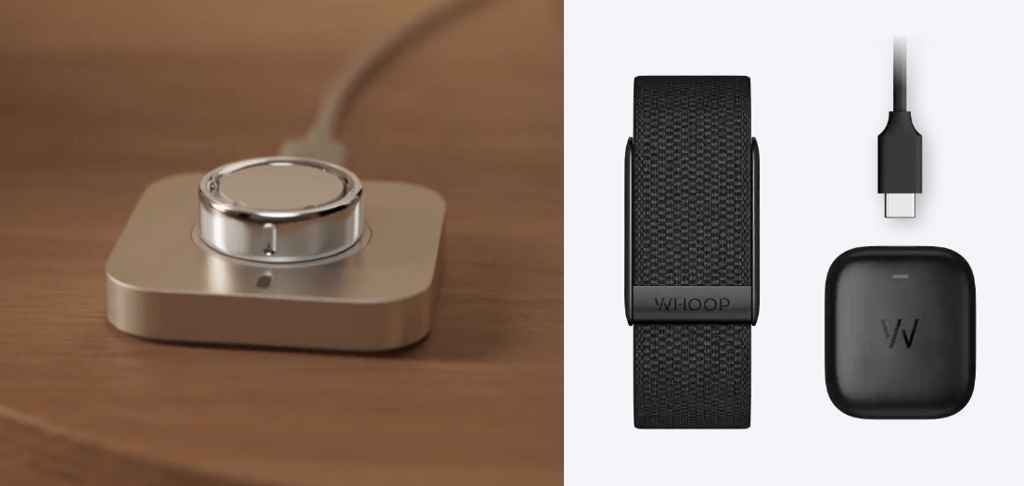
Oura promises to charge in about 20-80 minutes, while WHOOP takes over 100, which sounds like an easy win for Oura. But WHOOP has a wild card: it offers wireless charging. The battery can power up while you’re wearing the device and using it, a game-changer for any wearable device.

Oura Ring vs WHOOP: final verdict
Comparing WHOOP vs Oura turned out to be closer than expected. Both bring strong features to the table, whether it's comfort, sleek design, or smart health tracking. But after digging into the details, my Cybernews team and I found that Oura edged ahead for the average user.
Oura Ring 4 takes a well-rounded approach to health and fitness. It’s sleek, lightweight, and pairs with an app that’s packed with meaningful insights. And even though the upfront price is a bit higher, it ends up being much more affordable long-term.
That said, WHOOP has its loyal crowd. It’s super convenient to wear during intense training, and the automatic workout detection is a huge plus for athletes. The fact that you can charge it without taking it off is another big win.
At the end of the day, it really comes down to what matters most to you.
Other reviews you might be interested in:
Oura Ring vs Apple Watch: which health & fitness tracker is right for you?
Oura Ring vs Garmin: which wearable tracks your health better?
WHOOP vs Fitbit: which fitness tracker is worth it in 2026?
Hume Band vs Whoop: which device builds true resilience?
FAQ
Which is more accurate: WHOOP or Oura?
According to users, both WHOOP and Oura deliver pretty accurate results. That said, Oura tends to break down the data in a more detailed and accessible way, which can make it feel more precise.
Do I need a subscription for WHOOP or Oura?
Yes, you need a subscription for both WHOOP and Oura. WHOOP will cost you between $199 and $359, and Oura $69.99 a year. Oura will also charge an upfront price for the device, and WHOOP will impose upgrade fees if you switch membership tiers or tracker versions.
Can you wear the Oura Ring or WHOOP in the shower?
Yes, you can wear Oura Ring and the WHOOP band in the shower, since they’re both water-resistant. WHOOP can work at a depth of 10 meters underwater for 2 hours, and Oura up to 100 meters for up to 12 hours
Which device is better for tracking workouts?
WHOOP is slightly better at tracking workouts because it automatically recognizes and tracks dozens of activities. Oura takes a more comprehensive approach, using body signals such as heart rate and motion, and integrating with other popular fitness apps to help you monitor your fitness journey.
Is the data from WHOOP and Oura Ring medically reliable?
No, neither WHOOP nor Oura is a medical-grade device and shouldn’t be used to diagnose, monitor, or treat any health conditions. You may use them to gain insights into your activity and wellness, but not as a replacement for a medical examination or medical advice.