WHOOP 5.0 review for 2025: my honest insights
Being behind major reports like The Mother of All Breaches and RockYou2024, our in-house cybersecurity experts and journalists provide unbiased, real-world testing and in-depth analysis.
We maintain complete transparency by openly sharing our testing methodologies with our audience.
Learn more
Recovery, sleep, and levels of activity: it’s one of the most challenging aspects for an active person to manage, and this is exactly what WHOOP aims to solve. We’ve seen many activity trackers, which focus on steps or screen time. WHOOP, on the other hand, focuses on educating you about how your body responds to exercise, stress, and recovery.
WHOOP now offers three powerful models: 4.0 for starter fitness insights, WHOOP 5.0 for more serious users, and the WHOOP MG, which offers medical-grade insights, as the brand claims.
My WHOOP review will provide a detailed examination of this wearable’s design, functionality, performance, subscription options, and overall competitiveness in today’s market. By the end, you’ll be able to decide if this wearable is still worth subscribing to in 2026.
| Rating: | 3.5 stars |
| Price: | $216/year (annual plan) |
| App integration: | Yes |
| Battery life: | Up to 14 days |
| Main features: | Strain tracking, recovery tracking, advanced sleep analysis, heart rate, HRV, VO2 max, stress insights, healthspan and pace of aging metrics, ECG and blood pressure insights |
Pros and cons of WHOOP 5.0


Our team of in-house researchers, writers and editors reviews and analyzes health tech products using a research-driven approach. We gather data from multiple sources, fact-check all information, and conduct our research based on peer-reviewed studies, expert opinions, consumer ratings, and regulatory approvals.
You can learn more about how we test health tech products here.
What is a WHOOP tracker?
WHOOP 5.0 is a wearable tracker made to track recovery, sleep, stress, and daily activities without the need for any display or step tracking functionality. I believe it’s the emphasis on physiology as opposed to notifications that really gives WHOOP an edge over other typical wearable health devices and trackers.
The WHOOP 5.0 tracker can be paired with either the WHOOP band or the WHOOP’s ANY-WEAR Wearables.
In contrast to the WHOOP 4.0, the 5.0 feels much more polished. It’s smaller, lighter, and more streamlined to the point that you can forget you're wearing the thing.
Compared to its 4.0 model, the sensor nodes and processor are improved. This update promises to give more accurate HR tracking and faster data syncs within the app. The battery life has also improved dramatically; now it promises 14+ days of battery life. The waterproof battery extension charges via the strap, helping to minimize data holes when charging.
How does a WHOOP band work?
A WHOOP band is essentially the strap that holds the WHOOP tracking device on your wrist. This enables the device to track data continuously throughout the day and at night. For WHOOP 5.0, the band design continues with the no-screen philosophy and is more lightweight than previous iterations.

WHOOP offers a selection of bands for different lifestyles:
- Leatherluxe (made from premium Italian leather)
- Sportflex (mainly for high-intensity workouts)
- Cloudknit (fine-knit cashmere for everyday wear)
- Superknit (versatile use)
- Coreknit (foundational band with sleek material)
- WHOOP Body (tracker that integrates in your apparel or undergarment)
All of these bands are breathable, resistant to stretching, odor, and wear.
The WHOOP band attaches securely to the WHOOP tracker via a simple buckle system, making it easy to put on and take off. To wear it, slide the tracker into the fabric strap, adjust for a snug fit, and secure the buckle.
WHOOP: user experience
To understand how WHOOP performs in real life, I looked at recent user feedback across platforms like Reddit, Amazon, and Trustpilot. While many reviews still reference the WHOOP 4.0, they offer useful context, especially when paired with the upgrades introduced in WHOOP 5.0, which address several long-standing complaints by users.
Design & comfort
Users like the WHOOP band for its lightweight, low-profile design and all-day comfort. I observed that many say they barely notice it on their wrist, even during sleep. That said, some users still miss having a display for quick stats — a design choice WHOOP continues with 5.0. The newer model builds on this feedback with a smaller, lighter body, which should further improve comfort long-term.
Battery life
Battery life was one of the pain points experienced by WHOOP 4.0 users, as it used to last 3 to 5 days. Though it was appreciated by users because it could be charged even when worn, there were complaints regarding charging and accessories as well. WHOOP 5.0 removes this pain by providing battery life of 14 days (and over).
I also noticed there were some complaints about the charging hardware being easy to misplace and the short length of the charging cable.
Water resistance
One of the areas where the WHOOP device always receives praise from its users is in its resistance to water, which continues with the new WHOOP 5.0 device. The device, including the battery pack, fully resists water (has a rating of IP68), so users say they wear it to the shower, pool, ocean, or hot workout session with no problems at all.
App connectivity
Generally, users find the app connectivity reliable, with quick data syncing and useful notifications. However, some have faced occasional bugs and crashes, particularly on Android. WHOOP 5.0’s faster processor now helps improve syncing speed and overall app responsiveness.
Overall, I noticed that most users find the WHOOP app informative and motivating, especially for sleep and recovery insights.
WHOOP: main features
With WHOOP 5.0, the core experience stays familiar as with the 4.0 model, but the depth and reliability of the data have noticeably improved. WHOOP still focuses on screenless tracking. Newer models (5.0 and MG) now have a faster processor, upgraded sensors, and better battery efficiency. Below, I broke down the main features and where WHOOP 5.0 meaningfully builds on what 4.0 model.
Sleep
WHOOP 4.0 can track the duration and quality of your sleep by breaking it down into light sleep, rapid eye movement (REM) sleep (when your brain repairs), and slow wave sleep (SWS) or deep sleep (when your body and muscles repair).
The app compares how much you slept versus how much you actually needed based on your previous day's activities. With WHOOP 5.0, sleep data feels more stable night to night, due to improved sensor accuracy and longer uninterrupted tracking due to better battery life.
Strain
The strain score from WHOOP measures how much stress your body is under from physical and mental exertion. Using heart rate and movement sensors, it provides a score from 1 to 20.
Lower scores suggest light activity and room for more exercise, while higher scores indicate you have pushed hard and might need more recovery.
Compared to 4.0, WHOOP 5.0 now has cleaner heart rate data, which makes strain calculations feel more responsive. That especially applies during workouts and long active days.
Recovery
Recovery remains one of the WHOOP’s strongest features. WHOOP provides a daily recovery score based on your heart rate variability (HRV) and other metrics like sleep and the previous day’s strain. With WHOOP 5.0, recovery trends feel more consistent over time, which I think makes the day-to-day guidance easier to trust.
This score helps you gauge how ready your body is to take on more physical activity. Each morning, you get a recovery percentage and a suggested exertion level for the day.
Insights
By continuously analyzing your data, WHOOP offers personalized feedback on how your activities and lifestyle choices impact your recovery and performance. Over time, these insights could help you optimize your routines for better results. The faster processor in WHOOP 5.0 enhances the speed at which these insights update in the app.
Stress monitor
WHOOP also tracks your stress levels by monitoring how much time you spend in various heart rate zones throughout the day. The app displays a stress score from 0 to 3, indicating whether you are calm, moderately stressed, or highly stressed.
This could help you identify patterns and manage your stress more effectively. While this feature existed on 4.0, WHOOP 5.0 now offers smoother, more stable stress tracking throughout the day.
Health monitor
In addition to tracking sleep, strain, and recovery, WHOOP keeps an eye on several key health metrics. It monitors your respiratory rate, blood oxygen level, resting heart rate, heart rate variability (HRV), skin temperature, and calories burned. WHOOP 5.0 enhances long-term reliability, primarily by reducing data gaps and improving sensor precision. This, in my opinion, is a crucial factor when monitoring trends rather than single-day readings.
Healthspan and Pace of Aging
WHOOP 5.0 introduced Healthspan insights, which can calculate the estimated WHOOP Age and Pace of Aging. This can potentially help you determine biological age in comparison to chronological age. Additionally, the Pace of Aging helps you understand how your lifestyle might influence aging.
While contenders like Garmin and Oura ring might already offer similar features, Whoop’s Healthspan insights seem more deeply integrated and actionable.
WHOOP: the app
The WHOOP app is where all the data from the tracker comes together, and it seems even more refined with the new WHOOP 5.0, compared to previous generations. After all, data is really what you’re paying for here. The app uses the data from the tracker to create information: recovery, sleep, strain, stress, and so on.
Rather than viewing metrics individually, the app connects them to one another. Functions of sleep, strain, and rest are integrated to show the effects of your activities upon readiness and performance. The app also offers recommendations based on trends rather than day-by-day results, which, in my opinion, is a much more practical tool for measuring long-term usage patterns than the raw numbers themselves. Syncing is faster compared to the 4.0 model, owing to the 5.0’s enhanced processor and extended battery life.
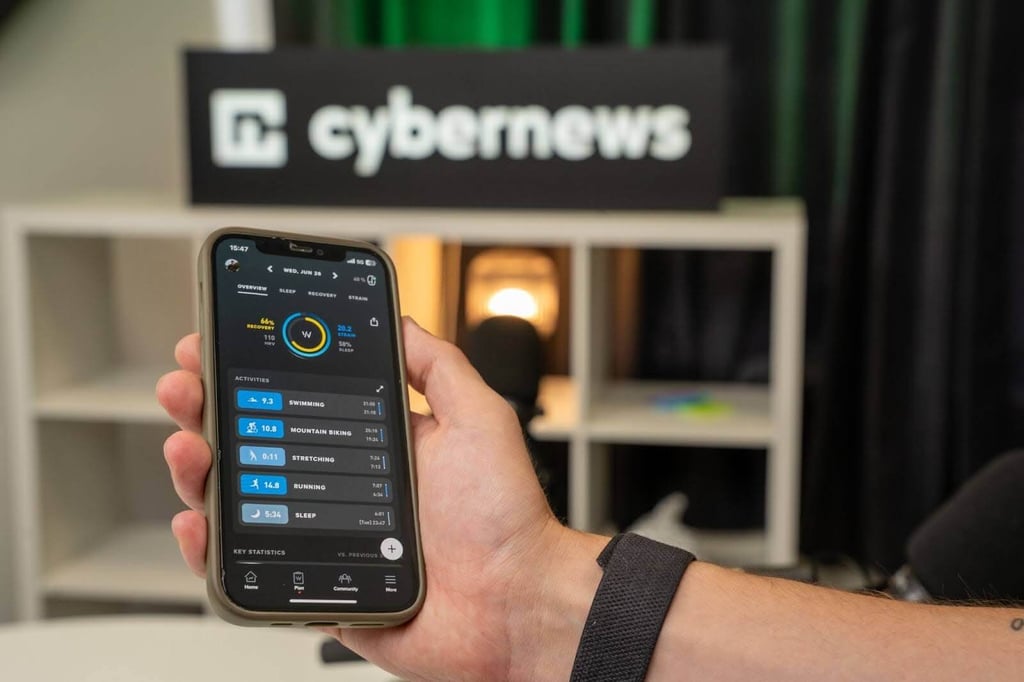
The app also monitors general health indicators, including heart rate, heart rate variability (HRV), breathing rate, oxygen saturation, skin temperature, and stress. Some of the latest improvements to the WHOOP 5.0 and MG include Healthspan measures, which expand the app's functionality from activity tracking to comprehensive health observation.
As far as user experience is concerned, the design is clean but information-dense. There is a bit of a learning curve here, particularly if you are unfamiliar with WHOOP terminology, but once you familiarize yourself with it, the app becomes a valuable resource for identifying patterns and making informed training and recovery choices.
How much does WHOOP cost?
WHOOP no longer offers one device sold under one price for one membership rate. You’re not purchasing the device anymore – you’re purchasing the membership, and the device is part of that membership. Currently, WHOOP offers 3 types of memberships.
I broke down all pricing levels of WHOOP and what each of them offers:
| Membership tier | Price | Included hardware | Key features | Special health metrics |
| One | $129/year | WHOOP 4.0 | Sleep, strain, recovery, stress tracking, core health metrics | ❌ |
| Peak | $216/year | WHOOP 5.0 | Everything in One + Healthspan insights, pace of aging, advanced trends | Healthspan, WHOOP Age |
| Life | $324/year | WHOOP MG (medical-grade) | Everything in Peak + on-demand ECG, deeper cardiovascular insights | ECG, blood pressure insights |
With WHOOP 5.0 and WHOOP MG, pricing reflects hardware capability and health depth. Battery life, sensor accuracy, and processing power are improved across all tiers, while advanced and medical-grade metrics are reserved for higher plans.
- WHOOP One. This model is best for casual users who want basic data: sleep tracking, recovery and training-related data.
- WHOOP Peak. A more advanced (and more expensive) option if you want long-term health and aging insights.
- WHOOP Life. The most advanced model is aimed at those users who are interested in medical-style health monitoring.
WHOOP's warranty policy includes a limited lifetime warranty that covers defects in materials and workmanship. WHOOP will repair or replace defective devices at no cost to the user, subject to terms and conditions.
The cancellation policy allows users to cancel their subscription at any time. However, since subscriptions are often billed annually in advance, refunds for any unused portion of the service are typically not provided.
I highly recommend reviewing the terms at the time of subscription to understand any specific conditions related to cancellation and refunds.
What are customers saying about WHOOP?
According to the WHOOP reviews I've looked at online, including those on Trustpilot, Reddit, and fitness forums, the overall view towards WHOOP is mixed, however, the 5.0 model has gained some positive traction.
What users like
In both models, the WHOOP 4.0 or 5.0, the feature that gets the most support from users is the sophisticated insights the app offers on deep health, as well as the coaching. Comfort is another feature that scores well, allowing you to place the tracker on the wrist, bicep, or on WHOOP apparel. In the WHOOP 5.0 model specifically, the one feature that gets the most support is the greatly improved battery life, allowing uninterrupted data tracking. This directly corrects one of the main criticisms of the 4.0.
Frequently mentioned complaints
Pricing is the primary concern with both the tracker and the service. Redditors say that the service is too pricey when considering the cost of other watches or wearables with additional features, such as the ability to track steps or use the GPS. On the other hand, a number of consumers with the latest 5.0 believe the service is worth the cost for the additional health aspects and the improved battery life. The absence of a screen seems to divide consumers.
I also noticed some mixed feedback regarding the detection of exercise sessions and discrepancies in recovery scores on the WHOOP 4.0. However, it seems that the same problems are not common on the WHOOP 5.0, thanks to its advanced sensor package and processing power. Times when one would complain about the band are not as common, other than the problems raised by the earlier designs.
Overall, users who experience an update from 4.0 to 5.0 seem to have a better experience, especially in terms of battery life, reliability, and long-term wear. However, concerns about price and the screen-free approach remain largely unchanged.
Verdict: is WHOOP health tracker worth it?
In 2026, I’d still give WHOOP a 3.5/5 score, even with advancements made for 5.0 and MG models. From my research, the 5.0 has highly improved in terms of design, having longer battery life, faster syncing, and especially with all the new features added to it, which go far beyond mere exercise.
However, the cost is still the largest pain point. The tiered model is an adjustment designed to improve flexibility, but it remains quite expensive compared to other models that offer a display, GPS, and no monthly charges. If you're deciding between 4.0 and 5.0, I’d recommend skipping 4.0 altogether. WHOOP 5.0 is best suited for active, analytical, and actually using recovery function users.
FAQ
Is WHOOP worth buying?
It depends on how much you need the advanced health metrics. As an athlete, these parameters might make all the difference for you. If you just work out occasionally and don’t require such advanced tech, I would opt for another product.
Is WHOOP really accurate?
Based on user feedback and available reviews, WHOOP (4.0 and 5.0 models) is reliable for monitoring overall trends for sleeping, recovery, and heart-related indicators. Most people use these figures as a guide for trends over a period, as opposed to accurate readings.
Is there anything better than WHOOP?
It depends what tracker or wearable you prefer. You could pay around half as much, and still have a stylish wearable that gathers sufficient metrics. However, if you really need advanced monitoring and tracking, then the outlay for the WHOOP 5.0 does make sense.
Is WHOOP or Oura Ring better?
It really comes down to your goals. If you want to study your recovery and training on a continuous basis, then WHOOP is the better choice. The Oura Ring is designed for users who prioritize sleep and overall wellness, offering a simpler and less performance-driven approach.
What's better, a WHOOP or an Apple Watch?
WHOOP focuses on recovery and long-term health trends, while Apple Watch has other general features such as notifications, apps, and GPS. WHOOP is best for data-driven users, while the Apple Watch fits the needs of any regular smartwatch.
Is WHOOP or Garmin better?
This depends on the user's priorities and preferences. However, WHOOP excels in recovery and sleep tracking with a sleek design and continuous wear, but requires a subscription. On the other hand, Garmin offers a GPS, a traditional display, and no ongoing fees.